
Checking the water level sensor in a Samsung washing machine
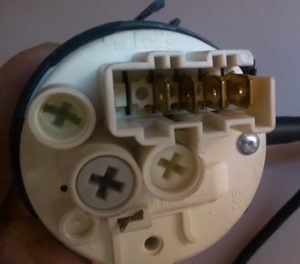 Automatic washing machines are packed with various sensors and valves that ensure proper operation. Every washing machine is equipped with a pressure switch, which monitors the water level in the drum and transmits signals to the control unit, thereby controlling the washing process. How can you test the water level sensor in a Samsung washing machine if it suddenly starts acting up? Let's find out where this element is located and how to access it.
Let's find the part and take a quick look at it.
Don't attempt any self-diagnosis if your washing machine is under warranty. It's best to contact service technicians and have it repaired free of charge. Disassembling the washing machine yourself will void the warranty.
If your washing machine is a long time old, you can try testing the pressure switch at home. Here's how to do it:
- de-energize the washing machine;
- turn off the water intake tap;
- detach the top cover from the housing by unscrewing the two bolts that secure it;
- Find the pressure switch. It's located near the control unit, closer to the right side of the housing;
- Unscrew the screw, disconnect the connector so that you can remove the level sensor from the machine;
- Loosen the clamp with pliers and pull the pressure switch out.
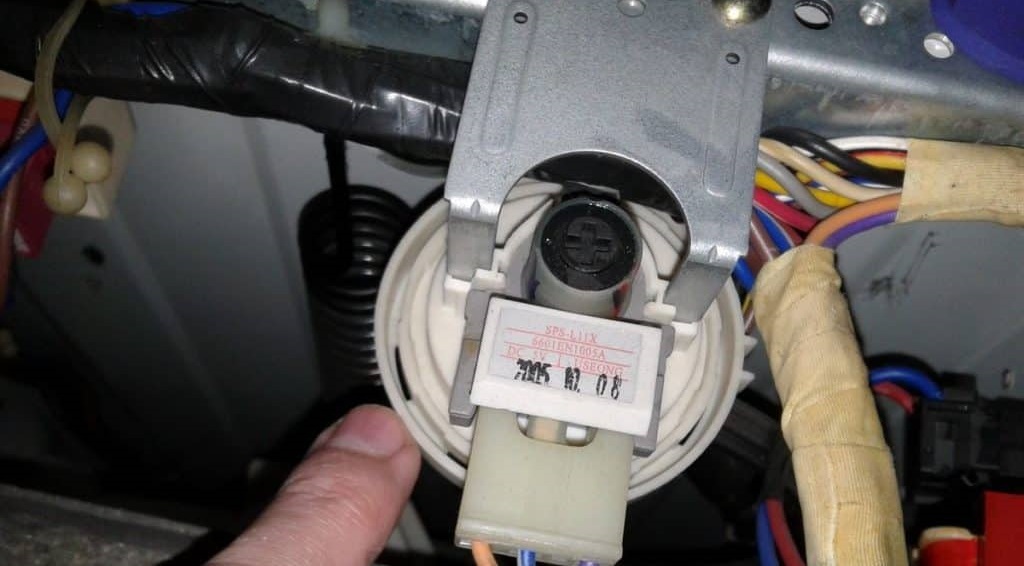
You don't necessarily need to immediately run a multimeter diagnostic. You can check the sensor pressure using improvised means. You need to take a short tube with a diameter corresponding to the pressure switch fitting, connect it to the device and blow into it. A clicking sound from the inside of the device will indicate that the water level sensor is working properly. If the relay doesn't respond to pressure, the element will need to be replaced.
How is the part constructed?
Accessing the water level sensor is very simple. Simply remove the top cover and locate the component. The pressure switch is hard to miss—it's a ribbed plastic element, vaguely resembling a washer. It can be any color, but that's not important. Wires run from the sides of the washing machine to the pressure switch, and a thin tube runs from the end panel.
In some Samsung models, the configuration of the level sensor may differ; the wires may only run on one side, but a thin tube will definitely be present.
How does a pressure switch work? The element actually responds not to the liquid level in the tank, but to the pressure in the system. The more water the machine draws, the greater the pressure, and therefore the greater the air pressure flowing through the sensor tube. The air exerts pressure on the membrane, causing the contacts to close. This sends a signal to the main control module to stop drawing water. The same principle works in reverse.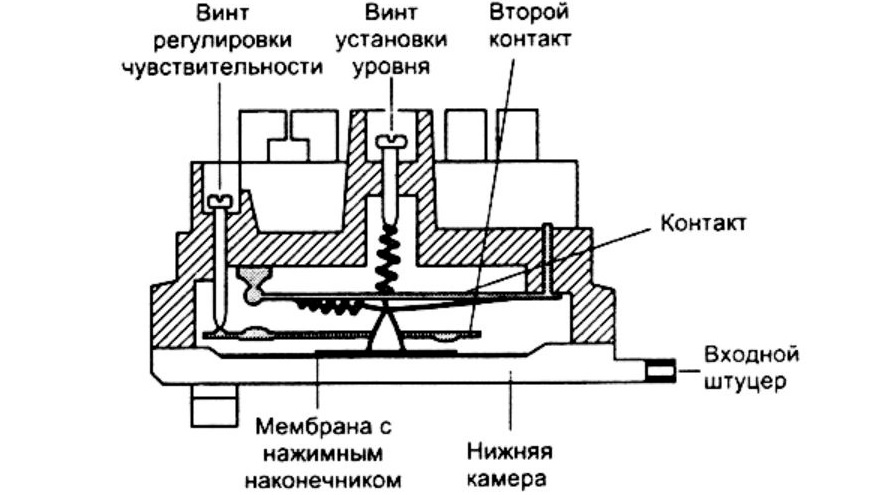
When the pressure switch doesn't respond to water filling the tank, the washing machine won't start washing. Therefore, an urgent check of the level sensor is necessary, and if necessary, its replacementThe problem may lie in the contacts of the element, the tube, or the relay itself.
We check the sensor coil with a multimeter
If you have a multimeter at home, you can diagnose the pressure switch with a tester. The procedure for checking the water level sensor on Samsung washing machines (and on machines from other manufacturers, such as Ariston, Bosch, Indesit, and Beko) is as follows: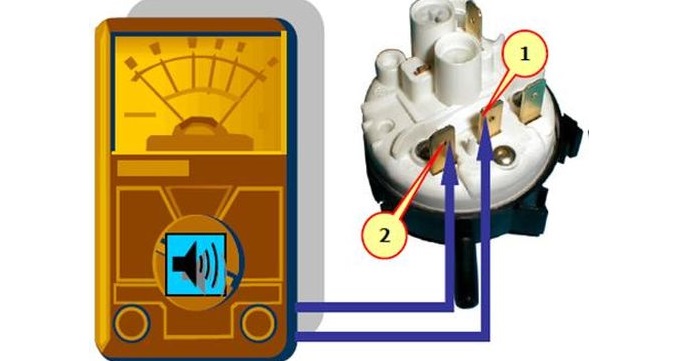
- study the electrical circuit of the pressure switch;
- apply the tester probes to the level sensor contacts;
- create pressure in the tube yourself to ensure the membrane is triggered;
- Study the readings on the multimeter.
The resistance value on the device screen should change when the sensor is operating. If the pressure switch has been triggered, but the value on the multimeter remains the same, then the part will have to be replaced. Even if the system worked like a charm, the problem could lie in the tube. Any hole, no matter how small, will leak air, meaning the required pressure for the relay won't be achieved.
Interesting:

Readers' comments
Headings
Washing machine repair




For buyers




For users


Dishwasher




Add a comment