
Checking the pump on a Samsung washing machine
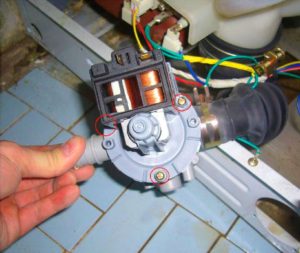 You can diagnose individual components of your washing machine yourself, but only if the warranty period has expired. If the machine is still under warranty, it's best to contact a service center for assistance. In fact, checking the drain pump on a Samsung washing machine is easy; the key is to follow the instructions. Let's look at the symptoms that typically indicate a faulty pump, how to access it, and how to inspect the part.
Selecting a verification method
Before disassembling your washing machine, carefully analyze the symptoms. By assessing the symptoms, you can narrow down the possible causes. Based on the nature of the damage to the machine, you can choose a diagnostic method.
The following signs indicate that the drain pump is failing:
- the washing machine cannot drain water into the sewer;
- when the machine is running, unusual noises are heard;
- the pump hums and does not pump out water;
- The pump does not function and makes no sound.
The diagnostics of a washing machine should be carried out from simple to more complex.
First, it's recommended to check the drainage system for blockages. Turn off the power to the appliance, prepare a container and dry rags, unscrew the waste filter, and drain any remaining water. If the filter element is dirty, rinse it. Also, wipe the walls of the hole, shine a flashlight into the cavity, and remove any debris. It's also a good idea to check the drain hose for kinks and that it's positioned correctly relative to the floor.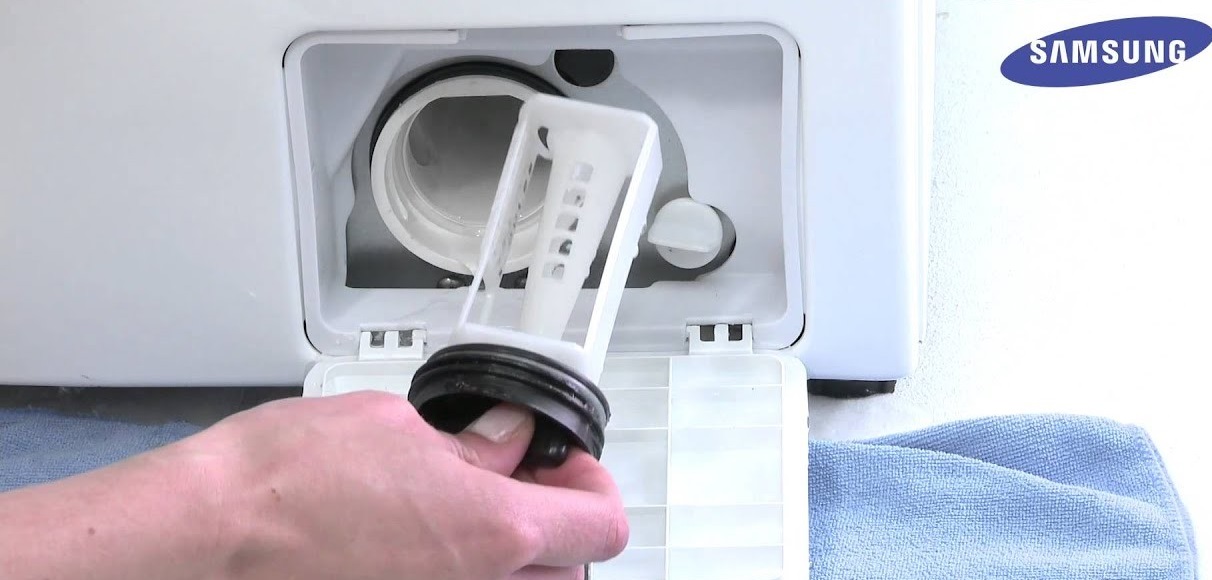
If there are no clogs, but the machine still won't drain, the problem is likely with the pump. Let's take a closer look at how to check the pump's functionality.
We look at the element adjacent to the pump
Sometimes the user may notice noise in the area where the pump is located (at the bottom, in the right corner of the Samsung washing machine). A washing machine malfunction may be caused by a foreign object getting into the pump snail or a severely clogged element. The snail is a component adjacent to the pump. The inspection procedure is as follows:
- de-energize the equipment;
- open the hatch located at the bottom, in the right corner of the washing machine body (this will give you access to the debris filter);
- Unscrew the filter. Water will leak from the hole, so be sure to have dry rags handy and place a flat container under the washing machine;
- shine a flashlight into the hole to examine the snail;
- remove any trash or small foreign objects that may be present there.
Normally, nothing other than the pump impeller should be visible in this opening. The only exception would be those Samsung models that have two motors on the volute—one for drainage and one for recirculation.
Visual inspection algorithm
Let's review the basic rules for visually inspecting a washing machine. It's important to follow safety precautions, so always unplug the machine from the outlet. You should also disconnect the appliance from the power supply and ensure there's no water left in the drum. Afterward, place the machine in a location where it's easy to use.
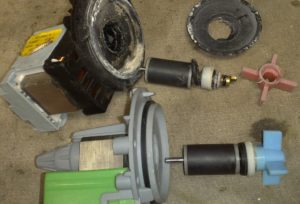
It's best to cover the floor with a blanket to avoid damaging the washing machine's body. After this, lay the machine on its left side. Looking underneath, you'll see the drain pump. Now you can easily remove the pump for inspection and diagnostics.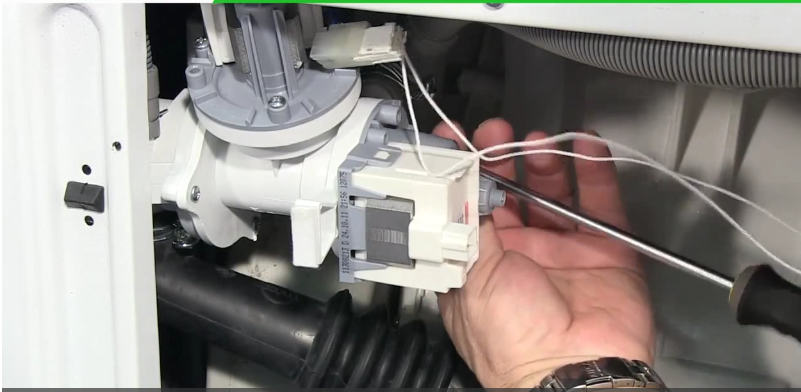
First, check the impeller's movement manually. Normally, its movement is jerky. Then, rock the impeller left and right, perpendicular to the axis. If significant play is noticeable, the pump will need to be replaced.
If the pump is unable to remove water from the tank, you can check its functionality and eliminate problems with the control module as follows:
- Add water to the washing machine tank. Enough to lightly cover the drum surface;
- de-energize the washing machine by unplugging the cord from the outlet;
- remove the front panel of the machine to gain access to the drain pump terminals;
- disconnect the terminals or remove the connector (the connection method depends on the washing machine model);
- connect the terminals of the previously prepared cord with a plug;
- Make sure the connection is secure and safe, and the contacts do not touch each other;
- Insert the plug into the socket.
If water begins to drain after these steps, the pump is working properly. The cause of the malfunction could be something entirely different. It could be a problem with the main control board or other components of the washing machine.
Testing the pump coil
The third method for checking the pump's functionality involves using a multimeter. When checking the winding of the drain pump electric motor, the tester should show a resistance of around 150-260 Ohms. The algorithm of actions will be as follows:
- disconnect the machine from the power supply;
- disconnect the pump connection contacts;
- turn on the multimeter, setting it to the resistance measurement mode;
- Apply the tester probes to the motor contacts.
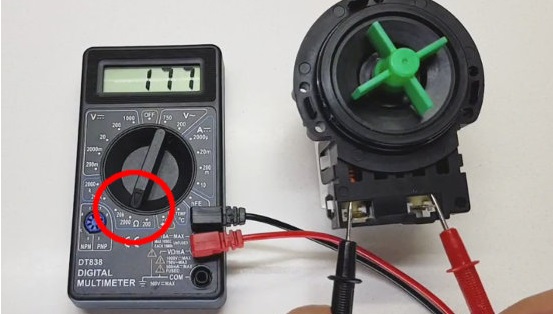
If the device displays 0, a short circuit can be diagnosed. If the multimeter displays an excessively high value, it indicates a winding open. A reading significantly higher than the specified value indicates damage to the stator winding.
It is not profitable to repair the pump winding; it is more practical to replace the entire drain pump.
Is it difficult to change the part?
You can replace your Samsung washing machine's pump yourself. It's important to select a replacement that matches the original. If the original isn't available, an alternative can be installed.
When selecting a pump, you need to focus on the following characteristics:
- power;
- snail attachment method;
- number of latches or bolt holes;
- connection method (plug or terminals).
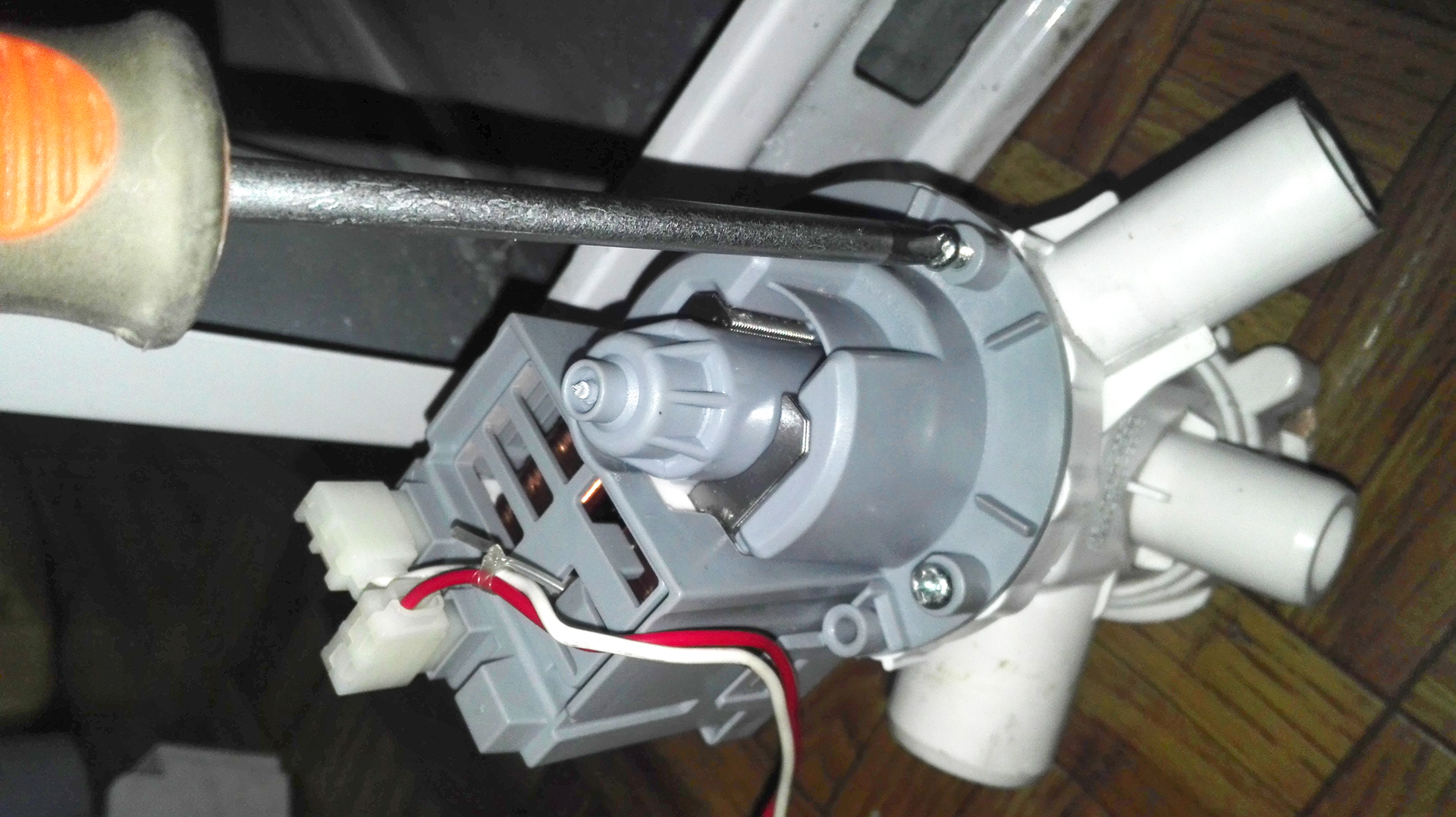
The algorithm for replacing the pump is as follows:
- Disconnect the two power wires going to the pump by removing the terminals;
- unscrew the bolts securing the pump to the snail;
- remove the pump from the housing;
- connect the new pump to the same place in the same position, secure it with screws;
- connect the terminals and wiring;
- put the SMA into its original position;
- Screw in the trash filter and close the protective hatch.
Afterwards, you can connect the machine to the power supply, plug it in, and run a test wash. You can also diagnose and replace the drain pump at home, without calling a technician. It's important to strictly follow the instructions and instructions.
Interesting:

Readers' comments
Headings
Washing machine repair




For buyers




For users


Dishwasher




Add a comment