
Checking the bearings of an LG washing machine
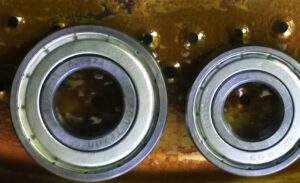 Despite all the technological advances and improved safety, modern appliances can still fail at some point. Bearings are one of the most common causes of washing machine failure. But don't rush to buy new parts; first, you need to check the bearings on your LG washing machine. We'll explain in detail how to accurately determine the cause of the failure to save time and money.
We determine the fault without disassembling the machine
Checking the bearings by disassembling the washing machine provides comprehensive information, but it's difficult. There are methods that don't require disassembling the machine, but only a service center specialist can professionally apply them. This is due to the fact that if an element has just begun to fail, it will be very difficult to determine this visually, since the signs of destruction will be minimal. Therefore, unless you have professional training or extensive experience, you'll likely still need to disassemble your direct-drive washing machine at least partially. However, there are a number of telltale signs that may indicate bearing deformation.
- The machine makes strange noises during the cycle. While these unusual noises may not be audible during the spin cycle, these metallic sounds, grinding, and knocking can be quite noticeable during the wash and rinse cycles.
- Poor spinning. Because the drum can't spin at maximum speed, clothes will remain wet, as if there was no spin at all.
- Excessive vibration. This is due to the fact that damaged bearings disrupt the balance, and the direct-drive washing machine begins to wobble more than usual during operation, although this can be difficult to detect.
- Damage to the seal. This also indirectly indicates that it's time to replace the bearings.
In addition to all of the above, it's worth highlighting the following quick test method. To use it, unplug the washing machine, open the door slightly, press the drum from above with your finger, and gently rock the element. The element should move smoothly and without any play, in sync with the drum.
If you feel a clear imbalance between the tank and the drum, then this is almost a 100% guarantee of bearing failure.
Try spinning the washing machine drum vigorously. If it moves smoothly and with a slight hum, there's no problem. However, if the drum makes extraneous noise while moving and rotates unstably, then the bearings need to be replaced. Most often, they fail due to manufacturing defects and natural wear and tear during operation.
Let's inspect the rear wall of the tank
Now let's move on to diagnostics, which involves a partial disassembly of the machine but without touching the drum itself. This way, we can confirm or refute the information obtained from the preliminary tests. To do this, you'll need:
- disconnect the device from all communications;
- remove the back wall of the machine body;
- evaluate the back wall of the washing machine tank.
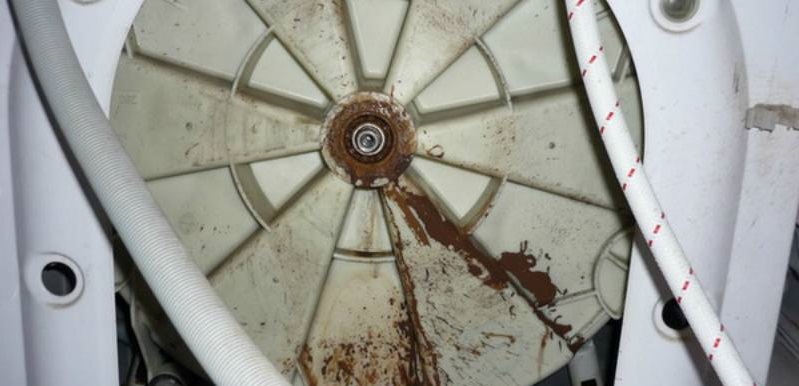
First of all, you should pay attention to grease leaks, as well as unpleasant rusty streaks. A rusty "path" will run down the back wall of the tank from under the inverter motor housing.
This indicates that parts are failing and leaking oil. If you notice this on the back of the tank, you don't even have to return the machine, as the machine shouldn't be used without replacing the failed bearings. In this condition, the machine is unusable, so you'll either have to call a service technician or replace the parts yourself.
Interesting:


Readers' comments
Headings
Washing machine repair




For buyers




For users


Dishwasher




Add a comment