
How to check bearings in a washing machine?
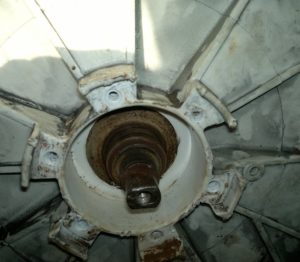 Washing machine bearing failure is the most common problem faced by owners of this household appliance. However, before attempting repairs, you need to be certain of the problem, as it requires almost complete disassembly of the machine. First, inspect the bearings and determine the cause of the problem based on external signs. How can you tell if a specific part needs replacing?
Superficial check
Diagnosing bearings without disassembling a washing machine is only possible for a highly experienced professional. If the component is just beginning to deteriorate, the external signs will be less obvious and easily overlooked. Partial disassembly of the washing machine will still be necessary. However, there are specific "symptoms" worth paying attention to.
- The presence of unusual noises during washing machine operation. While these are difficult to hear during the spin cycle, they are quite noticeable during the wash and rinse cycles. These are typically metallic sounds, grinding, and knocking.
- Poor spinning performance. This is because the drum isn't spinning fast enough, meaning clothes won't spin properly.
- Excessive vibration. Bearing failure will disrupt the balance, and the washing machine will vibrate more intensely. Please note that this sign of wear may be subtle.
- Damage to the cuff during bearing diagnostics will help indirectly confirm the need for their replacement.
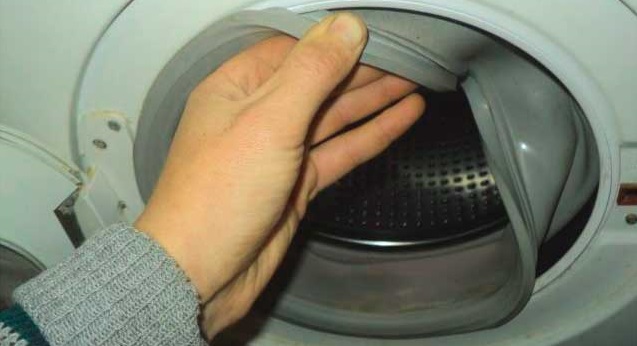
You can also determine the source of the problem as follows: Open the washing machine door after unplugging it. Press the top of the drum with your fingers and rock it. It should move in sync with the tub, with no play.
Important! If you feel an imbalance, you can be sure the bearings are starting to fail.
After this, give the drum a vigorous spin. If it moves freely and makes a slight humming noise, everything is fine. However, if you hear a noticeable noise and the drum rotates unevenly, the bearings need to be replaced. The main reasons for their failure are manufacturing defects and wear and tear during operation.
Let's open the machine's body
Next, we'll diagnose the bearings by disassembling the washing machine. This will help confirm our initial suspicions regarding the source of the problem. However, we won't disassemble the drum itself yet; we'll try to avoid extreme measures and still draw the right conclusions.
Then follow the instructions: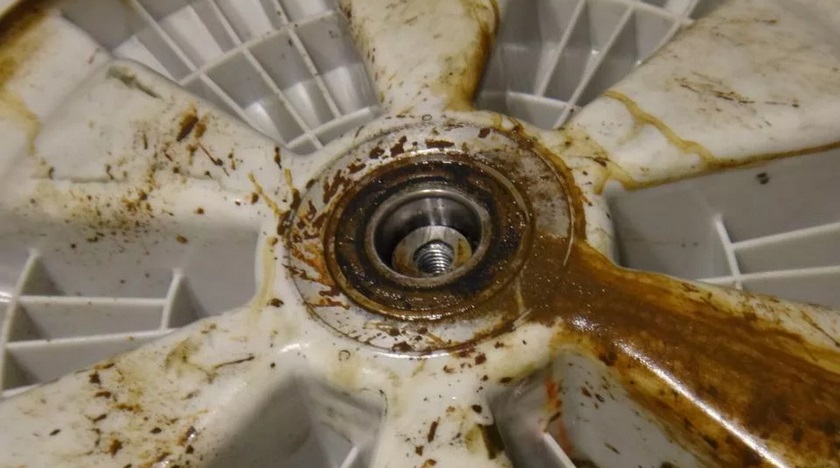
- disconnect the washing machine from the power supply, sewerage system and water supply;
- Place the machine in a place where you can easily disassemble it;
- unscrew the back wall of the case;
- Carefully inspect the rear wall of the tank, and for this it is better to remove the drive belt.
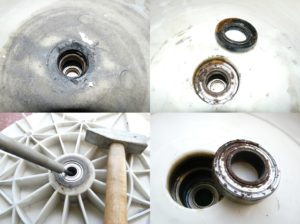
What should you look for when diagnosing bearings? If you see grease leaks and rusty streaks, this clearly indicates a malfunction—oil always leaks when a part breaks. If you notice these signs, you shouldn't even put the washing machine back in its original location, as it's no longer usable. The bearings will definitely need to be replaced before you can use it again. Do not operate a washing machine with this type of malfunction.
Interesting:



Readers' comments
Headings
Washing machine repair




For buyers




For users


Dishwasher




Add a comment