
Checking the pressure switch in a Candy washing machine
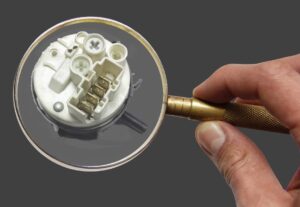 Washing machines not only display different error codes but also react differently to different problems. For example, if the water level sensor is damaged, the appliance often freezes during the wash cycle and stops responding to user commands. In this situation, a housewife should immediately check the pressure switch in the Candy washing machine to either repair the damaged element or replace it with a new one. Let's figure out how to do this correctly at home without the help of a repair service.
How does a water level sensor work?
First of all, you need to understand how exactly the pressure switch works to make it easier to work with. The level relay is considered one of the most important elements of a "home assistant", because without it, the equipment simply cannot function properly. The washing machine operates under the control of a control module, to which a level sensor transmits information about the amount of water in the tank. Using a pressure switch, the control module determines when to close the inlet valve to stop water intake and when there is insufficient liquid in the system for the cycle.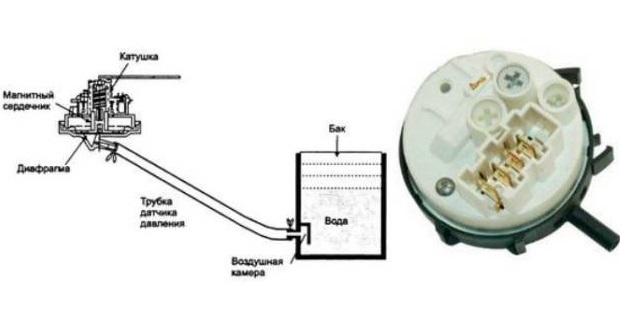
The water level switch itself controls the volume of liquid entering the tank. Each operating cycle requires a different amount of water, which is monitored by a pressure switch. The element looks like a small, round plastic component. Wiring and a pressure hose are connected to the switch, and a thin membrane and switch can be found inside.
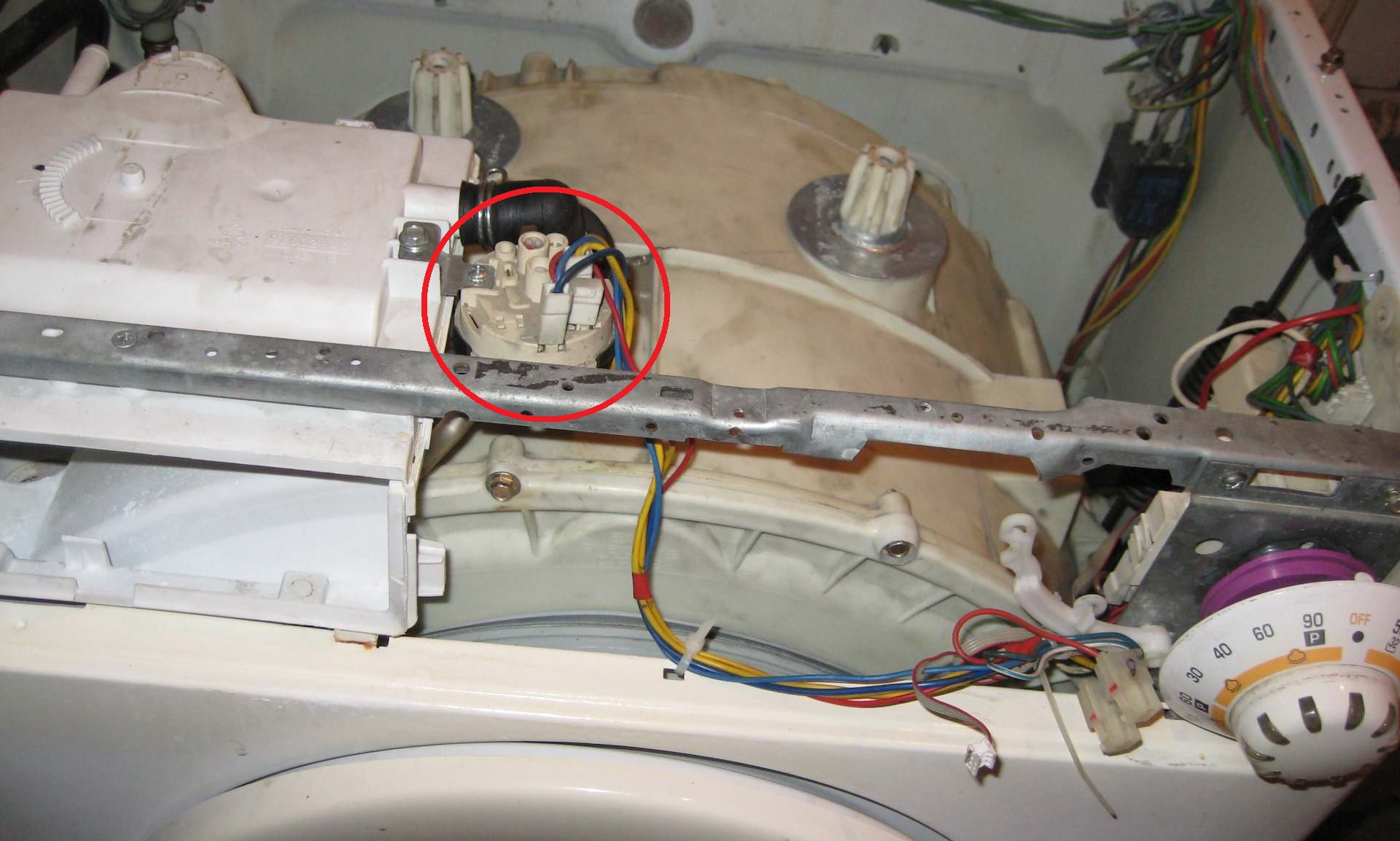
In Candy brand equipment, the level switch is located under the top panel of the housing, near the dispenser.
Let's briefly examine how this component works in an automatic washing machine. First, air passes under high pressure through the pressure switch hose and then hits the membrane, which changes shape and thus closes the switch. Then, via electrical wiring, the component transmits a signal to the control module indicating that there is sufficient water in the system for the selected operating cycle, so the inlet valve should be immediately closed.
How do you know if the pressure switch is faulty?
Often, you can tell if the water level sensor is damaged even without checking it. This is because most Candy washing machines have a smart automatic diagnostic system. As soon as it detects damage to the level relay, the machine will notify the user of the malfunction using the corresponding error code on the display. All that remains for the housewife to do next is to check the user manual to find the error code and decipher it.
However, sometimes situations arise when the appliance, for some reason, does not display an error code. In this case, the problem can be identified by the absence of water in the drum after starting the cycle. At the same time, you may sometimes notice that, despite the empty drum, the washer somehow activates the water heater. Problems with the pressure switch can also be indicated by an uncontrolled and continuous water intake. Additionally, you can always check your clothes after washing – if the laundry remains wet, it's likely the water simply wasn't able to drain in time, causing the items to spin in the water.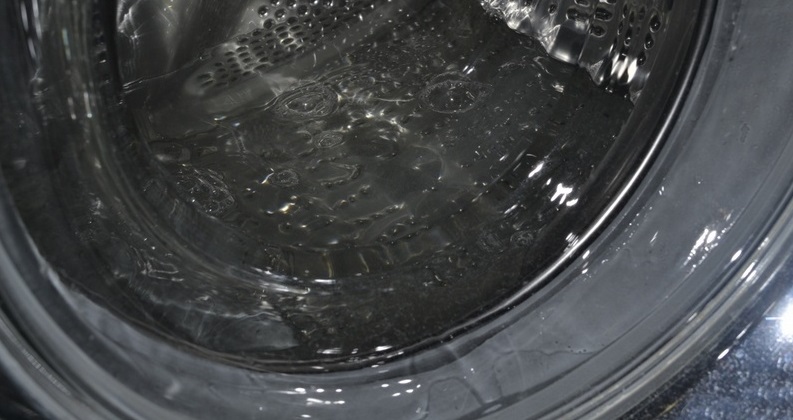
These incidents may indicate not only damage to the pressure switch but also the failure of other key system components, such as the control module or inlet valve. It's also possible that the washing machine was improperly connected to the utilities. A simple test, which we'll discuss in detail below, will help confirm that the problem is indeed with the water level sensor.
Testing the sensor
Testing an element doesn't require any special knowledge, skills, or equipment. So, don't rush to call a service center specialist; you can easily check everything yourself and save money. What should you do?
- Disconnect the machine from all communications.
- Remove all screws holding the top panel of the case and set the cover aside.
- Find the pressure switch inside the device.
- Prepare a small tube with the same diameter as the fitting.
- Remove the pressure hose, insert the prepared tube into it and gently blow into it.
- If you hear one or three quiet clicks, the part is OK.
- Afterwards, carefully inspect the relay, examining its housing, as well as the hose, which can be additionally washed with a powerful stream of water from the tap to clear it of blockages.
If the level sensor appears intact, it should be tested again with a standard multimeter. To do this, switch the tester to resistance mode, connect its probes to the relay contacts, and then examine the resulting data. If the readings change after testing, the contacts are OK. However, if the resistance remains unchanged, the pressure switch needs to be replaced.
Setting up the sensor
Sometimes there's no need to buy a new spare part, so don't rush into it. You can first try adjusting the element correctly. To do this, you'll need to know the exact volume of water your Candy washing machine requires for a given cycle. Find this information in the user manual to find out how many screws are on the relay, which can range from 1 to 3.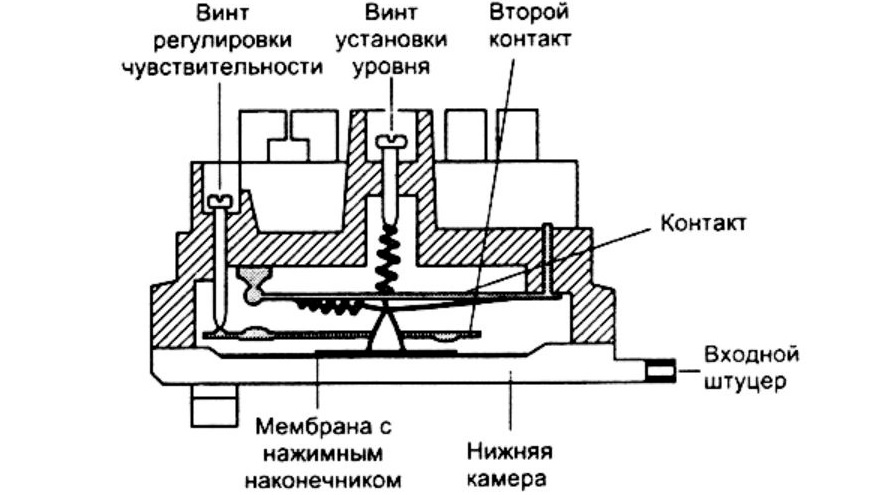
Next, you need to tighten the screws on the part according to the amount of water required for each cycle. This way, you can avoid replacing the element, provided you correctly configure the relay for operation. However, doing this yourself is very difficult, so a repair service is often called in for precise adjustments.
Replacing a faulty part
If, after all the checks, you're certain replacement is necessary, that's also easy. First, you need to buy a similar spare part. To be on the safe side, you can take the faulty element with you to the store as an example, or it is acceptable to simply write down the model of the washing machine Candy, so that the seller can recommend the right product to you.
Try to buy only original spare parts, avoiding counterfeits and cheap analogues that will not last long.
Once you have the water level sensor in hand, you can begin working. Follow the steps in the instructions above to partially disassemble your "home assistant" and remove the pressure switch. What's the correct procedure?
- Disconnect all hoses and wires from the element, remembering to take a few photos of the correct connection beforehand.
- Remove the screws holding the relay in the washing machine body.
- Carefully remove the sensor itself.
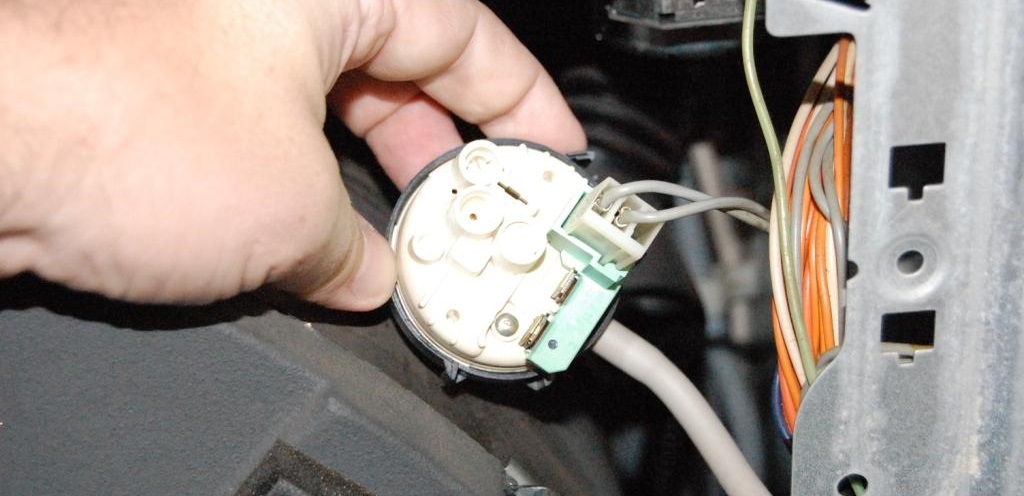
Replacement takes much less time than testing the part's functionality. Installation is performed according to the instructions in reverse order. Securely fasten the part with the mounting bolts, replace the wires and hoses, and then close the housing with the cover. Afterward, all that remains is to run a test run to verify the repair was successful.
Interesting:


Readers' comments
Headings
Washing machine repair




For buyers




For users


Dishwasher




Add a comment