
Checking the dishwasher heating element
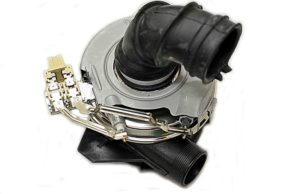 If the dishes remain dirty after a full dishwasher cycle, there's a chance the heating element is broken. In this case, it's important to check the dishwasher's heating element as soon as possible, as it's the heating element that most often breaks in dishwashers. How can you check the machine yourself and what should you do next?
Testing the thermistor and heating element
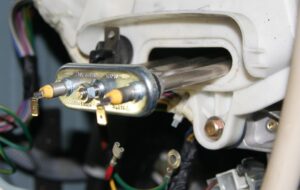
In addition to the water heating element, the temperature sensor can also fail, so it's always worth checking both components at once. You can test the temperature sensor not only with sophisticated professional equipment, but also with a simple inspection. Check all contacts and wires - if they are burnt or melted, then this is the problem. If there is no visual damage, then the dishwasher needs to be disassembled.
To check the functionality of the heating element and temperature sensor, you'll need a special tool—a multimeter. This incredibly useful device is a must-have in any homeowner's toolbox. With this measuring device, you can check the integrity of radio components, measure the voltage in electrical outlets, and test the functionality of the heating element and temperature sensor. Furthermore, a multimeter combines several essential tools: a voltmeter, an ohmmeter, and an ammeter. Let's get started with the tests.
- Let's start by checking the heating element, which requires setting the multimeter to ohmmeter mode. First, calculate the resistance of the heating element. This can be done by dividing 48400 by the power of the water heating element. Let's say the power of the element is 2.5 kW, then the resistance of the heating element will be 19.36 ohms.
You can find the dishwasher's rated power and other important specifications in the instructions, so never throw this document away.
- Now it's important to completely disconnect the device from the power supply, access the heating element, disconnect the wires, and touch the multimeter probes to the heating element's terminals. If the tester returns a value very close to the measured value—in our case, 19.36 ohms—the component is fine. If the value is 0, 1, or infinite, the component is broken and needs to be replaced.
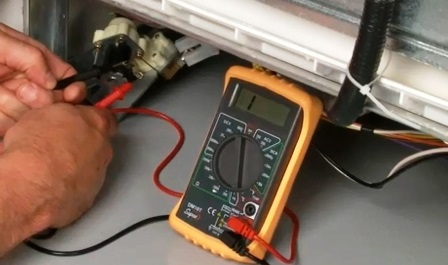
- Now set the tester to buzzer mode, as we'll be checking the heating element for current leakage. Place one probe on the power contact and the other on the housing or ground terminal. If the device remains silent, everything is fine, but if there's a short on the housing, the tester will beep.
- To check the insulation resistance, activate the megohmmeter mode, set the device to 500, attach the alligator clip to the dishwasher body, and place the probe on one of the heating element contacts. A normal value is 2 megohms or more.
- It's time to test the thermistor, which is commonly used in new dishwashers as a temperature sensor. Its resistance directly depends on temperature. Prepare a small pot of boiling water, switch your multimeter to ohmmeter mode, connect it to the temperature sensor's contacts, and check the resistance. After testing, place the thermistor in the pot—if the resistance increases significantly, everything is fine.
Modern heating elements often fail due to burnout of the coil and breakdown of the internal insulation. In this case, the dishwasher will begin to emit a painful electric shock, which is another sign that it's time to replace the heating element.
It is recommended to add regeneration salt to each wash cycle to prevent the water heating element from becoming coated with scale and to prolong its life.
If you have an Electrolux, Whirlpool, Bosch, Beko, Indesit, Znussi, or Hansa dishwasher, if it stops heating water, you'll have to replace the entire heating unit. This is because in these machines, it's impossible to replace a single tubular heater separately from the heating unit. In this case, replacing the heater will be much more expensive than replacing just the heating element.
How much does a new heating element cost?
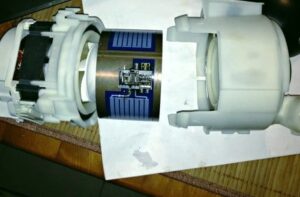
You can save money on replacing the water heating element by installing it yourself, but you won't be able to save money on buying a new one. Bosch and Siemens dishwashers are known for having the heating element built directly into the circulation pump, requiring the entire expensive part to be replaced.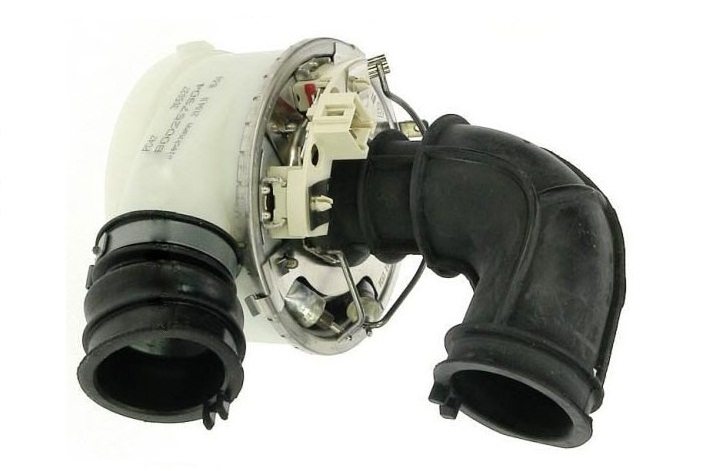
If desired, you can have the heating element repaired, which will cost approximately $30, but there is no warranty on the work. If it's not possible to purchase a separate heating element or repair the old one, the manufacturer recommends purchasing a new circulation pump with a built-in heating element. Such a part will cost at least $65 if you're lucky enough to get a discount and own a less expensive dishwasher model. If you're unlucky with the brand or discount, the family budget will be reduced by approximately $100.
In addition to the cost of the part, you should keep in mind the cost of the technician, who may charge an additional $30 to $50 for installation.
Thus, it becomes clear why many families are in no hurry to repair their old dishwasher, instead simply trading it in for parts and buying a new one. Given the current prices of budget dishwashers, replacing it with a new one will cost as much as repairing the broken one.
Interesting:


Readers' comments
Headings
Washing machine repair




For buyers




For users


Dishwasher




Add a comment