
How to check the lock on an Indesit washing machine?
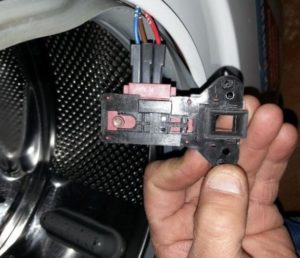 Each front-loading washing machine door is equipped with a door locking system that prevents accidental opening during the wash cycle. Without an electronic locking system, the drum could easily be forced open, causing a flood, short circuit, or worse. However, if the cycle ends and the washing machine remains locked and unresponsive, you should check the locking system of your Indesit washing machine. There's likely a system failure, a blockage, wear, or other damage to the locking system.
Design features of the sensor
Before diagnosing and repairing a lock, it's important to understand its mechanism and operating principle. Much depends on the type of lock. For example, older Indesit models were equipped with electromagnetic locks, which didn't require any special repairs. The problem is that the "magnets" immediately unlock when the power goes out, making them ineffective and no longer used in washing machines.
Modern Indesit machines have a different type of lock – a bimetallic one. Unlike its predecessor, this lock is more secure and prevents the door from being opened during a wash cycle. However, it is also more difficult to repair. The improved lock consists of the following components:
- thermoelement;
- bimetallic plate;
- retainer.
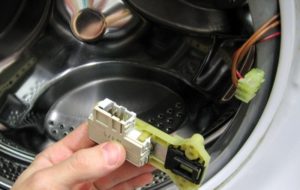
Modern Indesit machines are equipped with a lock with bimetallic plates and a thermal element.
The device works like this: the control board sends a current signal to the heating element, which heats up in a matter of seconds and conducts the charge to the plate. Due to the bimetallic base, the element expands and presses on the latch. The latch falls out and engages a protrusion in a special groove. Everything happens very quickly, and a distinctive click indicates the locking mechanism's final activation. If it sounds, the machine is closed and ready to fill the drum.
The door opens in a similar manner, but in reverse: the plate retracts when the power is cut off, the latch returns to its preset position, and the lock is released. There may be a slight delay, as the Indesit safety system often holds the latch until it verifies the tank is empty. Wait a few minutes and then press the door handle again.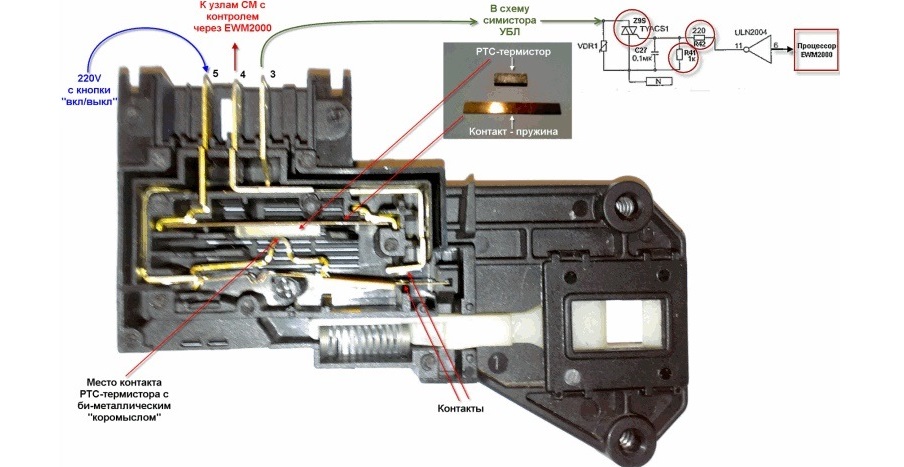
If the door still won't budge, there's a problem with the door lock system. We'll discuss the causes, consequences, symptoms, and necessary repairs for a faulty door lock below.
Why does the lock break?
Electronic locks fail primarily for two reasons. The first is wear and tear due to long-term use. More specifically, when heated, the bimetallic plate gradually deteriorates and breaks down, resulting in minimal loss of locking force. If this happens, repairs won't help; it's best to remove the old device and install a new one.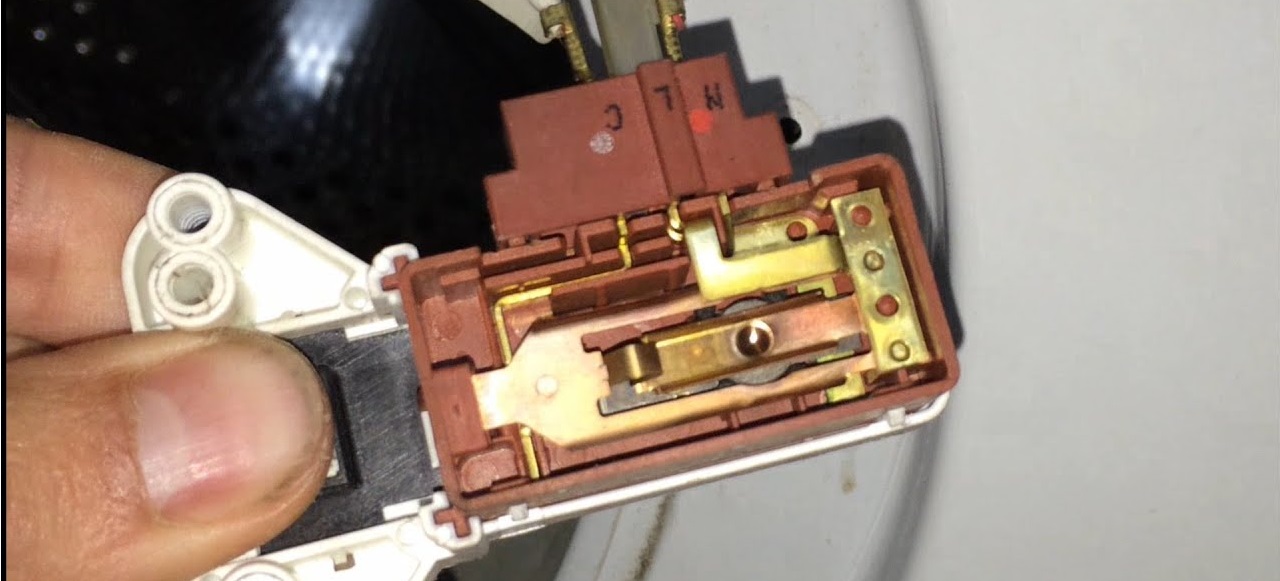
Problems with the washing machine's electronics can also cause a faulty lock. There are two possible causes:
- power surges in the network “break down” the thermoelement, which stops heating and starts a chain reaction on the plate and the retainer;
- The thyristor responsible for the UBL on the control board closes, the current supply to the blocker does not stop, and the lock is not released.
The UBL fails due to wear and tear or problems with the washing machine's electronics.
In addition to electronic problems, mechanical causes also cause the door to lock. So, the hatch will not budge if there is sagging, deformation of the door hinges, or a broken tongue on the lock itself. Therefore, it's forbidden to hang wet items on the door or allow children to "ride" on it. To accurately determine the nature and extent of the problem, it's necessary to conduct a proper diagnosis. This will make it easier to troubleshoot the problem and continue with the scheduled wash cycle.
Multimeter testing procedure
Typically, when problems arise with a machine's door lock, it's easy to guess that the door locking system has failed. With this "diagnosis," the machine will clearly indicate the nature of the problem. The following symptoms are present:
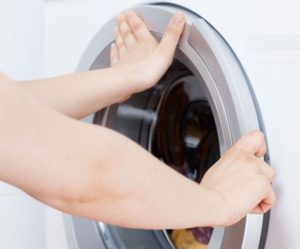
- the hatch does not open, although several hours have passed since the cycle was completed;
- the error code F17 appears on the screen or the Start/Stop button on the dashboard flashes 17 times;
- the door does not budge, even when the machine is disconnected from the power supply;
- When trying to start the cycle, the lock does not work and the wash does not start.
If any of the symptoms listed above are present, there's a problem with the door lock system. Most often, the problem lies with the device itself, the wiring connected to it, or the washing machine's control board. A multimeter test will help determine the cause more accurately.
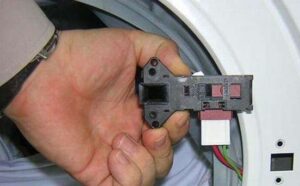
Before starting diagnostics, we study the electronic circuit diagram of the existing washing machine. It is important to find out where the neutral, common contact, and phase are located. Next, you need to remove the UBL itself from the machine. Here's how to do it.
- We disconnect the washing machine from the supplied communications.
- We open the door.
- We unscrew the bolts holding the UBL.
- We unscrew the two bolts at the back that secure the top cover of the machine.
- Push the cover away from you until the latches engage and remove it.
- We run our hand down towards the UBL (to the right of the cuff).
- We disconnect the wiring connected to the UBL and, holding it with the other hand, we take out the device.

Next, take a multimeter, turn on the "Resistance" mode, and attach the probes to the "neutral" and "hot" terminals. If the display shows a three-digit number, proceed to the second step; if it shows less, immediately replace the locking device with a new one. Next, connect the "empty" wire to the common terminal, and the second wire to the "hot" terminal. Use a screwdriver to slide the locking device's locking mechanism into the working position and connect it to the power supply. A working device will click, while a broken one will not.
We determine the fault without disassembling the machine
You don't have to disassemble the machine to diagnose a faulty locking system. Sometimes, you can diagnose a faulty locking system remotely by observing the machine's behavior. The key is to understand the machine's design and how its components operate. As a rule, a damaged electronic lock reveals itself through several “symptoms”.
- If the washing machine door remains locked for several hours after the machine is disconnected from the power supply, the door lock is faulty.
- If, when starting a cycle, an error code appears on the display indicating problems with the door lock (on most Indesit models, the combination “F17” indicates a faulty lock).
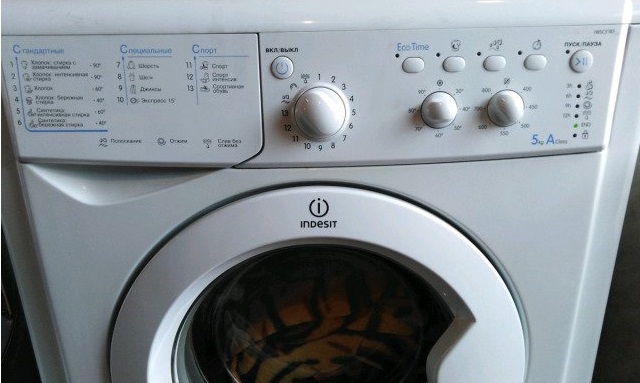
- If the washing machine doesn't lock the door after selecting a program, either the electronic lock or the control board is faulty. The multimeter test described above will help determine the culprit.
! The Indesit washing machine self-diagnostic system displays the error code "F17" when there is a problem with the door lock.
The door lock provides double protection, preventing anyone from opening the door when the tank is full. If the lock malfunctions or cannot be removed or installed, immediate diagnostics and troubleshooting are required.
Interesting:

Readers' comments
Headings
Washing machine repair




For buyers




For users


Dishwasher




Add a comment