Checking the shock absorbers on an Indesit washing machine
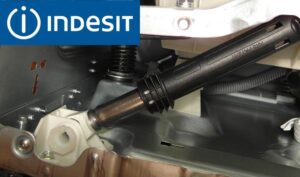
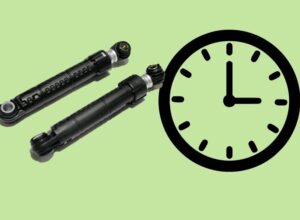
Often, a breakdown in a large household appliance can be detected with the naked eye. If your "home helper" starts making strange noises, bouncing, or vibrating excessively while operating, something is clearly wrong. This likely means you'll need to first check the shock absorbers on your Indesit washing machine, and then replace or repair them. We'll explain in detail what to do.
We dismantle suspicious parts
The main thing is not to rush into repairs and purchasing new spare parts, because first of all you need to make sure that the problem actually arose due to faulty shock absorbers. This can be done by partially dismantling the washing machine, which is easy to do yourself if you follow our instructions.
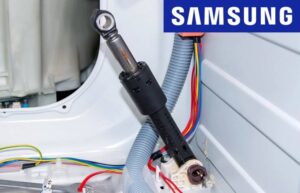
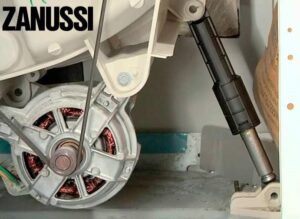
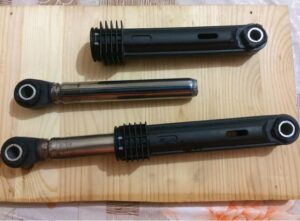
Because the shock absorbers are located underneath the washing machine, directly beneath the drum, the easiest way to access them is through the bottom of the appliance. To do this, disconnect the appliance from all power sources and carefully lay it on its side. The shock absorbers are held in place by special plastic clips at the ends of the posts, which should be removed with pliers. If you can't loosen the parts, try lubricating them with a commercial lubricant, such as WD-40.
Be sure to observe safety precautions when removing and inspecting the shock absorbers. Avoid applying excessive force to the fasteners, using a hammer or other heavy tools, and handle the internal components of the system carefully to avoid accidentally damaging the struts or any adjacent components, such as plastic tankTo determine if your shock absorbers are faulty, you need to do the following:
take the stand in your hands;
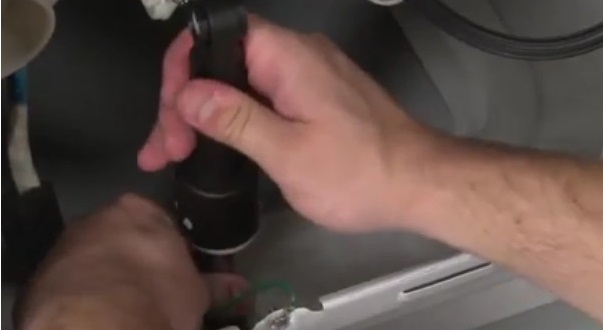
gently press on the rod;
try to pull it out of the body of the part;
The stand must create tension, the strength of which you must determine.
Under normal circumstances, compression should occur at an average force of 8 to 10 kilograms.
When the rod slides without visible obstruction or even pops out of the housing, it's damaged. In this condition, it can no longer effectively absorb vibration, so the user risks damaging not only the expensive appliance but also the flooring and any objects near the machine.
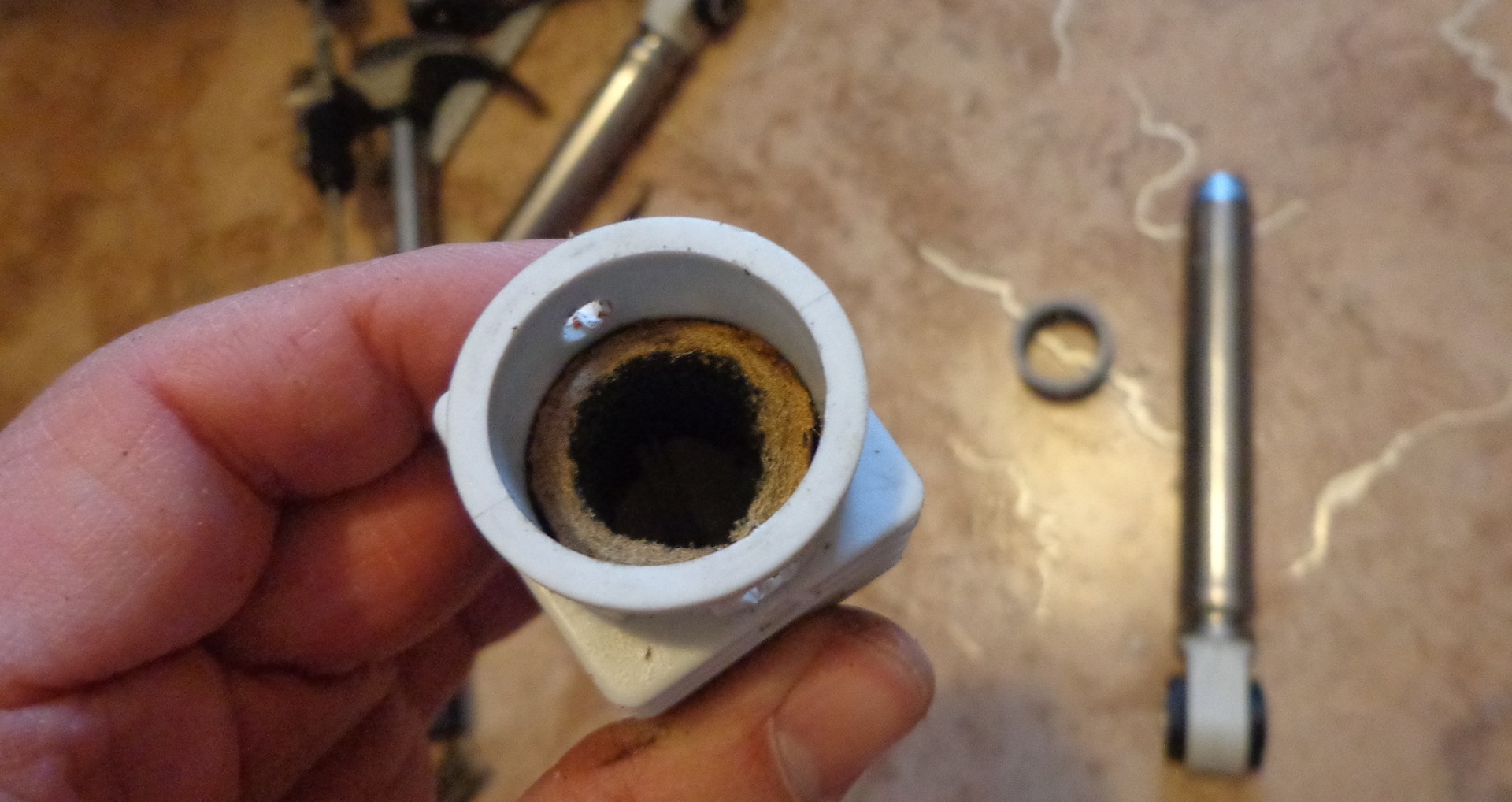
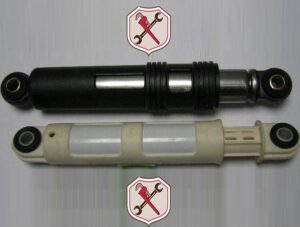
Additionally, the struts themselves should be examined, paying close attention to the piston and the presence of shock absorber grease. A lack of fluid indicates that the component is worn and requires refurbishment. The same can be said if traces of rust are found, which should not be present in the shock absorber system.
We are replacing a faulty shock absorber
If you've thoroughly inspected the shock absorber and determined that it's no longer functioning properly, you need to replace it. It's best to purchase genuine spare parts, as they may be more expensive but last much longer. This will also avoid the hassle of finding a part that fits your needs.
If you don't want to wait long for the original, or for some reason can't find one, you can buy a damper from a washing machine from another brand. In this case, the component must have similar dimensions, the same mounting type, and the appropriate resistance.
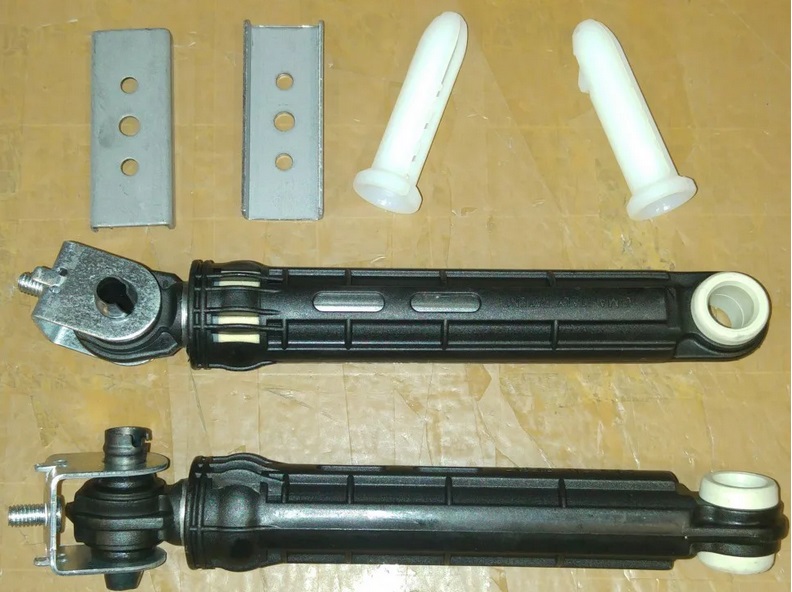
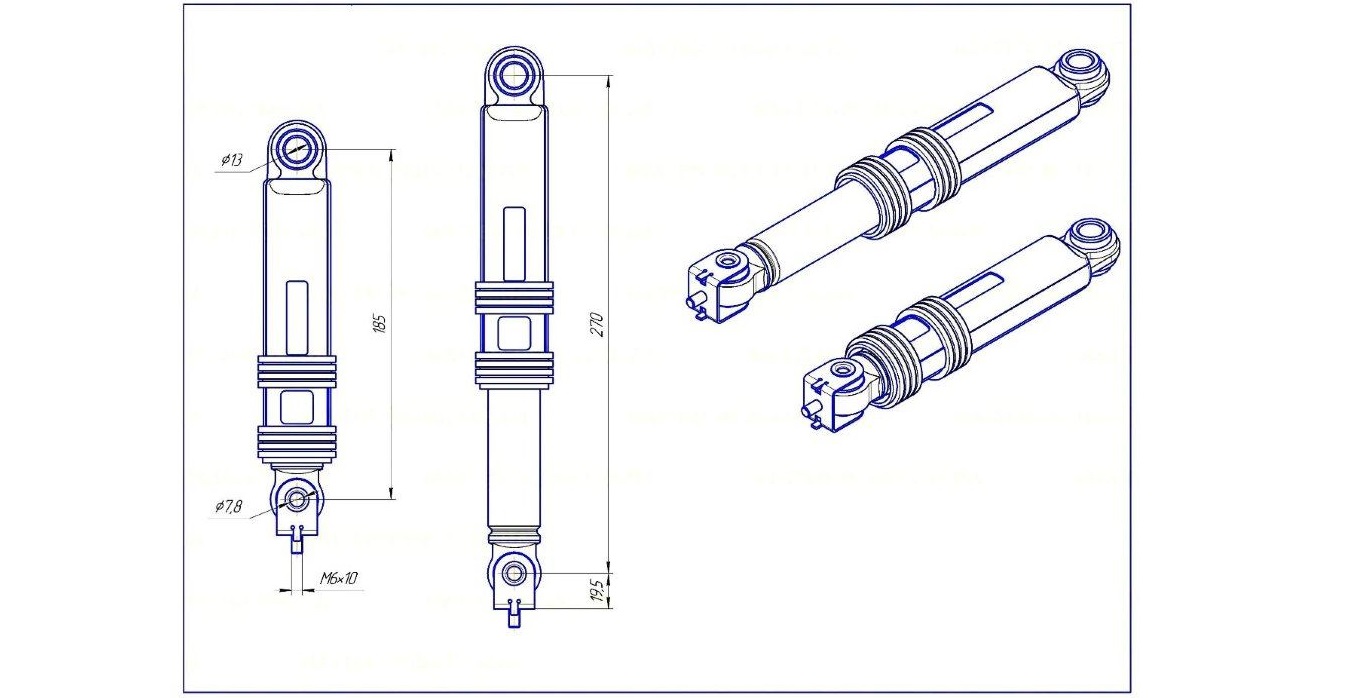
It is very important that the part matches its dimensions. Be sure to measure the length between the mounting axes, not only in the compressed state, but also in the free position.
Next, it's important to ensure the fasteners are compatible with your machine. These can be latches, plastic pins, or bolts.
Finally, check the resistance, which should be between 80 and 120H. This can be verified using an old shock absorber, carefully inspecting the housing to determine the values indicated on it.
After purchasing a new unit, all that's left to do is install it in place of the faulty one. After replacement, be sure to reassemble the "home assistant" in reverse order and run an idle cycle to ensure the problem with extraneous noise and excessive vibration has been resolved.
Or maybe it would be better to repair the shock absorber?
Users don't always replace shock absorbers, often attempting to refurbish them. This makes sense, as it saves you time and money searching for an original spare part. However, there's no guarantee that the problem won't soon return. If you decide to repair the component instead of replacing it, at your own risk, follow our instructions.
Measure the diameter of the bushing hole, for which you will need a caliper.
Using your measurements, cut a piece of rubber at least 3 millimeters thick. Alternatively, you can use a brake pad or a piece of an old leather belt.
Install the resulting piece in place of the seal removed from the part. Make sure the edges of the replaced gasket align.
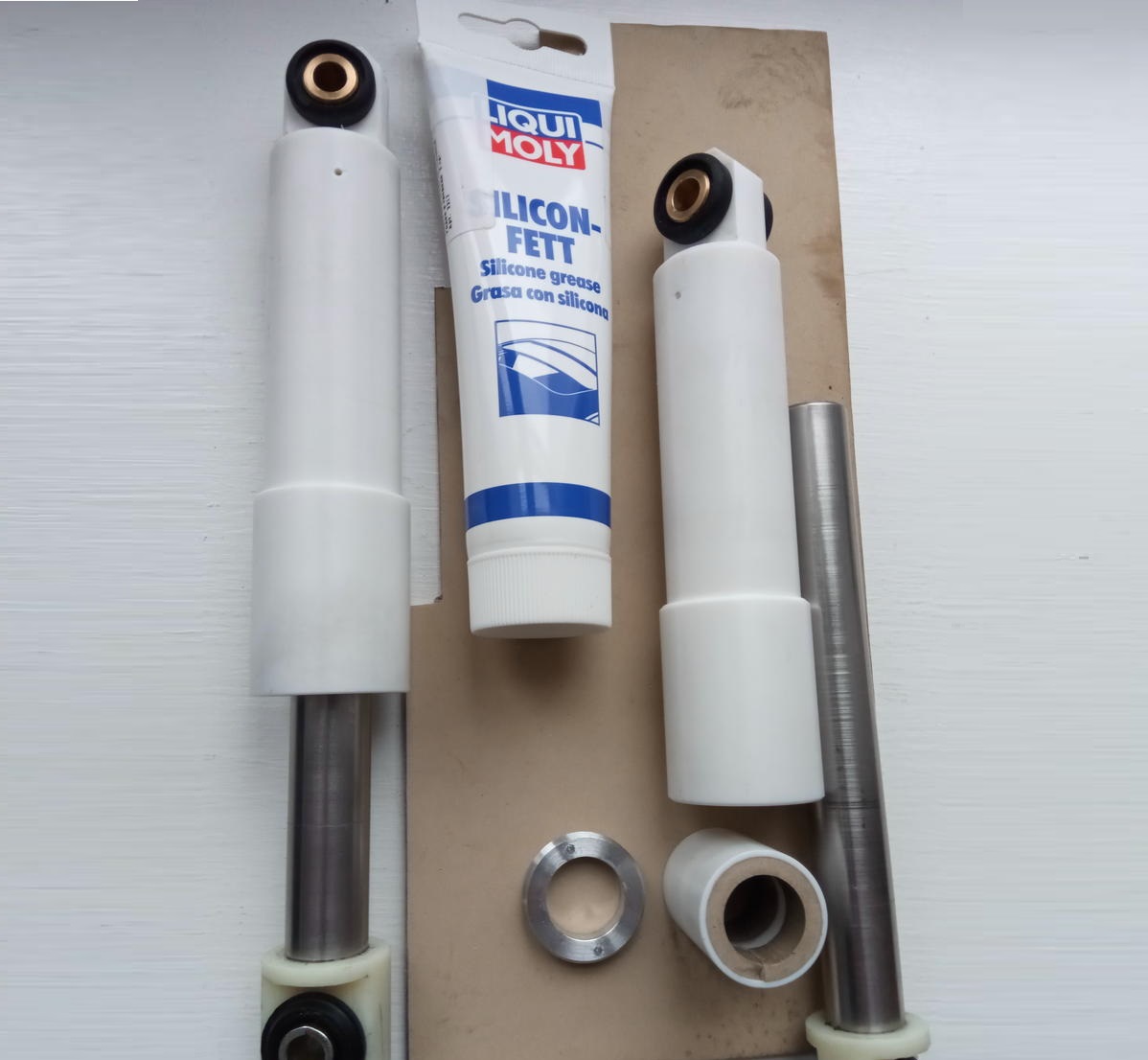
Generously lubricate the part with technical grease.
Install the damper rod into the seat.
The part should be lubricated immediately before inserting the piston rod. Use only lubricants that are highly resistant to high temperatures and moisture, and have excellent viscosity properties.
What will we lubricate the damper with?
It's not enough to simply thoroughly diagnose a household appliance, disassemble it, remove the faulty damper, and then replace it with a new one. You also need to secure the results with high-quality lubrication, which is just as important as the part itself. An example of incorrectness is Solidol and the widespread WD-40, which is not suitable in this situation. Let's list some good options that can be used to treat the damper.
PMS-250000 damping grease was developed to create viscous friction during tension adjustments on tape decks, tonearm lifters on turntables, and cassette mechanisms. It's also ideal for lubricating dampers in washing machines. The product comes in small packages, which, despite their size, are sufficient for several uses. Another advantage is the absence of a strong odor.
PMS-600000 Damping Grease. An improved formula of the previous product from our top list. It features increased viscosity, ensuring even smoother movement of components, even more effective noise reduction, and extending the lifespan of lubricated parts. This grease is typically used for tape recorders, doors, and furniture, but it is also ideal for automatic washing machines.
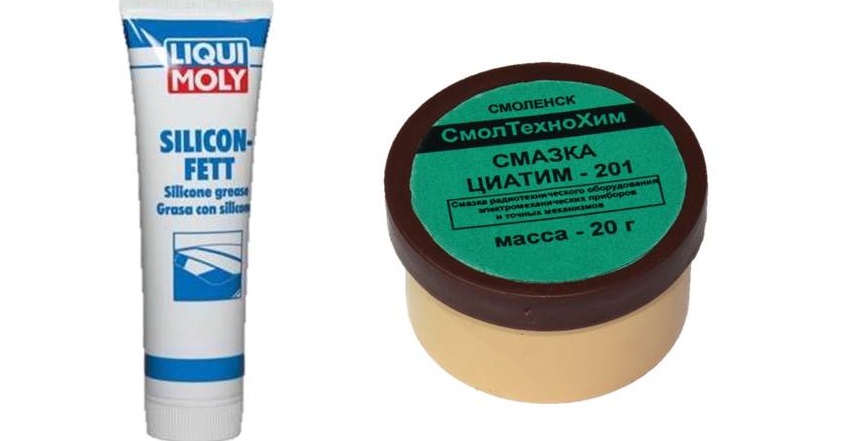
Silicon-Fett silicone grease from LIQUI MOLY. This product, originally not designed for Indesit washing machines, is perfectly suitable for them. Service stations use it to apply to contact areas with plastic and rubber, as well as various joints, guides, and connections in cars. At home, it can be used to treat seats, door hinges, rods, and parts of large appliances to eliminate squeaks and protect components not only from drying out but also from direct sunlight. Sold in small 0.1- and 0.05-liter containers, the grease adheres securely, prevents moisture penetration, is resistant to low and high temperatures, and extends the lifespan of the treated parts.
MS SPORT VMPAUTO silicone grease with fluoroplastic effectively protects components from moisture, electricity, UV rays, dirt, and high friction. This product adheres securely, withstands temperatures from -50 to +230 degrees Celsius, has a safe, non-toxic formula, does not deform, and leaves no residue. It is designed not only for household appliances but also for cars, sports and camping equipment, air guns, and much more. This product is manufactured in the Russian Federation and is sold in 400-gram packages.
You can lubricate the dampers in washing machines with other products than those listed above. The main thing is that the lubricant is a waterproof silicone-based compound and provides reliable protection against friction.
Never skip the final step of replacing damaged shock absorbers. Applying a high-quality lubricant extends the life of the dampers by preventing premature wear.

 Often, a breakdown in a large household appliance can be detected with the naked eye. If your "home helper" starts making strange noises, bouncing, or vibrating excessively while operating, something is clearly wrong. This likely means you'll need to first check the shock absorbers on your Indesit washing machine, and then replace or repair them. We'll explain in detail what to do.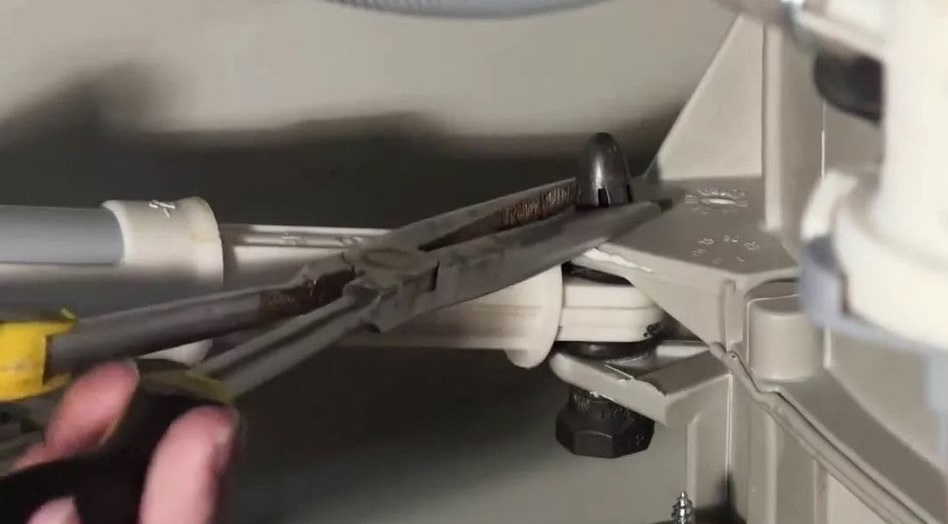














Add a comment