
Which washing machine is better: direct drive or belt drive?
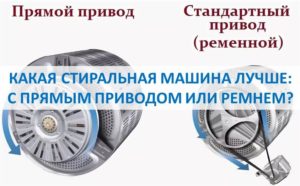 The presence of an inverter motor without a pulley or drive belt is a serious selling point for many buyers when purchasing a washing machine. Manufacturers lavishly extol their countless advantages, urging consumers to avoid traditional automatic drives and quickly replace "old" models with modern ones. Whether replacing them makes sense, what are the real differences between washing machines, and which one—direct drive or belt—to buy—is discussed below.
Let's compare two types of machines
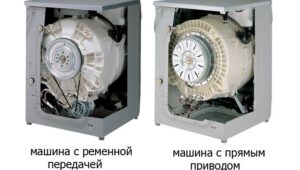
For those unsure about the difference between a belt drive and a direct drive, we'll explain. The main difference concerns the method of transmitting power from the motor, that is, how the drum rotates in the machine. There are two options: directly from the electric motor or via a drive belt. We'll briefly describe each.
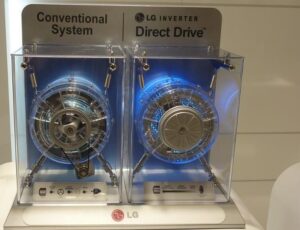
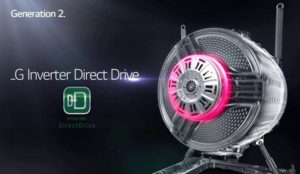 Direct drive means the rotor is directly connected to the drum axle. There is no belt system, but a special clutch is used instead. There are no brushes on the motor surface, as they are completely unnecessary. This technology is called “Direct Drive” because the inverter motor directly rotates the tank, and the rotation frequency is set by electromagnetic waves from the control board. Moreover, being under the hatch, the engine “reads” the weight of the loaded items and automatically adjusts the appropriate power.
In the second case, the drive belt connects the drum pulley to the motor, allowing the drum to rotate and stop. Rotation occurs smoothly due to the elasticity of the connecting rubber element, and speed regulation depends on the motor type. A commutator-based system requires a tachogenerator to control the rotational force, while special brushes smooth out friction and limit current transfer.
An asynchronous motor does not have such additions, is used in only 20% of household appliances, is inexpensive, and has a stationary stator and a rotating rotor, the operation of which is automatically configured to repeat three phases at a certain number of revolutions.
It's impossible to say for sure which washing machine performs better and lasts longer between repairs. One thing is clear: don't blindly trust advertising: each has its advantages and disadvantages. We'll discuss all the pros and cons in more detail below.
Why promote direct drive?
It's pointless to argue: well-known brands fervently praise their inverter-based protégés in commercials, comparing the endless advantages of modern machines with the shortcomings of traditional drives. The reason for this praise is simple: the manufacturer is trying to promote a more expensive product and stay ahead of the competition. But the impression one gets about these high-end models is not entirely accurate, as they are not without their weaknesses, are prone to breakdowns, and are not much better than traditional models.
Let's begin our analysis by looking at the "advantages" of automatic machines with a drive belt:
- affordable price;
- average trouble-free service life – up to 15 years;
- the entire load falls on the belt, which can be replaced inexpensively and quickly (about 20 minutes);
- If the laundry is unevenly distributed in the drum, the belt can act as a shock absorber.
The main thing is that such models have been proven over decades of mostly trouble-free operation. Now, about the disadvantages. These include a smaller tank size due to the need to fit the belt system inside the machine, as well as increased noise levels and the regular replacement of constantly wearing out electric brushes and belts.
Advantages of machines with a new drive
It's difficult to find real reviews from consumers who have tried direct drive. Most comments repeat advertising slogans. Taking all the information available, we see that direct drive machines have the following advantages.
- Compactness with a larger capacity. This is quite likely, as the absence of a belt, brushes, and pulley allows for a larger drum while simultaneously reducing the size of the housing.
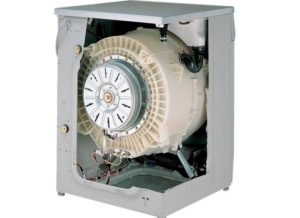
- A ten-year engine warranty is debatable, as other automatic transmission components can fail in addition to the engine.
- Reduced noise and vibration levels. However, the reduction is only marginal, as the rustling sound of the constantly running belt is replaced by the excessively noisy intake and discharge of water.
- Cleaning efficiency. The inverter motor's enhanced capabilities, including quick stops and reverse rotation, are said to clean laundry more thoroughly and combat even the most stubborn stains. Comparisons are difficult, as traditional washing machines have had few complaints.
- Accelerated washing. The previously mentioned rapid operation of the inverter motor allows for faster cycle times, saving a small amount of time.
- Energy saving. By eliminating some elements from the rotation chain and the ability to automatically control the required power by “reading” the weight of the loaded laundry.
- Malfunction diagnostics. The Direct Drive system can signal an overload of laundry by displaying an error message, refusing to start a cycle, or causing the control panel lights to flash erratically.
In traditional machines, things are different – the wash will start and stop due to a burnt or broken belt from excessive load.
There are many advantages, but it's important to understand that most of these benefits are relative and don't depend on the drive type. With high-quality factory assembly, proper operation, perfect installation, and the right choice of detergents, even a belt-driven washing machine will wash well and remain quiet. So, let's take our time and compare specific models.
Disadvantages of "new" cars
Another factor in deciding which of the available options is the weaknesses of direct-drive automatic transmissions. They exist, and they're worth considering.
- High cost. This applies to both the machine itself, as well as the components and repairs.
- Dependence on uninterruptible power. An inverter motor is controlled by electronics, which are extremely vulnerable to power surges. It's better to be on the safe side and connect a stabilizer to the device.
- Leaking oil seal. With a direct transmission, the engine is located directly under the tank, and if the oil seal isn't replaced in a timely manner, leaks often occur. Water entering the engine can cause damage, including complete burnout. The warranty does not cover such a malfunction, and you will have to pay for expensive repairs out of pocket.
- Rapid bearing wear. Without a belt and pulley, the entire load from the rotating drum is transferred to closely spaced bearings. This increases wear and tear and requires regular replacement.
It's possible that the aforementioned shortcomings are temporary and are due to the hasty and poorly thought-out transition from belt to direct drive. It's highly likely that manufacturers will address all these weaknesses in the future. For now, inverter machines are too expensive and extremely unreliable, as a simple leak can lead to significant financial losses.
The cost of machines with different types of drives
A comparative review of specific models will help you make your final decision between a belt drive or a direct drive. We compared washing machines with similar technical specifications to clearly demonstrate the significant impact an inverter motor has on market price. For the sake of integrity, we selected identical manufacturers for the experiments. Here are the results.
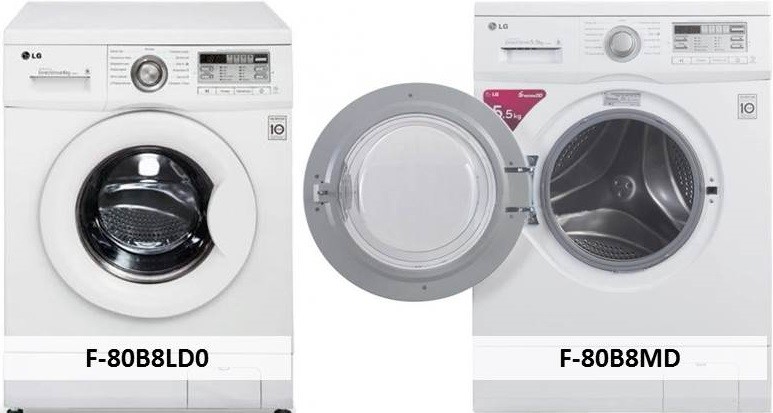
LG. The F-80B8LD0 and F-80B8MD front-loading washers have a 5.5 kg capacity, electronic controls, identical dimensions (60 x 44 x 85 cm), Class A+ energy efficiency, Class A wash efficiency, and a spin speed of up to 800 rpm. Other features are also similar: up to 15 programs, a 19-hour delayed start, identical functionality, and the same body color. The former features a direct drive and costs around $250, while the latter, with a belt, is priced between $210 and $230.
Hotpoint-Ariston. These washing machines feature a maximum load capacity of up to 7 kg, a digital display, high washing efficiency, and low energy consumption – the RST 702 X and VML 7023 B. They offer a spin speed of up to 1000 rpm, 16 modes, and equal power output in other aspects. Prices vary significantly: direct-drive models start at $200, while belt-drive models start at $160.
Bosch. The WAT 28541 and WAW 28740 models differ only in the drive type. Other specifications, including a door capacity of up to 9 kg, digital display, size, efficiency classes, and consumption ratings up to a 1400 rpm spin, are identical. The price also varies: 47,000-50,000 rubles with a drive belt and from 70,000 rubles without one.
It's easy to see that newer units are more expensive than their traditional counterparts, and the more sophisticated the model, the higher the premium. Whether the extra cost is worth it is up to each buyer to decide. We recommend carefully weighing the pros and cons.
Interesting:
7 reader comments
Add a comment
Headings
Washing machine repair




For buyers




For users


Dishwasher




If the seal leaks, water does not reach the motor.
The difference in price is not very big.
Yes, it seems to be the exact opposite. I saw that the same Bosch with a belt drive was more expensive than the LG with a direct drive. You're confused, author. Hmm, 2019. Strange. Are you sure you go to large chain electronics stores and check the prices? I have my doubts.
Everything is said correctly.
Inverter motors don't exist in nature. There is inverter motor control.
I disagree. For example, a belt that's tight enough, even if it's pulled toward the floor, creates additional pressure on the bearings. In indoor use, not only does it create asymmetrical rotation without the axle loads of a belt-driven machine, but it also tends to self-center the drum axle. Every washing machine these days has electronics and processor control. That's why both are unreliable. The problem is that inverter machines have more electronics, which is why they're less reliable.
I bought an LG with direct drive, and I really liked it at first. Now I don't, I'm going back to the regular one; the bearing is starting to make noise.