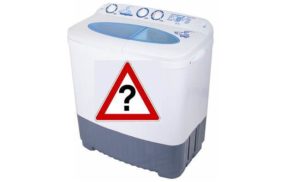
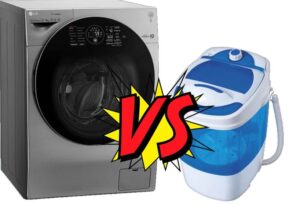
Semi-automatic washing machines are clearly inferior to modern automatic washing machines in terms of functionality and convenience. However, they continue to be produced because they are cheaper and don't require central utilities. They're an excellent option for a summer house or country home. Washing with older machines is more difficult—they require more hands-on experience and knowledge. To avoid confusion, let's look at how a semi-automatic washing machine works and the different types available.
How does a semi-automatic machine work?
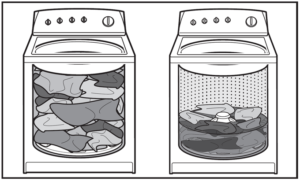
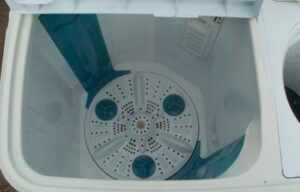
The design and operating principle of the semiautomatic machine are quite simple. The machine itself consists of a large tank with a motor. As soon as the user selects the “Wash” mode using the mechanical programmer, the motor begins to spin the activator – a circle with longitudinal bulges-blades. As the spinner rotates, the activator "ribs" constantly "stir" the laundry and foam the detergent. Ultimately, the fabric is washed clean.
Semi-automatic washing machines don't have a pump. The drainage system consists of a valve and a drain hose, but there's no pumping system—the waste liquid drains away by gravity. The user simply needs to switch the programmer to the "Drain" position, which opens the valve flap.
Semi-automatic washing machines are equipped with an activator – a circle with convex “combs” that are spun by a motor.
The main problem with semi-automatic machines is the lack of a transition from wash to rinse. To rinse the laundry, you need to perform a series of steps:
drain dirty water;
rinse the tank with the items in it with plenty of clean water;
empty the tank again;
rinse the items again (repeat until the foam has completely left the tank);
drain the water;
collect clean water;
start the washing mode.
Another option is to transfer the washed items to a bathtub filled with water, rinse them, and then immediately spin them. This will reduce the washing time, but the process will be more labor-intensive. You'll have to haul the heavy items around several times.
The second difficulty concerns filling the drum with water. A semiautomatic machine can be connected to a central water supply, but more often than not, water must be drawn manually. You need to heat a bucket with a kettle, dilute it with cold water, and fill the drum.
The best semi-automatic washing machines
Semi-automatic washing machines have been serving people for over 30 years, but their design hasn't changed much. Modern washing machines remain just as inexpensive, reliable, and easy to operate. However, the range has expanded significantly, with manufacturers producing more models with varying features and prices. Let's take a look at the most popular ones.
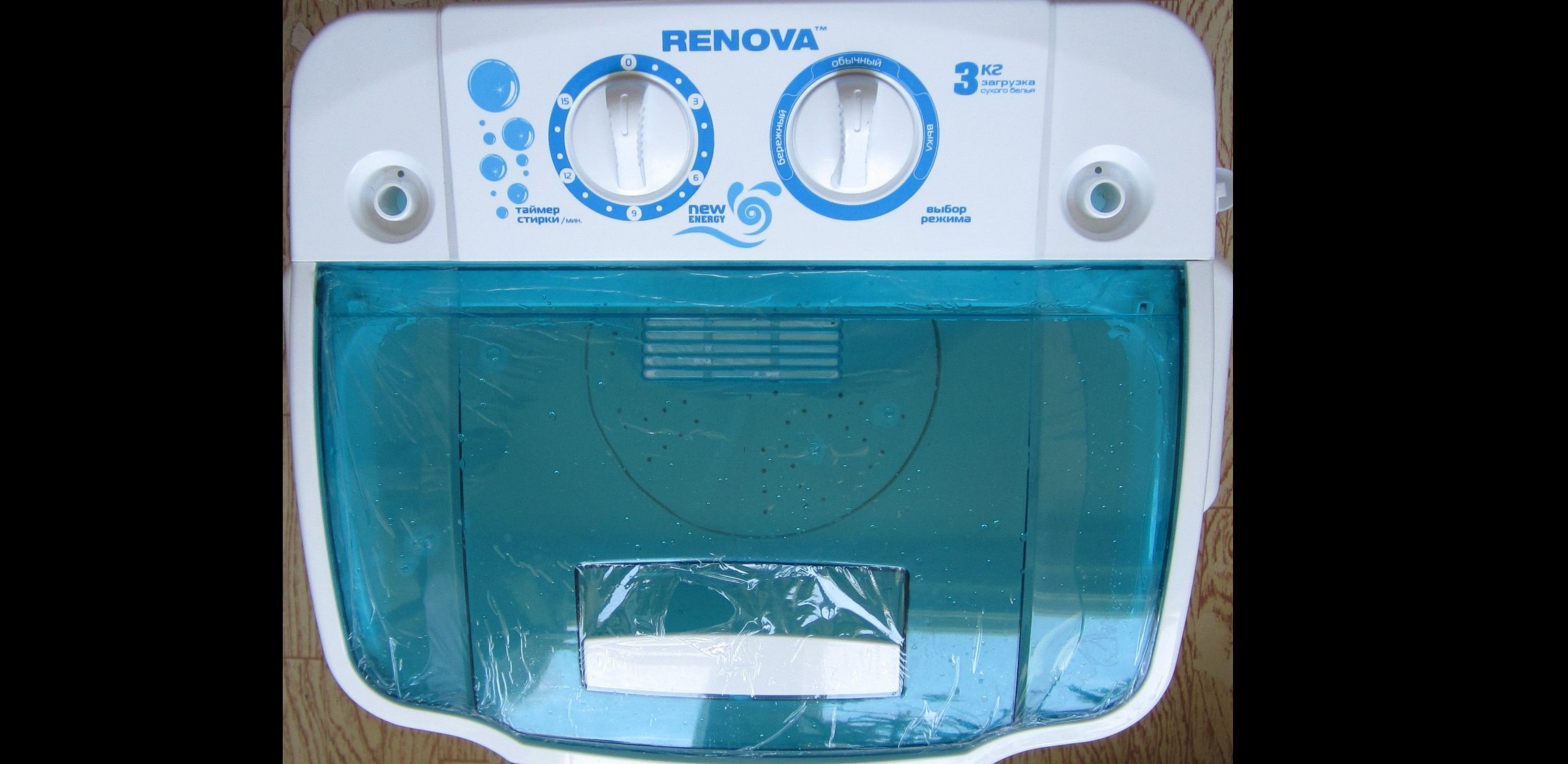
RENOVA WS-30ET. This freestanding, top-loading, actuator-operated washing machine holds up to 3 kg of laundry. If you need to add more laundry after the cycle has started, you can open the top lid and drop it into the drum. The washing machine is controlled by a mechanical programmer, ensuring a long service life. The machine measures 41 cm wide, 33 cm deep, and approximately 64 cm high. Prices start at $40.
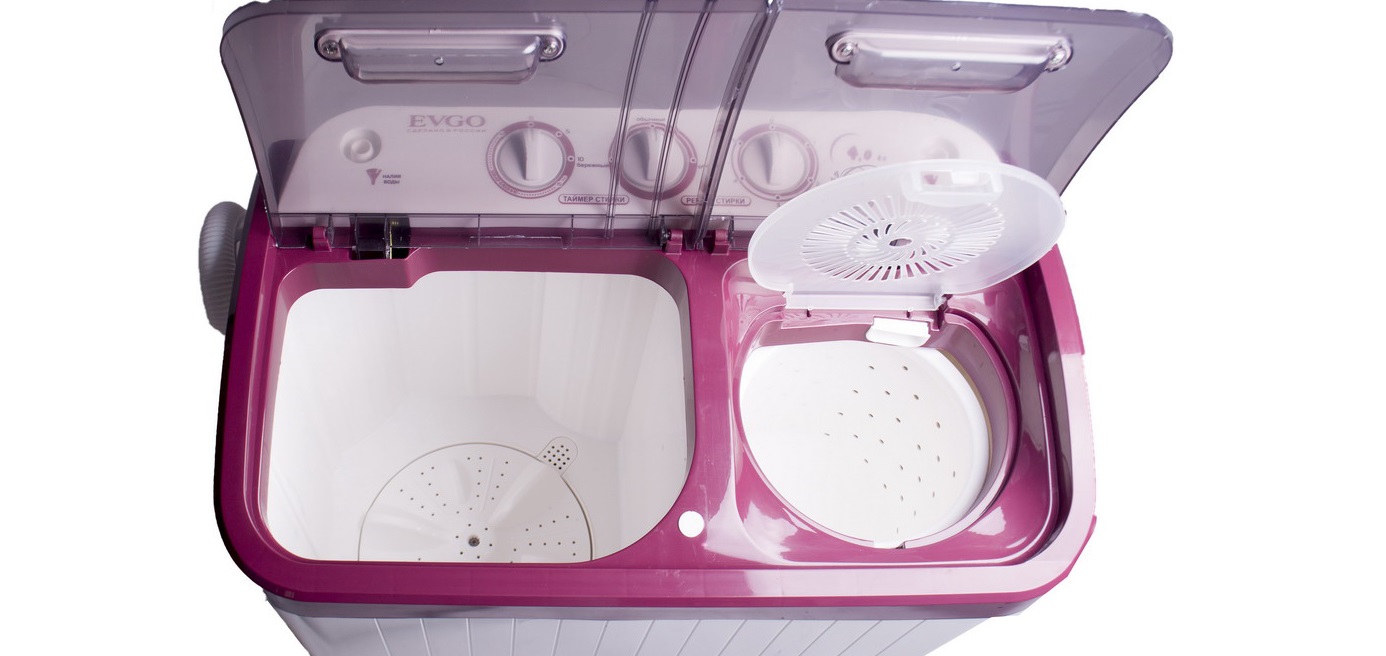
Evgo WS-30ET. This white and maroon washing machine features a top-loading actuator. It washes up to 3 kg of laundry at a time, is mechanically controlled, and has standard semi-automatic dimensions. You cannot add items to the tank after the cycle has started - lifting the lid turns the program off. In addition to the regular wash cycle, there's a delicate cycle. It costs $42.90.
In semi-automatic washing machines, laundry is placed into the drum through the top lid.
The RENOVA WS-50 PET is an improved semi-automatic machine equipped with a drain pump and a hot water connection. While the controls remain mechanical, the tank has been increased in capacity, allowing it to wash up to 5 kg of laundry per cycle. Additional laundry can be added. It also features a centrifuge, which can spin up to 4.5 kg at a time. Price: $86.90.
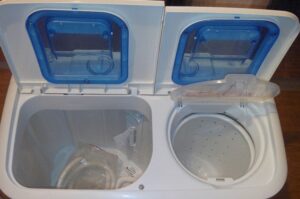
Evgo WS-40PET. Another "double" semi-automatic washer with a built-in spinner. The WS-40PET's wash tank holds 4 kg of laundry. In addition to the main wash program, there's a second program for delicate fabrics. It features a refill function and a white and maroon exterior with transparent top covers. Price: $63.90.
The Snow White XPB 3000S is a model distinguished by its blue body and transparent wash tub. This single-stage semi-automatic washer has a maximum load capacity of 3 kg and mechanical controls. There's no option to add laundry after the program starts or select a gentle cycle. The rated power consumption is 250 W, the estimated service life is 5 years, and the price is $37.90.
VolTek Princess SM-1 Blue. This compact semi-automatic machine is 34 cm wide, 30 cm deep, and 45 cm high. The drum holds up to 1 kg of laundry and approximately 1.5 buckets of water. The sides are transparent and have a blue tint. The machine has one program lasting approximately 15 minutes. There is no spin function. Prices start at 4,000 rubles.
VolTek VT-SMP4DRU. A compact washing machine with a spin-drying function. It features low noise, a reverse spin cycle, and an optimal 4 kg drum capacity. It features a classic design, white paint and transparent windows on the top panels. It has a mechanical programmer, and reloading is done through the main door. The machine is 68 cm wide and costs approximately 9,000 rubles.
Bravo WMM-72PT. A spacious 2-in-1 activator machine with a maximum load of 7.2 kg. In addition to the washing tank, there is a centrifuge that spins the laundry until it is almost dry. The tank's large capacity gives it impressive dimensions: 77 cm wide, 43 cm deep, and 86 cm high. There's no delicate program, and refilling is possible through the top lid. It costs around 9,500 rubles.
Semi-automatic machines are the best option for a summer house or a private home. They're more difficult to wash, but still easier than doing it by hand.

 Semi-automatic washing machines are clearly inferior to modern automatic washing machines in terms of functionality and convenience. However, they continue to be produced because they are cheaper and don't require central utilities. They're an excellent option for a summer house or country home. Washing with older machines is more difficult—they require more hands-on experience and knowledge. To avoid confusion, let's look at how a semi-automatic washing machine works and the different types available.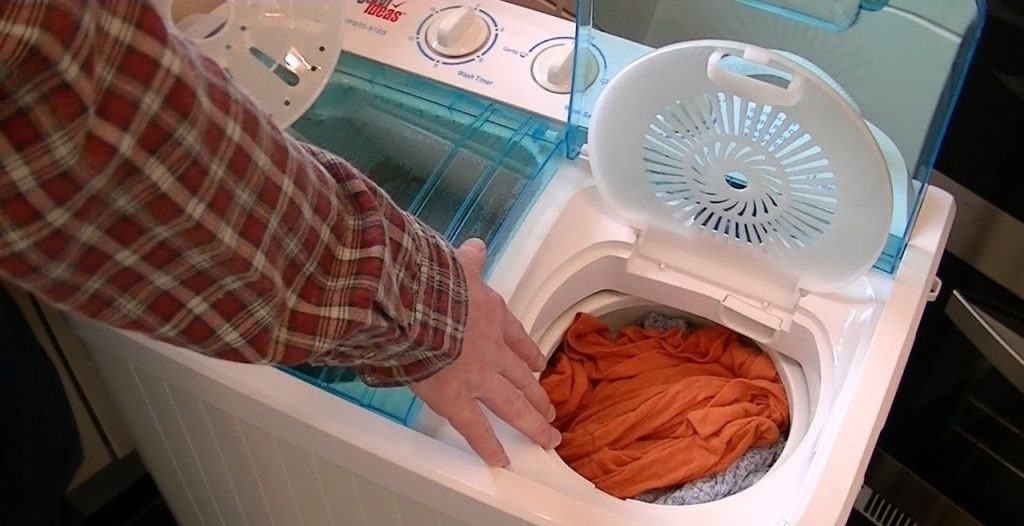














Add a comment