
Consumption of washing powder per 1 kg of laundry in an automatic washing machine
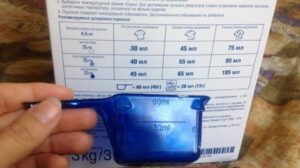 Some people don't even consider the amount of detergent per kilogram of laundry when loading laundry into the drum of their washing machine. They simply add as many granules as will fit in the dispenser and calmly start the cycle. However, this approach is not ideal. Using too much detergent will prevent it from being rinsed out, leaving streaks on the fabric. Furthermore, excessive foaming is dangerous for the machine itself and can even cause damage. Let's figure out how much detergent is needed per cycle and how to calculate the dosage.
How much detergent do you need?
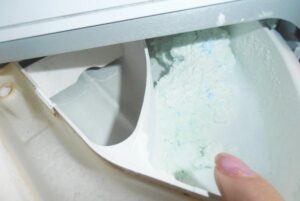
If you overfill the washing machine, soap stains will remain on the fabric, and undissolved granules will settle on the inside of the machine. Furthermore, the clothes won't wash properly, and stains will remain. When calculating the dosage of cleaning agent, you need to compare the weight of the laundry being loaded, the intensity of its contamination, the temperature and duration of the cycle, and the water hardness.
Calculating the optimal dosage may seem complicated at first. Once you get used to it, it won't be a problem. So, let's figure out how much detergent is needed for different types of laundry.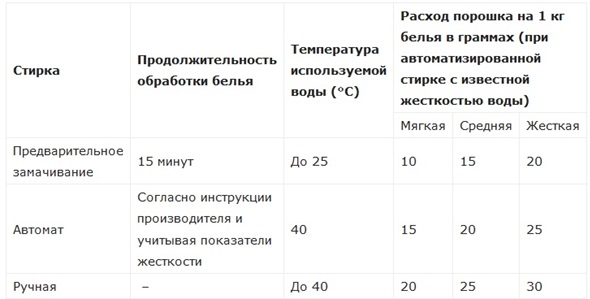
- Pre-wash. The laundry is tumbled in the drum for about 15 minutes, at a temperature typically no higher than 25°C. Detergent consumption will vary greatly depending on the quality of your tap water. For soft water, use 10 grams per 1 kg of laundry; for medium and hard water, use 15 and 20 grams, respectively.
- The main automatic cycle. Here, the washing time will vary depending on the selected mode. For example, at a washing temperature of 40°C, 15, 20, or 25 grams of dry granules per 1 kg of clothes is sufficient for soft, medium, and hard water, respectively.
- Hand wash. This method requires more detergent. If your water is soft, 20 grams of detergent per 1 kg of laundry is sufficient. If your tap water is moderately hard, 25 grams is sufficient. If your tap water is very hard, 30 grams is sufficient.
You should focus on the average consumption of powder when washing items without stubborn stains.
If there are stubborn stains on your laundry, you'll need to add more detergent to the detergent dispenser. Additionally, you may need to treat the stained areas with stronger detergents.
The presence of impurities in the water and ingrained stains
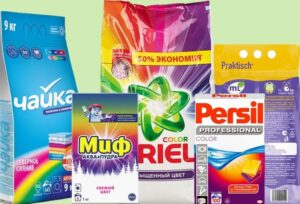
The easiest way to figure out how much granules to add to the detergent dispenser is to read the information on the packaging. The manufacturer specifies the optimal dosage for different washing parameters. For example, the recommended dosage for most mass-market detergents (Tide, Dosya, Persil, Mif, Ariel, Sorti, Ushasty Nyan) is as follows:
- if the laundry is not heavily soiled – 150-200 grams per cycle;
- for heavily soiled items – 225-250 grams of granules.
When the water is particularly hard, detergent manufacturers recommend adding an additional 20 grams of powder to the "norm."
While it's important to read the information on the packaging, it's not recommended to follow it blindly. It's clear that the manufacturer intentionally overstates the dosage—this will cause the product to run out faster, meaning the user will have to go back to the supermarket for another pack. During various experiments, it was found that when washing, it is enough to add 25 grams of powder per 1 kg of laundry. So, if you load an automatic washing machine with 5 kg of laundry, you only need 125 grams of detergent in the detergent drawer. As you can see, this is less than the "standard" recommended by household chemical manufacturers.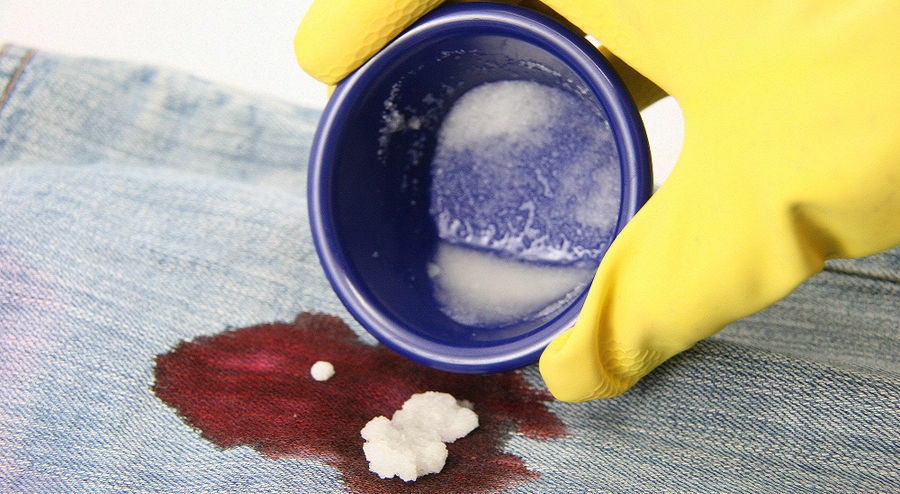
If your clothes have stubborn stains, it's a good idea to treat them with a special detergent before loading them into the washing machine. Increasing the amount of detergent won't solve the problem—such stains need to be removed before loading. You can treat a specific area of the fabric with a stain remover and then hand wash. To reduce the amount of detergent used per wash, add 2 tablespoons of baking soda to the detergent dispenser. This will soften the water and allow the granules to dissolve better. Do not use sodium bicarbonate on wool or silk items.
New technology reduces powder consumption
Modern automatic washing machines can provide better cleaning results while using less detergent. This technology helps save detergent, water, and energy. These machines feature EcoBubble technology or a steam option.
In Eco Bubble machines, the detergent dissolves instantly in the water, driven by the bubbles generated by the machine. This principle ensures that not a single granule remains undissolved. The foaming powder quickly penetrates the fabric fibers, removing stubborn stains.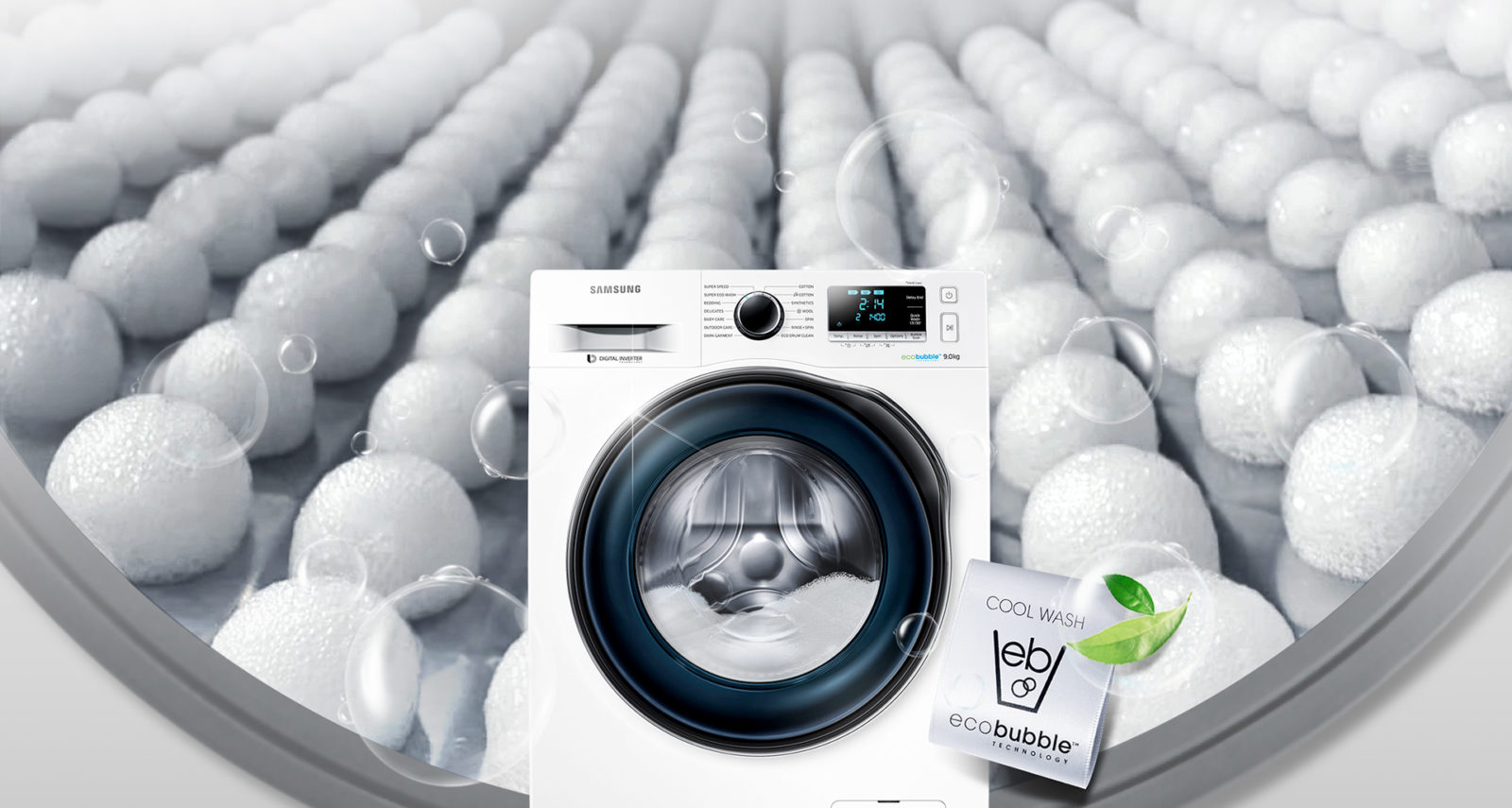
Steam technology also provides effective stain removal with minimal use of washing granules. Steam helps the product dissolve completely in water. In this situation, there is no need to pre-wash the item or use an expensive stain remover. Here are a few modern automatic washing machines that offer the features described above:
- The Samsung WF1802XEC is a front-loading washer with a capacity of 8 kg. Its bubble wash technology reduces detergent consumption. Another advantage is the ceramic heating element, which protects the heating element from scale.
- LG F12U2HCS2. This model features steam technology. The maximum load capacity is 7 kg. It also features an auto-weighing function.
- Daewoo DWD-UD2413K is another full-size front-loading washer with a 10 kg capacity and bubble wash technology.
When choosing a new washing machine, it's best to look for models equipped with an automatic laundry weighing sensor, steam treatment, or EcoBubble. These features will help you save money. They'll reduce not only detergent consumption but also water and electricity consumption.
How much gel do you need?
If you're using a liquid detergent, you'll need to measure it out slightly differently. Manufacturers indicate on the packaging that 75-100 ml of product is required per cycle. However, independent experts have concluded that this "dosage" is too high. On average, 1 tablespoon of gel is enough for washing; if the water is particularly hard, the amount of the composition can be doubled.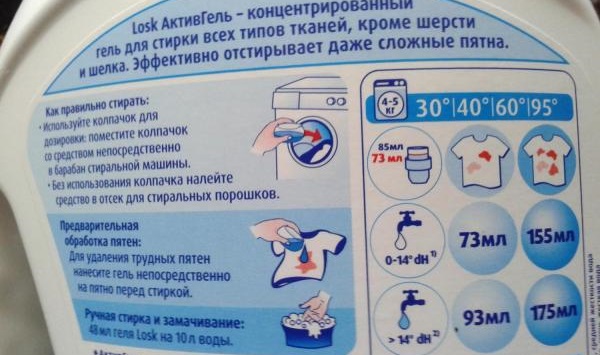
Adding more than two tablespoons of the detergent is simply pointless. It won't make your clothes any fresher, and the machine could break down from excessive foaming. So, thinking "the more, the cleaner" isn't a good idea in this case.
Interesting:


Readers' comments
Headings
Washing machine repair




For buyers




For users


Dishwasher




Add a comment