
How to properly position a dishwasher outlet
 A dishwasher is a wonderful addition to any home, yet many people shy away from purchasing one due to its high price or the space it takes up. However, there are many affordable machines available that can be built directly into the countertop, eliminating unnecessary space. Therefore, in this situation, finding a suitable location for the dishwasher's power outlet is more challenging than finding a place for the appliance. Connecting to the power supply must be convenient and safe, as the appliance uses water. Let's look at where to install the outlet and how best to organize it.
The ideal location for a dishwasher socket
The most common mistake when installing a dishwasher's power outlet is installing the socket directly behind the machine. Doing so risks short circuits and other problems, as they won't be able to quickly unplug the power cord during unexpected breakdowns. This mistake can make simple operations like disconnecting the appliance time-consuming and labor-intensive, as you'll have to constantly move the machine, which is quite heavy.
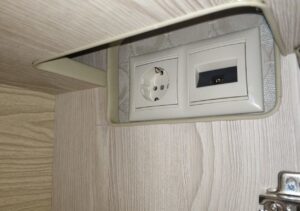
To avoid this, you can install an outlet directly inside the kitchen cabinet. Of course, any cabinet has shelves and other household items inside, but this will still make it much easier to reach the outlet. This location will require slightly damaging the back wall of the cabinet by cutting a rectangular hole for the outlet, but it's worth it, as there's simply no more convenient or safer option.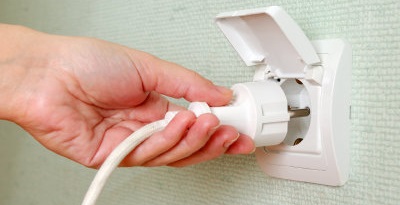
Also, pay attention to the outlet's height from the floor. It should never touch the baseboard, so it shouldn't be installed lower than 10 centimeters from the floor. At the same time, it shouldn't be installed too high either, as placing it higher than 70 centimeters from the floor will prevent it from being hidden behind the cabinet. It is also important that the socket is located far from the water or gas pipe – this will help avoid possible problems.
What do you need to set up a socket?
To make a dishwasher outlet yourself, you'll first need to purchase all the materials at any specialty store. You'll need:
- copper wire;
- residual current device;
- moisture-resistant socket;
- voltage stabilizer.
Not just any wire will do for a dishwasher; you need a three-core copper wire with PVC insulation and a cross-section of 1.5 mm or more.
If you'll be connecting not only the dishwasher but also other devices to the outlet, you'll need to purchase a 2.5 mm2 wire or calculate the voltage of the other appliances in advance, along with the dishwasher. Experts recommend always planning the wiring cross-section in advance, leaving yourself a small reserve so that you can safely increase the load in the future and avoid worrying about replacing sockets.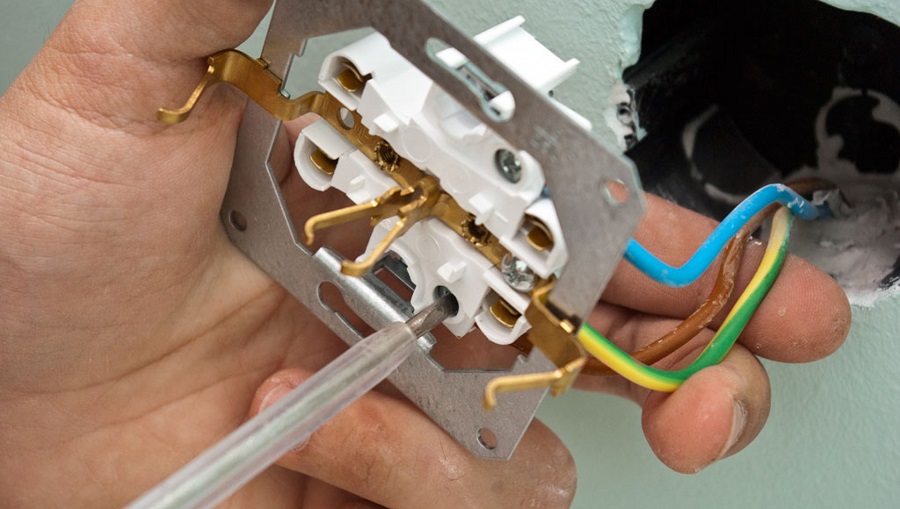
A separate circuit breaker is also required for operation, which should be installed in the electrical panel in case of an overload. A single-pole, single-phase 16A circuit breaker will protect you from a fire, so the dishwasher should only be connected to one.
If several devices, and not just a dishwasher, will be connected to the outlet, then it is necessary to purchase a 20A circuit breaker.
A moisture-resistant outlet is also a must. The housing of such an outlet is reliably protected against water penetration, so even if it accidentally gets splashed with water from the sink, everything will be perfectly fine. Moisture-resistant outlets are a lifesaver not only in the bathroom but also in the kitchen, so don't skimp on them.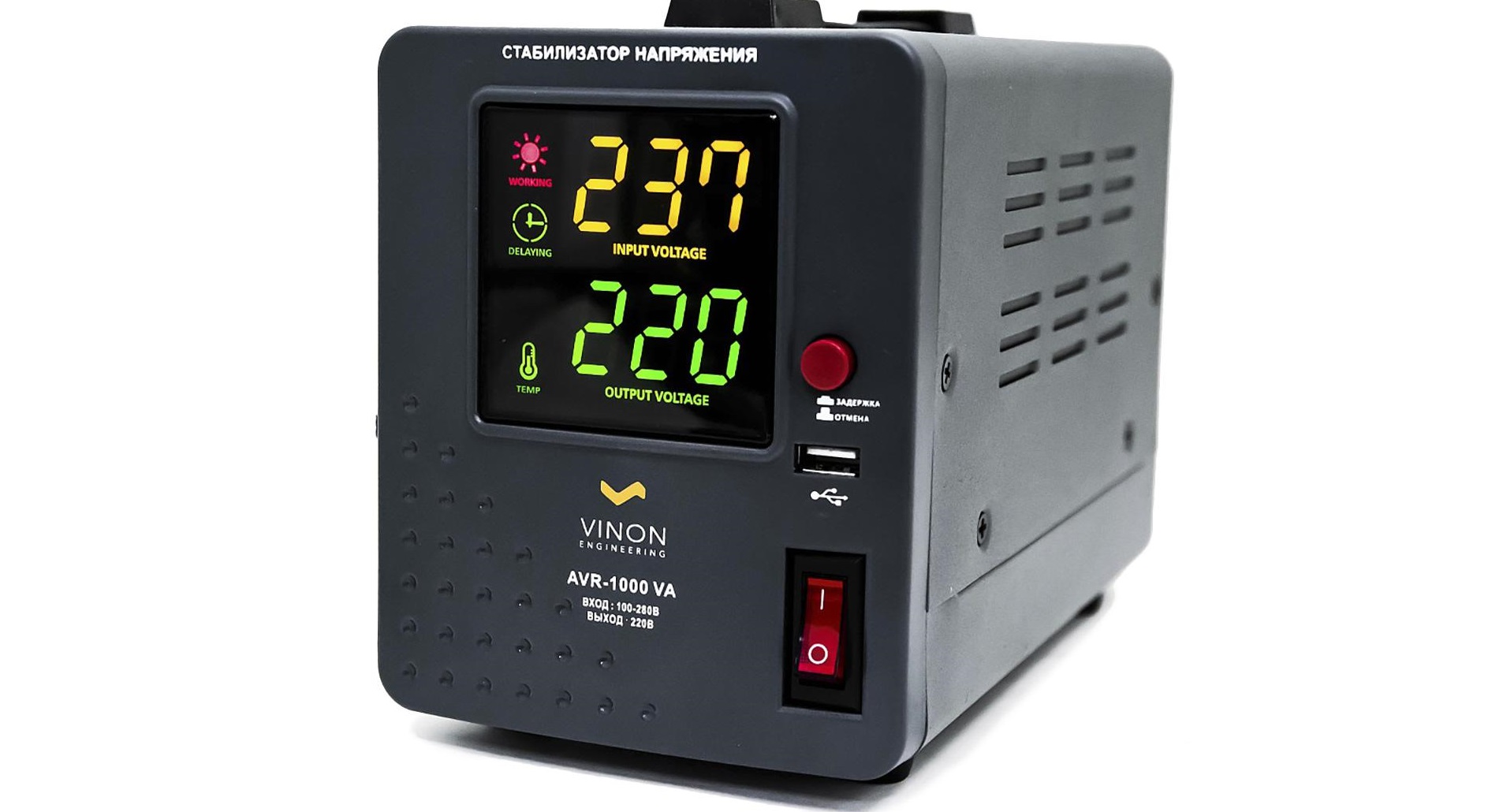
Finally, you need to buy a voltage stabilizer at a hardware store. It's hard to live without one in Russia, where the power grid suffers from constant instability. Yes, it's an expensive part, which is why many people ignore it, but it can save your home appliances. The stabilizer protects the electrical network from sudden voltage surges, which can instantly damage all the equipment in the house. Don't skimp on safety, because by spending just a few tens of dollars on a voltage stabilizer, you can save household appliances that cost much more.
For example, experts recommend using the RESANTA ASN-2000 N/1-Ts voltage stabilizer. It allows you to reliably connect your dishwasher and other electrical appliances, eliminating the risk of sudden power surges. Before purchasing, calculate the total power of all devices you plan to connect to the stabilizer to ensure it has enough power for all devices.
Interesting:


Readers' comments
Headings
Washing machine repair




For buyers




For users


Dishwasher




Add a comment