
How to properly position the washing machine drain hose
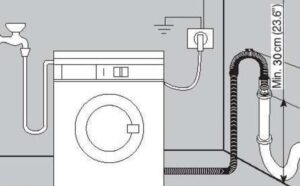 It's important to position your washing machine's drain hose according to the manufacturer's recommendations to avoid problems during future use of your appliance. Therefore, before connecting your washing machine to the power supply, carefully read the instructions for the appliance. They provide detailed instructions for installing the drain hose.
How and at what height should the hose be laid?
Without a proper drainage system, your washing machine won't work. Proper drainage speeds up the washing process and extends the machine's service life. Therefore, it's important to understand how your washing machine's drain hose should be positioned.
First and foremost, it's important to maintain the altitude. The following rules apply:
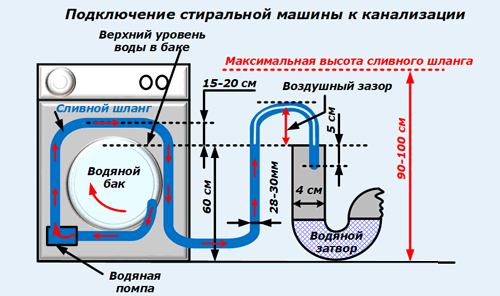
- since the pump power is limited, the drain hose can be placed at a height of no more than 80 cm, directly next to the washing machine;
- near the sewer pipe, the drain hose should be placed at a distance of 60 cm from the floor;
- The lowest section of the drain hose should be at a height of 50 cm. If this recommendation is not followed, unpleasant odors from the sewer will enter the machine.
To ensure that your automatic machine operates reliably for the 10 years or more stated by the manufacturer, it is essential to follow the basic recommendations for connecting it to utilities.
- The drain hose should not exceed 2 meters in length. Otherwise, the pump will have difficulty pumping water and will burn out quickly.
- Don't extend the drain hose vertically higher than 80 cm. This is especially true when the drain hose simply extends into the sink. It's better to insert the corrugated hose into the drain elbow under the sink.
- Use only high-quality components for connecting your washing machine. Even the cheapest corrugated hose can quickly become worn and leak.
When connecting the washing machine, be sure to remember the S-shaped bend in the drain hose. The length of the drain hose should not exceed 2 meters, and it is also important to ensure the correct distance from the floor to the point where it enters the sewer – exactly 60 cm. If the main conditions are met, no problems will arise during further operation of the washing machine.
How to connect the machine to the siphon?
There are several options for connecting the drain hose. For example, you can hang the hose over the edge of the bathtub or sink and secure it there. This is a very simple, but also the most inconvenient way to organize the drain. Firstly, there's a risk that the hose will break off and spill everything on the floor. Secondly, the plumbing will always be stained, as the water coming out of the machine is dirty, containing lint, hair, threads, etc.
The option of connecting the drain hose to the siphon is the most optimal; this method is chosen in most cases.
The design of the trap isolates the kitchen or bathroom from sewer odors. Modern units have an additional outlet on the side specifically for connecting the drain hoses of washing machines and dishwashers. If you have an elbow without an additional outlet, replace it with a new one.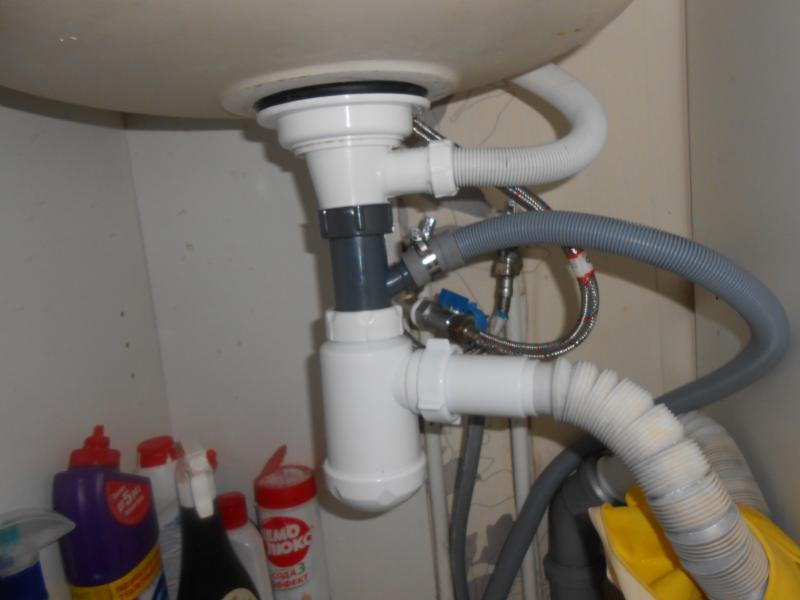
To connect the drain of an automatic washing machine through a bend, you need to:
- remove the plug from the side elbow pipe;
- apply a layer of waterproof sealant or special silicone-based glue to the edge of the branch at the joint;
- put a drainage hose on the side outlet;
- secure the connection point with a worm-type clamp.
The siphon should be positioned as high as possible relative to the sink, at least 40 cm, ideally 50-60 cm. The drain hose itself is secured to the machine body at a height of 70-80 cm with a special clamp, and its end is lowered into the drain. This ensures an S-shaped bend in the corrugated hose.
Organizing drainage directly into the sewer pipe
Another option for organizing drainage is to connect the machine hose directly to the sewer pipe. Connection is made using a tee or a straight connection. In this case, some plumbing skills will be required, so the work will probably have to be entrusted to a professional.
If a tee is used, the first (straight) branch is used for the sink, bathtub, or other plumbing fixture. The second (angled) branch is used for connecting the automatic washing machine. The connections must be sealed with sealant and wrapped with FUM tape.
When connecting the drain hose to the tee, be sure to use a rubber seal - you can buy one or cut one yourself from an old car inner tube.
If a suitable tee cannot be found for the sewer pipe (for example, in the case of asbestos or cast iron structures), the drain hose is connected directly to it. Before starting work, it is important to shut off the water supply to the entire riser in the building's entrance. The connection and installation of the branch pipe are usually performed during the apartment renovation phase.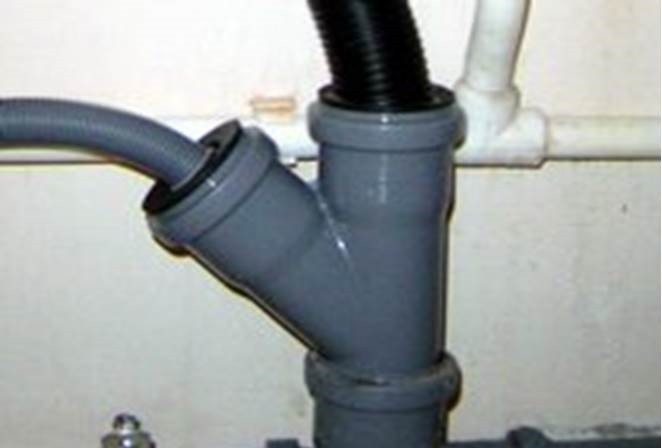
During the work you will need a standard set of tools:
- Phillips and slotted screwdrivers;
- adjustable wrench;
- pipe cutting device;
- pliers;
- knife;
- roulette;
- building level.
The drain line is inserted into the sewer pipe at a height of 60 cm. The hose is connected to the branch pipe using a sealing ring. The drain hose should not come into contact with the water. This will prevent unpleasant odors from entering the machine.
What happens if you place the hose without bending it?
As mentioned earlier, the correct position of the drain hose is crucial for the proper functioning of your washing machine. If the hose is not connected according to the instructions, water may drain out of the washing machine by gravity. This occurs when the hose is not positioned at the correct height and its S-shaped bend is not maintained.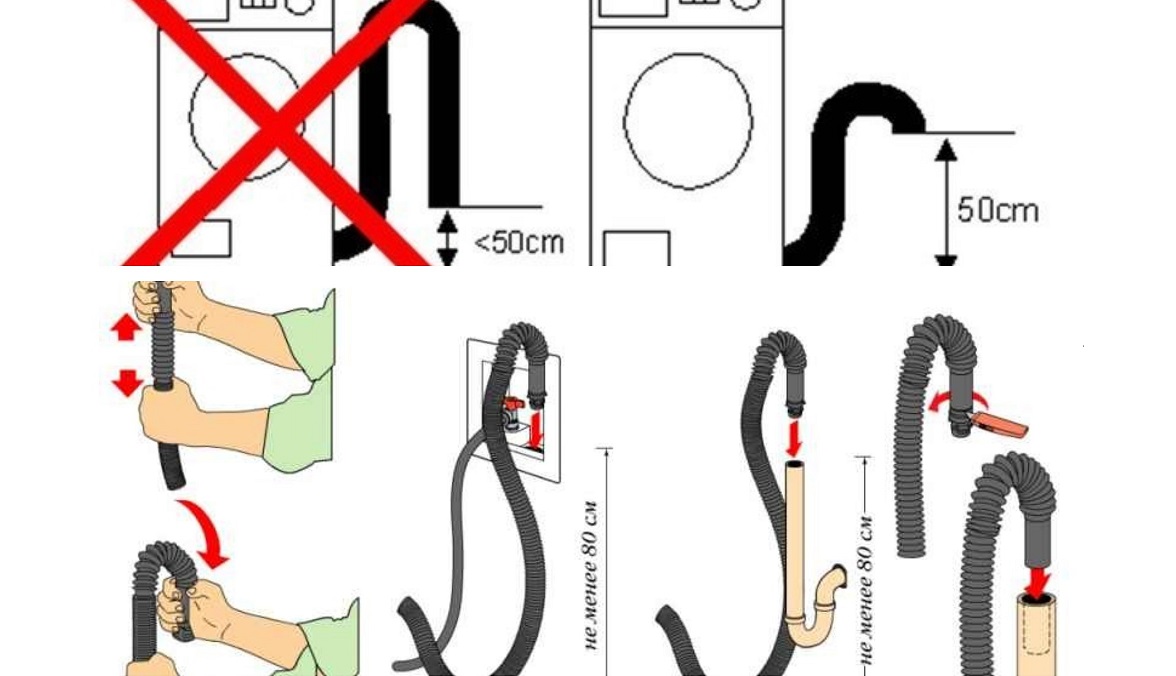
Another unpleasant consequence is sewage backing up from the sewer into the washing machine. If the drain hose is positioned incorrectly, a "siphon effect" will occur. Water from the drain pipe will flow back into the washing machine's tub. This is why it's so important to position the corrugated hose at the recommended height and with a bend.
Interesting:

Readers' comments
Headings
Washing machine repair




For buyers




For users


Dishwasher




Add a comment