
Dimensions of the Malutka washing machine
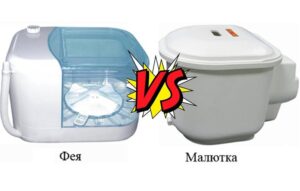
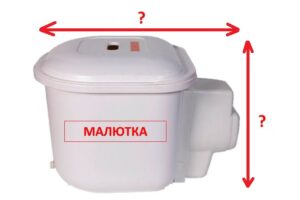 It seems like decades have passed since the invention of the "Malutka" washing machine, yet it remains in high demand due to its low cost and excellent wash quality. It's used not only in country houses but also in city homes. Its success stems not only from its reliability and simple design, which even a child can handle, but also from its compact size, making it easy to fit in even the smallest apartment. Today, we'll examine the dimensions of the various "Malutka" washing machines so you can choose the right one for you.
The second "Little One"
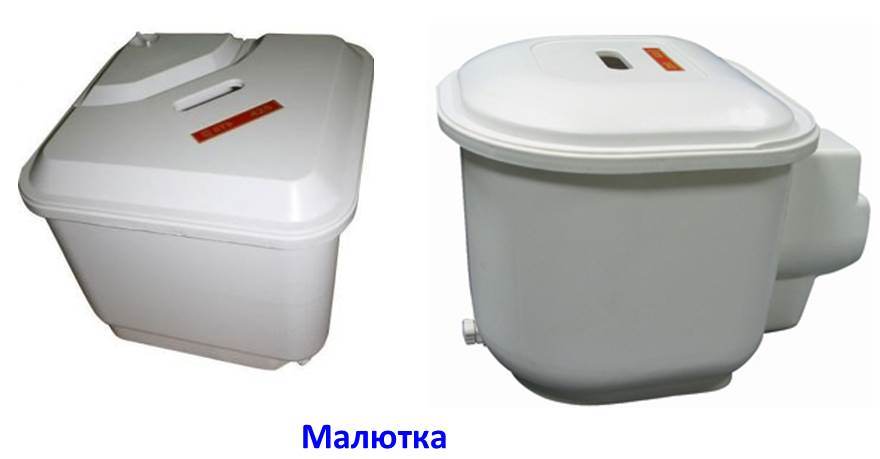
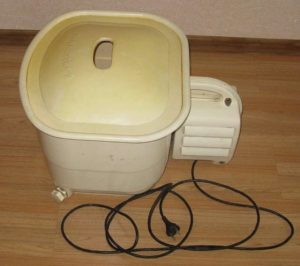
This washing machine is officially called the SM-1 "Malutka 2." It's easy to use, uses very little water, and rinses and washes dirty clothes beautifully. Its dimensions and other specifications are as follows:
- the maximum dimensions of the equipment are 570 by 450 by 420 millimeters;
- maximum drum load 1 kilogram;
The machine itself weighs no more than 10 kilograms, making it easy to carry from one place to another when needed.
- the tank volume is 28 liters;
- on average, the number of revolutions per minute reaches 1360;
- the machine consumes only 0.05 kilowatts;
- Normal operation is possible at a voltage of 220 volts alternating current with a frequency of 50 hertz.
The machine only has two modes, but they're the most essential for a housewife: wash and rinse. On average, a wash cycle lasts about five minutes, and a rinse cycle takes a little over four minutes. The time interval between the two cycles is about three minutes.
Most of the device is made of plastic—the tank, lid, and casing, which houses the electrical components and the washing machine's electric motor. The actuator housing is attached to a threaded flange, which also houses a seal. The flange is contained within the casing, and the actuator is mounted to the electric motor shaft. The power switch is located on the casing, marked "1/0" or "On/Off."
Later versions of the "home helpers" also have special latches that are necessary to hold the lid in the groove during operation. However, even without these locks, early versions of the machines work without problems, since their lid does not pop out of the groove during the washing process.
Episode 400
Let's take a look at the "Malutka 425" and "Malutka 465" models, whose dimensions and specifications are virtually identical to those of the "Malutka 2." What are their key features?
- The maximum amount of laundry that can be washed at a time is 1 kilogram.
- There is no spin mode.
- Washing takes from one to six minutes.
- The power rating is within 250 watts.
- The tank volume is 27 liters.
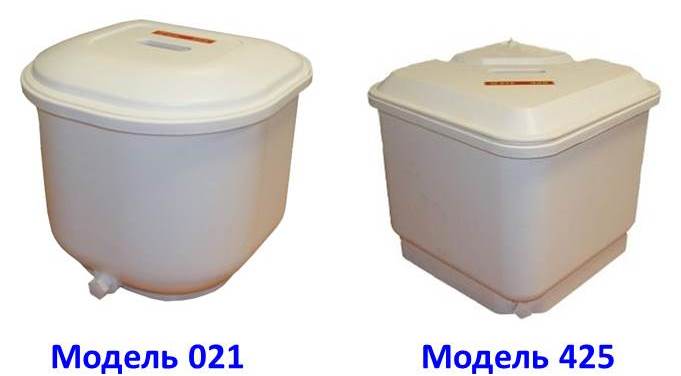
The equipment is controlled mechanically using a timer relay. The "Malutka 425" allows the user to control the duration of the operating cycle. Operation ends automatically, and the waste liquid is then discharged into the sewer via a drain hose. The dimensions of the machines are slightly different: the “Malutka 425” is 380 by 430 by 430 millimeters, while the “Malutka 465” is 472 by 406 by 476 millimeters.
The timeless benefits of the "Baby" SM
Now that we've discussed the dimensions, it's time to focus on the key advantages of this affordable appliance. The machine is very compact, which will be appreciated by owners of small studios and homes. It's inexpensive and energy-efficient. Wash quality is also excellent, although it depends on the detergent used, the quality of your tap water, and the length of the cycle.
The "Malutka" is very gentle on laundry, and the 225 and 425 series are additionally equipped with a reverse function, which allows you to change the direction of the disc. This reduces the amount of twisting and reduces wear on clothes. So how do you use this washing machine correctly?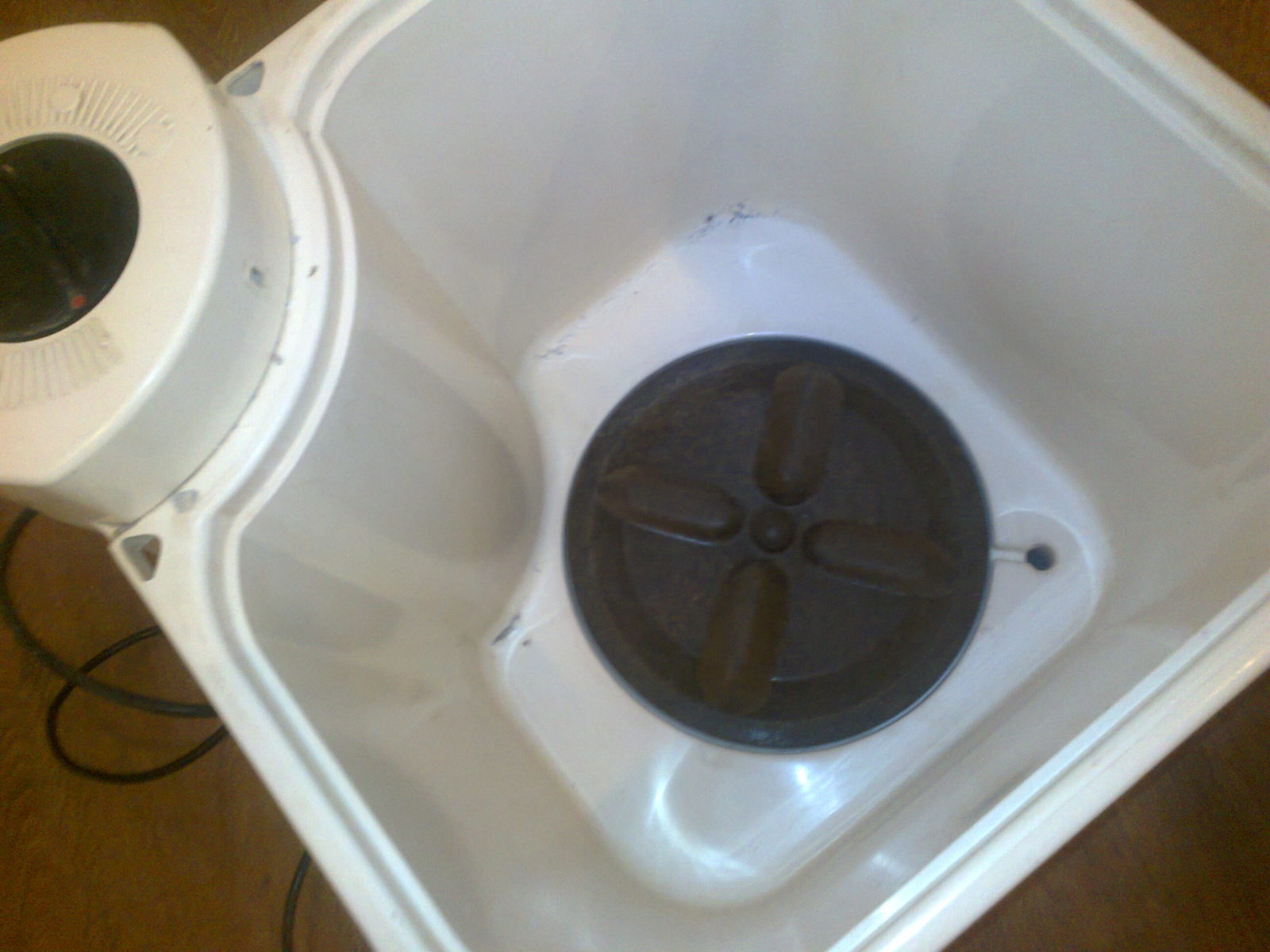
- Fill the machine with water of the required temperature.
- Add washing powder and stir it thoroughly.
- Place dirty clothes in the bin.
- Close the machine lid tightly.
- Start the work cycle.
The activator in the "Malutka 465" is located not on the side, as in other models, but in the bottom, which means you don't have to fill the tank all the way, which means you can reduce the consumption of water and household chemicals.
When the wash cycle is finished, the used water and detergent can be discarded or reused, but this is not recommended. Rinsing should also be done exclusively with clean water. Wash baby clothes in soapy water, as it's much easier to rinse out of baby's clothes. As for the only downside to this technology, it lacks leak protection, but it pales in comparison to the washing machine's advantages.
Interesting:

Readers' comments
Headings
Washing machine repair




For buyers




For users


Dishwasher




Add a comment