
Dimensions of the Siberia washing machine
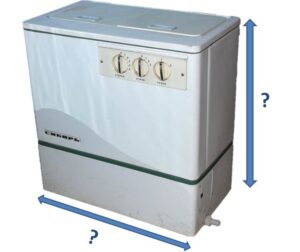 Although washing machines from popular foreign brands are widely available on the market today, many housewives still enjoy using domestically produced Sibir machines, manufactured in Omsk at the Polet plant since 1957. This truly high-quality "home assistant" can compete with foreign models, as it washes efficiently, is reliably assembled, and can serve without failure for decades. Let's look at the main dimensions of the Sibir washing machine so you can estimate which model will fit best in your home.
The first "bestseller" of 1966
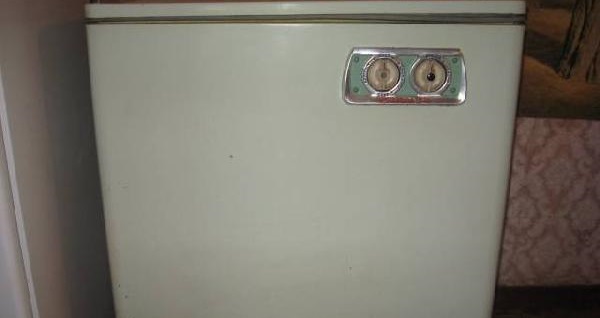
This Omsk-made appliance gained a genuine following in the USSR after the "Sibir 3M" version, featuring a contoured tank and a user-friendly control panel located on the front of the washing machine, went on sale. Moreover, it was one of the first centrifugal washing machines, with its most important components made of aluminum, which is particularly resistant to corrosion. It weighs 40 kilograms, is 67 centimeters wide, 70 centimeters high, and only 37.5 centimeters deep, making it easy to fit even in a narrow space. Given its relatively light weight, especially compared to modern heavy-duty machines, the Sibir ZM can be easily installed and connected to all utilities. The following are some of the most important design features:
- An electrical circuit consisting of a capacitor block, a control panel, a time relay, an underwater harness, a microswitch, and two electric motors. The protective casing is made of polyethylene, and the outer panel is made of polystyrene;
- A bypass valve designed to drain waste liquid from the tank, plus the detergent. The valve is connected to the washing machine's hydraulic system;
- the activator drive unit, part of which is the motor with a pulley, responsible for transmitting the force from the shaft rotation to the activator;
- a centrifuge rotary drive with a suspension system, which together initiate the movement of the rotating tank of the squeezing device;
- a centrifugal pump that pumps fluid from the hydraulic system of the washing machine into the drainage system;
- an activator, which is a disk fixed on a vertically mounted shaft, which, when rotating, helps the laundry rotate in the washing machine;
- chassis for securing the running rollers, tank stands, electric drive motor, capacitor block, and bypass valve;
- a washing tank made from sheet aluminum.
This is all the necessary information you need to know about one of the most popular washing machines of the Soviet era.
The fifth version of the Siberia car
This two-tank machine, officially named "Sibir-5," went on sale just two years after the release of the "3M" model, in 1968. The device weighs 40 kilograms, is 67.5 centimeters wide, 70 centimeters high, 37.5 centimeters deep, and has a tank that holds 37 liters of water. The device is equipped with an activator with a power of 600 revolutions per minute, as well as a centrifuge motor with a maximum number of revolutions per minute of 2800.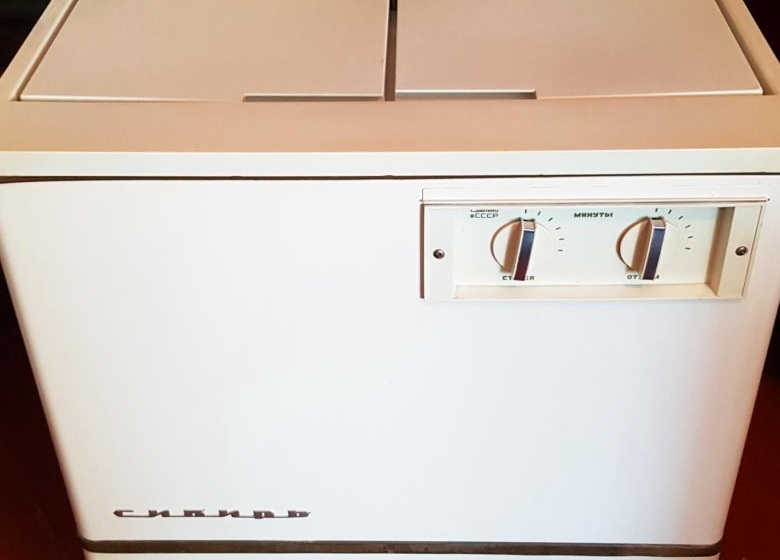
This "home helper" is an improved version of the previous model. It features an improved timer relay, reduced vibration during operation, and an additional filter for the hydraulic system.
Siberia, sixth model
Let's move on to the most popular model, boasting 600 watts of power and a 37-liter capacity. This machine features two wash programs. Both the washing compartment and the spinner can hold up to 2 kilograms of dry laundry. While the spinner rotates at 600 rpm, the spinner reaches a speed of up to 2,700 rpm. Clothes are spun to a residual moisture content of 55% or less.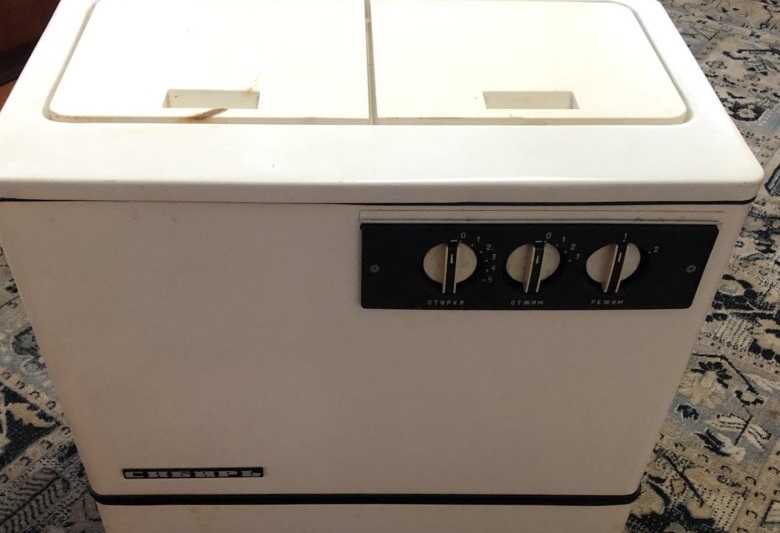
The weight of the device has increased slightly – it is now 45 kilograms, which makes the machine even more stable. As for the dimensions, they remained the usual - 37.5 centimeters in depth, 67.5 in width, and the standard 70 centimeters in height.
How to wash with such a machine?
While this company's appliances may seem basic in today's climate, a number of rules should be followed when using them. For example, in winter, do not turn on household appliances for at least four hours after they have been exposed to cold temperatures and then brought into a heated room. Also, avoid running the washing machine without water, as this will damage the motor. Additionally, avoid heating the water in the drum with a boiler or changing operating modes after activating the cycle. Here are the basic steps to follow when washing with a Sibir washing machine.
- First, you should sort your clothes by color and material.
Immediately after purchasing the washing machine, do not forget to remove all the fixing parts located on the device’s engine.
- Next, select a normal or delicate wash cycle, designed for clothes made from delicate materials such as wool or silk.
- Now fill the machine with water, the temperature of which should be adjusted in advance.
- We load the detergent, which can be in the form of powder or gel, into the washing machine tank.
- Load your laundry according to the manufacturer's recommendations. For the regular cycle, the maximum load is 2.5 kilograms, while for delicates, the limit is stricter—up to 1.5 kilograms.
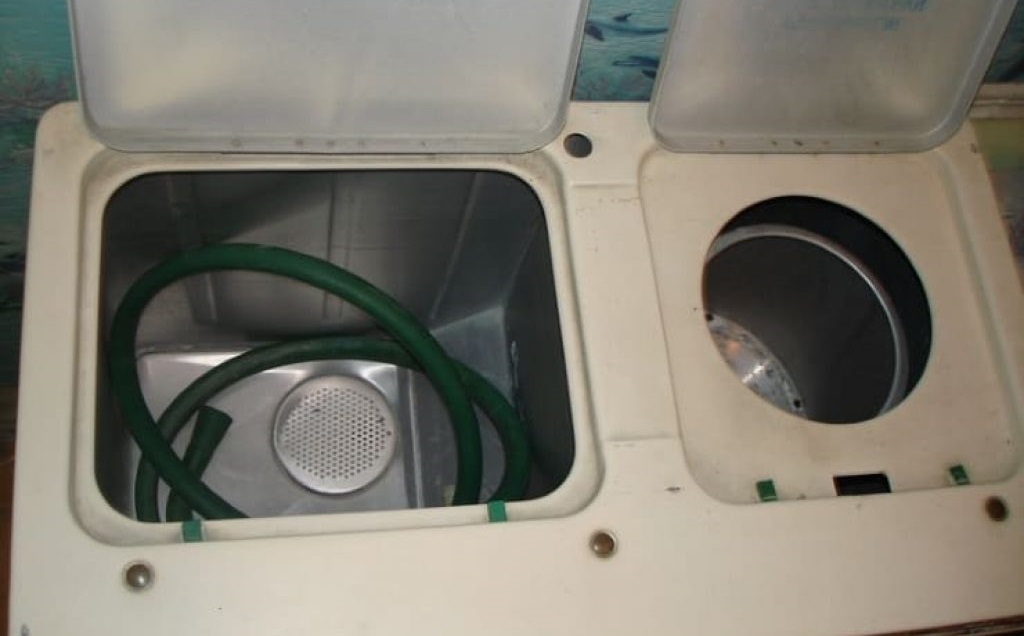
- We set the time on the timer to start the work cycle.
- Once the wash is finished, the machine will drain all the waste liquid.
- Now it's time to rinse the clothes, which is done by refilling the tank with clean water. The activator runs for two minutes, after which the rinse should be repeated, remembering to change the water.
- Clean clothes must be removed from the drum and placed in the centrifuge to run the spin cycle for three minutes.
- Finally, the laundry can be taken out and hung to dry, and the machine should be disconnected from the power supply.
Don't forget to rinse the hoses and tanks after each wash, and don't close the washing machine compartments to allow the equipment to dry out and prevent mold and unpleasant odors.
This is how easy it is to use this classic washing machine, which over the decades has become the favorite "home helper" of millions of Soviet and Russian housewives.
Interesting:



Readers' comments
Headings
Washing machine repair




For buyers




For users


Dishwasher




Add a comment