
Dimensions of a front-loading washing machine
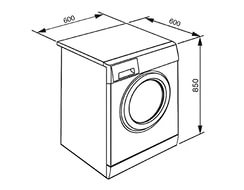 Front-loading washing machines are now found in almost every home. The immense popularity of these appliances encourages manufacturers to continually expand their offerings, resulting in hundreds of models to suit every taste and budget. Modern consumers, in addition to a washing machine's technical specifications, also consider its dimensions to ensure it fits within a predetermined space in the home. This is what we'll discuss in more detail.
Relationship between size and type of download?
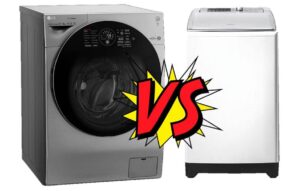
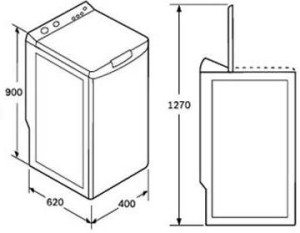
Currently, there are two main types of automatic washing machines on the market: front-loading (their hatch is located on the front wall of the machine) and top-loading (their hatch is located on the top). Top-loading washing machines are narrow and tall, while front-loading washing machines are wider and deeper, but taller.
Front-loading machines are, of course, the most common. Why is that? Let's look at the pros and cons of front-loading washing machines and, using this information, determine why they are so popular. Let's start with the advantages.
- Front-loading washing machines fit perfectly into built-in spaces. Built-in models, designed for installation under countertops, under sinks, and in various niches, are currently very popular among consumers. This saves a significant amount of space.
- Front-loading machines are much cheaper than top-loading washing machines.
- You can see how the wash is progressing. This may not be essential in all cases. But, for example, when you're unsure whether the machine is working properly and are troubleshooting, being able to see what's happening in the drum is a big help.
- The front-loading machine can serve as a cabinet, with packs of washing powder, bottles of bleach, and other items placed on top.
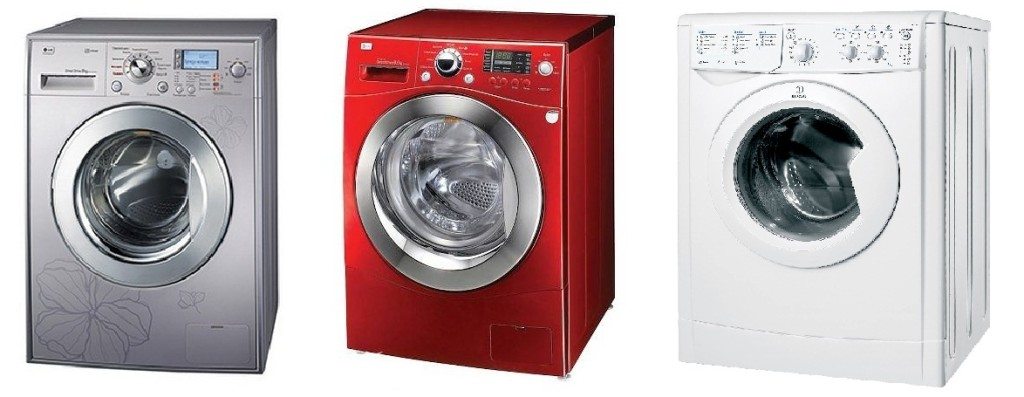 The disadvantages of front-loading washing machines include: the need to bend your head significantly to open the door and insert the laundry, as well as the need to leave space in front of the machine to open the door properly. These disadvantages are not considered significant by most people; they don't interfere with the normal operation of the appliance, so 87% of buyers purchase front-loading washing machines and only 13% top-loading ones.
Please note! Top-loading washing machines are rarely purchased, and most buyers of such machines prefer inexpensive semi-automatic models. Only 1.5% choose automatic top-loading washing machines.
The location of the drum in front-loading washing machines forces manufacturers to slightly increase their width and depth. The larger the drum, the larger the dimensions of the machine. However, it's important to understand that science never stands still; modern developments allow for the creation of washing machine models with fairly large and capacious drums, while the body dimensions either remain the same or increase slightly. Let's review these models and provide examples of such machines.
Height, width, depth, and weight of the machine – overview
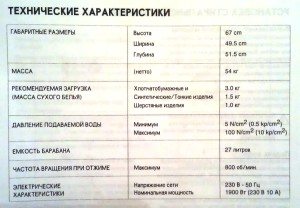
Front-loading washing machines come in a variety of sizes. Consumers choosing a specific built-in model are interested in having it match their desired dimensions down to the last centimeter. Therefore, they'll be primarily interested in the specific size of a particular model, rather than the average size of a front-loading machine. This can only be determined by examining the specifications of various models of this type of appliance. Here are some examples.
- LG E1096SD: A modern, automatic front-loading washing machine with a 4 kg capacity. One of the best machines on the Russian market. It features 13 wash programs, a digital display, a lint filter, a leak protection system, self-diagnostics, and other useful features. Weight: 56 kg. Dimensions (in cm): height: 85 cm, width: 60 cm, depth: 36 cm.
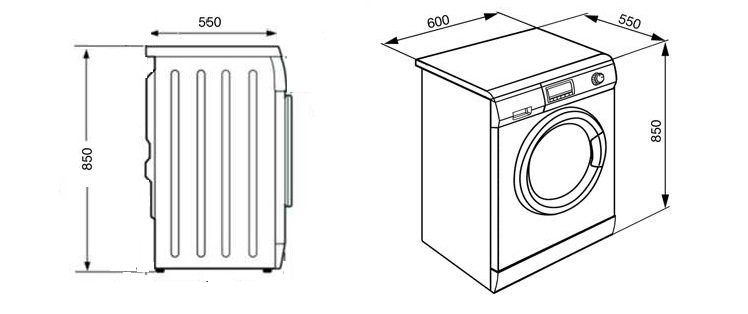
- BOSCH WGL 20060 OE. A simple and reliable automatic washing machine crafted in the best German manufacturing traditions. It features a 5 kg load capacity, a comprehensive package of basic wash programs, and a spin speed of up to 1000 rpm. It also includes a basic set of safety features: leak protection, foam control, and imbalance control. Weight: 60 kg. Dimensions (in cm): height: 85 cm, width: 60 cm, depth: 40 cm.
- GORENJE W8624H. A very high-quality automatic washing machine from Slovenia. It features a spacious drum (8 kg load capacity), a large number of washing programs (this model has 23) and an impressive set of protective functions. Specifically, it features leak protection, foam protection, imbalance control, overflow protection, and more. Weight: 76 kg. Dimensions (in cm): height: 85 cm, width: 60 cm, depth: 60 cm.
- SAMSUNG WW90H7410EW/LP. This technologically advanced automatic washing machine from a renowned Korean manufacturer is packed with useful features, including a delayed start, easy ironing, quick wash, bubble wash, and a program progress indicator. It features 12 wash programs, foam protection, and a child lock. Maximum load: 9 kg. Weight: 73 kg. Dimensions (in cm): height: 85 cm, width: 60 cm, depth: 60 cm.
This brief overview allows us to draw several important conclusions. Regarding the relationship between the depth of a washing machine and the amount of laundry that can be loaded into the drum, we can say the following: The larger the maximum load capacity of a front-loading washing machine, the greater the depth of the machine. Specifically, the LG E1096SD3, which has a depth of 36 cm but a load capacity of only 4 kg, and the SAMSUNG WW90H7410EW/LP, which has a depth of 60 cm but a larger load capacity of 9 kg. These examples clearly demonstrate the correlation.
Please note! Modern front-loading washing machines with load capacities of 7, 9, 12, and 14 kg have very wide drums. The manufacturer intentionally widened the drum and, consequently, the door to partially compensate for the increased depth of the machine.
Experts advise against choosing very narrow front-loading washing machines. Besides their small maximum drum capacity, compact machines also have another significant drawback: they vibrate quite a bit. The fact is that small-sized washing machines counterweights are not large enough and heavy enough, which is why the manufacturer usually saves space by making small-sized machines lighter.
The result is this: when you turn on the spin cycle at maximum speed, the machine begins to swing violently under the influence of centrifugal force. In particularly severe cases, the machine begins to literally jump from side to side, producing a lot of noise. Draw your conclusions!
Car in the interior: do dimensions affect placement options?
Over the past 20 years, designers have come up with hundreds of front-loading washing machine placement options, and the dimensions of a particular model play a significant role. What determines the variety of options for integrating a washing machine into a room's interior?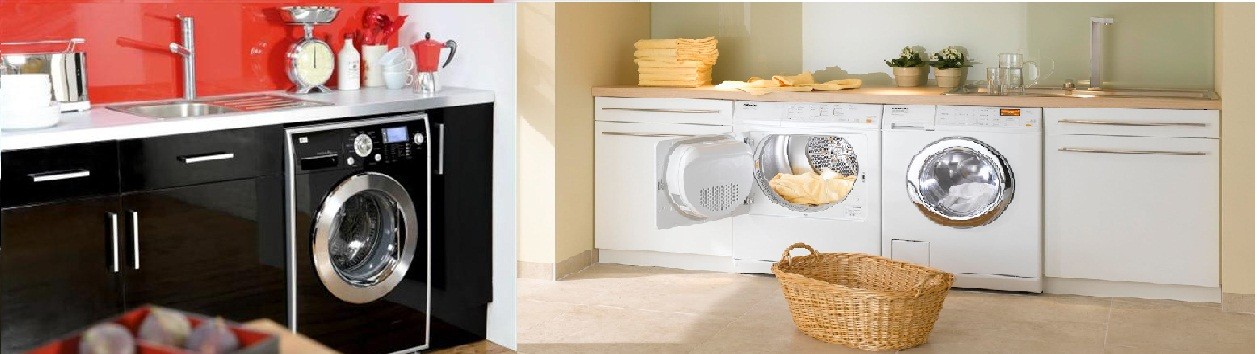
- The size of the room. In a small kitchen or bathroom, every centimeter counts, so you'll have to choose more compact layouts than in a larger space. In this case, the size allows for a variety of design solutions.
- It all depends on the furniture composition. If you're ordering kitchen or bathroom furniture to fit the dimensions of your washing machine, there won't be any problems. However, if you already have the furniture but need to replace the washing machine, choosing the right one may be a challenge.
- The location of utilities. If it's not possible to relocate utilities (water, sewer, electrical outlet) specifically to the intended location of the washing machine, you'll have to adapt to the existing layout.
- The presence of interdependent appliances. If you're purchasing both a washing machine and a dryer, it's best to place them together; this makes them easier to use and more efficient in terms of utility connections.
By combining various individual characteristics and circumstances with design sketches, you can create your ideal interior, where a front-loading washing machine will find its rightful place. Designers arrange washing machines in completely different ways. If you have a dryer in addition to your washing machine, you can create a stylish pair by stacking the appliances one on top of the other.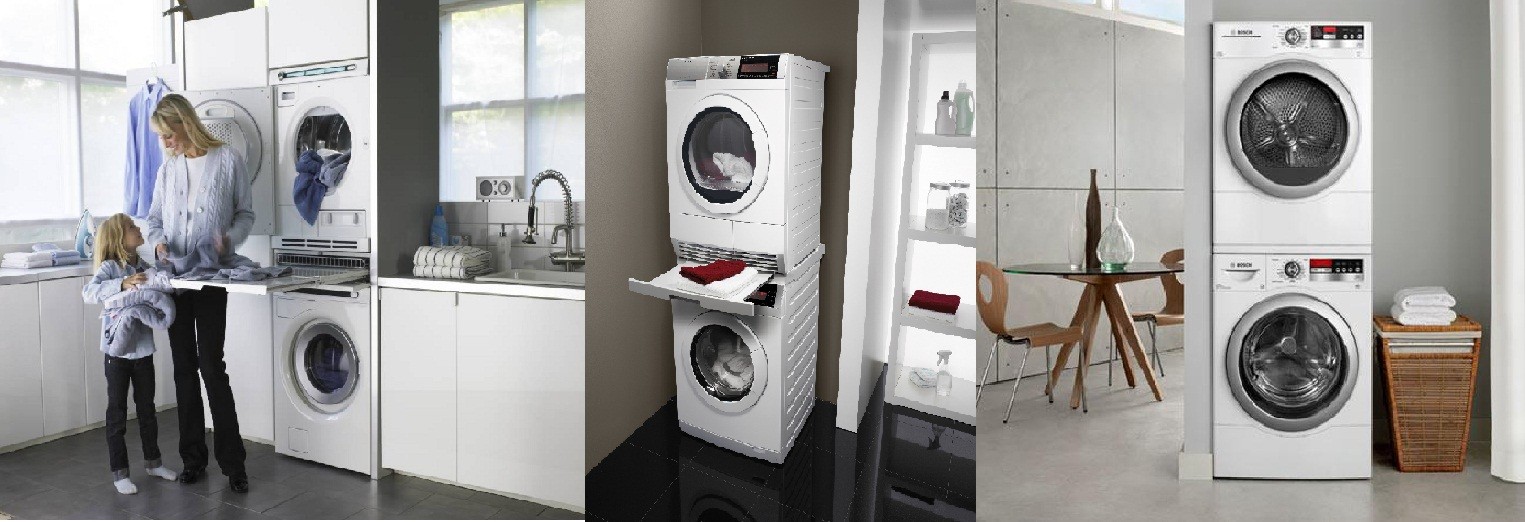
The machine also fits well under a vanity or under a sink. It won't be in the way there, and its size won't be a factor, while also not taking up valuable space or creating any inconvenience. A washing machine looks great under a kitchen countertop. If you don't like the look of the front panel, you can choose a built-in model and mount it under the counter as a cabinet with a door.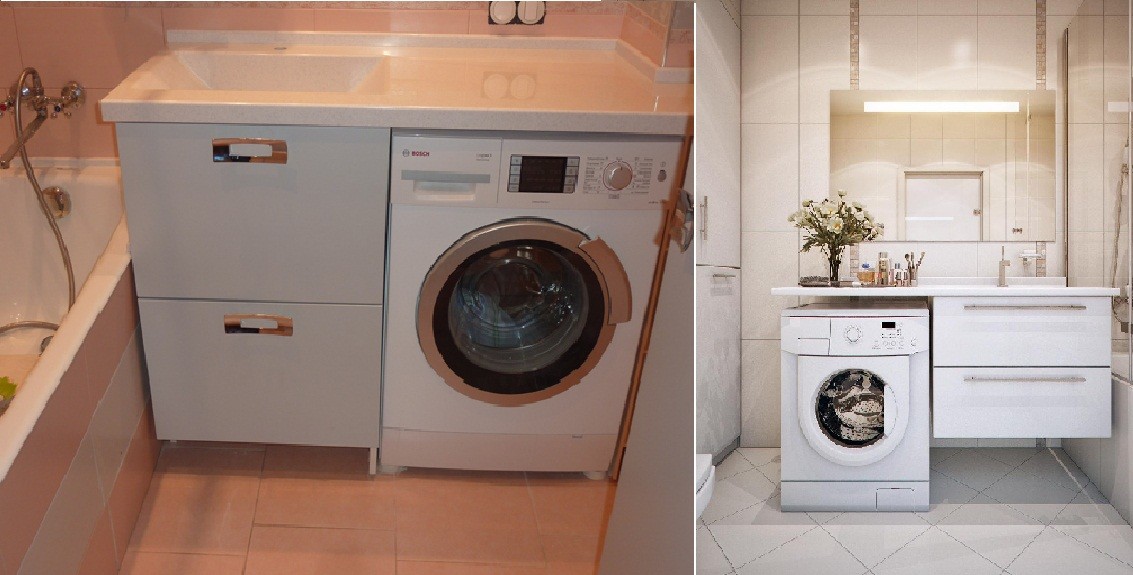 We also think that placing the washing machine in the bathroom above the toilet is a good solution. Khrushchev-era apartments have rather small toilets, so the only effective way to use the space above the toilet is to create a niche and place the washing machine there. This placement makes the washing machine more convenient to use, as you don't have to bend over to throw laundry into the hole.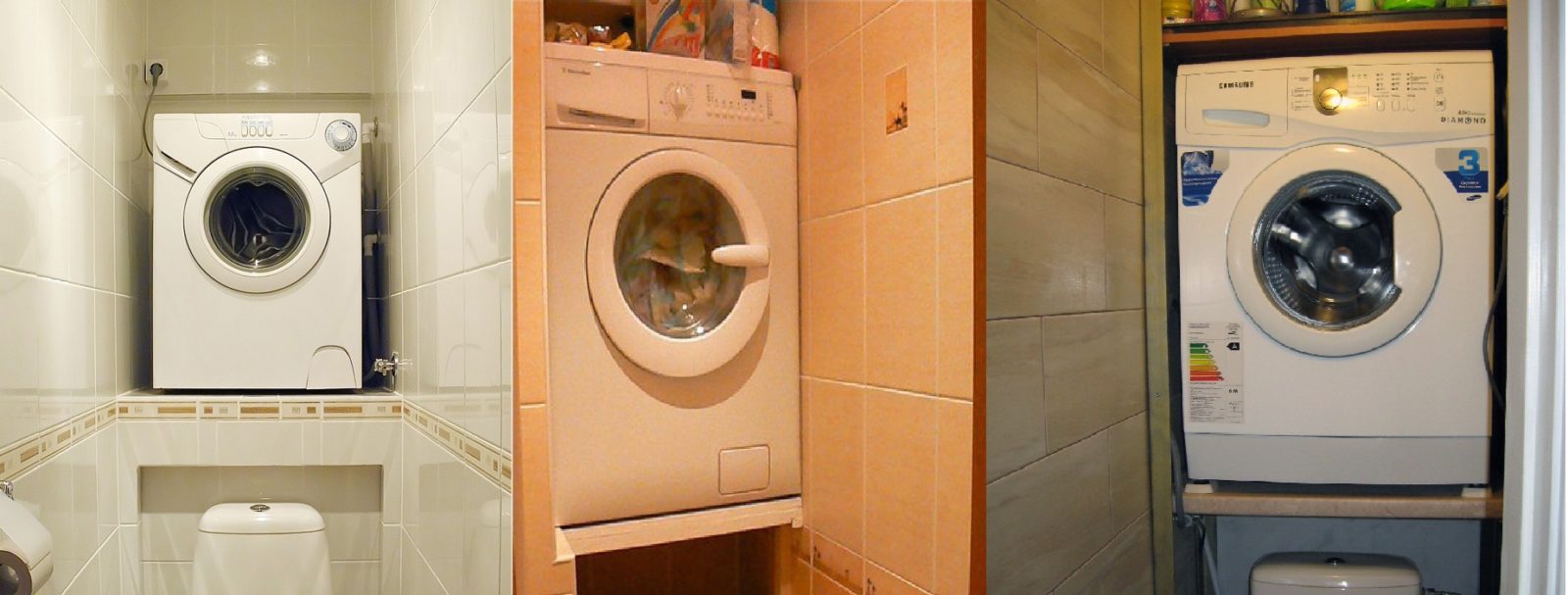
Oddly enough, the size of the washing machine rarely influences its placement in the home, as the height and width of all models are the same, averaging 85 and 60 cm. Therefore, if you clearly plan in advance where your "home assistant" will fit, you'll be able to choose the right dimensions.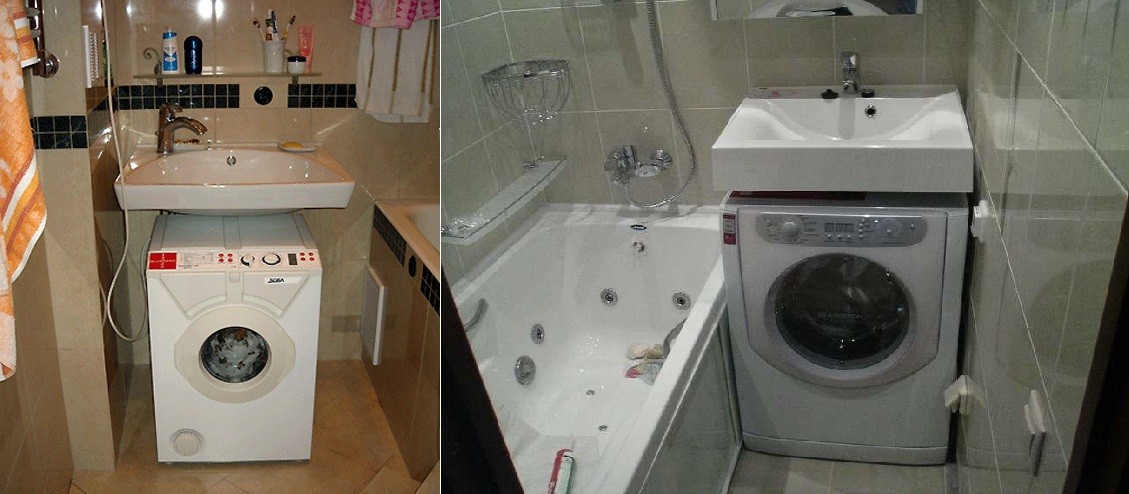
Finally, the dimensions of front-loading washing machines are important when items need to fit into a specific space, centimeter for centimeter, without any room to spare. In this case, you need to select a model specifically tailored to the dimensions, while, of course, taking into account all other technical specifications.
Interesting:



Readers' comments
Headings
Washing machine repair




For buyers




For users


Dishwasher




Add a comment