
Dimensions of a stacked washer and dryer
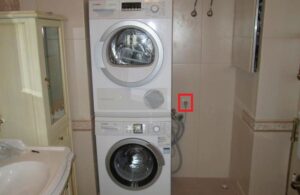
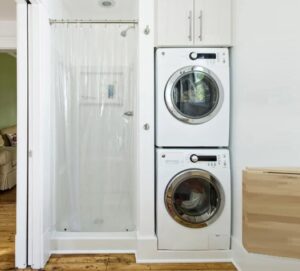
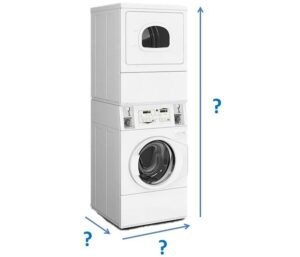 The most popular way to install a washer and dryer is to stack them. The appliances are stacked one on top of the other, saving valuable space. To avoid clutter, they are often hidden in a cabinet with a niche.
To order furniture, you need to know the dimensions of the washer and dryer stack. The niche must accommodate both units, taking into account the height of the legs and the stand between them. We'll explain how to correctly calculate the dimensions of the "structure."
Machine column parameters
Calculating the width, depth and height of a niche for placing equipment is quite simple. To calculate the dimensions of the column, you need to know the parameters of the washing machine and dryer. Equipment sizes vary, so everything will depend on the models of devices you choose.
To calculate the length of the column, add the heights of the washer and dryer (including their feet) and add a couple of centimeters for the stand that is always provided between the appliances. Of course, it's best to order the cabinet not exactly flush, but leave a few centimeters extra.
Dryers are typically 85 cm tall. Washing machines can be 85 to 90 cm tall. You can find the exact dimensions in the equipment's technical data sheet, or better yet, measure them yourself.
Let's calculate the dimensions of the column. If the dryer is 85 cm high and the washing machine is 90 cm, the total is 175 cm. Plus 2 cm for the stand, the total is 177 cm. It's also a good idea to leave some extra space and order a niche cabinet at least 180 cm long.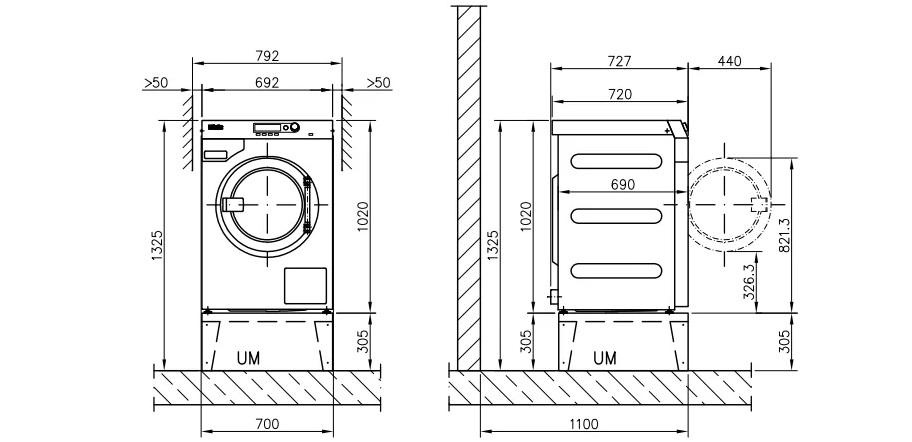
Washing machines and dryers come in varying depths. Some models are full-size and others are narrow. It's important to measure the units accurately, using the most prominent parts of the cabinet. This ensures that the door of the future cabinet doesn't hit the appliance hatches when closed.
When calculating the column depth, it is essential to provide a spare 5-6 cm required for connecting equipment to utilities.
It's a good idea to leave a small amount of extra space, about 2-3 cm. If the washer and dryer are 60 cm deep, the column should be at least 60 + 5 + 2 = 67 cm. This will be enough to accommodate the machines.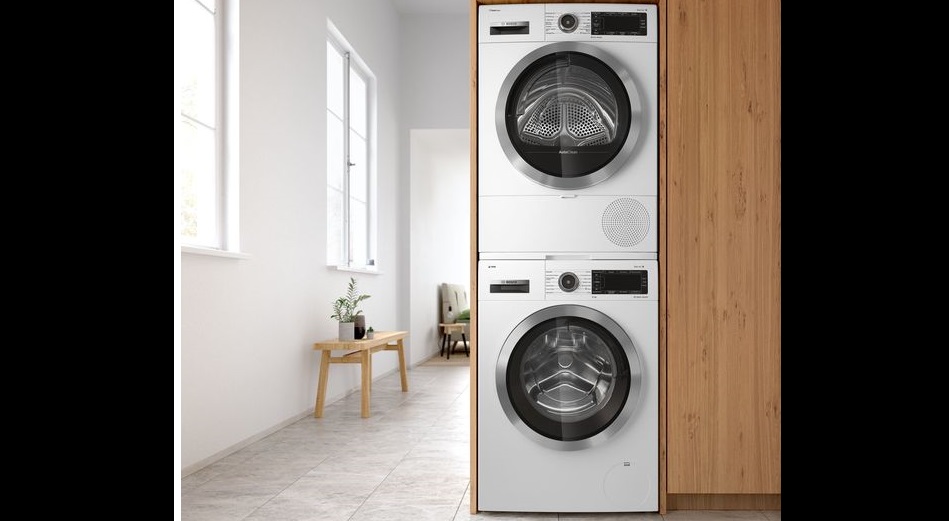
The width of the future cabinet will be the same as the width of both washing machines, plus a small allowance of approximately 1 cm. If the washer and dryer occupy the standard 60 cm, then the niche should be at least 61 cm. It's important for cabinet makers to take into account the thickness of the material. If the chipboard is 1.6 cm thick, the calculated dimensions of the cabinet will be 63.2 cm.
This is how the column dimensions are calculated. With these initial measurements, the height of the washing machine cabinet should be 180 cm, the width 63.2 cm, and the depth 67 cm. It's important to remember to add a small amount of clearance to allow for the doors to open freely and to connect the washing machine to the water supply and sewerage system.
How to connect a column to utilities?
Once the equipment is installed, the units need to be connected to the house utilities. One outlet is usually sufficient to connect dryers. If the dryer is a vent type, it may need to be included in the ventilation system.
If you have a ventilated dryer, you need to do the following:
- find a hole on the machine body;
- connect the air duct to it (it is made in the form of a flexible corrugated pipe and comes with the equipment) and secure it with a clamp;
- Connect the other end of the corrugated pipe to the ventilation system (if there is none, then the tube is simply directed to the window).
It's important to try to position the duct as straight as possible. If the corrugated pipe is too bent, air circulation will be disrupted. The hood will not operate at full capacity.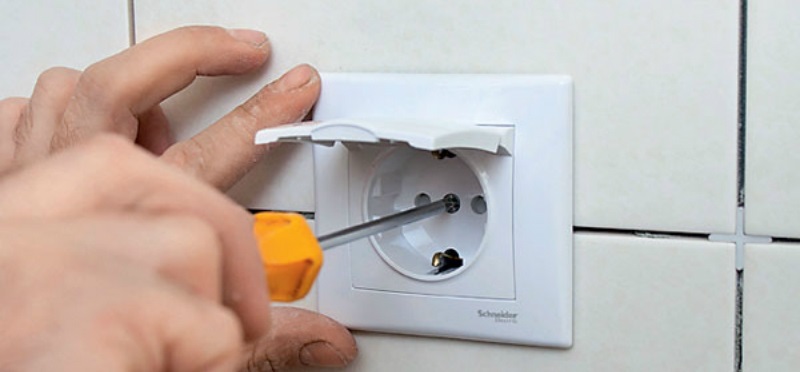
If the column is installed in a room with high humidity, the air duct should not be routed overhead. Otherwise, condensation will constantly accumulate on the corrugated pipe. In this case, the pipe should be positioned at the same level as the dryer.
If the dryer is a condensation dryer, its drain hose is connected to the sewer pipe. A simpler method is to direct the hose into the bathroom while the dryer is running to drain the water. However, this method is not entirely convenient.
Connecting a washing machine to the water supply and sewer system is standard. An inlet and drain hose are always included with the machine. A step-by-step procedure for connecting the machine to the utilities is provided in the equipment manual.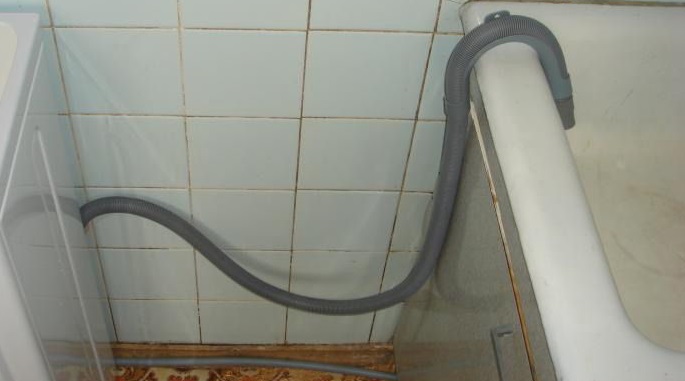
The next step is connecting the column to the electrical network. You can run a separate line from the electrical panel for the machines or connect it to a regular outlet. The latter option is simpler and more practical.
It is important to provide both the washer and dryer with their own grounded outlet.
Dedicating a double outlet to washing machines can lead to short circuits. The increased load can cause the outlet casing to melt. Therefore, it's important to ensure a separate connection point for each appliance.
It's advisable to have a residual-current device (RCD) or circuit breaker installed in the electrical system. This will protect the equipment from voltage surges and current leaks. After connecting the column to the power supply, you can run a test wash and dry cycle.
Interesting:
Readers' comments
Headings
Washing machine repair




For buyers




For users


Dishwasher




Add a comment