
Placement of a washing machine in the toilet
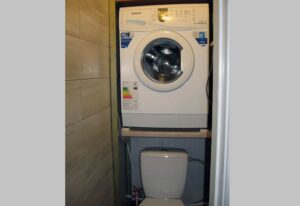 Everyone knows the size of bathrooms and kitchens in Khrushchev-era and Brezhnev-era apartments. These spaces are so compact that accommodating all the furniture and appliances while still leaving enough space for living can be quite challenging. Where to place the washing machine is a particularly pressing issue for apartment owners. We'll explore the possibility of installing a washing machine in the bathroom and discuss the available options.
What is the best way to place the unit?
The idea of placing a washing machine in the bathroom comes to mind for many. This option is convenient because utilities are close by, the appliance is hidden from view, and bathrooms usually have tiled floors, which is also a plus. Furthermore, placing a washing machine in the bathroom can sometimes be safer than in the kitchen or bathroom.
There are several options for placing washing machines in the bathroom, depending on the room's square footage. If the bathroom size allows, the easiest way is to place the washing machine next to the toilet. This is usually not suitable, as most apartments have bathrooms no more than 80-100 cm wide.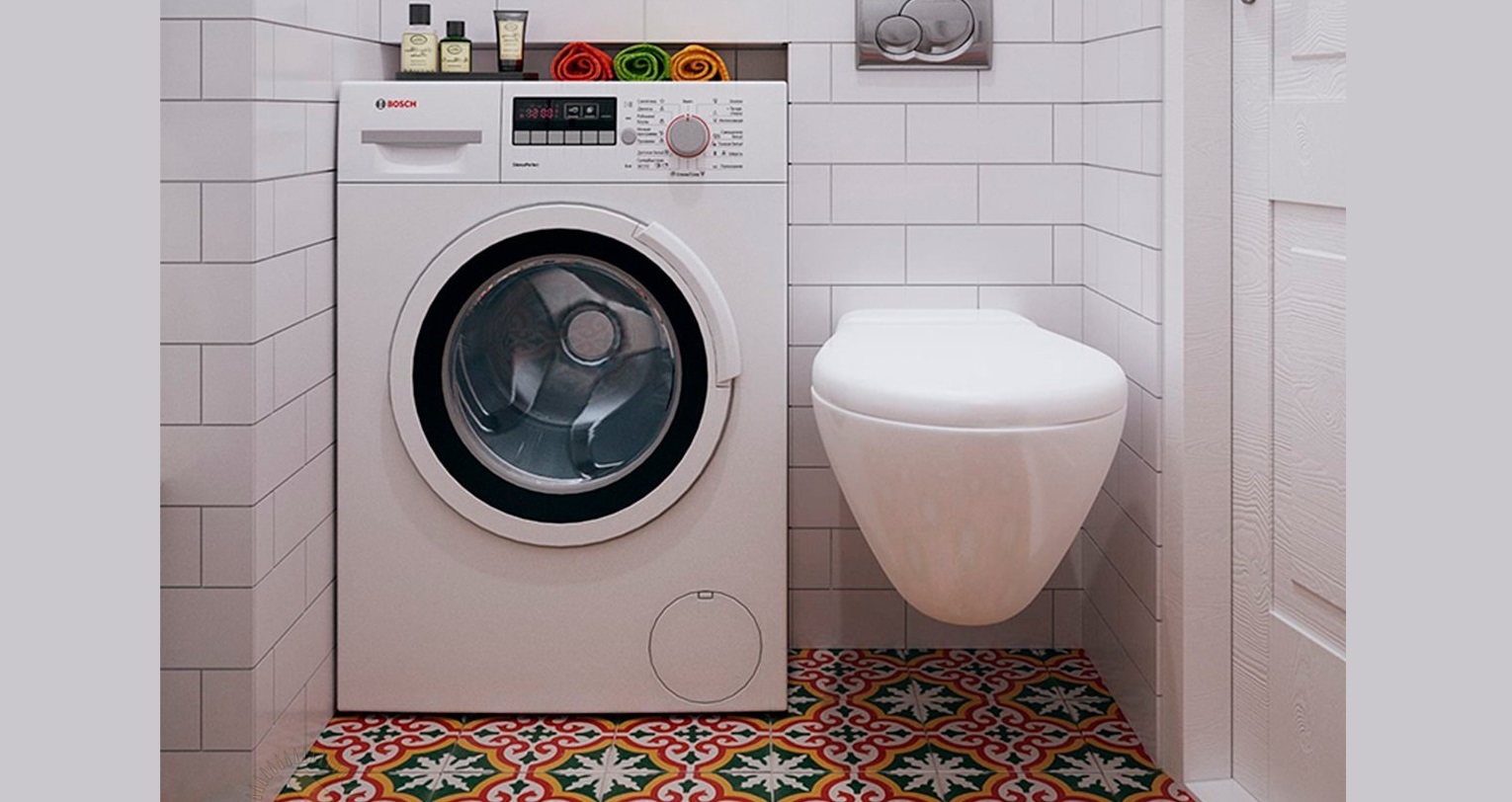
It's easier if the bathroom has a sink. Then you can purchase a front-loading washer with under-sink installation. This will solve the problem—the washing machine will fit perfectly under the sink.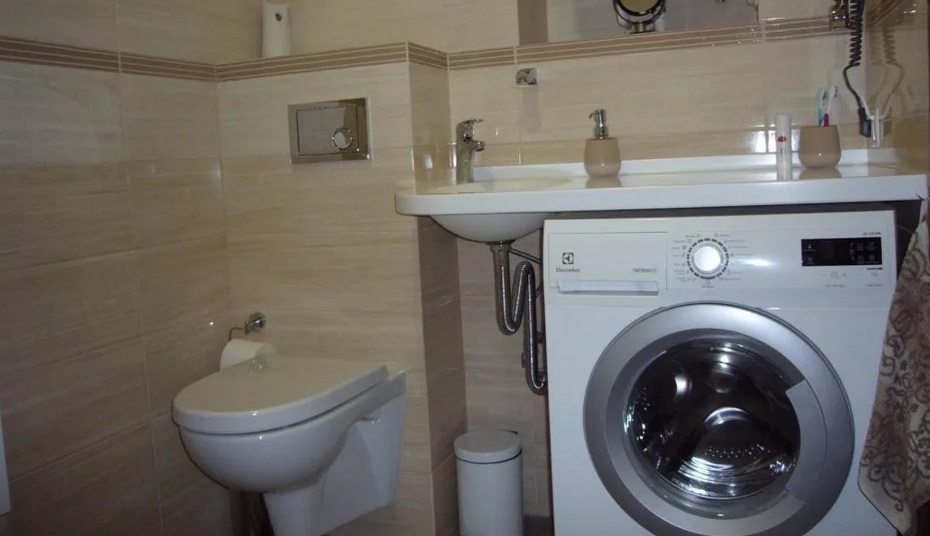
The next option is more expensive. If you have the time and money, you can cut a hole in the wall separating the toilet and bathroom. Place the washing machine in this hole. It's up to you to decide which room the front of the machine will face.
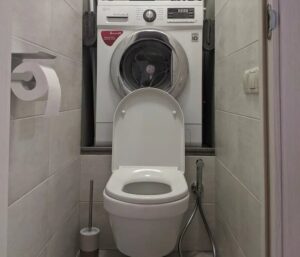
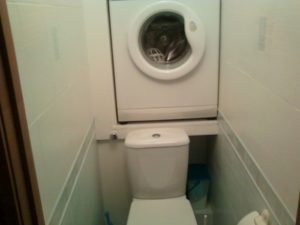
There is another, quite popular accommodation option. Often in a small toilet the machine is installed above the toilet. Installation will take time and effort, but this method allows you to save a lot of space.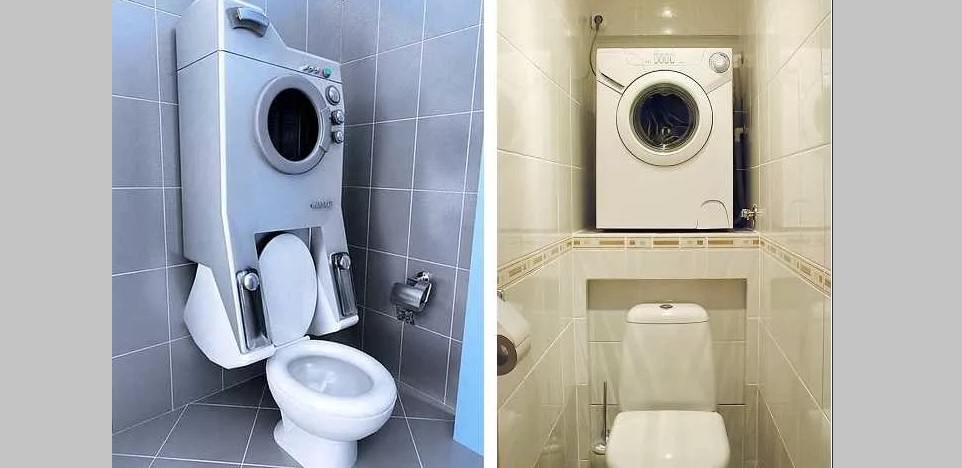
Apartments typically have a small recess in the wall above the toilet. This niche can be used to install the machine. Of course, this placement option isn't suitable for full-size front-facing toilets; in this case, narrow models are the better choice.
A washing machine hanging in a niche above the toilet can be concealed by installing a screen or door. This will hide the washing machine from prying eyes, giving onlookers the impression of a small cabinet.
The metal frame where the machine will be placed must be securely fastened to withstand the load generated by the washing machine during operation.
Along with one major advantage – saving space, this method of placing the washing machine has significant disadvantages:
- Difficulty of installation. You'll have to not only build a sturdy metal frame for the machine, but also secure it to the wall and haul the heavy machine up.
- Inconvenience when loading and unloading laundry from the drum. The hatch will be located at a fairly high height to fill the machine and activate the desired program; housewives may need a chair;
- If the machine is larger than the niche dimensions, it will hang over the toilet. This may be uncomfortable for family members;
- Increased danger. If the frame fasteners become loose, the machine may simply fall to the floor during the next spin cycle;
- Additional difficulties during repair. The heavy device will have to be removed from the shelf and then put back.
Be sure to place a rubber mat under the base of the washing machine; it will dampen the vibrations emitted by the appliance.
Another way to install a washing machine in the bathroom is to hang it on the side. Of course, we're not talking about standard front-loading machines, but rather special wall-mounted units. Their capacity is small, up to 4 kg of laundry, but for a small family, this load capacity is sufficient.
Connecting to communications
Once you've decided where exactly to place your "home assistant," you can move on to connecting the equipment. Be sure to read the instructions to understand how to properly position the drain hose, how to connect it to the sewer, and where the inlet hose is attached. The user manual describes all processes in great detail.
A separate outlet should be provided for the washing machine. It should be moisture-resistant and preferably have a cover. A residual-current device (RCD) is recommended, and the outlet should be grounded. Do not use an extension cord.
Grounding the outlet is essential for the safety of family members. If a current leak occurs inside, the charge will flow to the metal casing, causing serious injury to anyone touching the machine's walls. Therefore, it's crucial to take all safety precautions.
The drain hose must be positioned in a specific way—a curved line at least 50 cm above the floor. If the height is lower, there's a risk of water draining from the washing machine's drum by gravity. There are several ways to connect the hose to the drain: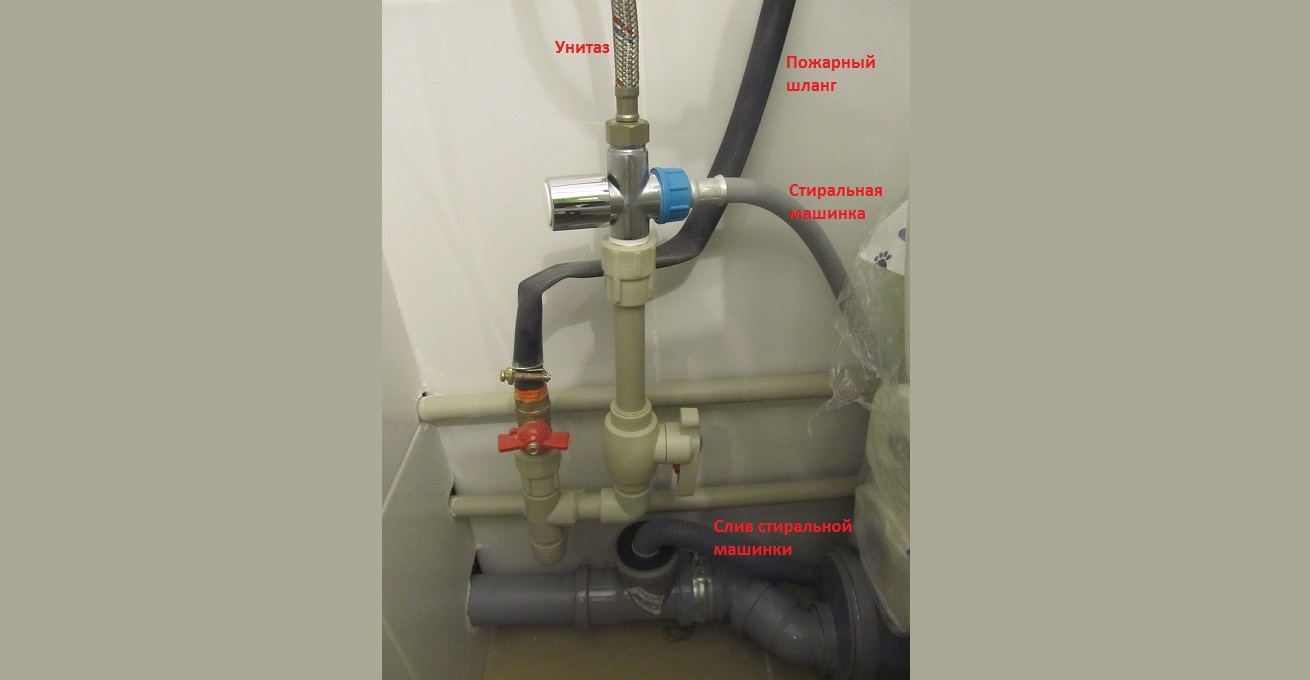
- cut it directly into the sewer pipe;
- Connect to the drain trap under the sink. If there's a sink in the bathroom, the hose can be connected there. If there's no sink, the pipes can be run into the adjacent bathroom and secured there.
- connect through a special tee, which is mounted in the gap of the comb.
It's important that the drain hose connection to the sewer outlet be sealed. Otherwise, the room will become fouled by the smell of sewage. This is especially important.
Connecting the machine to the water supply is simpler. The end of the inlet hose has a nut with a 3/4-inch thread. This nut fits a variety of valves, including screw-type and ball valves. Once you've selected the appropriate valve, install it into the pipe and screw the washer hose onto the outlet.
After connecting the automatic washing machine to the power supply, run a test wash. This should be done empty, without any laundry in the drum. During the first cycle, it's important to constantly monitor the machine to detect any potential problems.
The difficulty of installing a machine in a small toilet
In small bathrooms, washing machines are typically installed above the toilet, on a special frame. Mounting the machine on top requires considerable effort and time. And it's important to understand that over time, some part of the washing machine may break. You'll have to unplug the unit and remove it from its "shelf."
Experts recommend removing the machine from the frame sideways—this will make the process much easier. Also, the unfolded washing machine should be removed from the bathroom and repaired in a more open space. The machine should be placed back on the shelf in the same position and then turned face-up.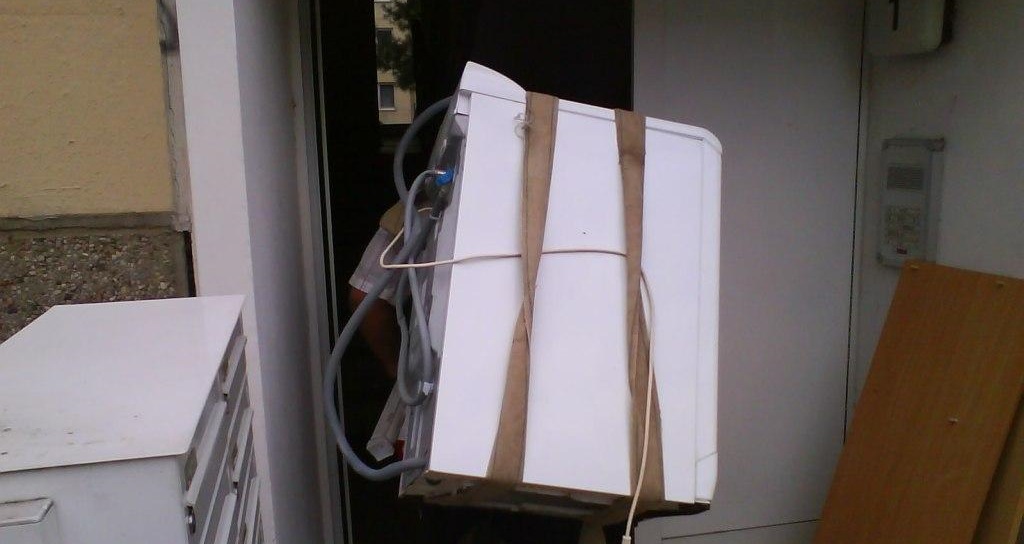
To summarize, installing a washing machine in a small bathroom should only be done as a last resort, as it can be inconvenient. Of course, if the bathroom size allows, you can allocate space for the machine next to the toilet or under the sink. But instead of hanging a bulky front-facing unit on the wall, it's better to choose a safer mounting method.
Interesting:
Readers' comments
Headings
Washing machine repair




For buyers




For users


Dishwasher




Add a comment