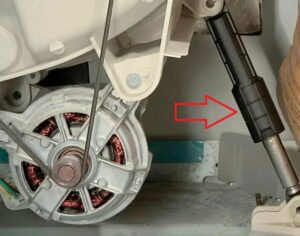
Because standard shock absorbers are quite expensive, washing machines are often equipped with simple single-cylinder shock absorbers. These have a simple design, so even someone with no experience in appliance repair can disassemble a washing machine shock absorber. We'll learn in detail how to do this at home, thereby saving the family money on calling a repairman.
We divide the car's shock absorber into its component parts
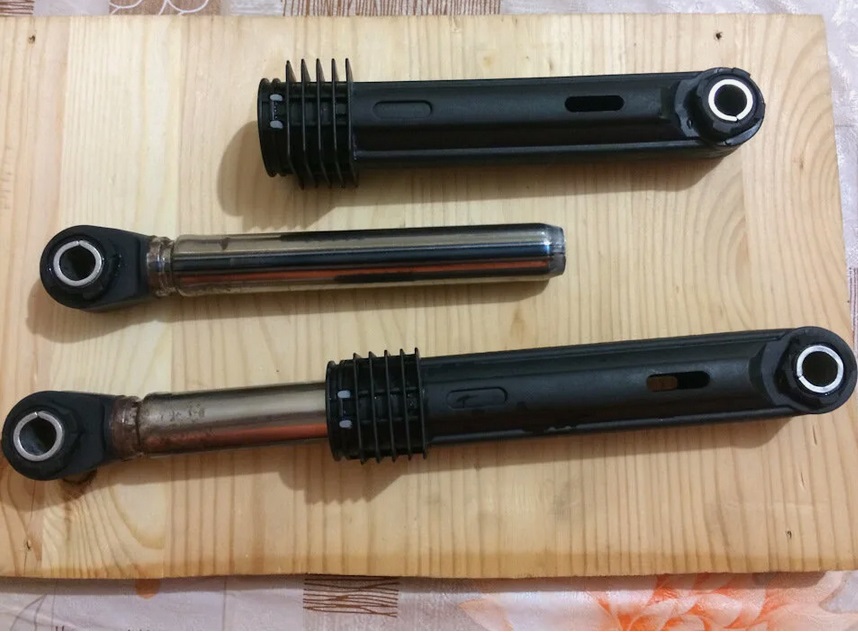
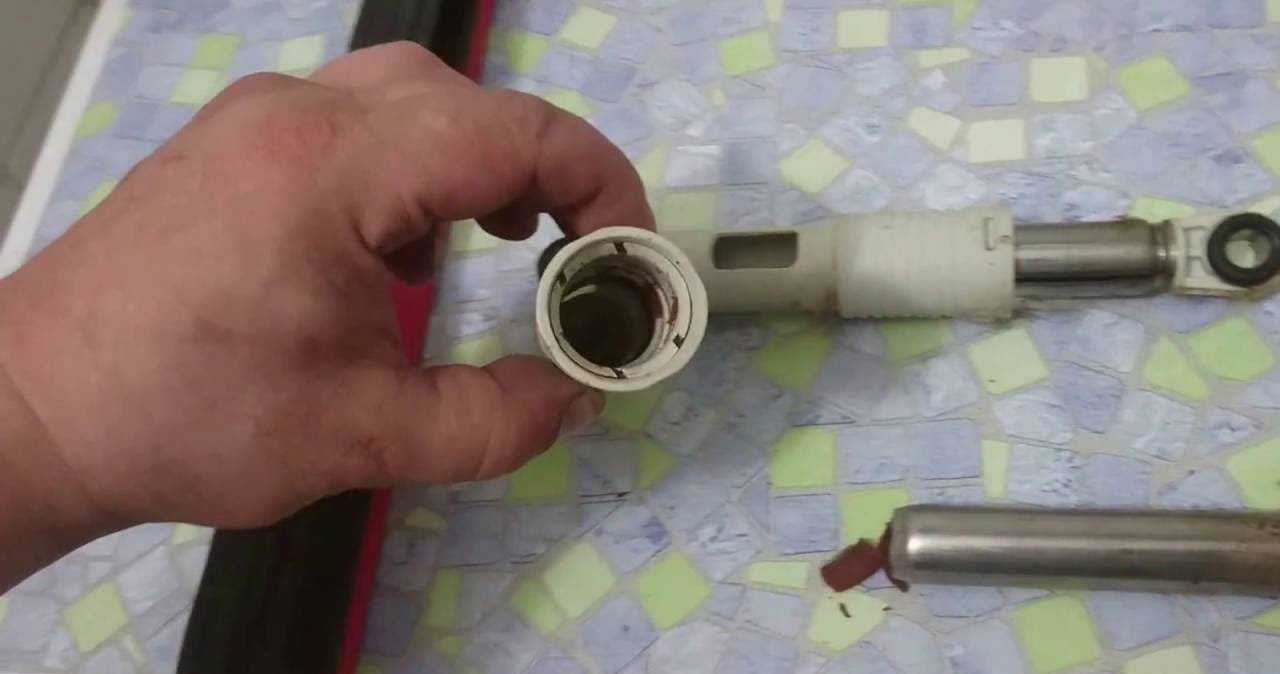
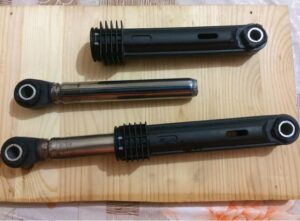
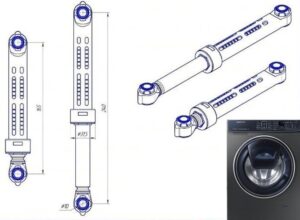
Before disassembling a part, it is worth examining it carefully to understand the operating principle. The shock absorber consists of a plastic cylinder, a small metal rod, two bushings attached to the cylinder and rod, plus a special gasket installed in the design as a piston. Often, it's the gasket that needs replacing, as over time it becomes critically damaged, rendering it unable to perform its intended function. This occurs even with adequate lubrication inside the cylinder, which should create additional friction.
If the gasket loses its properties, the damper will no longer have a working piston, so the piston rod will no longer be held in the cylinder, will begin to move freely within it, and sometimes even fly out. Let's consider a situation in which the gasket has deformed, but not completely, and therefore partially functions, preventing the piston rod from leaving the cylinder.
To fix this problem, you need to disassemble the shock absorber and carefully remove the piston rod from the cylinder. This can be done manually using force—just grasp the element securely and pull it out of its seat. This is usually easy, as the piston loses its resistance and easily leaves its seat.
Don't forget to remove the protective plastic cover with a screw thread from the rod - it protects the element from falling out of the cylinder, but not every washing machine has one.
If you can't remove the piston rod this way, first wrap the cylinder in a towel or rag, clamp it in a vice, and only then try removing the piston again. Pull very carefully to avoid accidentally damaging the plastic components. Once you have the piston rod in your hands, disassembly is complete.
Restoring the shock absorber yourself
First, let's learn how to properly remove the element from your "home assistant." Don't delay repairs if you discover any problems with the dampers. If you leave them running in this condition, you risk damaging the bearings and the washing tank. Timely replacement of the unit will help avoid breakdowns and save the family budget.
Usually, a simple gasket replacement can fix the problem. This requires partially disassembling the washing machine, removing the shock absorbers, and installing a new replacement part. How can you do it yourself?
Disconnect the washing machine from all utilities.
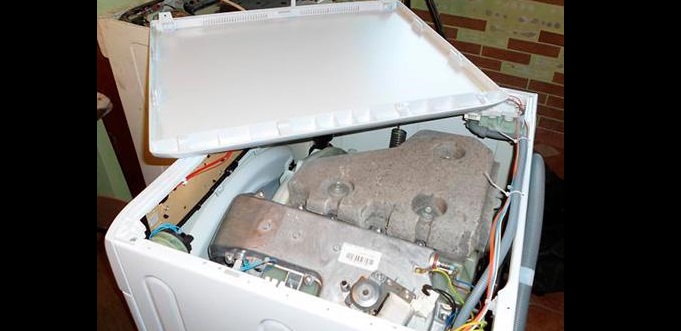
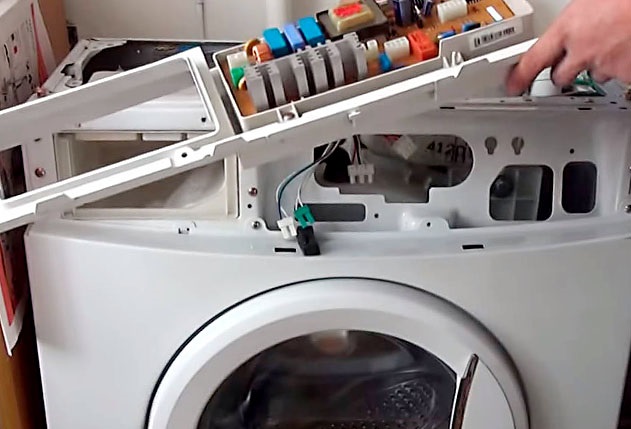
Remove the top cover clips and then remove the top cover.
Remove the household chemicals tray.
Carefully detach the CM control panel.
Disable the hatch locking device.
Insert the rubber hatch seal into the drum by first loosening the clamp that holds the cuff.
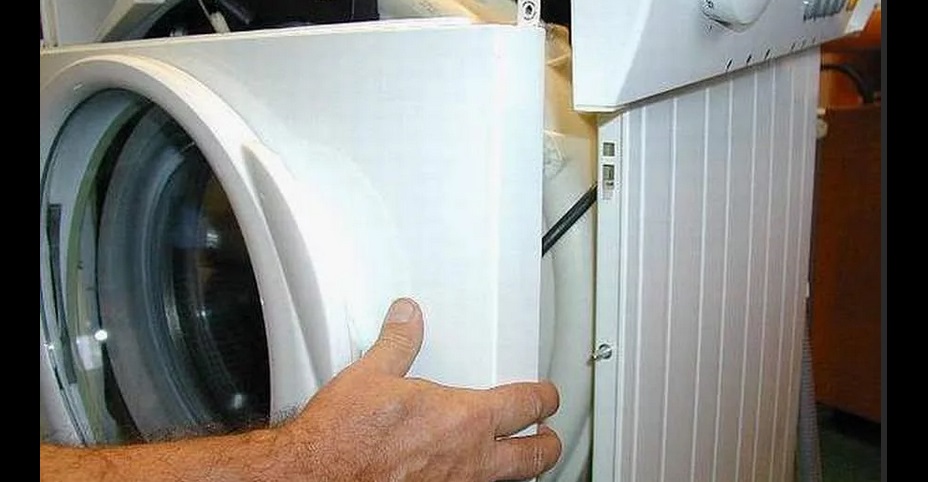
Remove the front panel of the case.
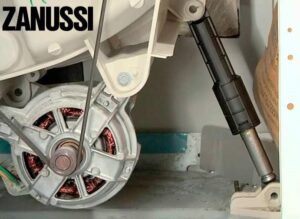
Remove the dampers.
Disassemble the parts and assess the integrity of the gaskets.
If the element needs to be replaced, cut out suitable sized parts from textolite or rubber.
Install the resulting seals in place of the old ones.
Be sure to take photos of all stages of disassembly so that you have examples to hand during reassembly.
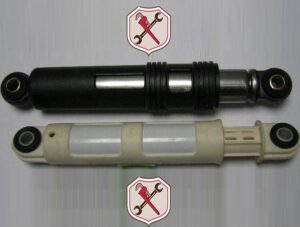
In some situations, it's impossible to repair the damper, requiring the purchase of new parts. Unfortunately, even if only one damper fails, both must be replaced to achieve uniform vibration damping. Otherwise, the component will wear out very quickly, negatively impacting the entire system.
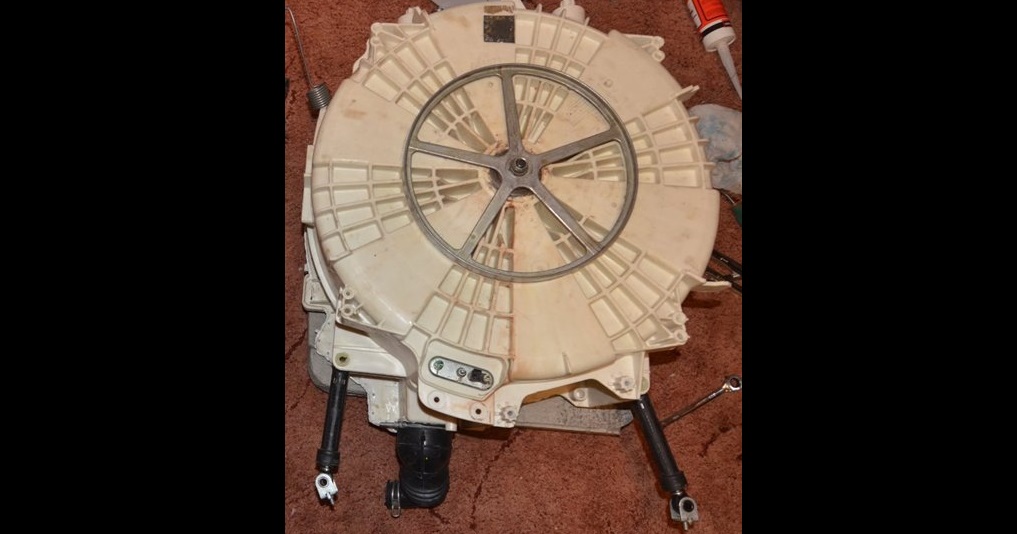
Replacing the shock absorber assembly begins with removing the components. They may be detachable from the washer's tub, or they may be attached so that they must be removed along with the tub. The former option is preferable, as you can quickly remove the front panel of the machine, remove the components, and install the replacement. If the shock absorbers cannot be removed without the tub, disassembling the washing machine is required.
Unplug the machine.
Remove the top panel of the housing, the powder receptacle, the control panel, the upper springs, and then the front panel.
Disconnect the pipes from the tank, as well as all sensors and instruments.
Remove the large object and place it on a flat surface to make it easier to work with.
Restore the dampers or install new ones instead of damaged ones.
Disassembling the washing machine to check the dampers is an excellent opportunity to inspect other important components, such as the bearings, spider, and drain. Never wait for a malfunctioning component to fail completely, as this can seriously worsen the situation. If any system components are clogged or have a thick scale buildup, WD-40 technical lubricant can help remedy the situation. Once the maintenance is complete, all you have to do is reassemble the machine according to our instructions in reverse order, and then run a test cycle.
Does the shock absorber need to be repaired?
At the first suspicion that the shock absorption system is faulty, you need to carefully check the dampers. There is no need to start disassembling the machine and dampers without checking, because there is a simple and quick test of the unit. What to do for this?
Disconnect your "home assistant" from the mains.
Remove the top panel by first removing the retaining bolts.
Gently press down on the washing machine tank with your hands so that it drops at least 5-7 centimeters.
Drop your hands quickly and watch the reservoir.
If the components are in good working order, they will engage instantly, returning the tank to its normal position. However, if the tank begins to swing back and forth like a pendulum, the shock absorber system needs repair. This can be determined without this inspection—damaged dampers can be detected by the following signs:
During washing, a strange creaking and humming noise appeared;
The device started jumping violently during the spin cycle.
To prevent future shock absorber damage, it's important to determine the cause of the problem. Most often, shock absorber failure occurs due to the following:
natural wear and tear that occurs during active use of the device;
deformation that could have occurred due to errors in the use of the washing machine, careless transportation, or a manufacturing defect;
wear of fasteners – the bolts that secure the dampers may have simply become unusable over time.
If the shock absorber assembly has completely failed, it can only be replaced with a new one. However, if the dampers are failing due to worn gaskets or loose fittings, you can fix the problem yourself and save on service center fees.

 Because standard shock absorbers are quite expensive, washing machines are often equipped with simple single-cylinder shock absorbers. These have a simple design, so even someone with no experience in appliance repair can disassemble a washing machine shock absorber. We'll learn in detail how to do this at home, thereby saving the family money on calling a repairman.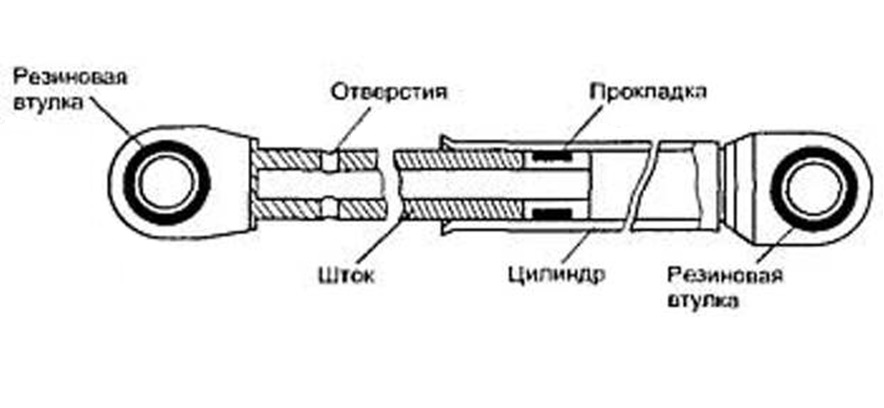














Add a comment