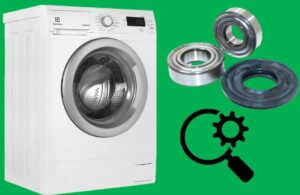
If your Electrolux washing machine breaks down and needs to be checked for bearings and seals, you'll have to almost completely disassemble the drum. This seems simple at first glance. Difficulties arise once the technician gets to work: the parts are heavy, there are numerous fasteners, and there's limited room to maneuver. However, if you understand the assembly diagram and have the necessary tools, you can fix the problem at home.
Tools for disassembling the device
Unlike other manufacturers, Electrolux allows for the replacement of parts. Accessing the interior of the unit requires removing several screws or bolts. Some parts are secured with clamps.
To troubleshoot, you will need a standard set of tools that almost every owner has:
flat and Phillips screwdrivers for different thread diameters;
pliers.
However, for disassembling some models, other tools may be required. We recommend having the following:
wrenches;
round-nose pliers;
chisels;
hammer;
stationery knife;
universal key;
Be sure to read the device instructions before starting work.
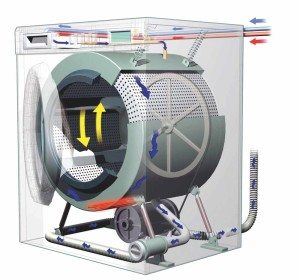
Most Electrolux washing machines have similar design features. However, to avoid mistakes, we recommend carefully reading the manufacturer's recommendations, paying particular attention to the motor type. Inverter type motors are directly connected to the drum, while commutator type motors are connected by a belt and pulley. Next, assess where the heating element, pump and pipe are located.
How to remove the master node?
Before removing the drum, you need to remove most of the washing machine parts that are attached to the body, step by step. Strictly following the disassembly instructions is essential for successful removal.
To prevent accidental electric shock, disconnect the machine from the power source before beginning repairs. Simply unplug it from the outlet.
The first thing you need to do is disconnect the water supply pipes.
Then drain any remaining water in the tank. To do this, activate the drain program. Once it's complete, unscrew the filter containing the debris.
Check the drum again. There should be no foreign objects in it.
Turn the device so that nothing obstructs access to the rear panel.
Then remove the back panel and the top of the machine.
Remove the counterweights. To do this, unscrew the retaining bolts.
The instrument panel and powder applicator are detached.
The next step is to remove the pressure switch.
The hatch cuff and the device door are removed.
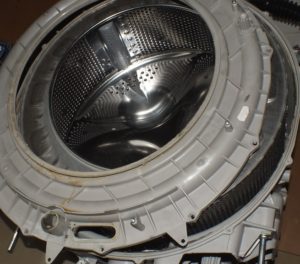
The drum is now accessible. Now, disconnect the wires, hoses, and other components connected to it, one by one, and remove the motor. Then, disconnect the dampers and springs. Once all components are removed, carefully grasp the drum by both sides, lift it up, and remove it from the machine. It's best to do this with another person, as the drum is heavy.
The nuances of disassembly
Place the removed tank on a flat surface, such as the floor. It's important that it's dry. Now disassemble the tank to clean any soap or residue from the reservoir.
First, prepare a utility knife blade and break it into pieces between one and three centimeters long. The key is to keep the pieces thin.
It is better to carry out the work wearing gloves to avoid cutting your hands.
Then, take a thin flat-head screwdriver and pry up the seam latch. Gently lift it up and slide a piece of knife underneath. Thus, a piece of blade must be inserted under each latch.
After this, you need to unscrew all the screws that are screwed into the tank.
Insert a screwdriver along the contour of the seam and divide the tank in two.
Turn the tank over and use a universal wrench to secure the shaft and unscrew the axle. If the shaft won't unscrew, we recommend treating the joints with WD-40 cleaner and separating the tank half from the drum.
When contacting a service center, there's always the risk of encountering unscrupulous technicians. They may act carelessly, breaking off the blades instead of inserting them between the latches. This method significantly speeds up disassembly, but weakens the structure. Because the plastic clips are broken, the tank is held in place only by screws. Technically, this assembly method is acceptable, but unreliable.
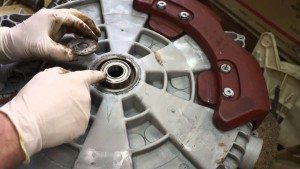
Once the drum is completely disassembled, there's nothing stopping the unit from being repaired. Most often, the bearings are replaced at this stage. To do this, the seal is removed, the crosspiece is unscrewed, and the O-ring joints are hammered out. The area is cleaned with WD-40, and only then are the new parts installed. The joint is reinforced with silicone sealant, and the tank is reassembled in the same manner, but in reverse order.

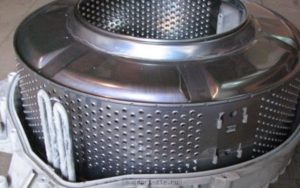 If your Electrolux washing machine breaks down and needs to be checked for bearings and seals, you'll have to almost completely disassemble the drum. This seems simple at first glance. Difficulties arise once the technician gets to work: the parts are heavy, there are numerous fasteners, and there's limited room to maneuver. However, if you understand the assembly diagram and have the necessary tools, you can fix the problem at home.
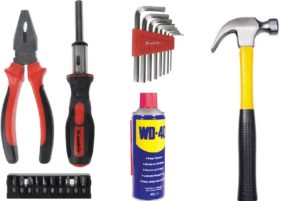 However, for disassembling some models, other tools may be required. We recommend having the following: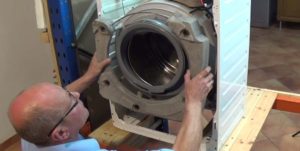















Thank you for helping me understand how it works. You explained everything very clearly. Good luck!
Thanks for the accessible educational program. Good luck!