
How to disassemble a washing machine motor?
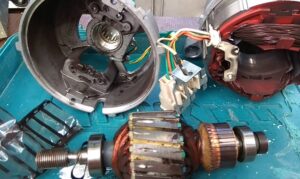 If you think your washing machine's motor needs repair, you'll need to conduct a diagnostic to find out for sure. To do this, you need to know how to properly disassemble a washing machine motor so you can restore it to working order later, if necessary. Removing and disassembling the motor is also useful for those who want to salvage the copper for scrap metal.
How to remove the engine?
Removing a washing machine motor is much simpler than removing and replacing bearings or disassembling the drum. However, basic precautions should not be neglected. Rushing the process can lead to negative consequences, even in such a routine procedure. Here's the procedure for removing the motor:
- Disconnect your washing machine from all utilities and position it so that you can easily reach the rear wall of the unit and work with its contents.
- Unscrew the screws holding the rear panel of the CM and remove it, putting it aside.
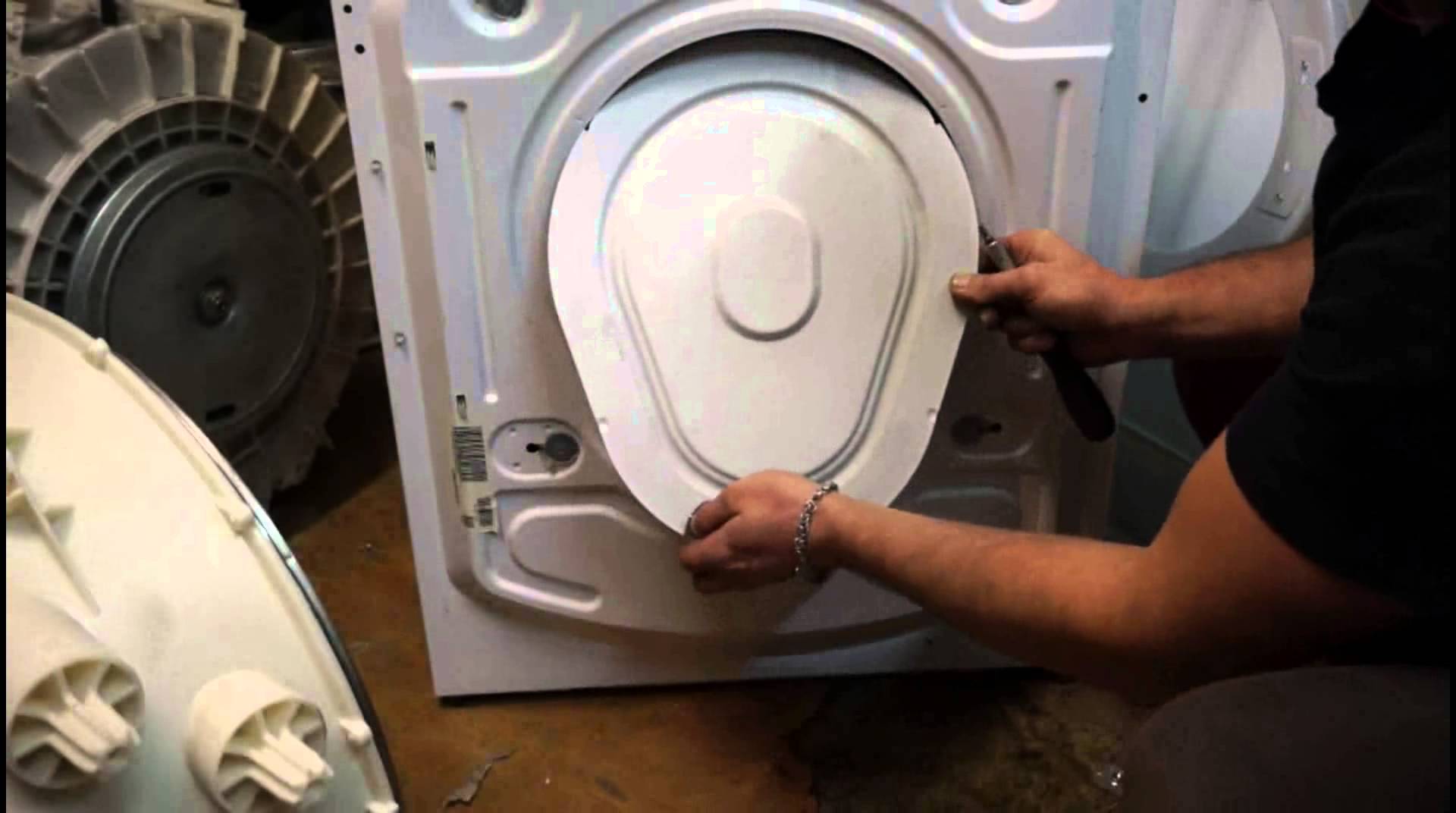
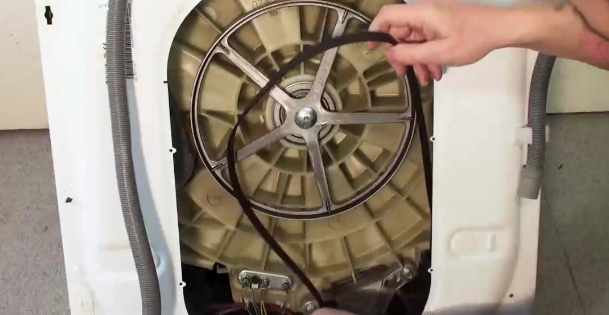
- Spin the pulley wheel while pulling the drive belt towards you to remove it.
- Inspect the space under the tank and find the engine there.
Important! The electric motor is held in place by two screws, which can be removed using a T20 socket head.
- Now you need to lay the washing machine on its side, depending on the position of the detergent drawer. The side on which the drawer is located is the side on which the machine is placed.
- Disconnect the motor from the ground and the terminal with the wiring.
- Use a screwdriver or similar tool to pry the motor forward.
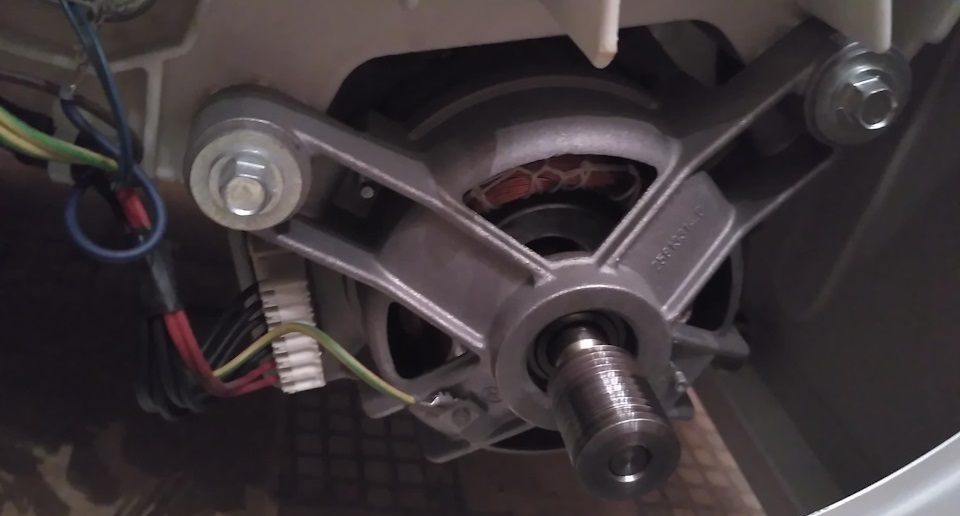
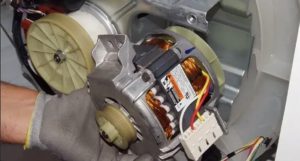
- Remove the part from the grooves and then from the CM body itself, carefully rocking the engine from side to side.
For further diagnostics and repairs, place the motor on a specially prepared surface. It should be as level as possible and absolutely dry. Wear gloves during all work. Also, be prepared for the motor being very heavy, weighing several kilograms, so move and remove it with extreme caution to avoid damaging the rest of the washing machine's internal components during disassembly.
Opening the engine
Let's look at how to open and disassemble a washing machine motor using a Samsung motor as an example. Almost all modern models from popular manufacturers have a similar design, so motors from other machines will be disassembled in a similar manner. To dismantle it, you need to turn the engine towards you with the pulley.
- First, you need to disconnect the rotor commutator, essentially the motor's front component, from the aluminum housing and stator, which are held together with special rivets. This motor has eight of these: four on each side, two on the bottom, and two on the top, but the number may vary. To drill out the rivets, you can use a standard drill and an 8mm drill bit.
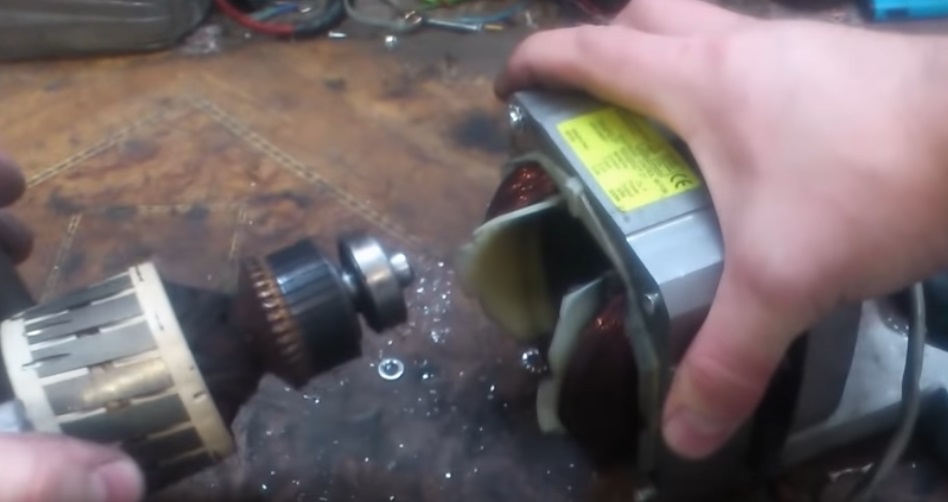
- After removing the rivets, take a screwdriver, knife, scissors, or any other sharp object, pry up the gap between the housing and the contents of the motor from the pulley side, and separate one from the other.
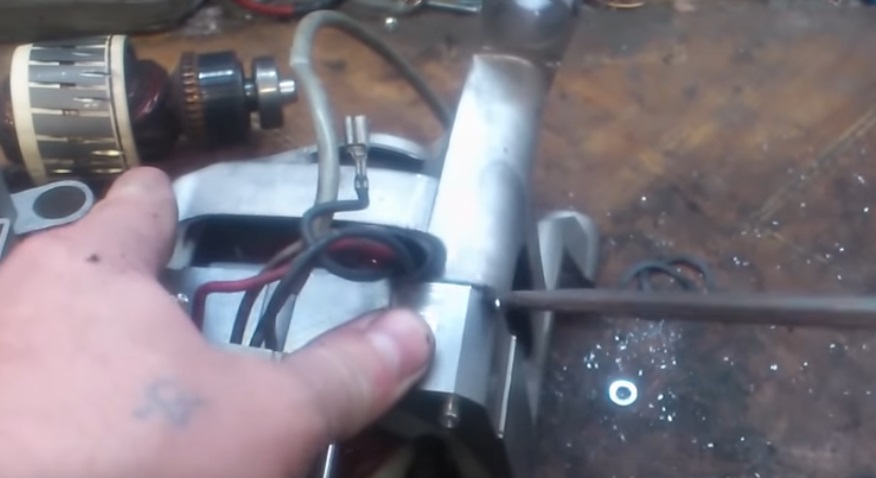
- Next, simply pull the anchor (on the opposite side from the pulley) and disconnect it from the rest of the housing.
- Now you need to separate the motor stator from the rear wall of the housing, prying it with a chisel or screwdriver.
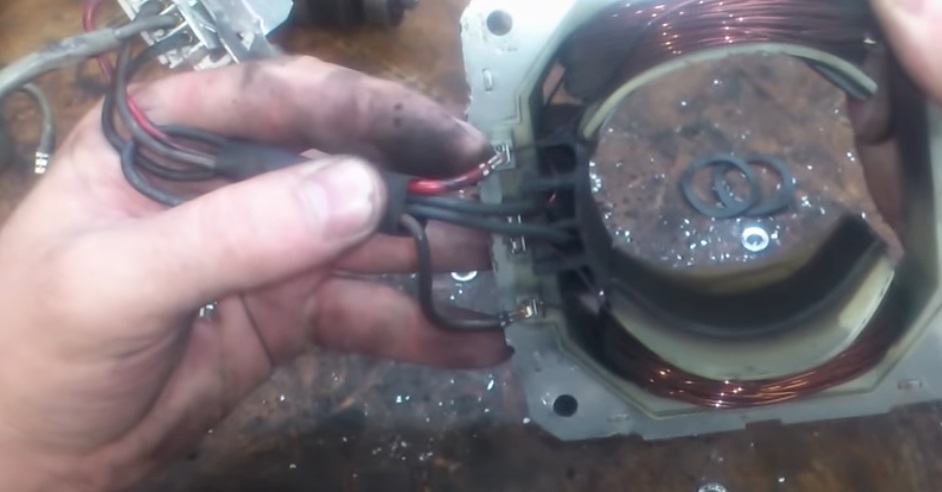
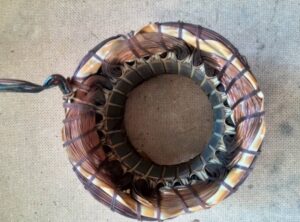
- After removing the stator, inspect its winding. It typically consists of four wires, two of which are the same color and protect the stator. These wires lead to the disconnect block, which can also be removed. To do this, cut two wires, then carefully remove the block from its slots. If you plan to restore the engine's functionality later, do not touch the wires or remove the block; if necessary, perform a visual inspection.
Important! Stator wire, if intact and unburned, can be used for winding transformers in addition to copper scrap, as it can be easily removed without damaging the varnish.
Now let's return to the rotor section of the motor. It consists of bearings, magnetic rings, a commutator, an armature, a compensation ring, and a pulley wheel. Some of these parts can also be useful around the home if the electric motor has reached the end of its useful life.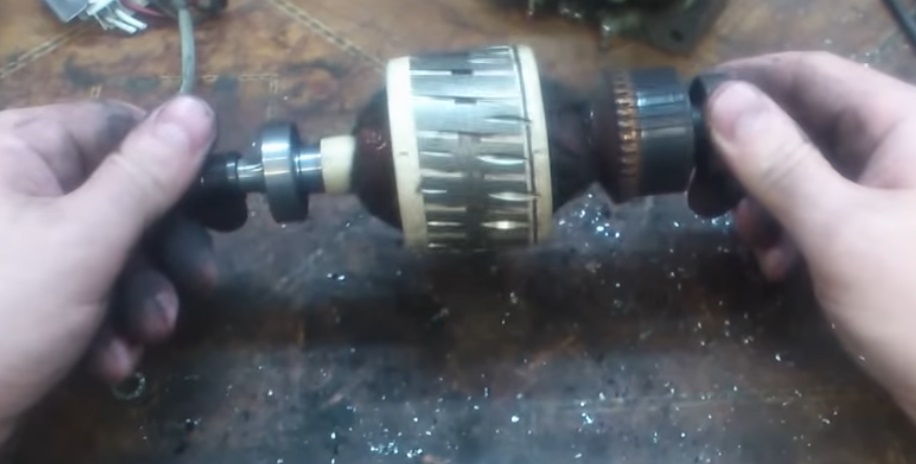
For example, bearings can be used in the wheels of a garden cart. People typically don't reach high speeds while walking, so the bearing rings can easily withstand this pressure. To do this, simply remove the bearings from the motor unit with a special puller, lubricate them, and insert them into the cart wheels.
A commutator-armature connection is more difficult to use outside of a washing machine, but it contains a huge amount of copper wire, which is much more difficult to unwind, so it can easily be scrapped. Typically, electric motor repair doesn't involve such detailed disassembly. It's sufficient to simply disassemble the housing and then address the problem based on the identified issue.
Interesting:

Readers' comments
Headings
Washing machine repair




For buyers




For users


Dishwasher




Add a comment