
Disassembling the washing machine drain pump
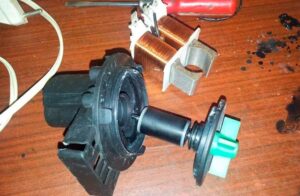 If your washing machine suddenly freezes while draining or stops working completely, you'll need to check the pump. While the pump may look brand new, it can accumulate a significant amount of dirt and debris inside, preventing it from functioning properly. We'll explain how to remove the pump from the housing and disassemble it.
Dismantling and removing pump parts
Disassembling and cleaning your washing machine's drain pump doesn't require a professional. The job doesn't take much time and is easy to complete if you follow the instructions. The pump of all machines is located in the lower part of the body, under the tank. Typically, it can be accessed through the bottom of the washing machine. The procedure for disassembling the drain pump is as follows:
- unplug the washing machine;
- turn off the valve responsible for the water supply;
- detach the drain and fill hoses from the body;
- Locate the debris filter. Depending on your washing machine model, it may be hidden behind a lower decorative panel or a small hatch;
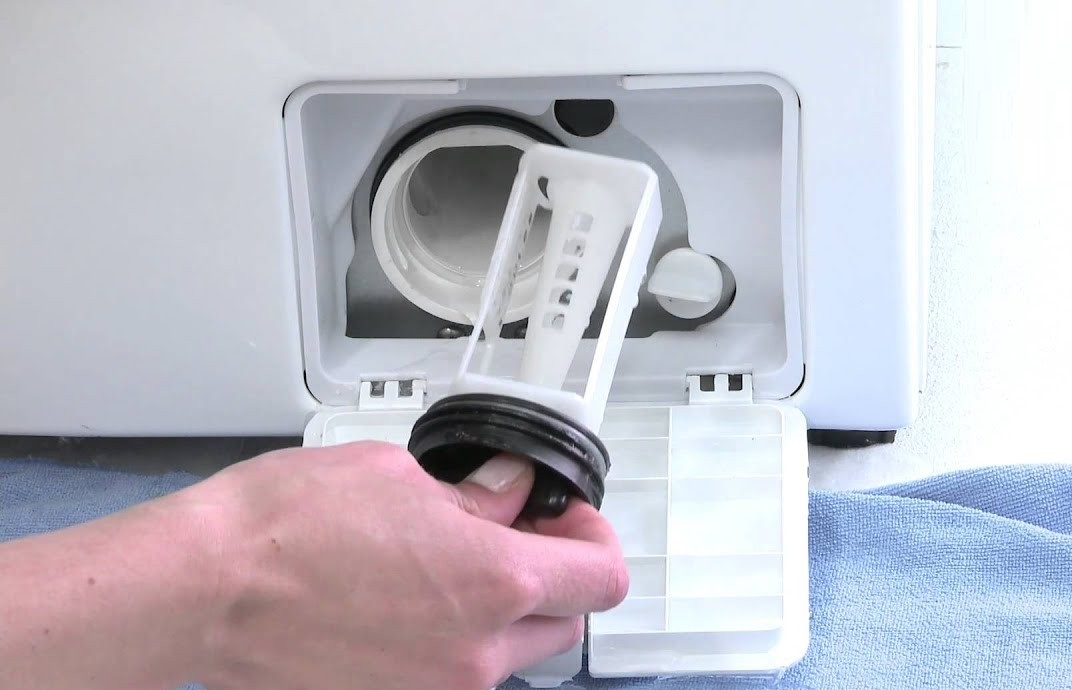
- Cover the floor around the washing machine with unnecessary rags, place a low basin under the bottom, in the area where the waste filter is located;
- Unscrew the drain filter plug and make sure that the liquid flows out of the hole into the container;
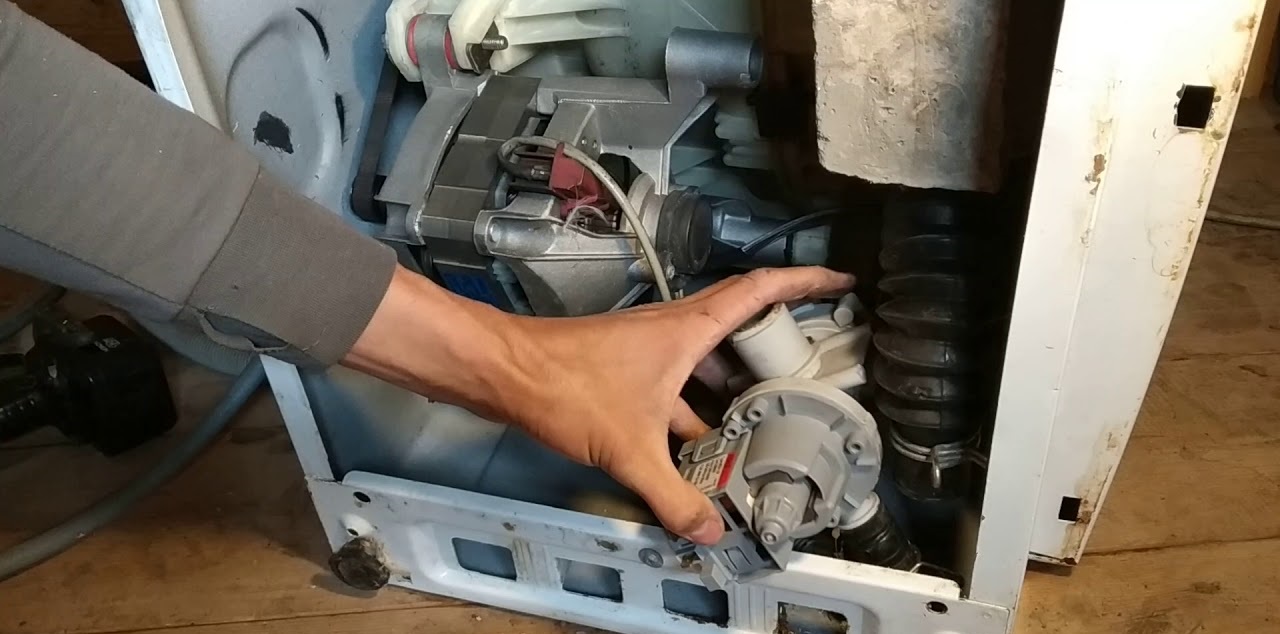
- carefully place the front camera on its left side;
You cannot lay the washing machine on its right side - water accumulated in the pipes may flood the control board.
- If there is a tray under the machine, unscrew the fixing bolts and remove it;
- unscrew the screws securing the pump to the housing;
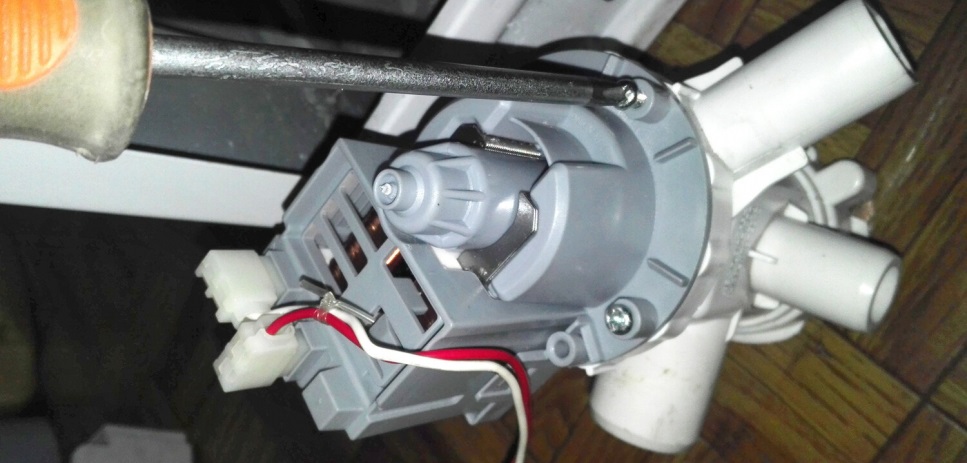
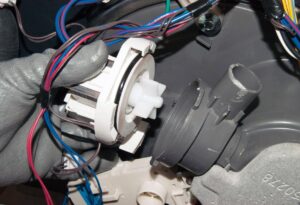
- Take a photo of the wiring diagram for the element, then disconnect the contacts and pipes;
- Turn the pump from right to left, slightly “sink” it into the housing and pull the part out.
Next, you need to remove the impeller; without it, you won't be able to disassemble the pump. Follow these steps:
- Pry up the impeller latches and remove it. If the crosspiece doesn't come off, blow hot air (a hair dryer) onto the shank and try again;
- After removing the magnet and impeller, clean them from dirt;
- Remove the electromagnet from the shaft. Now you can see the bearing.
Inspect the bearing; if it is badly damaged and cannot be repaired, replace the element.
After cleaning the inside of the pump yourself, reassemble the housing in reverse order. Next, replace the pump in its original location and connect the wiring and hoses. To avoid making any mistakes when connecting the contacts, refer to the photo below. Be sure to run a test cycle and observe the machine's operation.
How to ring a coil?
If no visual defects are detected in the pump, it will need to be tested with a special device. To diagnose the pump, you'll need a multimeter—available at specialty stores and costing approximately $3–$6. You can use the tester to test the coil of the element. The procedure is as follows: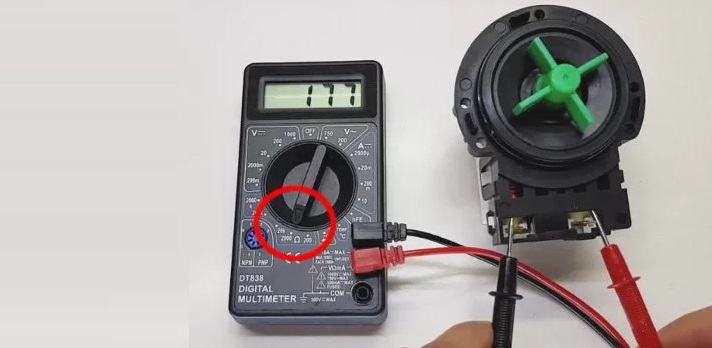
- set the multimeter to voltmeter mode;
- Place the device probes against the coil contacts;
- evaluate the values on the tester display.
If the multimeter displays 0 or 1, the pump will need to be replaced. Repairing the part isn't practical; it's better to buy and install a new unit. If the multimeter displays a three-digit number, the problem may not be a burned-out pump motor, but rather a faulty control board. For a more accurate diagnosis, you'll need to call a technician.
Let's extend the service life of the part
Washing machine manufacturers claim a fairly long service life for drain pumps—8-10 years. Whether the element will last that long depends largely on the user. To prevent the unit from failing early, it is important to ensure proper maintenance of the automatic machine. Typically, a pump fails prematurely due to:
- penetration of foreign objects into the drainage system;
- loading too much dirty and dusty laundry into the drum;
- getting paper clips, keys, paper, bolts, matches and other items forgotten in pockets inside.
To ensure your automatic washing machine's water pump lasts as long as possible, follow these basic rules:
- shake out things before washing, make sure there is nothing left in the pockets;
- laundry with pieces of dirt should be pre-soaked in a basin and only then loaded into the drum;
- install a filter in front of the machine’s inlet hose for additional purification of tap water;
- periodically use various means to prevent scale formation;
- Make sure that there is no water left in the tank after washing.
If you have even the slightest doubt about the operation of the drain pump, it is best to immediately disassemble the part, clean it and test it with a multimeter.
In fact, disassembling the pump yourself is quite simple. If you follow the instructions, the job can be completed in literally an hour. To prevent clogging, clean the debris filter every three months and remove any hair or threads tangled around the impeller blades.
Interesting:
Readers' comments
Headings
Washing machine repair




For buyers




For users


Dishwasher




Add a comment