
How to disassemble an LG washing machine pump?
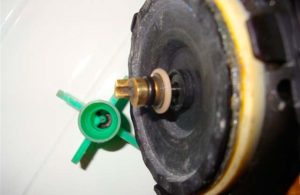 While anyone can remove a pump from a washing machine, disassembling the drain pump of an LG washing machine is somewhat more challenging. While it's certainly easier to throw out the faulty part and install a new one, replacing it isn't always cheaper than doing it yourself. For those on a budget, we suggest learning how to properly "dig into" the drain system.
Let's dig around in the drain pump
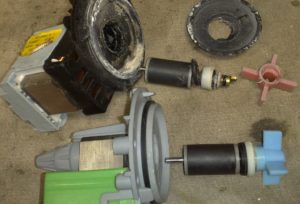
You can't fix the pump without disassembling it. Only by getting under the housing can you check whether the impeller rotates completely on the shaft and how well the clamps hold the part. This is especially true if the blades don't rotate and there's no apparent reason for them to stop (when there's no debris, dirt, or hair on the pump). Then the problem preventing proper drainage is hidden inside the unit, and it needs to be identified. To "unlock" the pump on an LG washing machine, follow these steps:
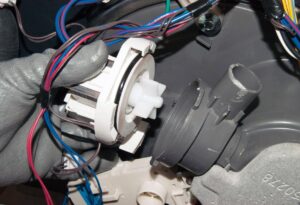
- disconnect the part from the snail by removing the fixing bolts;
- press on the body from the side of the drain valve, and then pull it towards you;
- drain the remaining liquid from the pump;
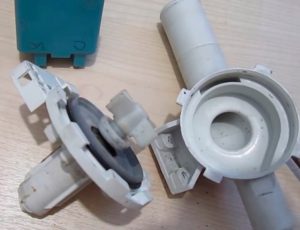
- pry up the latches on both edges of the case;
- lift the pump away from the coil.
Any pump repair requires a thorough cleaning of the pump's internal mechanism and adjacent elements of the drainage system: the volute, the seat, the pipes, and the impeller.
Less common, but still available, are "non-disassemblable" pump types, which, despite their name, are quite repairable. The only requirement is a special approach to the mechanism. Here's how: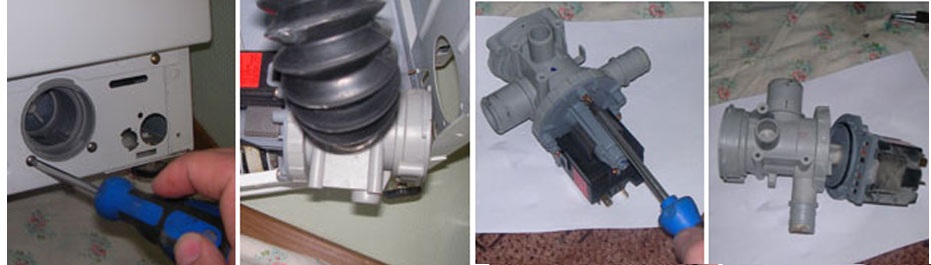
- We put on protective gloves.
- We disconnect the pump together with the impeller, leaving the snail and coil in place.
- We examine the part.
- We take a hair dryer and turn on the lowest temperature setting.
- We direct a hot stream of air to the “tail” – the long tip at the back of the body.
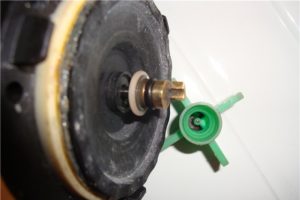
- After 2-5 minutes, use a screwdriver to pry the crosspiece out. The crosspiece comes with a magnet, which makes the mechanism non-disassemblable.
Once the cover is removed, the pump assembly is completely disassembled. All that remains is to repair the component. To do this, clean any accumulated debris from the removed and remaining parts, remove the magnet from the shaft, and lubricate all bearings (both the removed one and the one located at the bottom of the housing) with a special lubricant. Then, restore the pump to its original condition. To ensure the cover fits tightly again, press it down until you hear a distinctive click.
If, after inspection, it turns out the pump can't be repaired, you'll have to replace the faulty part with a new one. We'll purchase a pump based on the serial number of the appliance or washing machine and install it in place of the old one. The connection process is identical to the disassembly technique, so there's no need to describe it in detail.
How do you know if the pump is broken?
It's important to understand that disassembling the pump yourself is risky. To avoid unnecessary expenses, first ensure that the pump is indeed the problem. It's quite possible that your LG washing machine's sudden stop was caused by completely different reasons. You can rule out this error by thoroughly inspecting all the weak points in the drainage system.
- We evaluate the noise level of the machine. When the drain pump is faulty, a loud humming noise comes from the machine, but the water does not drain or fill.A complete absence of any sounds should also be a warning sign—moderate noise at a moderate volume is normal. Testing your washing machine is easy: just run the fastest cycle and listen carefully.
If the problem is in the drain pump, the LG self-diagnosis system will display the OE error code.
- Inspect the drain hose. Drainage is often obstructed by a clogged hose, preventing wastewater from exiting the machine into the drain. You can confirm this by feeling the entire length of the rubber hose, but it's best to immediately disconnect the hose and rinse it under the tap.
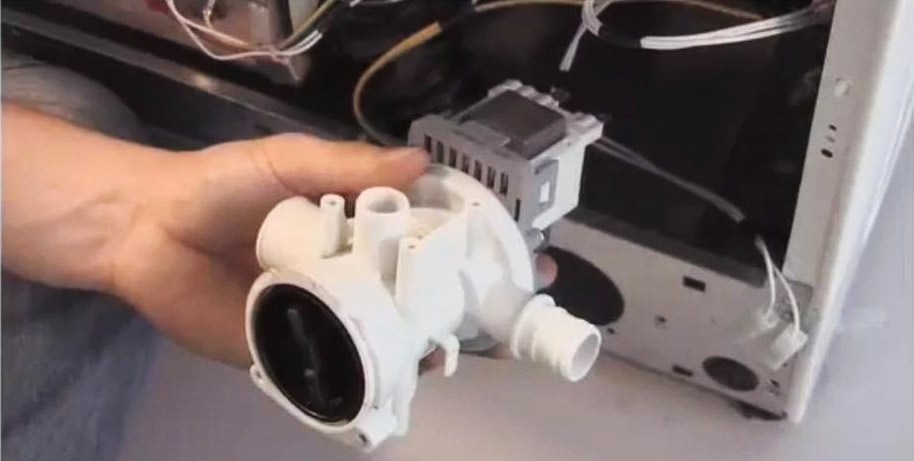
- Cleaning the debris filter. At the first sign of a drain problem, pay attention to the debris filter. It's located under the access cover in the lower right corner of the machine and looks like a plastic spiral attachment. Twist the round cover half a turn, pull it toward you, and thoroughly clean out all the accumulated debris. Hair, coins, dirt, and even bra wires are common on plastic.
- Try turning the impeller. Don't rush to replace the waste filter. It's better to immediately check another problematic element of the drainage system—the pump impeller. This is the bladed wheel located on the pump directly opposite the waste filter opening. Using a flashlight, locate the screw and try to check with your fingers if it rotates freely. If it's difficult to turn, remove any hair, threads, lint, wire, or other foreign objects that might be interfering with its rotation.
To monitor the troubleshooting process, it's recommended to run a test wash after each check. If the pump still doesn't work, you'll need to troubleshoot it. Turn off the washing machine, remove the pump, and begin disassembling it according to the instructions described above.
Interesting:
Readers' comments
Headings
Washing machine repair




For buyers




For users


Dishwasher




Add a comment