
How to disassemble a Samsung washing machine pump?
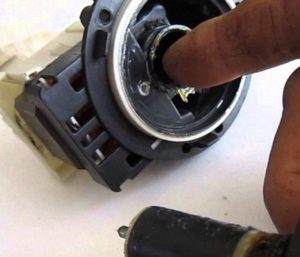 If the drain pump is clogged or no longer functioning properly, it needs to be disassembled for cleaning or repair. This raises two questions for users. The first is how to remove the component from the washing machine body, and the second is how to disassemble the drain pump of a Samsung washing machine, as at first glance it appears to be a cast part, without any fasteners or gaps. We'll explain the disassembly process in detail.
Dismantling the pump
Before disassembling the pump, it is necessary to remove the element from the housing. Before starting work on the washing machine, it is necessary to de-energize the equipment and turn off the water supply. You'll also need to disconnect the drain hose from the drain and the inlet hose from the water pipe. Next, the user wonders: where should I even approach the washing machine? Where is the pump located?
In Samsung washing machines, the drainage system components are located underneath, covered by a false panel or a special hatch. To remove the panel from the housing and access the components, it's best to use a thin screwdriver. The lower part of the machine can be pryed up with a tool and set aside.
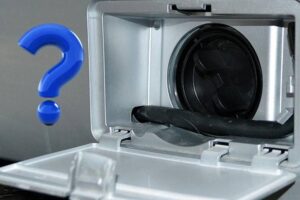
Removing the panel will give you easy access to the drainage system components. This will initially reveal the area containing the debris filter. It's a plastic piece. The filter element protects the pump and impeller from debris and small objects. Be sure to unscrew the drain filter and rinse it in water.
When unscrewing the debris filter, be prepared for water to start flowing out of the hole.
Therefore, before starting work, cover the floor under the machine with rags. This will help absorb excess liquid.
The pump impeller will be visible in the open cavity. Use your finger or a long stick to spin it; it should rotate intermittently but freely. Hair or fabric fibers may be tangled around the impeller, preventing it from moving. Remove as much debris as possible. For a thorough cleaning, you'll need to remove the drain pump from the machine.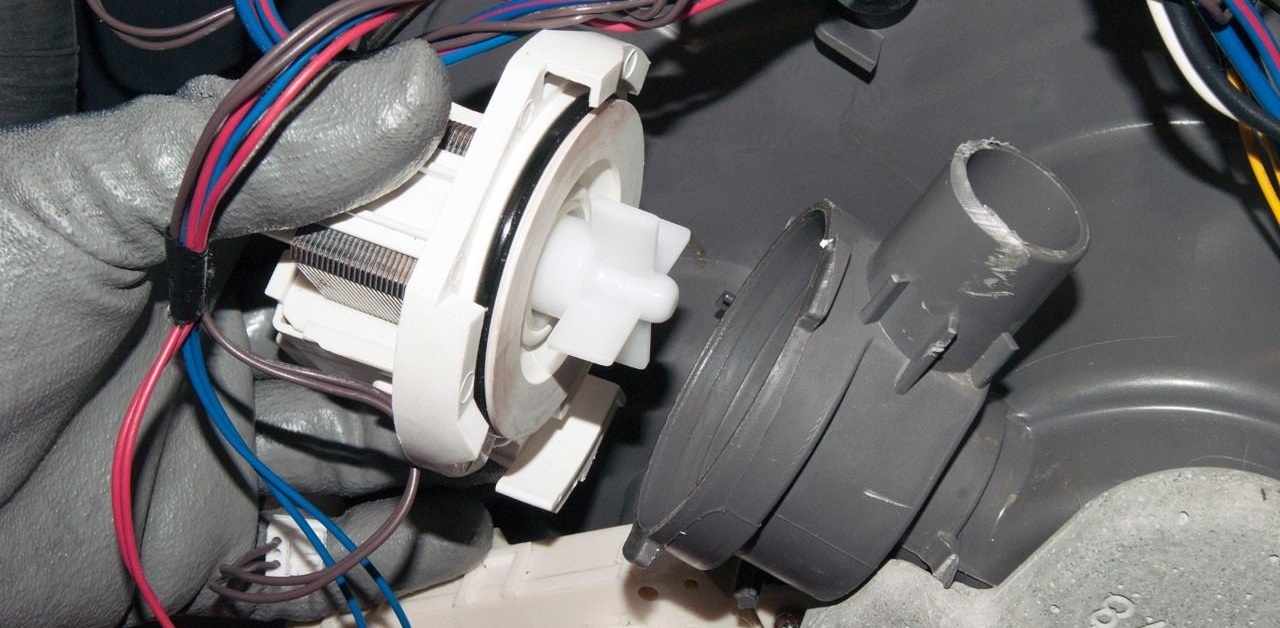
The next step in the repair process, once the pump is disassembled, is to lay the washing machine on its side. Cover the floor with a blanket and place the washing machine on it to prevent scratching the casing. If your machine has a bottom, remove the tray by unscrewing the securing bolts. Look inside the casing to see the pump, the volute, and the motor.
The further algorithm of actions will be as follows:
- Disconnect the two power wires connected to the pump;
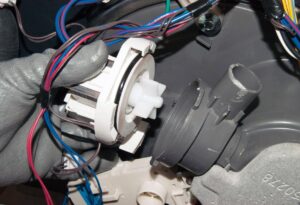
- unscrew the bolts securing the drain pump to the snail;
- Take hold of the pump, bend it slightly downwards and pull the part out of the housing.
Once the pump is in hand, you can begin repairs. The pump of Samsung washing machines is disassemblable, so getting inside the part is not that difficult.
We open the part
To disassemble the pump, you'll need a flat-head screwdriver; a hair dryer may also be helpful. To test the drain pump, you'll need a multimeter. You should also prepare some grease for the bearing beforehand. The steps for disassembling the pump are as follows:
- Remove the drain pump volute. This can be done either by turning it from right to left or by removing the bolts securing the cover;
- Next, you need to dismantle the impeller to gain access to the internal elements;
- carefully pry up the latches on the case, remove it and put it aside;
If the crosspiece does not come out freely, “heat” it up with a hair dryer and then pry it out with a screwdriver.
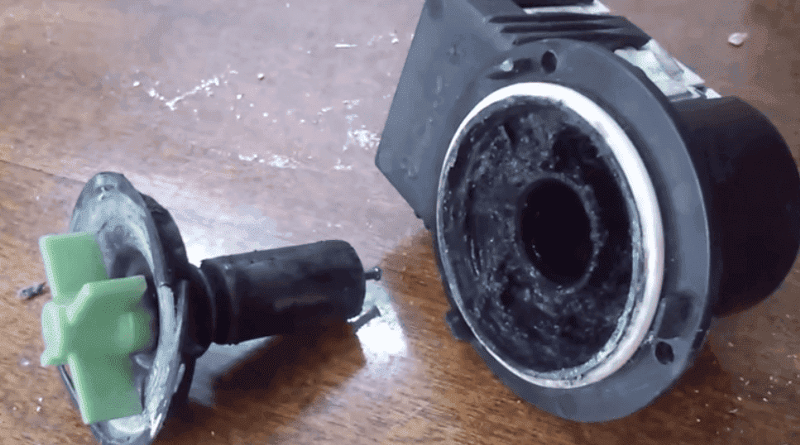
- After removing the impeller with the magnet, remove any debris from them;
- remove the magnet from the shaft;
- inspect the bearing, treat the element with a special lubricant to restore its functions;
- if necessary, replace the bearing;
- Assemble the case in reverse order.
To ensure the drain pump is fully functional, test it with a multimeter. To test the pump, follow these steps:
- set the multimeter to voltage detection mode;
- Place the tester probes against the pump contacts;
- evaluate the result displayed on the screen.
When the device shows "0" or "1," it's safe to assume the drain pump is faulty. In this case, the only solution is a complete pump replacement. A technician can perform a precise diagnosis of the component.
Interesting:
Readers' comments
Headings
Washing machine repair




For buyers




For users


Dishwasher




Add a comment