Disassembling a non-detachable washing machine drum
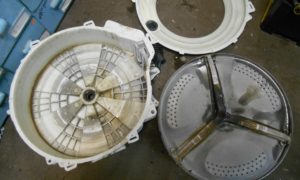
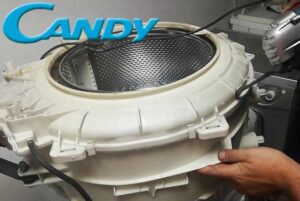
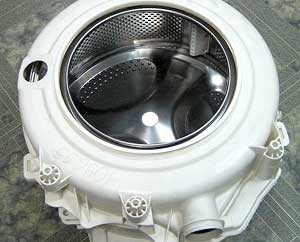
There are several situations where you need to look inside the tank. Most often, this is necessary when bearings and seals, "hidden" in the casting, fail. However, cracks in the element, leading to leaks, can also be the cause. Whatever the cause, you need to act as quickly as possible. Let's figure out how to disassemble a non-detachable tank without the help of a professional.
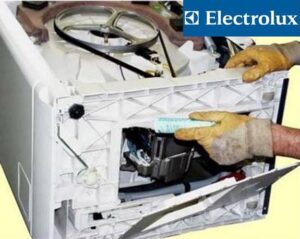
Removing the tank
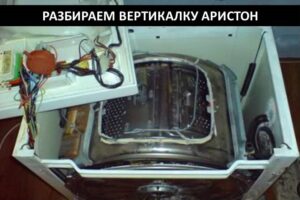
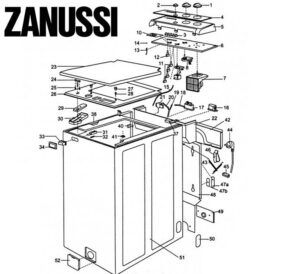
The steps for removing a component from a washing machine are similar for different models. The only significant difference is when repairing a front-loading or top-loading machine: in the former, you'll need to remove the front panel of the machine, while in the latter, you'll need to remove the side panel. To easily remove the drum from the machine and then separate it, prepare the following tools:
Phillips and flat head screwdrivers;
screwdriver;
hacksaw for metal;
drill with a diameter of 3-5 mm;
pliers;
punch;
set of socket heads;
ratchet wrench.
When disassembling a washing machine, it is advisable to photograph all disconnected circuits and connections in order to properly reassemble the machine after repair.
The main stages of work on removing a non-separable tank from the housing:
de-energize the washing machine;
close the valve responsible for supplying water to the system;
disconnect the inlet and drain hoses from the body;
remove the top cover of the device; to do this, use a screwdriver or drill to unscrew the mounting screws;
remove the detergent tray from the system;
Remove the bolts holding the main control panel. There is no need to completely disconnect it from the body, it is enough to place the part on top of the washing machine;
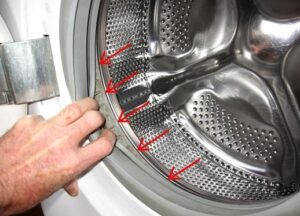
Loosen the clamp holding the door seal. Remove the ring and insert the sealing rubber into the machine drum;
Unscrew the 2 screws holding the hatch locking device, pull out the hatch locking device, having first disconnected the power supply wiring;
Unscrew the remaining screws holding the front wall of the case, remove it and put it aside;
remove the rear wall by unscrewing all the mounting bolts;
disconnect the wires from the heating element, loosen the main nut and pull the heating element out of the socket;
remove the counterweights adjacent to the tank;
remove the drive belt from the pulley, disconnect the power supply wiring of the electric motor.
Once all components and assemblies have been removed from the tank, you can begin loosening the shock absorbers. Unscrew the suspension spring fasteners and remove the tank. Carefully remove the integral assembly from the housing and place it on a flat surface for further DIY repairs.
Stages of work
It's not profitable for appliance manufacturers to produce dismountable tanks. Monolithic designs lack additional bolts and fasteners, and if a bearing breaks, most users will have to buy a whole replacement tank, at considerable expense. Not many people know that a washing machine with a non-detachable drum can be “defeated” by dividing the cast part into two halves, thereby gaining access to the inside. The step-by-step instructions for disassembling the tank when replacing bearings are as follows.
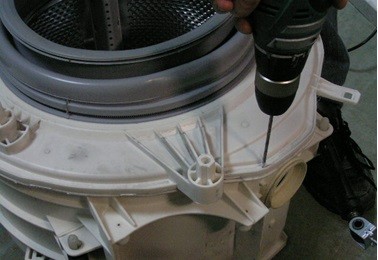
Mark and drill holes on the surface of the plastic housing.
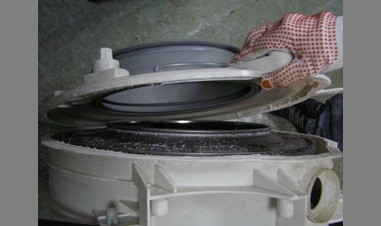
Carefully cut the tank along the marked line.
Remove the drum.
Using a punch or a special key, knock out the bearings and install new ones in their place.
Change the oil seal.
Assemble in reverse order.
The overall plan is extremely simple. However, the work ahead is precise and labor-intensive, so let's examine each stage in more detail.
We open the tank
Now that the tank is removed from the washing machine body, wipe it with a clean cloth and begin marking the weld seam. It's recommended to space the holes 5-7 cm apart, no more. A drill bit with a diameter of 3 to 5 mm is suitable for drilling.
Once you can easily trace the cutting line visually through the holes, begin carefully sawing the tank apart with a hacksaw. When finished, you'll have two halves. The rear "half tank" will contain the drum, bearings, oil seal, and wheel for the washer pulley.
To remove the drum, you must first remove the wheel. The screw holding the ring in place is glued by the manufacturer for added security. To remove the fastener, place a bit on it and tap the screw a couple of times with a hammer. This will loosen the glue, making it much easier to remove the wheel. After this, you can safely remove the drum.
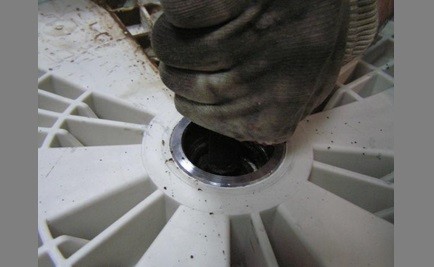
The next step involves knocking out the bearings. Take a drift, place it on the inner edge of the bearing, and gently tap it in a circular motion to remove the part from its seat.
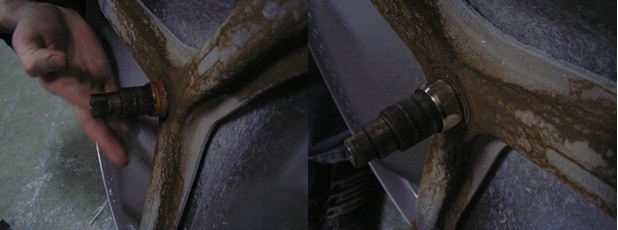
The exposed drum shaft should be cleaned and treated with a special polish until it shines.
The bearing seat should also be cleared of dirt and debris. Then, proceed to driving in the serviceable bearings and the new seal. Lubricate the installation area with a special moisture-resistant grease, insert the bearing, and tap its outer edge with a drift. This procedure must be carried out very carefully to avoid damaging the new element. When the bearing is fully inserted, you will hear a distinctive dull thud. Install the second ring on the opposite side in a similar manner.
The bearing must be fully seated and rest against the side.
Apply a seal generously coated with special silicone grease to the inner bearing. The silicone will prevent moisture from entering the system and extend the life of the new parts.
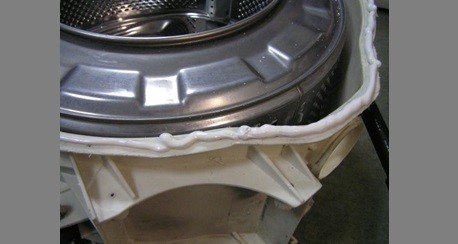
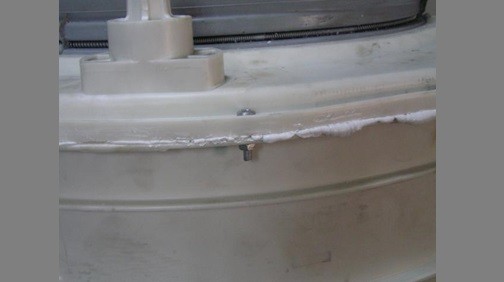
Reassembly begins with installing the drum. Its shaft should slide smoothly into the bearings. Then, the pulley ring is secured in place and tightened with a screw. All that remains is to reassemble the cut halves. Apply a strong silicone sealant to the edges around the entire perimeter, then connect the tank parts together. The holes drilled earlier will be used to tighten the halves with screws.
As you can see, it's possible to disassemble a non-detachable tub. This method is much more cost-effective than completely replacing the monolithic structure. Reassemble the washing machine in reverse order and test it for proper operation.

 There are several situations where you need to look inside the tank. Most often, this is necessary when bearings and seals, "hidden" in the casting, fail. However, cracks in the element, leading to leaks, can also be the cause. Whatever the cause, you need to act as quickly as possible. Let's figure out how to disassemble a non-detachable tank without the help of a professional.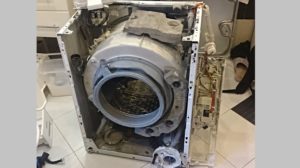















Add a comment