
Disassembling a Haier washing machine
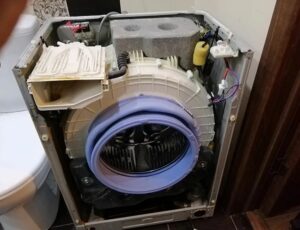 Sometimes users need to disassemble their Haier washing machine, for example, when attempting to repair the appliance themselves. We'll explain how to do the job and what tools you might need.
Essential tool kit?
Disassembling a washing machine doesn't require many tools. For minor, superficial repairs, a Phillips-head screwdriver is often sufficient. When completely disassembling the washing machine, additionally prepare the following:
- screwdriver;
- a mallet or a small hammer;
- pliers;
- pliers;
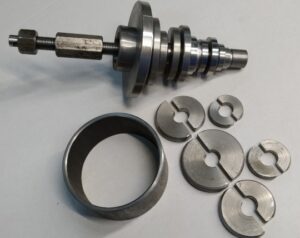
- puller;
- set of hex keys;
- slotted screwdriver.
To deal with stuck fasteners, use a special liquid WD-40.
Apply anti-corrosion lubricant to the stubborn bolt. Wait 10-15 minutes for the solution to take effect. Then, remove the bolt.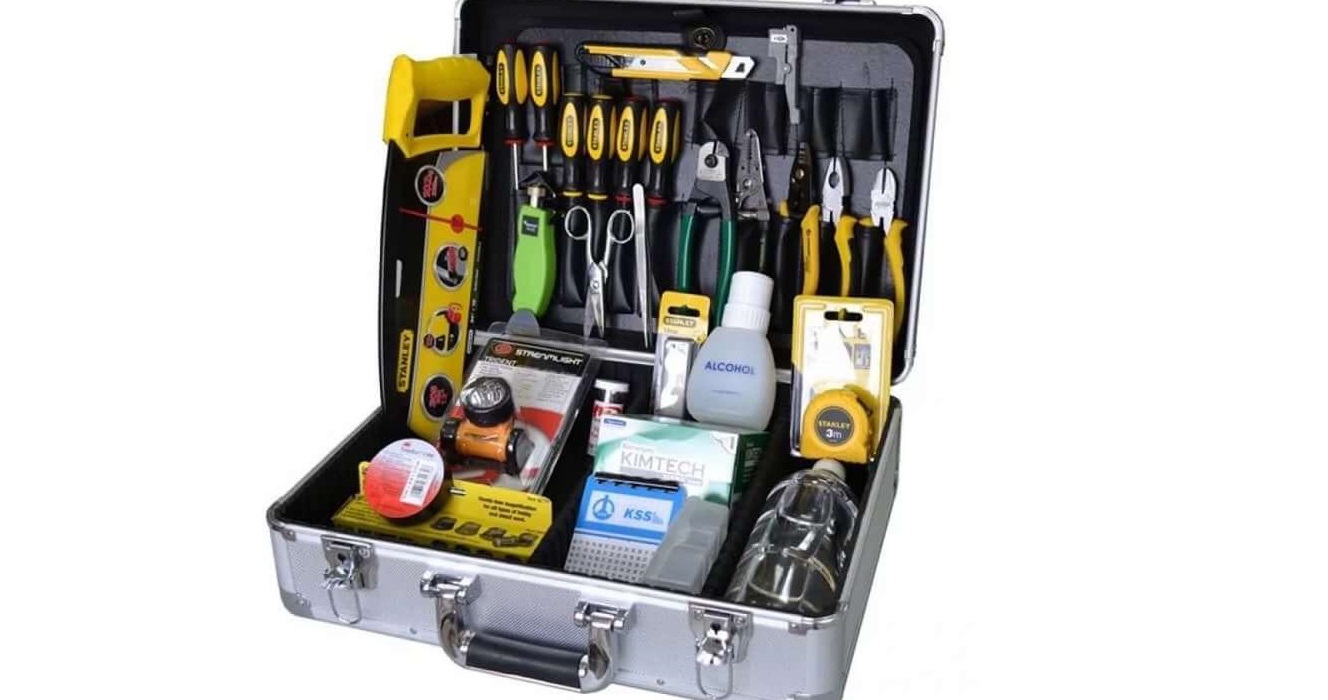
In addition to the tools listed above, you will need the following during the disassembly of your automatic machine:
- a small container (to drain the remaining water from the machine);
- dry rags;
- marker;
- telephone (to take photos of the wiring diagram for the parts).
A regular camera will do the job, too. It's important to capture the work process with the camera to avoid making mistakes during reassembly. Once you've gathered the necessary tools, you can begin repairing your Haier washing machine.
We take out everything except the tank.
If you decide to do the repairs yourself, carefully read the instructions for the equipment. They describe in detail the location of the washing machine's main components and parts. Before starting work, be sure to de-energize the machine and turn off the shut-off valve responsible for the water supply.
Next, you need to drain the remaining water from the machine. First, carefully disconnect the drain hose from the body and lower it into a basin or bathtub. Then:
- find the dust filter (it is located in the lower corner of Haier washing machines);
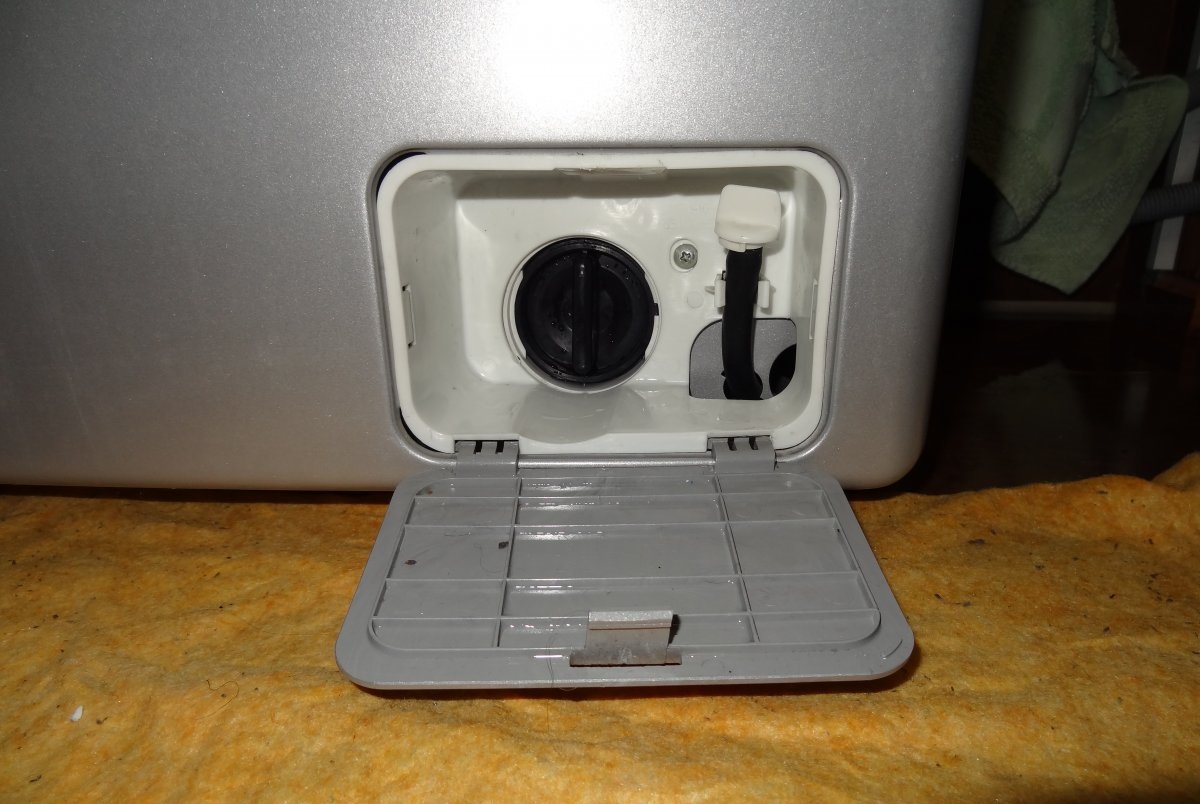
- Place a container under the machine to collect water, cover the floor around the washing machine with dry rags;
- unscrew the filter element;
- Wait until the water drains into the container.
Now you can begin disassembling the washing machine. First, remove the top cover. To remove the panel, you need to unscrew the two screws that secure it.
Next, remove the detergent drawer from the machine. To remove the drawer, pull it out halfway, then press the button in the center of the drawer. Then, pull the detergent drawer toward you.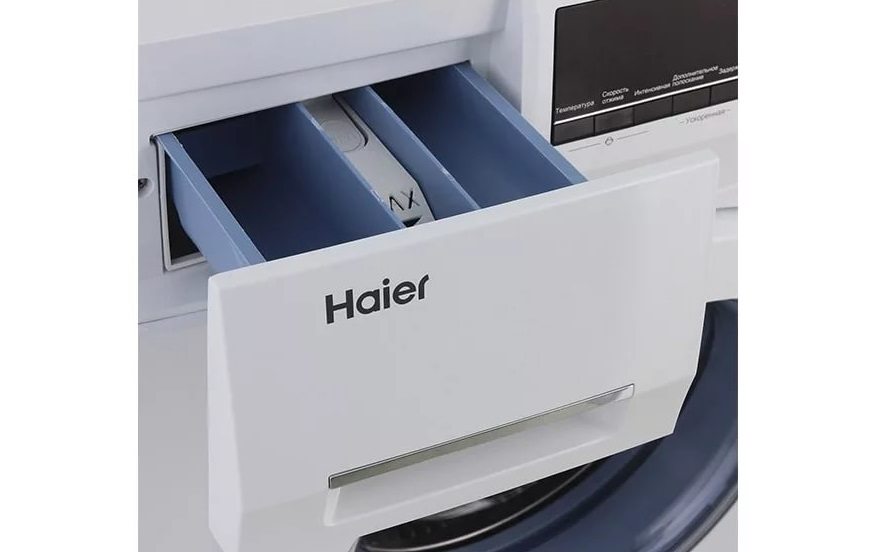
Now you can proceed to dismantle the instrument panel. To do this, unscrew all the screws securing it. Typically, one bolt is located under the powder receptacle, and the other is on the opposite side. Remove the control panel carefully to avoid damaging the buttons, the programmer, or breaking the wires.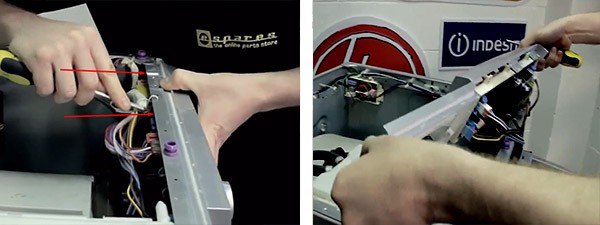
If not needed, there's no need to disconnect the contacts. Carefully place the control panel on top of the machine or hang it on the hook on the side of the housing.
Next, you can begin dismantling the drum door. Unscrew the fasteners holding the door in place and remove it from its metal hinges. The sash should be placed aside on a flat surface, placing a soft cloth underneath it to prevent the glass from breaking.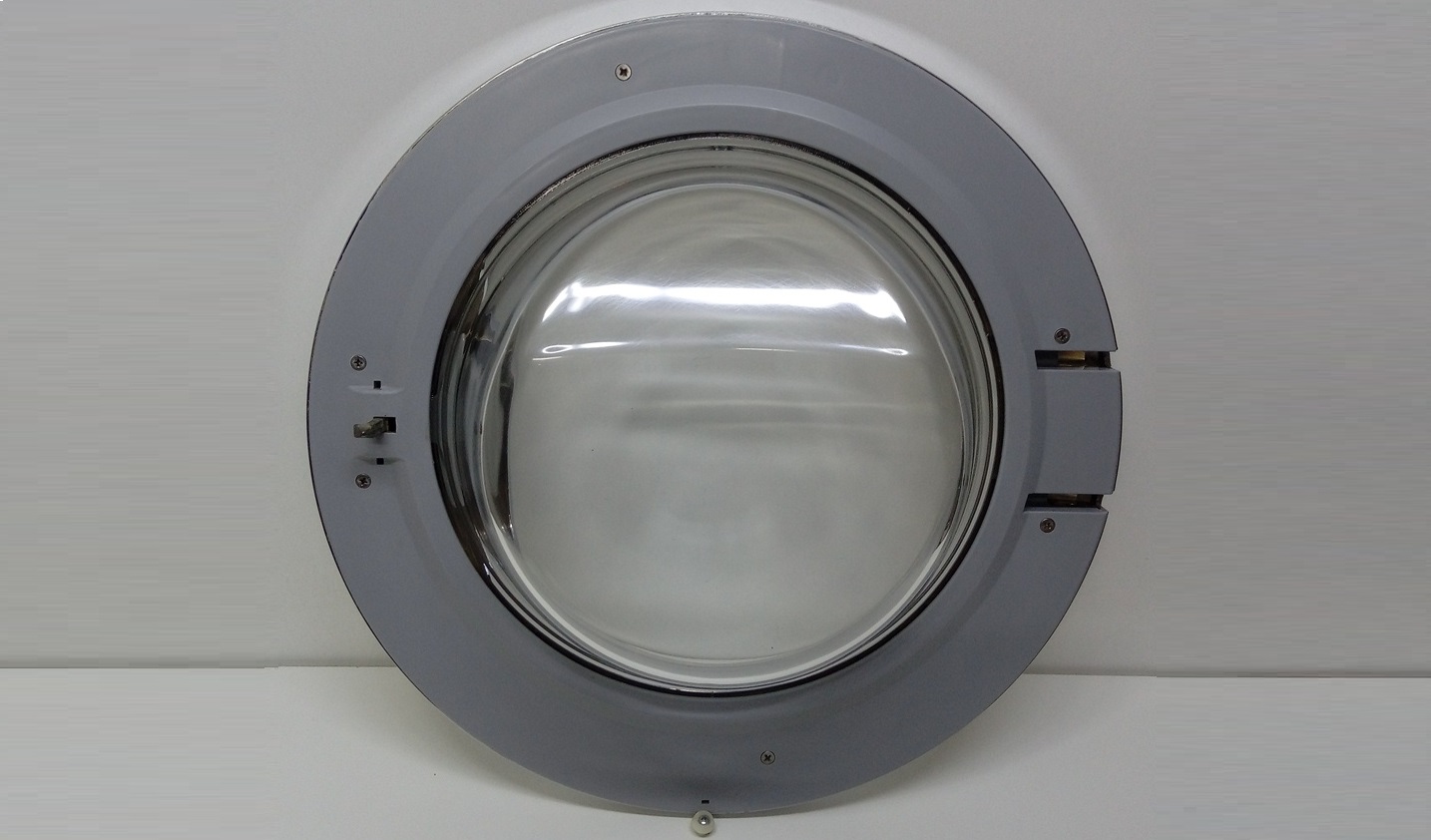
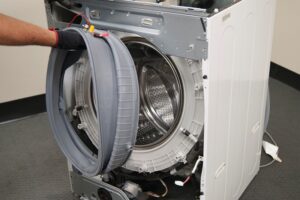
The next step is removing the front panel. To do this, you need to "hide" the rubber seal inside the drum. It is secured with two clamps—an outer and an inner one. You'll need to release the latch and pull the outer ring out of the housing. After this, the seal is tucked inside the washing machine.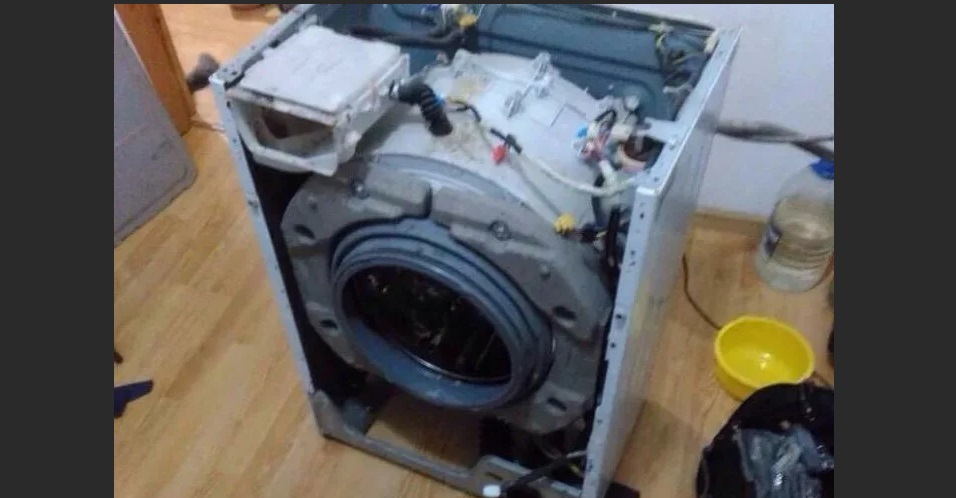
Now you can begin removing the front panel. Since the dashboard and hatch door are already removed, there's nothing to interfere with its removal. Unscrew the screws around the perimeter, lift the panel, and remove the hooks holding it in place.
Removing the back panel of the machine is very simple. The drain hose is already disconnected, so all that remains is to unscrew the bolts holding the panel in place and set it aside. This completes the disassembly of the Haier washing machine.
We take out and divide the tank in half
In some cases, partial disassembly of the washing machine is not enough—to fix certain types of problems, access to the inside of the drum is required. For example, when replacing bearings and seals, the machine's main components, such as the drum, motor, and so on, will have to be removed.
The washing machine tank weighs about 10 kg, so it is not recommended to remove it alone.
There shouldn't be any obstacles interfering with the drum's removal. Therefore, first, remove the counterweights. These are concrete blocks designed to ensure the washing machine's stability.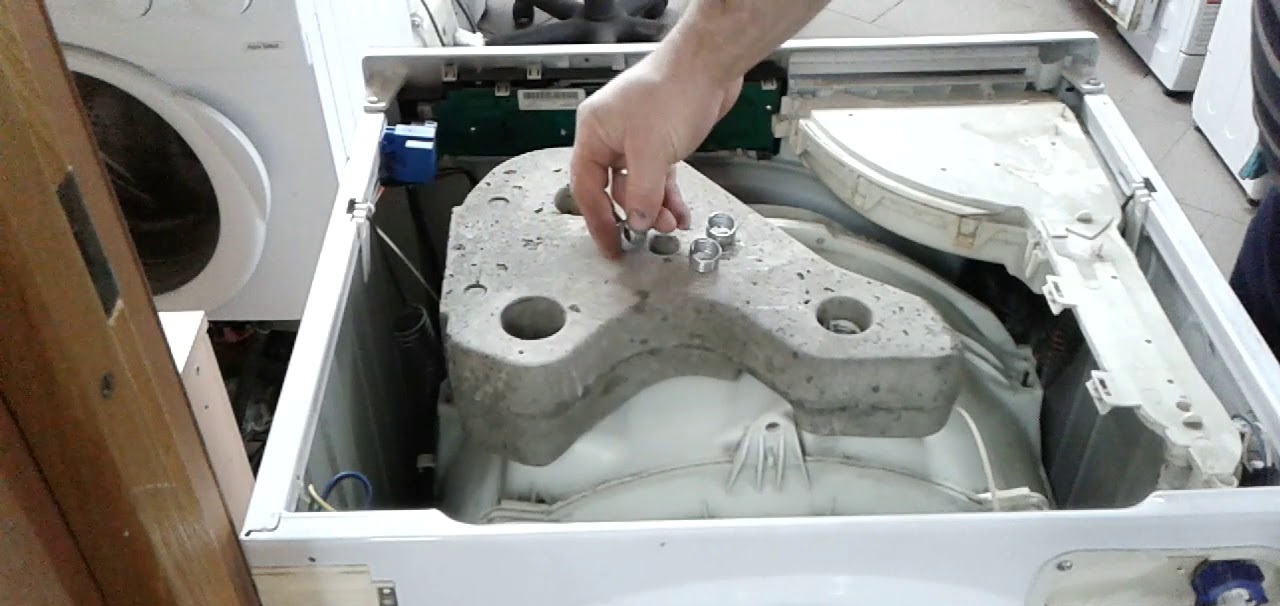
Next, disconnect the pulley from the tank. Treat the bolt that secures the part with WD-40 aerosol lubricant and let it sit for 10 minutes. Afterward, remove it with a hex screwdriver. Be careful not to strip the hex.
The screw should be unscrewed counterclockwise. It's secured with a special compound that strengthens the connection. Therefore, removing the fastener will require some force. If it doesn't come loose at all, apply WD-40 again. After removing the bolt, grasp the pulley with both hands and pull it toward you, gently rocking the "wheel" back and forth.
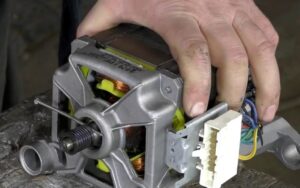
Next, you need to disconnect all components from the washing machine's drum that will interfere with its removal. These include the electric motor, drain pump, heating element contacts, various hoses, and wires. Experts recommend taking pictures at each step to avoid mistakes when reassembling the equipment.
When nothing interferes with the removal of the main tank, remove the unit from the housing. The drum of all Haier washing machines is detachable. To split it in half, simply unscrew the long screws that hold the plastic parts together.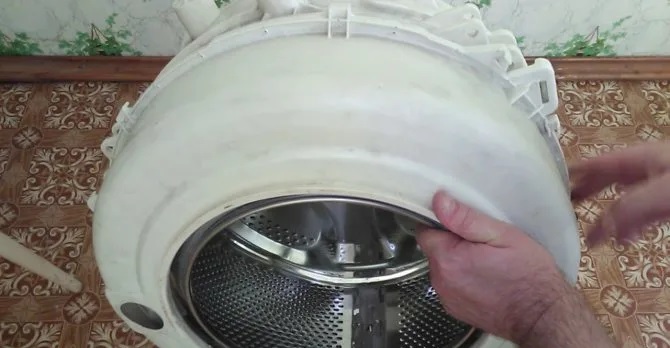
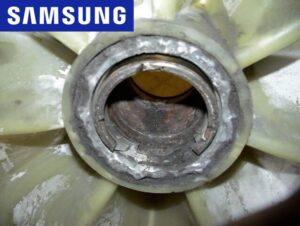
Once all the screws are removed, the washing machine's tub will separate into halves. The drum will be attached to the rear section by bearings mounted on the shaft. The next step will be to remove these metal rings.
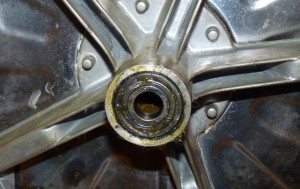
Take a bolt that matches the size of the screw used to attach the pulley to the tank. Insert it into the existing hole. Then take a wooden block and place it in its place. Tap the block with a hammer or mallet until the rear wall of the tank comes off the bearing.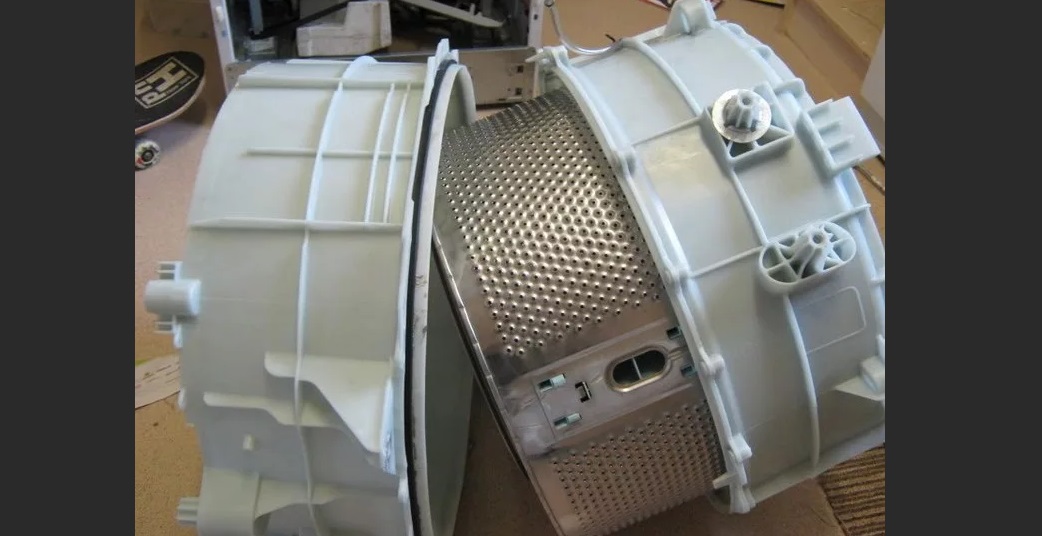
Next, we'll work on the front part of the drum, which contains the spider and shaft. To completely disassemble the assembly, you'll need a puller. The procedure is as follows:
- Place the puller jaws under the bearing;
- Tighten the puller thread to obtain the required tension;
- Treat the bearing with WD-40 lubricant;
- wait 20-25 minutes;
- Continue unscrewing the threads until the bearing falls out of the socket.
Once the damaged bearings and seal have been removed, you can begin installing the new components. Reassembly is performed in reverse order. It's recommended to refer to the photos taken during the process to avoid errors when connecting the components. Once finished, run a test wash to check the machine's functionality.
Interesting:
Readers' comments
Headings
Washing machine repair




For buyers




For users


Dishwasher




Add a comment