
Disassembling a Hansa washing machine
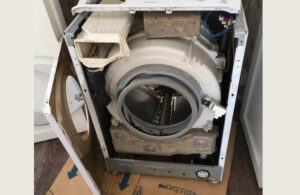 In some cases, it's necessary to completely disassemble a Hansa washing machine, for example, to find spare parts or for complex repairs. Even a user who has never worked with a washing machine can handle this. The key is to carefully follow the instructions and understand the machine's structure. We'll explain what tools you'll need and where to begin.
We will prepare everything necessary
An automatic washing machine is a fairly large household appliance, consisting of a large number of parts. To avoid distractions while working, you need to clear 3-4 square meters. Disassembling a washing machine in a cramped bathroom or kitchen would be inconvenient; the ideal option is to take the unit to the garage. When this is not possible, move your “home helper” to a larger room.
When disassembling electrical appliances, be sure to follow safety precautions.
Before you begin disassembling your Hansa washing machine, you must:
- de-energize the equipment;
- turn off the valve that supplies water to the washing machine;
- detach the drain and fill hoses from the body;
- remove residual water from the system through a debris filter;
- Collect the tools you will need for the repair at your workstation.
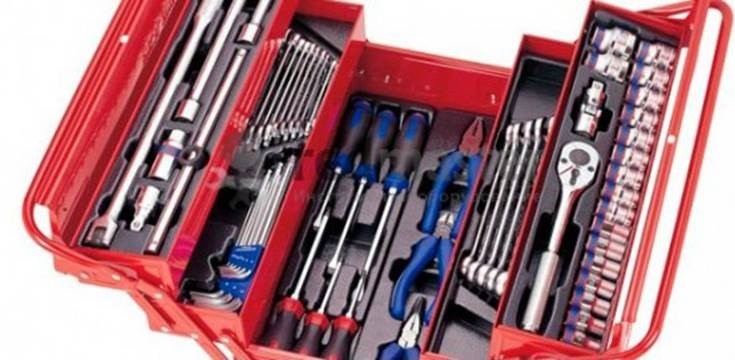
To easily dismantle all the parts of the Hansa washing machine, you will need the following set of tools:
- a pair of screwdrivers (positive and negative);
- 19 and 8/10 spanner;
- Pliers. Needed for loosening clamps;
- pliers;
- pliers;
- nippers;
- service hook.
Usually, all the listed tools, except the last one, are available in every home. The service hook can be purchased at a specialty store or ordered online. It looks like this: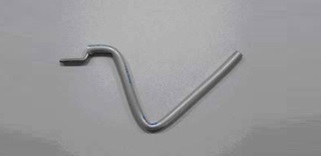
That's all you need to disassemble an automatic washing machine. No expensive tools or special equipment required. Let's figure out where to start.
We open the case and expose the parts
First, you need to remove the external parts of the washing machine. This includes the detergent drawer, the door, the lower trim panel, and the body walls. The procedure is as follows:
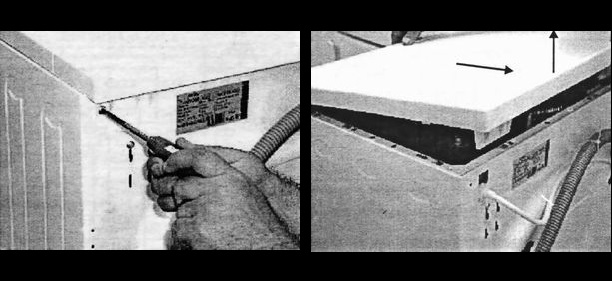
- Unscrew the two bolts located on the rear of the washing machine, securing the top panel's "eyes." Gently push the cover back and lift it up. Set the removed element aside.
- Pull the detergent drawer out of the machine until it stops. Then press the plastic latch in the center of the drawer. Pull the dispenser toward you again—it will be in your hands;
- Having dealt with the latches, remove the lower false panel, behind which the trash filter is hidden;
- unscrew the screws located around the perimeter of the dispenser niche (previously they were hidden by the detergent tray);
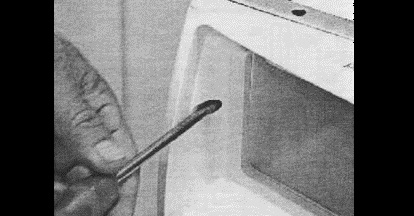
- Unscrew the bolts holding the washing machine door, remove the door together with the hinge and put it aside;
- Now you can work on the cuff. Using a thin screwdriver, pry up the outer clamp securing the seal. Be careful not to pull too hard, as this could damage the spring. Carefully pull out the "ring," then tuck the "rubber" inside the drum.
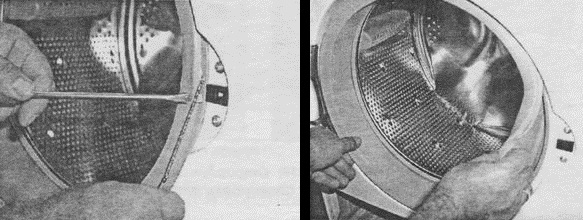
- Remove the screws holding the control panel in place. Then, use a screwdriver to pry up the latches on the top and side of the instrument cluster and carefully remove them. Remove the circuit board and hang it on the wire hook you made earlier. Be careful not to damage the wiring of the electronic module.
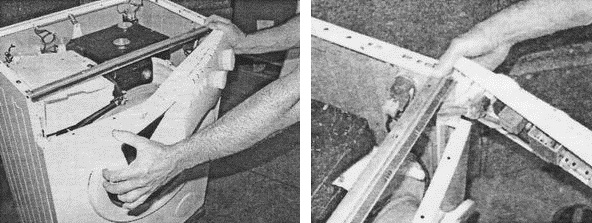
- Now all the bolts holding the front panel in place will be visible. Remove the screws located around the debris filter, under the dashboard, and near the sunroof locking mechanism. The front panel is also held in place by latches, which can be removed with a thin screwdriver.
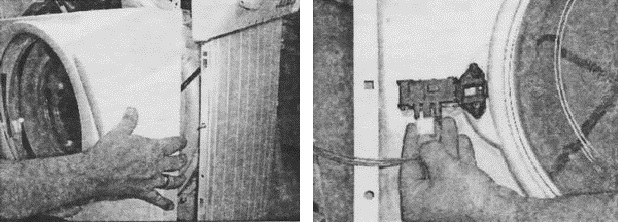
- Remove the screws securing the rear panel of the case. Remove the panel and set it aside.
After these steps, you'll have access to all the internal components of your Hansa washing machine. Now you can easily remove the counterweights, drive belt, pressure switch, heating element, drain pump, motor, and even the drum. We'll explain the best order for disassembling the machine's components.
We take out the main components and parts
You can disassemble the entire washing machine yourself. The only difficulty you might encounter is removing the heavy drum. Due to its weight, it's best to remove it with a helper. Before you can remove the drum, you'll need to remove many other parts from the machine. We'll explain the order in which to disassemble. The sequence of steps is as follows:
- Remove the drive belt. Slowly rotate the drum pulley and pull off the rubber band;
- remove the power wires from the engine terminals;
- remove the screws holding the engine;
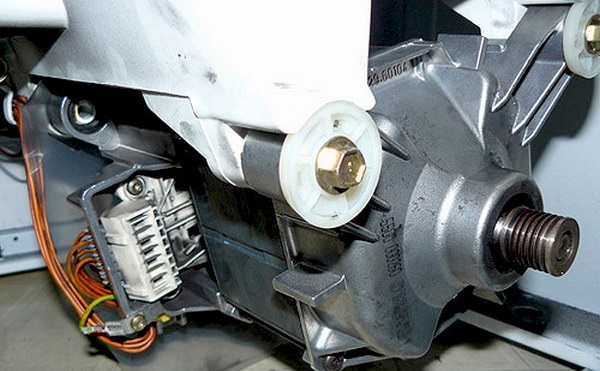
- “shake” the motor from side to side, then pull it out of the machine;
- Disconnect the wires from the pump, unscrew the screws holding the pump in place, and remove the part from the housing;
- detach the drain pipe from the main tank;
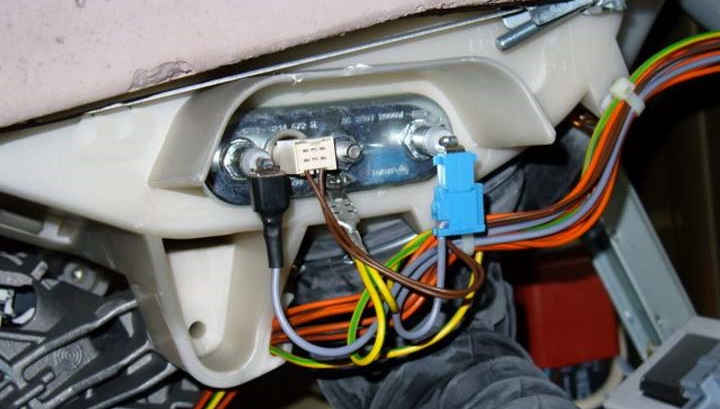
- remove the heating element contacts, remove the wiring from the temperature sensor, loosen the central nut of the heater and remove the element;
If you have difficulty removing the heating element, you can treat the heater sealing gasket with WD-40 aerosol lubricant; this will make removal easier.
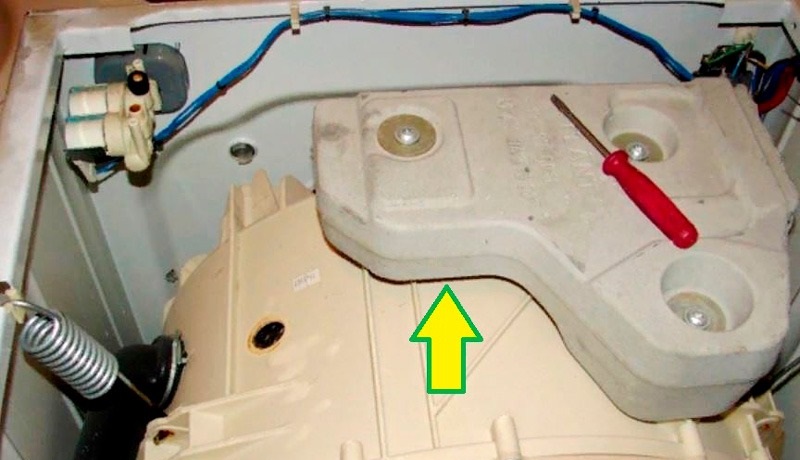
- Remove the counterweight blocks by unscrewing the bolts that secure them.
- Work on the shock absorbers: remove their fasteners. There is no need to remove the springs themselves at this stage;
- Disconnect the dispenser pipes from the tank, as well as the inlet valve contacts;
- disconnect the pressure tube from the pressure switch, remove the water level sensor from the housing;
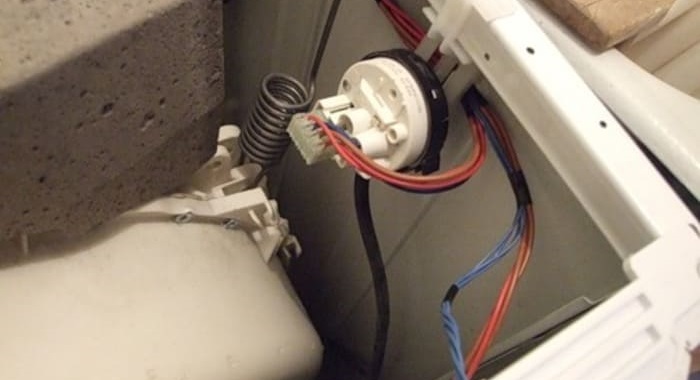
- Remove the tank by removing the upper shock springs.
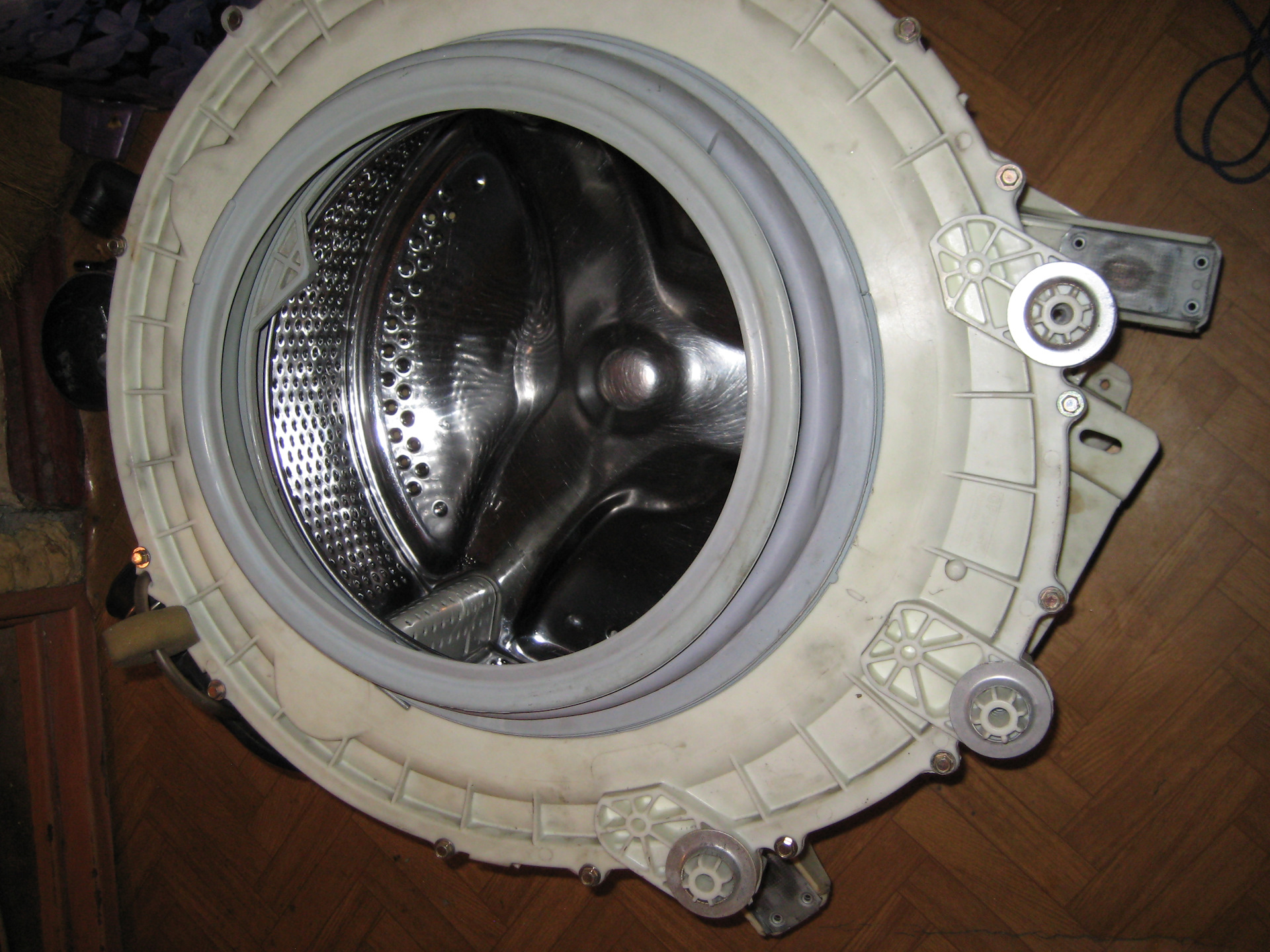
Some models are equipped with plastic tanks that cannot be disassembled. In this case, to access the tank's interior, you'll have to saw it in half. Accessing the drum is usually necessary when the bearing assembly fails. Only by disassembling the centrifuge can the bearings and seal be replaced. The procedure is as follows:
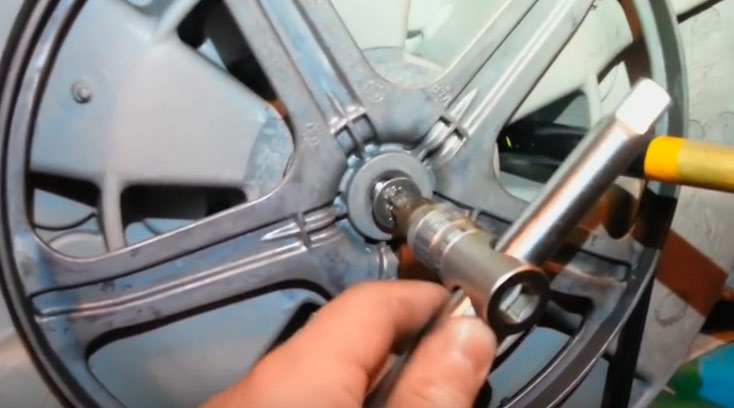
- unscrew the screw located in the center of the pulley;
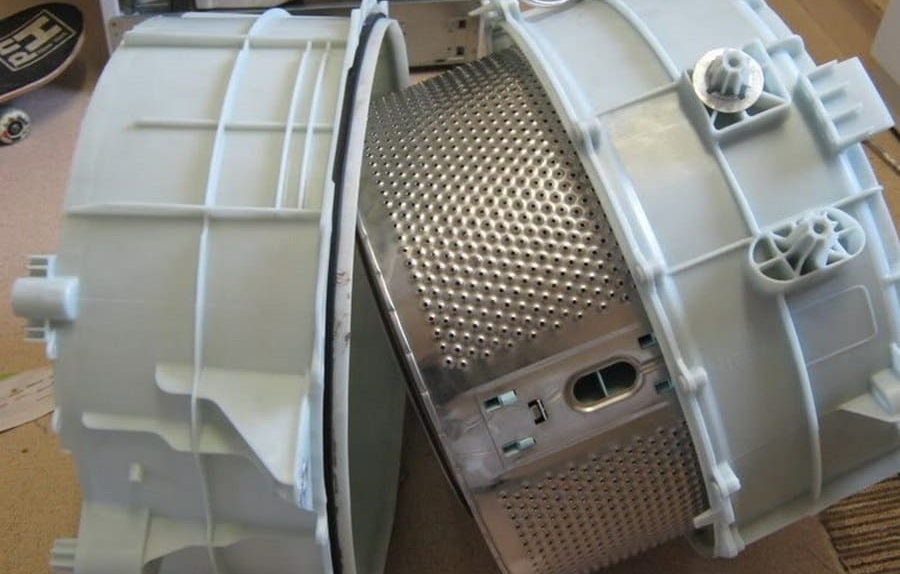
- Using a hacksaw, cut the plastic tank along the factory weld;
- separate the halves of the tank;
- inspect the crosspiece, unscrew it;
- Proceed to replacing the bearings: knock out the worn rings, press the new parts into place.
Not all washing machine models require the use of a hacksaw. If your washing machine is equipped with a detachable tank, simply unscrew the screws around the circumference and release the latches. This will give you access to the drum. Reassembling the washing machine after repair is done in reverse order. First, connect the drum halves, place it into the housing, and secure it with shock absorbers. Reinstall the remaining components: pressure switch, counterweights, heating element, and others. It's best to take photographs of the disassembly steps to ensure proper wiring and connections later.
Interesting:
Readers' comments
Headings
Washing machine repair




For buyers




For users


Dishwasher




Add a comment