
Disassembling a top-loading washing machine
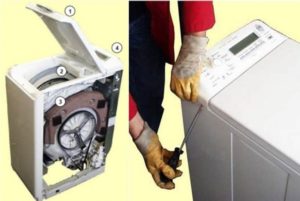 Unfortunately, all household appliances break down. Washing machines are no exception. Top-loading washing machines break down just as often as more traditional front-loading machines, and damage to top-loading machines can be both typical, common to front-loading machines, and unique, specific to top-loading machines. Let's learn how to disassemble a top-loading washing machine to fix the problem at home.
Getting ready for work
Before you start disassembling the machine yourself, you should carry out some preparatory measures. First, you need to turn off the power to the washing machine and disconnect the unit from the utility lines. Secondly, you need to prepare your workspace—it should be sufficiently clear. Thirdly, it's best to plan in advance where the parts removed from the device will be stored, either by allocating a space on the floor or clearing a small table for them.
Next, gather all the tools and materials you'll need for the process. To disassemble the "vertical," you'll need to have the following on hand:
- two types of screwdrivers: Phillips and slotted;
- open-end wrenches of different sizes;
- set of automotive socket heads;
- nippers and pliers;
- flashlight – for ease of working inside the case;
- universal aerosol lubricant WD-40.
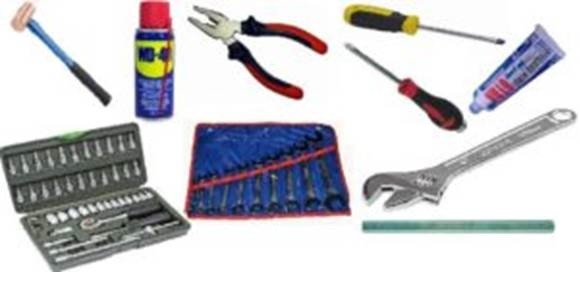
Additionally, you should prepare a small container that will be used to collect the water remaining in the washing machine, and several dry rags.
It is best to have a camera on hand to be able to capture the progress of the work; this will make it easier to reassemble the washing machine.
Let's start to disassemble
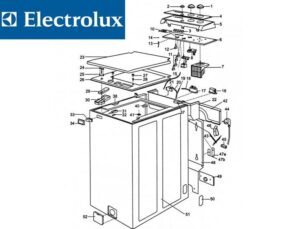
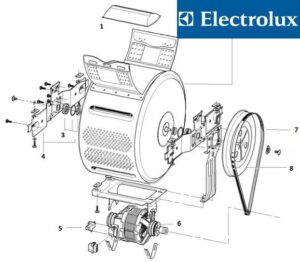
Before you begin working with the machine, it's a good idea to learn how a top-loading washing machine works. This will help you better navigate the inside and clearly understand the names of each part. Dismantling of vertical racks of famous brands such as Bosh, Whirlpool and other companies are carried out in the same way. Of course, there may be slight differences, but the basic algorithm of the actions performed will remain unchanged.
- Unscrew the fasteners located on the sides, then use a screwdriver to pry up the main control panel and carefully remove it.
- Tilt the panel slightly to the side and take a photo of the wiring connections. After that, you can disconnect and remove the assembly.
- Remove the board by removing the remaining wires and unscrewing the bolts.
- To remove the filler valve, slightly loosen the clamps and disconnect the rubber hoses. Turn off the power and press on the designated holes. This will allow the part to be pushed out.
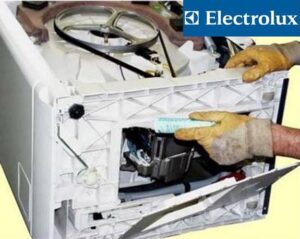
- Unscrew the screws holding the side panels in place. Slide them downwards slightly and carefully remove them.
- Unscrew the bolts holding the front wall and move the panel aside.
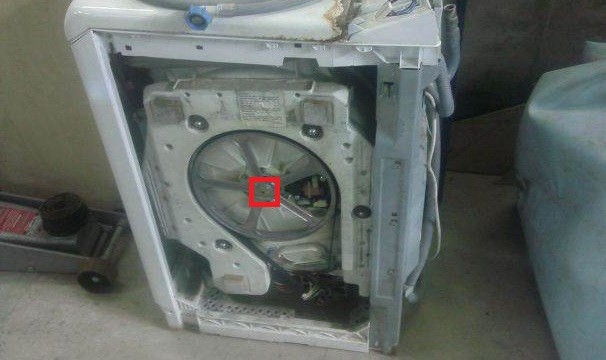
Thanks to the actions taken, you will have free access to the drive belt, electric motor, drain pump, and pressure switch.
In most cases, at this stage, you can replace the damaged part yourself and reassemble the upright washing machine. In the very rare case that the latch that holds the door in place after closing fails, you'll have to disassemble the machine further:
- lift the cover, unscrew the screws that hold it in place, and remove the part;
- The top lid of the washing machine will be secured with several bolts located under the sealing cuff. Unscrew the fasteners and remove the lid.
This will give you free access to the SMA cuff and the door locking device. Please note that the tank of vertical machines, unlike front-loading machines, is not removed from the body. Therefore, when replacing drum bearings or seals, it is necessary to remove the counterweights and springs and replace the parts.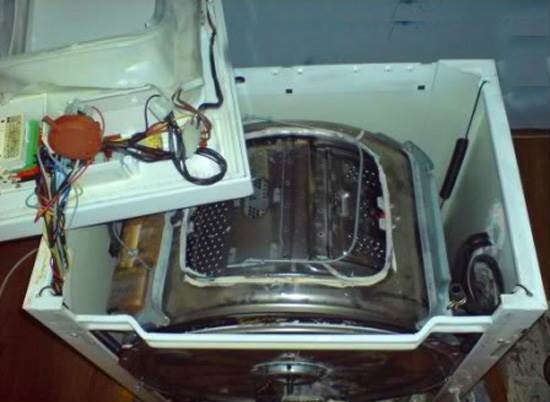
The top-loading washing machine is now disassembled. As you can see, doing the job yourself isn't all that difficult. Once the faulty components have been replaced, reassemble the machine in reverse order. If you took photos during the process, it's best to refer to them. Be careful to connect the wiring correctly; incorrectly connected wires can cause a short circuit.
Interesting:
Readers' comments
Headings
Washing machine repair




For buyers




For users


Dishwasher




Add a comment