How to repair the shock absorber of an LG washing machine?
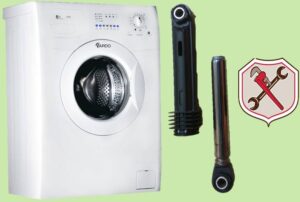
The LG washing machine's shock absorption system ensures its resistance to vibrations emanating from the rotating drum. Several springs and dampers keep the drum suspended, preventing imbalance. If the dampers fail, the machine will begin to bounce, knock, and vibrate during the wash and spin cycles. Running the machine with faulty dampers is dangerous. It's best to avoid risking the problem and have your washing machine's shock absorbers diagnosed and repaired.
Types of shock-absorbing elements
During spinning, the washing machine accelerates to 400-1800 revolutions per minute, which inevitably leads to vibrations of the entire structure.The shock absorber is responsible for suppressing outgoing vibrations in the machine. Depending on the LG model, there are two options for damping centrifugal force:
shock absorbers;
dampers and springs.
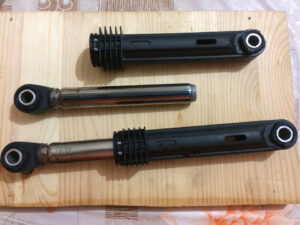
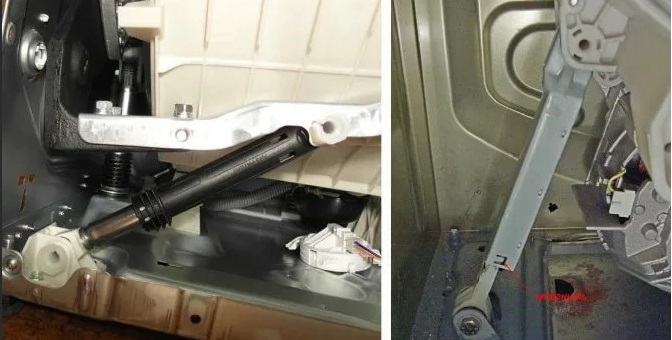
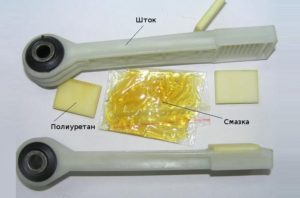
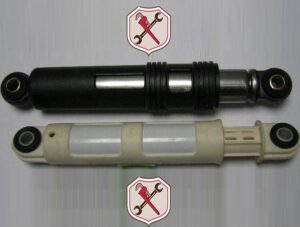
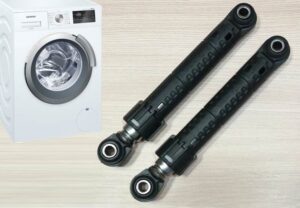
Shock absorbers are cylindrical struts with a piston and return spring. Between the housing and the mechanism are lubricated rubber seals that activate the shock absorber. At the end is a rod.
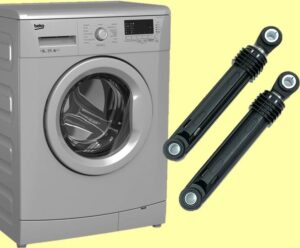
LG washing machines are equipped with two dampers or shock absorbers.
A damper is a more advanced type of shock absorber. Its design eliminates springs: they are located separately and support the wash tub from above. This provides better vibration dampening. These types of vibration dampers are most often found in LG washing machines.
Both the dampers and shock absorbers are located at the bottom of the washing machine, attached to both sides of the wash tub. While the former are practically useless to repair, the latter are cheaper to repair at home. However, before disassembling and repairing the shock absorbers, it's important to verify their integrity with a simple test.
How do you know if your shock absorber is broken?
Don't rush into disassembling and removing the shock absorber. First, you need to confirm its inoperability with a quick DIY test. Here's the instruction:
disconnect the machine from the power supply;
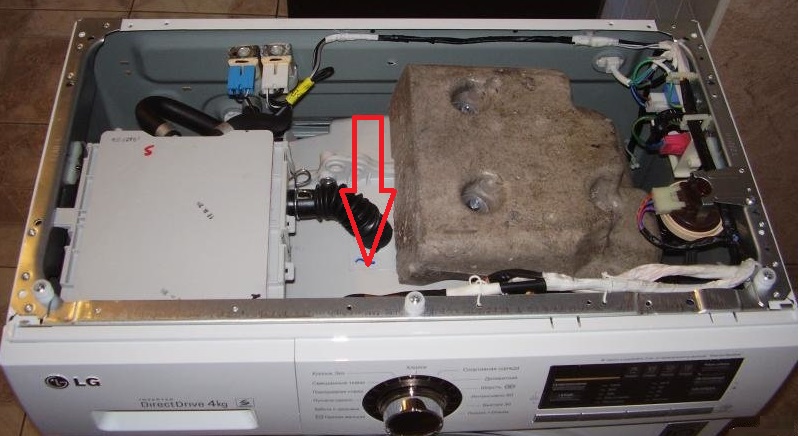
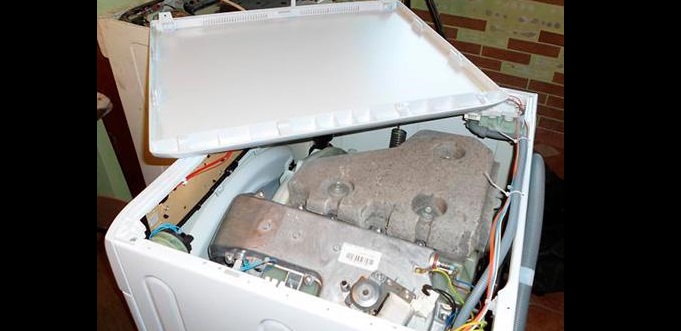
remove the top cover (first unscrew the bolts that secure it, then lift it up and push it away from you);
reach the washing tank with your hand;
press on the top of the tank, lowering it 5-7 cm above the original level;
release your hand abruptly;
evaluate the "behavior" of the tank.
Normally, the shock absorbers should engage instantly: the tank will immediately rise and stop. If the tank starts swinging back and forth like a pendulum, the shock absorbers are faulty. They need to be replaced or repaired.
It's possible to detect a faulty vibration damper even without testing. If there's a problem with the vibration dampers, your LG washing machine will display a number of symptoms:
when washing, the appliance creaks and hums;
the machine "jumps" during spinning;
The drum rotates with difficulty (due to lack of lubrication in the racks).
To repair a shock absorber, it's necessary to determine the cause of its failure. Typically, shock absorbers fail due to:
natural wear and tear (after long-term use, the bearings and dampers wear out and the lubricant is used up);
deformations (due to manufacturing defects, improper operation or transportation of the washing machine);
wear of fasteners (the bolts holding the dampers may become loose and break).
Only severely damaged dampers cannot be repaired. If the cause of the malfunction lies in the wear of the gasket or the loosening of the fastening, then the struts can be restored to working order without calling a specialist. Step-by-step instructions are below.
Repairing the shock absorber
Delaying repairs to faulty shock absorbers is dangerous—imbalance can lead to serious mechanical damage to the structure. This can quickly lead to bearing failure or a leak in the wash tub. To prevent damage, repair the shock absorbers immediately.
Most often, replacing the shock absorbers simply requires replacing the sealing gasket. This requires partially disassembling the car, removing the dampers, removing the old sealing gasket, and installing the new one. The instructions are as follows:
de-energize the machine;
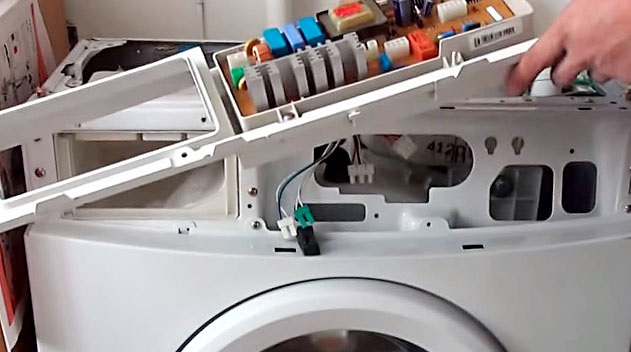
remove the top cover of the case;
remove the powder receptacle;
unhook the instrument panel;
disable UBL;
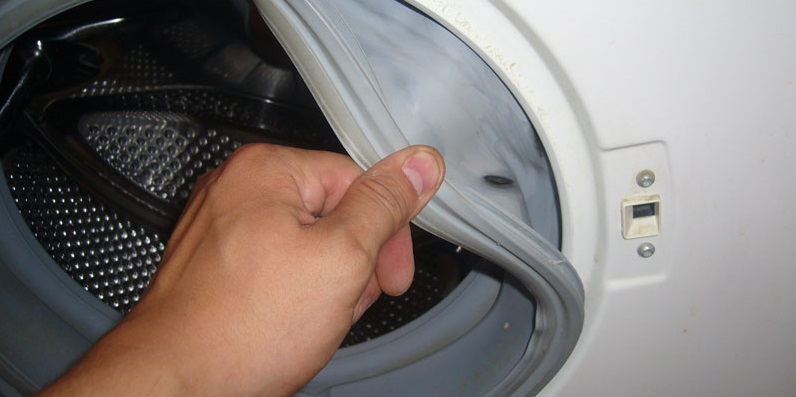
insert the hatch cuff into the drum (after loosening the outer clamp);
detach the front panel from the case;
loosen the fasteners holding the shock absorbers;
pull out the racks;
disassemble each damper, find the gasket and assess its condition;
cut a gasket of the required size and thickness from textolite or a piece of rubber;
install new seals.
Sometimes repairing the damper is impossible, leaving only one option: installing new struts. The entire set must be replaced at once, as uniform vibration damping is essential. If you leave one damper old, it will wear out faster and the entire system will break down faster.
Record all manipulations on camera to avoid mistakes during reassembly!
The replacement begins with removing the old shock absorbers. There are two options: with the shock absorbers detached from the wash tank or with them not detached. The first option is faster, as it's enough to remove the front panel, take out the shock absorbers, and install a new set. If the shock absorbers cannot be removed without the wash tank, you'll have to almost completely disassemble the LG washing machine.
disconnect the washing machine from the power supply;
remove the top cover, detergent tray, dashboard, upper springs, front wall;
disconnect all connected pipes, sensors and devices from the washing tank;
remove the tank with dampers;
repair the racks or replace them with new ones.
When disassembling the LG to replace the shock absorbers, you can immediately check other system components: the bearing assembly, the universal joint, and the drain. Waiting for the parts to completely break down and become clogged is dangerous – it’s better to replace and clean the devices as a preventative measure. To remove a thick layer of scale and seized parts, use WD-40 lubricant cleaner.
Then we reassemble the machine, following the instructions in reverse order. At the finish line, we check the quality of the repair using the test described earlier.

 The LG washing machine's shock absorption system ensures its resistance to vibrations emanating from the rotating drum. Several springs and dampers keep the drum suspended, preventing imbalance. If the dampers fail, the machine will begin to bounce, knock, and vibrate during the wash and spin cycles. Running the machine with faulty dampers is dangerous. It's best to avoid risking the problem and have your washing machine's shock absorbers diagnosed and repaired.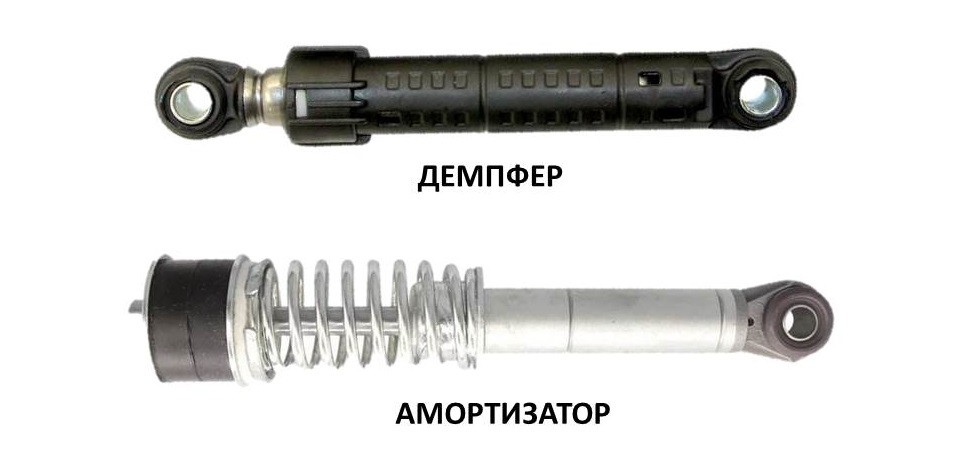














Thanks so much for the idea! The dampers are the same as mine (LG machine). I'm off to the market to pick up a hose!