
DIY LG Washing Machine Motor Repair
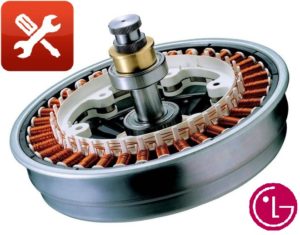 Both older LG washing machines with belt drives and relatively new direct-drive models eventually experience motor failure. No matter how carefully you handle your "home helper" or what preventative measures you take, wear and tear will happen. If a breakdown occurs, you have three main options: remove the motor to repair it yourself, take it to a repair shop, or replace it with a new one. We recommend the first option!
What breaks in the engine?
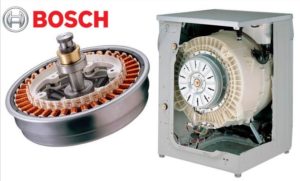
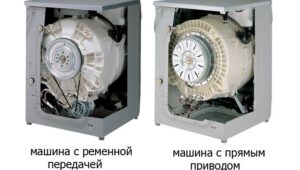
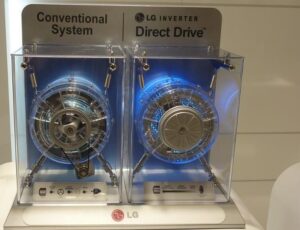
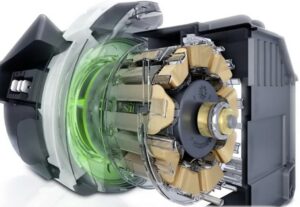
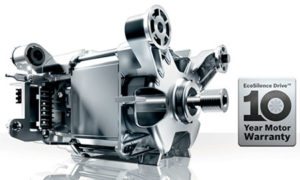 New LG washing machines are equipped with so-called inverter motors. They offer a host of advantages: no brushes or other moving parts, they rarely break down, accelerate instantly, maintain a stable speed, and are extremely quiet. Manufacturer of modern washing machines LG trusts its inverter motors so much that it boldly offers a 10-year, and in some cases even a 15-year, warranty on them.
If you have an LG washing machine with an inverter motor, you probably wouldn't be interested in this topic or reading this article, as the motor is the last thing to break in such machines. This means you have an older LG model with a brushed motor, and something is clearly wrong with it. To determine what's wrong with the motor, you need to remove it, disassemble it, and inspect it. But first, you need to determine what to look for, which means identifying a list of possible faults. So, what could happen to the brushed motor in an LG washing machine?
- The brushes wore out and the engine lost significant power.
- It's possible that the winding has broken.
- The lamellas are worn out, which leads to unstable engine operation and also affects its power.
Please note! The most common failure is the motor brushes, which need to be replaced most often. Winding problems are the second most common, and fin wear is only third.
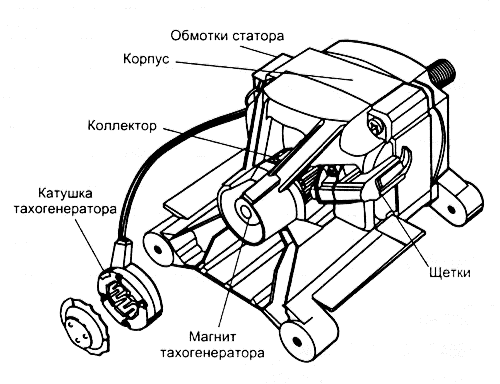
How to remove a part?
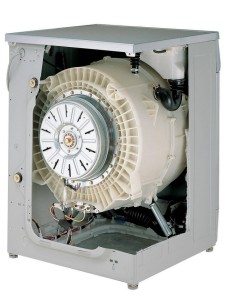
Removing the motor from an old LG washing machine is fairly easy. First, take a Phillips-head screwdriver and remove the screws holding the back panel of the machine. Since our LG washing machine has a belt drive, the first thing you'll see when removing the back panel is the drum pulley and drive belt. We remove the drive belt and pay attention to the space under the bottom of the washing machine tank – the motor is located underneath it.
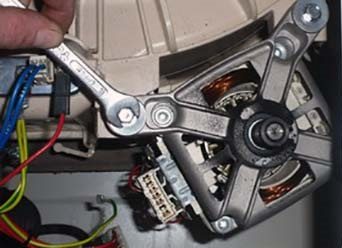
The wires, mounting bolts, and bushings that support the motor will prevent us from removing the LG washing machine's brushed motor. What should we do?
- First, we photograph the location of the wires, and then remove them from the engine.
- Using a ratchet and a 12 mm head, unscrew the screws.
- We push the engine forward a little so that it “jumps” off the bushings, and then carefully pull it out of the housing.
Changing brushes
If the brush motor of an LG washing machine is faulty, there's an 85% chance the brushes are to blame. Brushes on these motors wear out fairly quickly, after approximately 3-5 years of use. If the machine is used intensively, the brushes may need to be replaced after just 2 years. Perhaps this is why the Korean company abandoned brush motors in its washing machines and switched to inverter motors, even though they are more expensive.
To buy suitable new brushes, remove the old ones from the engine and take them to the store – you can’t go wrong.
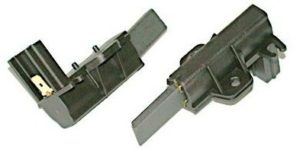 You need to change the brushes yourself. This is a "piece of cake" job, which, with the right skill, will take the average person 20-30 minutes, including removing the engine. A mechanic can do this job faster, but they'll charge a pretty penny. Changing your windshield wipers in Moscow costs about $40, and that's assuming you buy new ones yourself, which costs another $8-10. So, changing your windshield wipers will cost you $50. If you don't mind the expense, then by all means, pay the mechanic, but remember, you can easily do this repair yourself.
How to change brushes You can read about the washing machine's commutator motor in one of our website's publications. The brushes on an LG washing machine's motor are replaced in the same way.
Winding
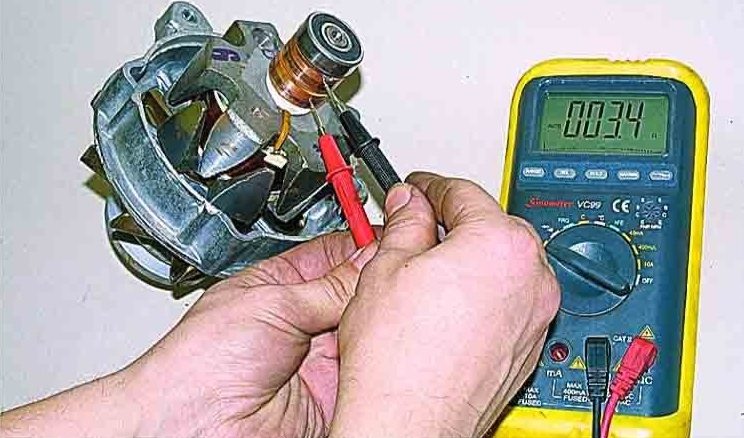
If the brushes are OK, you need to disassemble the motor housing and inspect it. The winding or fins may need repair. A strong, unpleasant burning smell coming from the motor housing indicates a possible faulty winding. In this case, check the winding resistance before repairing it. Follow these steps:
- Take an ohmmeter or multimeter.
- Set the resistance value to the minimum value.
- Check the functionality of the device by short-circuiting the probes together.
- Place one probe on the lamella and the other on the winding. Record the resistance reading. If the difference is half an ohm, there is no short circuit between the turns of the winding.
- Next, we check the short circuit of the winding to iron, we place one probe on the lamellas (one after the other), and the second on the body. If the device displays a very high resistance value, then everything is fine; if not, the winding is faulty and needs repair.
Now let's discuss the next question: is it possible to repair the winding of an LG washing machine's commutator motor at home, and how feasible is it? Experts unanimously agree that repairs in this case are economically unfeasible. A homeowner won't be able to rewind the motor themselves, and a repair shop can do it for a pretty penny—$40-$50 in the regions and $70-$90 in Moscow. In this scenario, it's better to buy a new motor instead of repairing it.
Please note! A new brushed motor will cost about the same as a repair, and the manufacturer will provide a minimum one-year warranty on the unit.
The slats are worn out
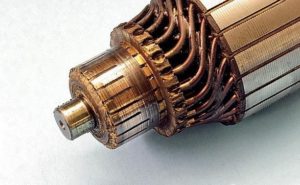 After disassembling the motor of an LG washing machine and inspecting the windings, we confirmed that everything was fine and no repairs were needed. This leaves only one possible solution: worn fins. Many forums and information sites online explain how to visually check for fin wear. They say that simply disassembling the motor and inspecting the commutator will immediately reveal the problem. In reality, it's not that simple.
When the slats are so worn that their abrasion becomes visible to the naked eye, repair is impossible. There's only one solution: throw the old motor in the trash and run to the store for a new one. But it often happens that the fins have peeled off just a tiny bit, literally a fraction of a millimeter. These fractions of a millimeter can cause a motor failure in an LG washing machine, but are we really going to throw the motor out because of them? Of course not, there's a chance to bring the motor back to life!
You can try turning the fins on a lathe to restore them to their original size. Only a highly qualified professional lathe operator can do this for a relatively small fee. They'll turn the fins, then you'll carefully remove the shavings, reassemble the engine, and test it—everything should work.
In conclusion, it's worth noting that repairing the commutator motor of an LG washing machine is either futile or only possible with a professional in about half the cases. However, in some cases, you can fix it yourself. The key is to diagnose the problem first, so you can make a final decision about whether to repair it! If you're interested in information about repairing the inverter motor of an LG washing machine, watch the video below.
Interesting:

6 reader comments
Add a comment
Headings
Washing machine repair




For buyers




For users


Dishwasher




Where can I buy an engine for LG?
I have.
Need 4681FR1194D.
What engine, excuse me? And where are you from?
What is the price of the LG 4681FR1194D engine?
Is it possible to replace the motor in the LG WD-10108N, 5 kg washing machine with the motor from the LG WD-10302TUP, 6 kg washing machine?