
Hansa dishwasher repair
 Like any appliance, Hansa dishwashers have their strengths and weaknesses. Weaknesses usually result in breakdowns that require repair. Hansa dishwasher repairs are best left to a professional, but you can also try them yourself, depending on the specific problem. Let's explore the common problems with Hansa dishwashers and how to troubleshoot them.
What breaks most often?
A real scourge of Hansa dishwashers is breakdowns related to water intake and drainage. While these may be due to design flaws, repair technicians report that they constantly need to replace:
- pumps;
- filling valves;
- the electrician of these parts;
- pipes.
The water filling and draining processes are interconnected. If the dishwasher fails to drain and displays a corresponding system error, it's not necessarily due to a faulty pump. A technician should be familiar with the symptoms of various malfunctions to accurately determine which component is faulty. They recommend listening carefully to the dishwasher's operation and the sounds it makes before it displays an error and stops.
About half of the faults can be detected by ear, and if this fails, you need to begin scrupulously checking all suspicious parts until the fault is discovered.
In addition to the drain and fill systems, the heating elements in Hansa dishwashers also break down. The situation here is simpler, since if the heating element fails, the dishwasher either doesn't heat the water at all or overheats it significantly. So even the average person would be 90% certain that the heating element is broken. The other components of Hansa dishwashers are more robust and don't break as often, so we won't discuss them; we have plenty to discuss.
Drainage system
Clogged drains are a common occurrence, so the first step is to check for clogs in the Hansa dishwasher's waste filter, hose, or pipes. What should you do?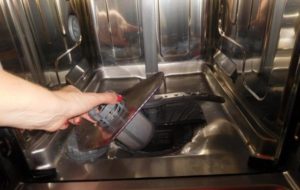
- We free the washing chamber from the lower basket for dishes.
- Remove or move the lower spray arm so that it does not interfere with removing the debris filter.
- We take out the glass of the debris filter, as well as the metal mesh that is located nearby.
- Rinse the filter and mesh. You can clean them with a soft-bristled brush. A small amount of dishwashing detergent can be used for cleaning.
- Before putting the filter back, check the niche into which it is inserted; there may be dirt there too.
If the filter is clean, we'll try checking the drain hose. To do this, unscrew it from the trap and inspect it. Next, turn off the machine, pull it out of its niche, and remove the left side panel. There are several screws around the perimeter, which we can remove with a standard Phillips-head screwdriver. After removing the side panel, we gain access to the pump, pull it out, and inspect it. First, we inspect the part visually. If dirt or physical damage is not detected, we test the pump with a multimeter. Replace the broken pump with a similar one.
The pump may be fine, in which case it's worth checking the internal hoses; one of them may be clogged with dirt. The hoses connect the dishwasher components and are secured with clamps. Unscrew the clamps and inspect the hoses, although clogs in them are relatively rare.
Filling system
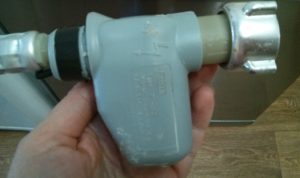 The filling system can be checked without disassembling the Hansa dishwasher, which is especially pleasing to some users. The filling valve is located on the edge of the machine, at the base of the inlet hose, so it can be accessed without penetrating the housing.
So, if your machine isn't getting water or is constantly draining itself, the problem is with the inlet valve. This assumes, of course, that you've already checked that there's water in the water supply, the taps aren't turned off, the hose isn't kinked, and the filter mesh at the base of the valve isn't clogged with debris. Let's check the valve.
- We shut off the water supply to the dishwasher.
- At the base of the housing, at the end of the inlet hose, there's a plastic housing. This is the inlet valve; you need to unscrew it.
- Carefully remove the part and test its contacts with a multimeter.
- We replace the faulty valve with a similar one.
A new fill valve is quite expensive, but the old one is often beyond repair. The video below this article offers an ingenious solution.
Heating element
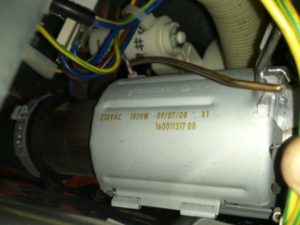 Hansa dishwashers are equipped with flow-through heating elements. They often break, and repairing this rather expensive part is impossible; it can only be replaced. This is done quite easily. First, remove the right side panel of the dishwasher, which immediately reveals the circulation unit and the two large pipes between which the heating element is mounted.
You need to remove these clamps, pull out the heating element, test it with a multimeter, and then act according to the test results. If the part is faulty, buy an identical one and install it in its place. If the heating element is working properly, the water may not be heating due to a malfunctioning control module. Don't forget to buy clamps along with the new heating element, since the "native" clamps are disposable. After the replacement is completed, put the side wall back in place and check the operation of the dishwasher.
Repairing a Hansa dishwasher at home isn't easy, but it's not impossible. Access to all the necessary parts is relatively easy, making troubleshooting much easier. However, before attempting to repair your "home helper," you should learn the basics. dishwasher diagram, so you know where each part is located and what it does. The rest will come with practical experience. Happy repairing!
Interesting:
Readers' comments
Headings
Washing machine repair




For buyers




For users


Dishwasher




Add a comment