
Bosch washing machine control module repair
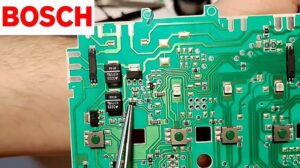 If you don't have experience working with electronics, it's best to leave repairing your Bosch washing machine's control board to a professional. The module consists of dozens of semiconductors, circuits, and microchips. Without understanding the unit's structure, you could cause further damage to the controller. With some knowledge, you can diagnose and repair the component yourself. We'll show you how.
Control and indicator board elements of the Bosch SM
Problems with the main control unit in Bosch washing machines are rare. The board most often burns out due to external factors, such as moisture on the semiconductors or power surges. The module controls the entire operation of the washing machine, so if it is damaged, the washing machine cannot function normally.
In some cases, Bosch washing machines themselves indicate a malfunction in the unit by displaying a corresponding error code on the display.
Removing the control unit is easy. Simply pull out the detergent drawer, remove the top cover and dashboard, disconnect the wiring, and unscrew the screws securing the board. Now let's explain the parts that make up the "brain" of a Bosch washing machine.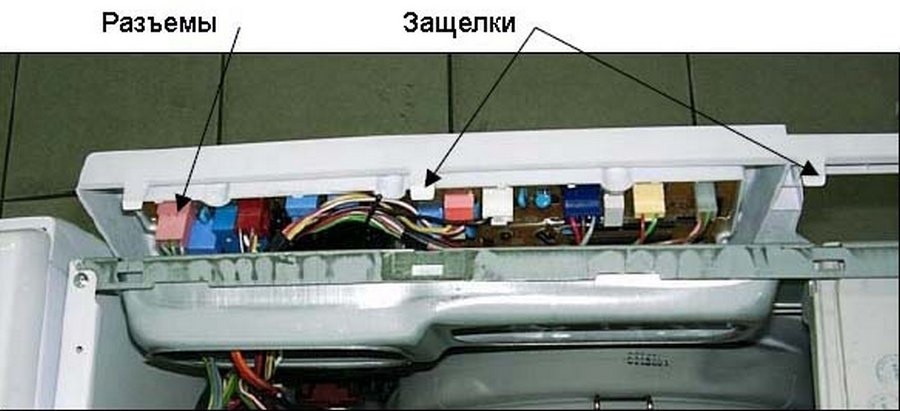
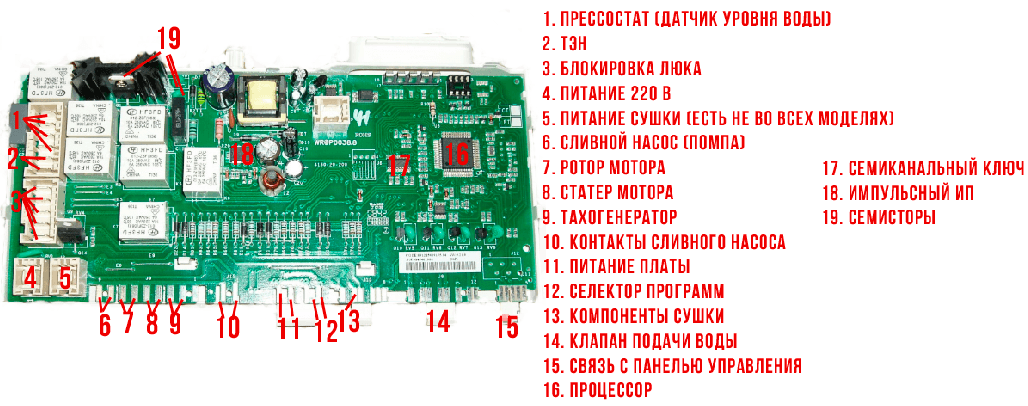
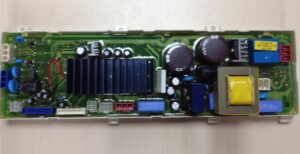
The controller of most Bosch washing machines consists of a main unit and a display unit. These are interconnected. Each element is responsible for specific functions. The main board contains:
- program selector;
- power unit;
- capacitors;
- RF transformer;
- rectifier diodes;
- varistor;
- triacs (each one controls the operation of different elements of the washing machine: drain pump, door locking device, inlet valves, etc.);
- voltage stabilizer;
- resistor;
- microcontroller;
- thyristor block;
- engine control triac;
- relays responsible for reversing the engine and turning on the heating element.
The display board is connected to the main unit via a special cable. It contains:
- LEDs;
- touch button antennas;
- high-frequency npn transistors;
- microcircuits for indicators;
- a driver that controls the operation of LEDs;
- voltage stabilizer;
- capacitors;
- microcontroller;
- buzzer (a device that makes a sound when the washing machine is turned on and at the end of the cycle).
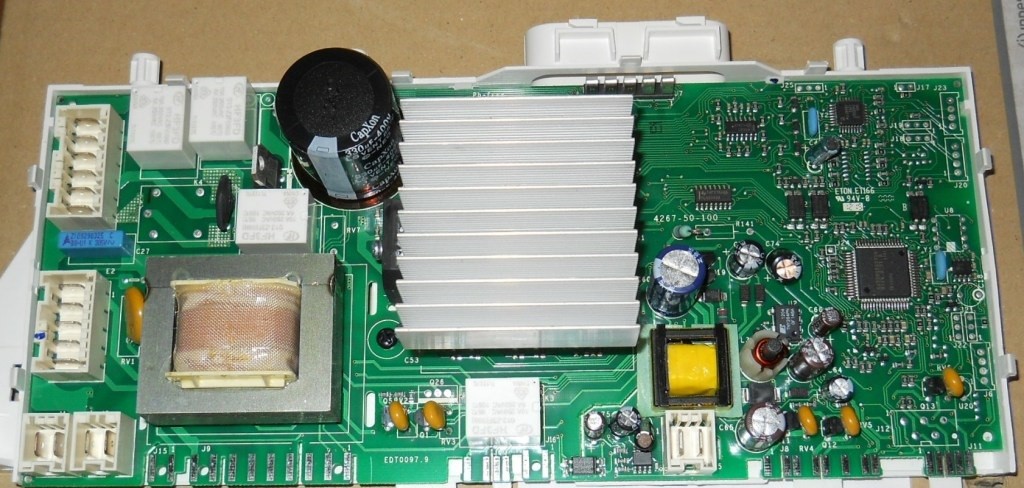
The electronic unit is the "brain" of the washing machine. It controls all washing programs. Bosch washing machine modules consist of one or two circuit boards, depending on the model. Each part contains semiconductors responsible for the operation of various components of the machine. The components are connected to each other by tracks.
If the electronic unit is damaged, the machine may not turn on at all, may not respond to user commands, or may freeze at a certain point in the cycle. If all other possible faults have been ruled out, the control board should be checked. We'll explain how to perform diagnostics.
Checking the control board components
The electronic control unit of a Bosch washing machine usually fails due to power surges. Therefore, if the lights in your apartment were flickering and then the machine stopped working, the circuit board has likely burned out. Another possible cause is high humidity in the room and water ingress onto the semiconductors.
The first stage of diagnostics is a visual inspection of the board for burns.
If the board appears clean and there are no burnt areas or black spots, you will have to test each semiconductor. Diagnostics of the control unit is performed using a multimeter. The tester is switched to the "dialing" mode.
After the pulse power supply, there's a smoothing capacitor on the main module. The terminals of this capacitor should be connected to the connectors leading to the display board. If the multimeter beeps, the two parts are communicating.
The capacitors on the control board are responsible for voltage stabilization. A common cause of component failure is swelling. The capacitor contacts are also tested with a multimeter. A one on the tester's screen indicates an open circuit, while a zero indicates a short circuit.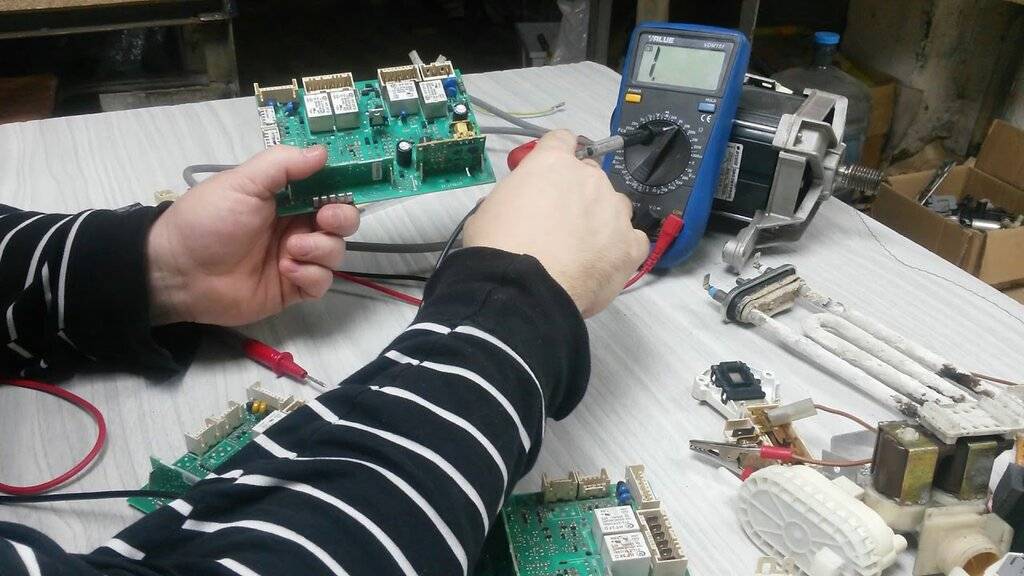
The next diagnostic step is to check the contacts coming from the main unit to the display board. You need to find a white element with five pins. The first is the negative terminal, the third is the positive terminal.
Nearby, on the display board, are two diagnostic contacts. These are used to check the power supply at the connectors. One multimeter probe is placed on the negative terminal, the other on the diagnostic pin. Do the same with the positive terminal.
If the multimeter beeps, it means there's contact. If there's an open circuit, the tester will remain silent. When the elements aren't connected, the signal doesn't reach the voltage regulator, and therefore, power isn't supplied to either the microcontroller or the logic unit. This prevents the unit from functioning properly.
A multimeter is also used to measure the voltage between the semiconductors. For example, the stabilizer should normally output 9 volts. Check whether the actual value matches the stated value. If not, you'll need to clean the contacts or replace the component entirely.
After diagnosing the capacitors, the thyristor block is checked. A negative resistance must be set and the first-order diodes must be tested with a multimeter. The voltage reading should not exceed 20 volts.
In a similar manner, all contacts on the control board are tested one by one. If the multimeter is silent, there is no connection between the semiconductor elements. This will tell you which components of the unit to focus on.
Troubleshooting
Without a doubt, the most difficult step is diagnosing the control unit of a Bosch washing machine. While it's difficult to detect the fault, repairing the board is easier, and all the parts are readily available. Repair of the module will consist of soldering tracks, cleaning contacts, and replacing damaged semiconductors.
In the vast majority of cases, a soldering iron is needed to repair the washing machine control board.
In addition to a soldering iron, to repair the main electronic unit of a Bosch washing machine you will need:
- rosin;
- tin;
- solder;
- a sharp knife (for cleaning oxidized contacts).
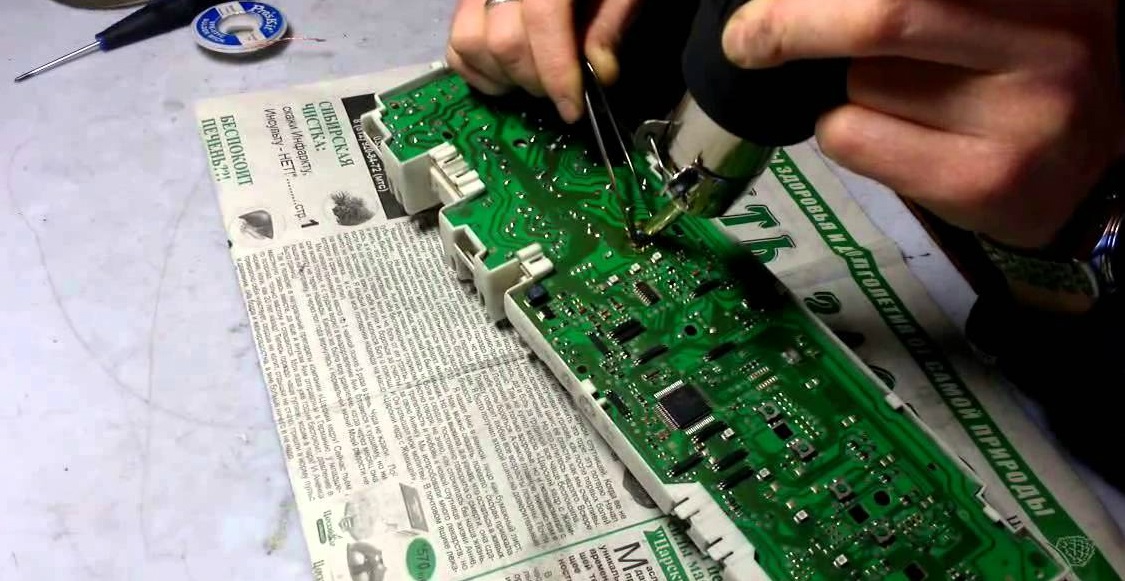
If you're inexperienced with electronic devices, it's best not to attempt to repair the controller yourself. You could only make the situation worse and further damage the board. This would require replacing the entire component, which is significantly more expensive than installing new semiconductors or re-soldering the tracks.
Once the repair is complete, be sure to perform a final test of the unit. This is done with a multimeter. If all semiconductors ring normally, you can reinstall the board and start the machine.
If problems persist after repair, the software may be the issue. In this case, you'll need to update the controller firmware. To do this, you'll need an adapter (programmer) and special drivers. It's best to take the board to a service center, where technicians can upload the firmware directly to the processor.
There are cases where the Bosch washing machine controller cannot be repaired. If the service center confirms your suspicion, the unit will need to be replaced. You can order a new board specifically for your washing machine model from specialized online stores.
Interesting:
Readers' comments
Headings
Washing machine repair




For buyers




For users


Dishwasher




Add a comment