
Gorenje dishwasher repair
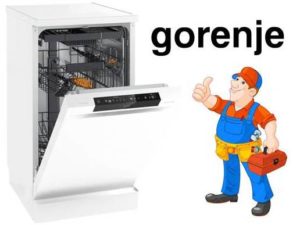 Many Gorenje appliance enthusiasts claim they're so reliable that they rarely break down. Our technicians don't share their optimism, so they helped prepare this publication, which, according to them, details Gorenje dishwasher repairs, addressing the most common faults of these "home helpers." We hope this information will be useful for experienced users and novice repairmen.
What breaks most often?
It's clear that anything can break in any dishwasher; no machine is absolutely reliable. However, every brand of dishwasher has its weaknesses, which result in so-called typical problems. Let's take a look at them.
- The "disease" of Gorenje dishwashers is clogging. It would be more accurate to say that this "disease" is not the dishwasher's fault, but the owners', who neglect basic care of their "home helper."
It is recommended to clean the filters at least once every 3 months, preferably more often.
- Another weakness of Gorenje machines is the thermistor, which burns out due to power surges and system failures. Less frequently, the heating element fails.
- The machine's leak protection sensor is often triggered. This sensor is located in the drain pan and can be triggered, so to speak, without a leak, even if there's no leak.
- The pump in Gorenje washing machines also raises complaints among some technicians. 9% of all breakdowns are related to the drain pump, a fairly high percentage.
The latest Gorenje dishwasher models have problems with the control module firmware. Most often, the problem is solved by resetting the firmware, but sometimes a complete replacement is required. This type of work should only be performed by a qualified technician. Messing with the firmware without experience and the necessary knowledge can seriously mess things up and lead to expensive repairs.
Cleaning the machine
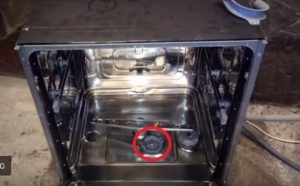 Cleaning the dishwasher is the user's responsibility. Neglecting this will result in a clogged drain that will stop the dishwasher from working. If the dishwasher drains slowly or doesn't drain at all, the debris filter needs urgent cleaning. This filter is located at the bottom of the washing chamber. Rinse it thoroughly but gently using dishwashing gel.
You should also check the drain hose, as clogs often accumulate there. You should also inspect the siphon fitting. Dirt accumulates there in a dense lump, and over time, water stops flowing through it. Cleaning this is simple. Simply disconnect the drain hose from the fitting and poke around the entrance with a screwdriver to remove any debris.
Another filter that should be checked regularly is the inlet valve filter. It can be accessed by unscrewing the inlet hose of your Gorenje dishwasher. The filter is a small plastic mesh that quickly becomes clogged with limescale. If you have hard water, check the mesh at least every three months. After removing the mesh, clean it thoroughly and replace it.
We check the temperature sensor and heating element
If you notice that your Gorenje dishwasher is refusing to heat water, it's likely the temperature sensor or heating element has failed. Heating elements fail less frequently, but they still sometimes need to be replaced. Replacing a Gorenje dishwasher's heating element is a complex process. The heating element is located deep within the circulation unit. To access it, you need to completely remove the tray, disconnect the power supply from the heating element, and pull the element out of its slot.
First, check the heating element for leaks with a multimeter, then measure the resistance. The resistance of the working element is approximately 30 ohms.
The heating element may be working properly, in which case you should turn your attention to the temperature sensor. Measure its resistance, and if the readings approach zero, the temperature sensor needs to be replaced.
The leak sensor was triggered
The leak sensor operates on a very simple principle. Inside the dishwasher's casing, there's a sensor connected to a float. If water floods the casing, the float immediately rises, pulling a contact bar with it. This contact immediately sends a signal to the control module, which immediately shuts off the water supply and stops the dishwasher.
To check this sensor, remove one of the side panels of the Gorenje washing machine. Insert your hand into the resulting hole and feel for water in the tray. If there's a lot of water, tilt the machine on its side and drain it. Then, look where the water is dripping from and try to locate the leak. After replacing the leaky hose or gasket, you can start the machine again.
Let's assume there's no water in the tray. That means the sensor is simply stuck. You need to move the float downward. Then the contacts will open and the machine will start functioning normally.
The pump does not pump out water
When pumping wastewater into the sewer, the dishwasher pump makes a loud humming sound. It's impossible not to hear it, so if the humming suddenly stops, The dishwasher does not drain water., then the pump needs to be checked. To remove and check the pump, you don't need to disassemble the entire dishwasher.
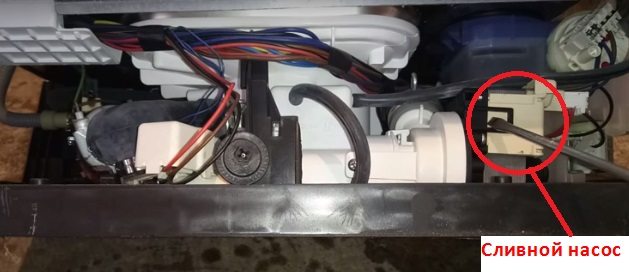
- It is enough to remove the side wall of the Gorenje dishwasher.
- Disconnect the pump from the circulation unit.
- Remove the wires from it.
- Check the drain pump with a multimeter.
- Replace if it turns out to be faulty.
In conclusion, it's worth noting that troubleshooting many Gorenje dishwasher problems yourself isn't all that difficult. You can get to the parts you need almost immediately, but there are some defects that should only be left to professionals; otherwise, you could only make the problem worse and the repairs much more expensive. Good luck!
Interesting:
Readers' comments
Headings
Washing machine repair




For buyers




For users


Dishwasher




Add a comment