
How to repair a pressure switch?
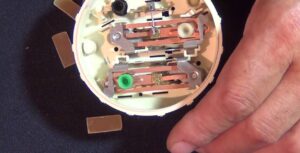 The pressure switch is a washing machine component located on the side panel of most models, just below the top cover. It resembles a washer. Replacing the component is easy, but not all technicians can perform a proper pressure switch repair. What are the most common malfunctions of this component, and is it possible to fix them at home without calling a professional?
Typical problems
A special error code appears on the control panel to help identify pressure switch malfunctions in washing machines equipped with a display. There are also other signs that indicate malfunction. Characteristic symptoms can help you suspect a malfunction.
- A repeating wash cycle. A faulty water level control mechanism prevents the machine from functioning properly. In such cases, technicians recommend disconnecting the machine from the power supply and replacing the pressure switch with a new one.
- Water intake failure when the appliance is turned on. The program often fails to start due to the automatic dry wash cycle or if the contact is stuck in the "full" position.
- A burning smell when the drum is empty is also a reason to check the pressure switch and pump. The washing machine can automatically start a program and operate the heating element. However, if there is no liquid, the heating element's fuse trips.
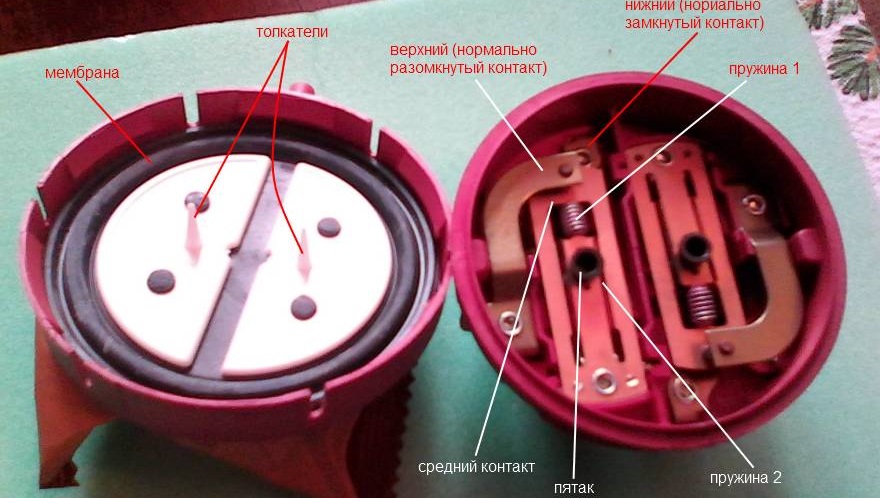
- Water remains in the drum after a full wash cycle. This is often caused by a faulty water level sensor. Sometimes, the used water isn't completely drained from the machine, while fresh water is still entering the drum.
In addition to these signs, poor quality washing may also indicate problems. The laundry may remain dirty due to the fact that the tank does not collect enough liquid, and the pressure switch setting is incorrect. To troubleshoot a sensor, simply turn the special adjustment screw and compress the spring. Let's take a closer look at how to do this correctly.
Checking and adjusting the sensor
Before assessing the pressure switch's functionality and attempting repairs yourself, you should check whether your washing machine's warranty has expired. Most brands offer a warranty period of up to 12 months. If the warranty is still valid, it's best to avoid attempting repairs yourself and contact a specialized repair center. Otherwise, you can repair the water level sensor yourself. To do this, you'll need:
- disconnect the washing machine from the power supply;
- Unscrew the two small screws on the back of the case that hold the top panel in place. Remove it;
Important! The pressure switch is located on one of the machine's body walls.
- remove the connector and release the screw;
- remove the hanging sensor;
- unscrew the clamp, remove the device using pliers.
After completing these steps, you can check the pressure switch adjustment and ensure it's working properly. To do this, take a piece of rubber tubing and connect it to the sensor. The test method is simple: blow into the tube and listen for a clicking sound inside the device as the pressure changes. If there's no clicking sound, the pressure switch is faulty.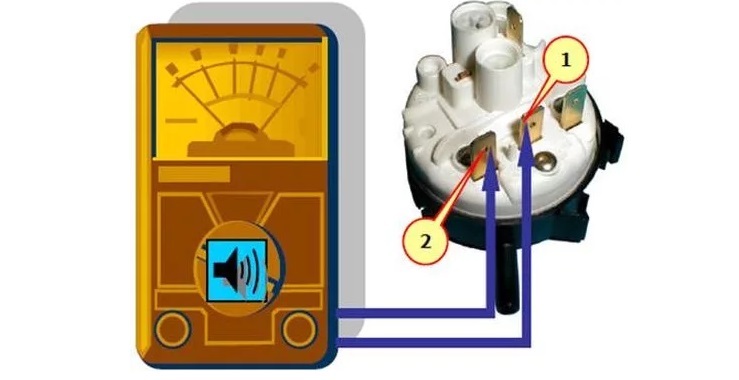
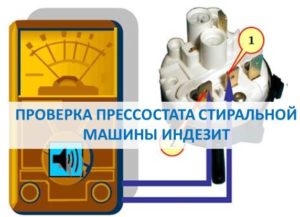
The water level sensor can also be tested using a different, hardware-based method. To do this, use a multimeter. Then, follow these steps:
- prepare a device for measuring resistance;
- the probes are placed on the corresponding contacts of the pressure switch;
- increase the pressure in the air tube until a certain relay contact is triggered.
If the contact is activated but the resistance value does not change, the sensor is faulty and a new one must be installed. Experts advise: even if the above-mentioned testing methods indicate no faults, it's worth conducting a further inspection of the mechanisms. To do this, attach a tube to the pressure switch and test its tightness.
Please note! Adjusting the sensor at home is only possible when you need to increase or decrease the amount of liquid in the drum. To do this, simply adjust the pressure switch's actuation force.
Before adjusting the settings, unplug the washing machine. Then remove the cover and disconnect the connector from the relay. The sensor has three adjustment screws. The one for controlling the primary force is located in the center of the relay housing in most models. This screw is usually made for a Phillips-head screwdriver. You should only start adjusting the sensor when the tank is empty. This work is carried out in several stages, with constant intermediate checks of the water level:
- turn the key – assembly is performed;
- connect - conduct testing.
These steps are repeated several times, with the screw turned no more than half a turn each time. To independently check, replace, or adjust the pressure switch, you must have at least basic theoretical knowledge. If you lack experience, it's best to consult a professional technician.
Interesting:


2 reader comments
Add a comment
Headings
Washing machine repair




For buyers




For users


Dishwasher




You write quite well: "... after blowing into the tube, observe whether a clicking sound is heard inside the device as the pressure changes. If there is no clicking, the pressure switch is working properly."
Quite the opposite! 🙂
Have you heard of inductive and electronic pressure switches? Because this test only applies to electromechanical ones.