
Repairing a Renova washing machine yourself
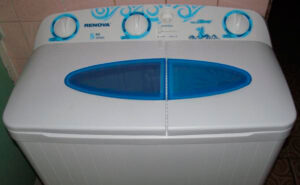 Semi-automatic washing machines with actuators, such as the Renova, are inexpensive and easy to use. However, these days, such machines are rare and rarely repaired—it's cheaper and easier to buy a new one. However, sometimes you have to repair a semi-automatic machine yourself. We offer insight into how Renova washing machines are repaired. We'll examine the machine's design, as well as common problems and troubleshooting instructions.
How does a washing machine work?
Before attempting to repair a broken Renova, it's essential to understand the washing machine's design. Otherwise, it's impossible to locate the fault, disassemble, diagnose, repair, or replace it. Therefore, first, study the included instructions and the machine's schematic.
Like any activator semiautomatic, Renova necessarily has:
- frame;
- washing tank;
- trash filter;
- centrifuge;
- dashboard;
- activator;
- motor with drive;
- drainage system;
- shock absorbers.
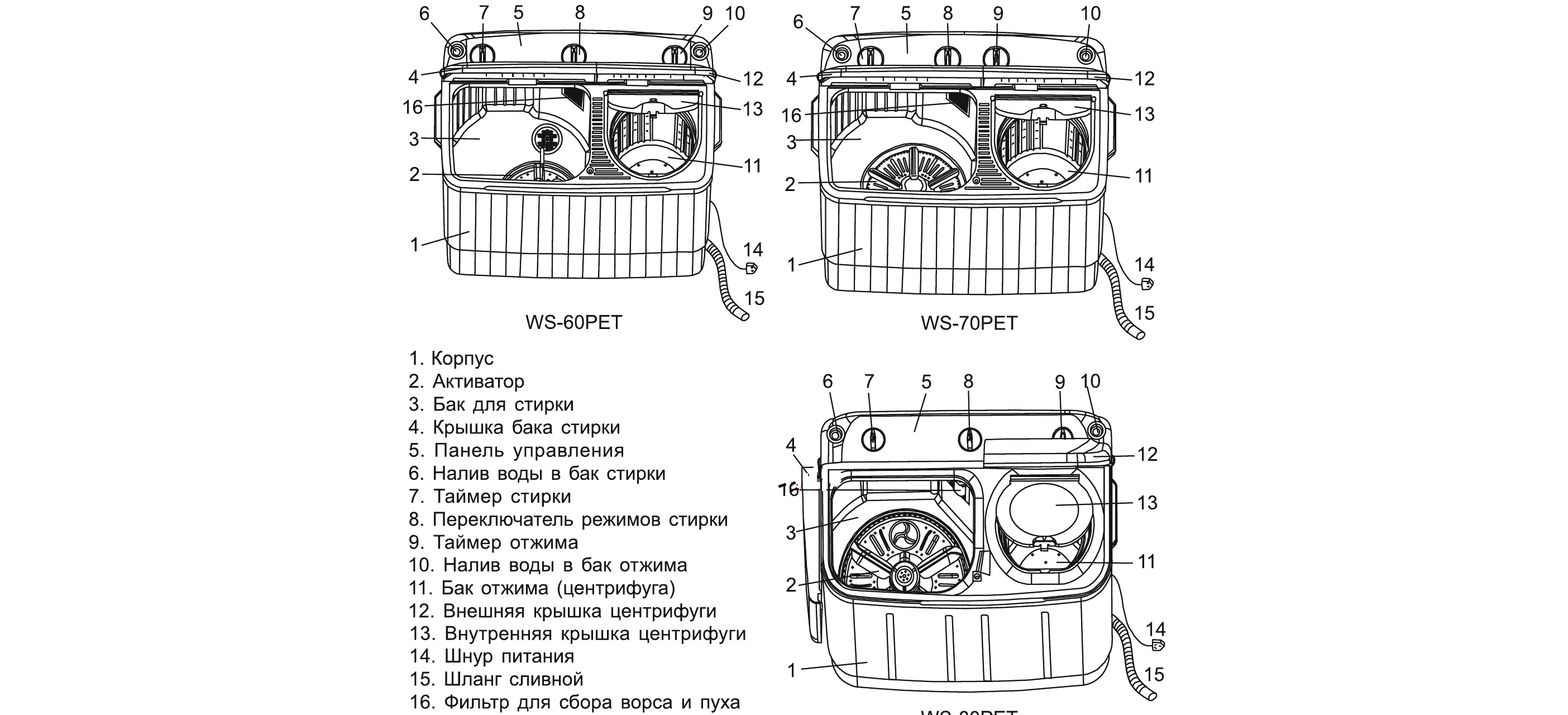
Let's look at each point in more detail. The Renova washing machine's body consists of a decorative top cover, a base, and front, rear, and side panels. The control panel houses the spin cycle timer, as well as knobs for switching modes and selecting the cycle duration.
The main design element is the wash tank. Unlike automatic machines, there's no separate tank or drum cylinder, just a recess in the body. At the bottom of the washing machine or in the wall there will definitely be an activator - a circle with longitudinal bulges-blades. The “screw” is fixed with special screws and a washer with a steel gasket, and rotates with the help of a provided shaft and pulley.
The dust filter is located in the washing machine's compartment, or more precisely, it hangs from a hook on the left or right wall of the machine. It's a mesh bag that catches debris and dirt during the wash cycle. Cleaning is easy: simply remove it from its slot, clean it, and return it to its place.
Another key component is the centrifuge. It consists of a drum, a laundry retainer, and a protective lid. The centrifuge is driven by a separate motor, the impulse from which is transmitted through the shaft, and is stopped by a brake and a brake clutch. Vibration emanating from the drum is dampened by three lower dampers.
The Renova drainage system consists of the following elements:
- pump;
- internal and external drain hoses;
- drain valve;
- drain nipple.
The washing machine's motor is located under the wash tub. The motor is connected to the actuator via a drive belt, which attaches to the small and large pulleys.
Restoring the drain
Renova washing machines often experience problems with water drainage. Waste water either doesn't drain out of the machine or, conversely, isn't retained in the drum. It is not difficult to fix the problem on your own; the main thing is to correctly identify the cause of the malfunction.
Drainage can be disrupted in three situations: if the drain valve is dislodged, or if the pump is broken or clogged. In the first situation, you'll need to manually adjust the valve control cable tension. Here's how to do it:
- disconnect the washing machine from the power supply;
- remove the back panel by unscrewing three screws on the front wall of the case;
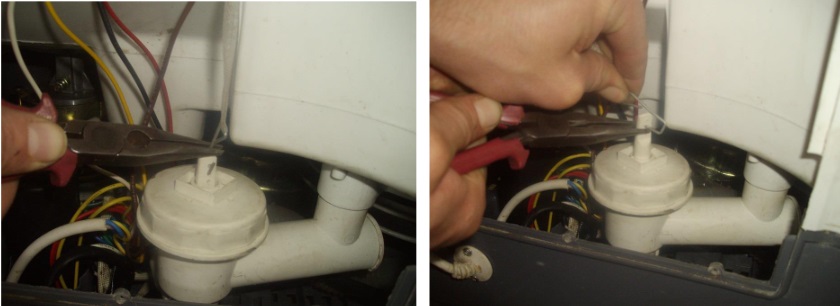
- unhook the control cable;
- we move the cable to another hole on the drain unit;
- We check the operation of the drain.
The drain also stops working if the pump is broken or clogged. In the first case, it needs to be replaced; in the second, it needs to be cleared of accumulated debris. But first, the device needs to be removed. The instructions are as follows:
- de-energize the semiautomatic device;
- remove the back cover;
- pull the drive belt off the activator pulley (feel it with your hand and pull it towards you);
- tilt the washing machine body and unhook the lower base by unscrewing 6 screws around the perimeter;
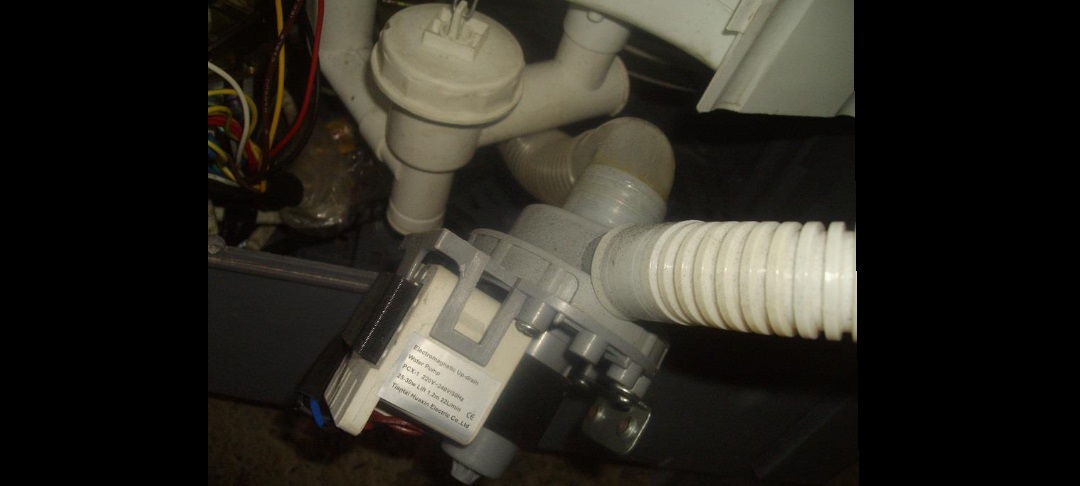
- move the semiautomatic body by 30 degrees and open access to the pump;
- unscrew the 2 bolts holding the pump from the bottom;
- remove the pump from its seat along with the hoses;
- loosen 4 screws and disconnect the pump from the "socket".
The removed pump should be carefully inspected for blockages and damage. If dirt is the issue, simply clean the pump body thoroughly, reassemble, and replace it. A broken pump cannot be repaired; it must be replaced with a new one.
Changing the timer
If your Renova's timer isn't working, you'll need to replace it. Removing the old timer and installing a new one isn't difficult; just find a similar part and follow the instructions. Here's the procedure:
Before any repair work, it is necessary to de-energize the machine and disconnect it from the water supply.
- remove the back wall;
- unhook the drain valve control cable;
- Unscrew the screw holding the instrument panel from the back of the case;
- unclip the panel from the body and turn it over;
- find the timer;
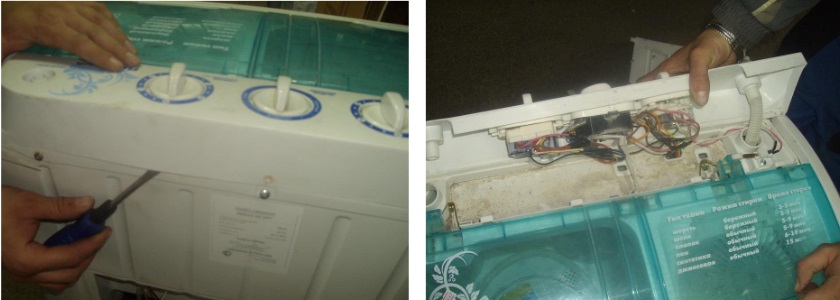
- loosen the bolts securing the timer;
- detach the timer from the decorative handle;
- release the wiring connected to the device;
- remove an element;
- set a new timer;
- connect the wiring to the new device, put the handle back in place, and secure the timer with bolts.
You need to be extremely careful with the wiring. To avoid mixing up the contacts when reconnecting, it is recommended to take a photo of the terminal locations when removing the old timer.
We are replacing the centrifuge motor and seal.
The centrifuge often jams on semiautomatic machines. The tank doesn't spin up to the set speed, remaining stationary. In this case, you'll first have to replace the corresponding motor, followed by the seal. The instructions are as follows:
- remove the back cover;
- remove the centrifuge locking cable together with the plastic fastener;
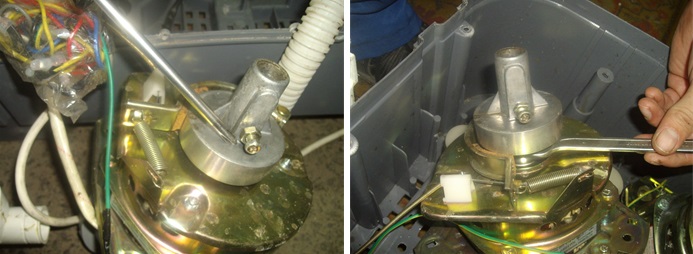
- Using an 8 mm socket head, loosen the bolt that secures the centrifuge drum to the brake clutch;
- tighten the activator drive belt;
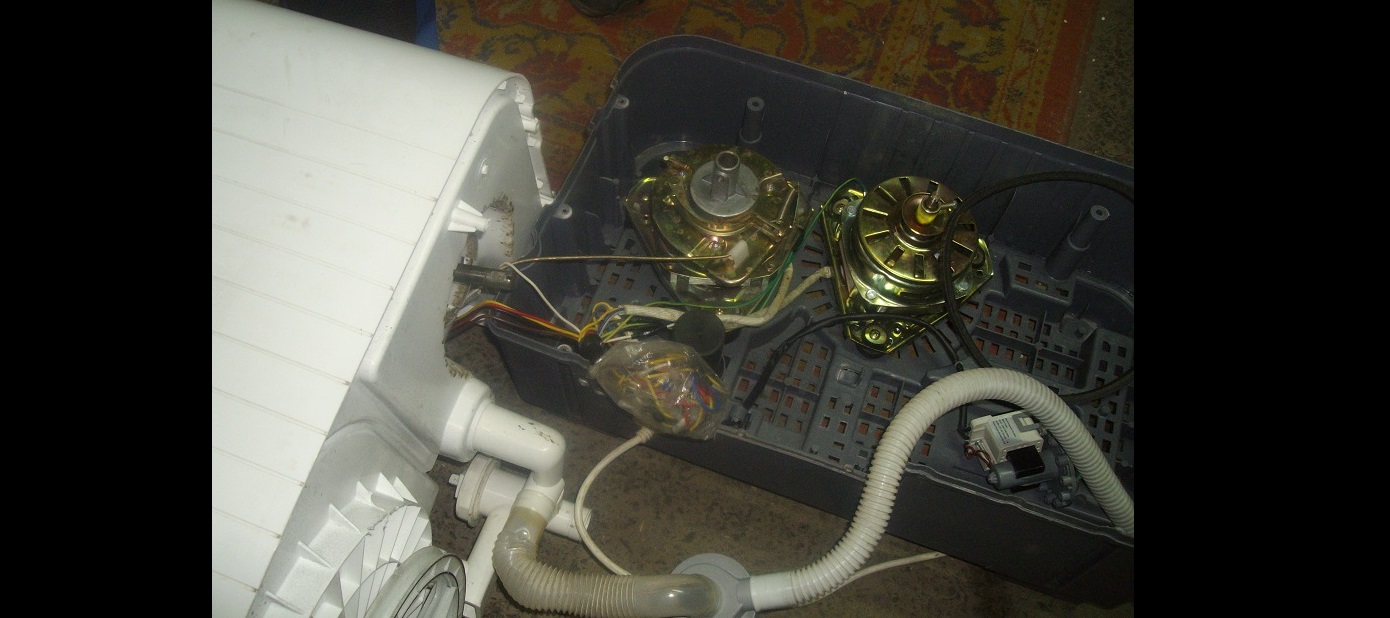
- tilt the washing machine and unscrew the screws holding the bottom to the body;
- detach the bottom from the body, freeing access to the motor;
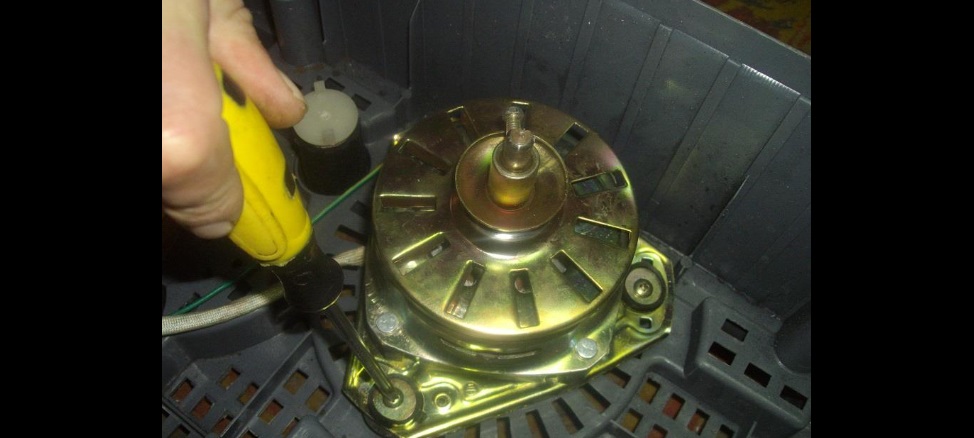
- Use a Phillips screwdriver to loosen the 3 screws securing the engine to the platform;
- remove the engine from the grooves;
- partially unscrew the bolt so that the brake clutch can be removed (it can be pried off with a flat-head screwdriver or wrench);
- disconnect the centrifuge brake and unscrew the bolts holding it;
- disconnect the wiring;
- replace the old engine with a new one.
Next, you need to replace the seal. Unscrew the bolts holding the top cover of the washing machine and lift it up along with the control panel. It is not recommended to completely disconnect the part from the housing to avoid damaging the wiring. Next, pull out the centrifuge drum and remove the rubber seal from its "nest." After that, all that remains is to install a new gasket and reassemble the Renova.
We are replacing the washing machine motor.
If necessary, you can also repair the main motor, which is responsible for spinning the actuator, yourself. Repairing the motor involves removing it and then replacing it. The procedure is as follows:
- remove the back cover;
- reset the centrifuge lock cable;
- Using an 8 mm socket head, unscrew the bolts connecting the centrifuge drum to the brake clutch;
- remove the drive belt from the activator;
- tilt the washing machine on one side and release the lower base of the housing from the fasteners;
- move the bottom away from the main body and release the washing compartment motor;
- release the engine from the fasteners (there are three of them);
- partially unscrew the fan mounting screw;
- remove the fan from the engine;
- disconnect the wiring from the motor;
- dismantle the engine.
To avoid mistakes during reassembly, it is recommended to record the disassembly process on video.
After removing the old motor, all that remains is to install the new engine, connect the wiring, and screw back all the previously removed bolts. It is important to select the correct engine, based on the Renova serial number.
Changing the drum on a centrifuge
After extended use, the centrifuge drum of Renova washing machines often suffers. It becomes damaged and needs to be replaced. The drum is replaced as follows:
- the back cover is removed;
- the drum is disconnected from the brake clutch;
- the fasteners holding the top cover are unscrewed (three screws at the back, one on each side, and one under the plug at the front);
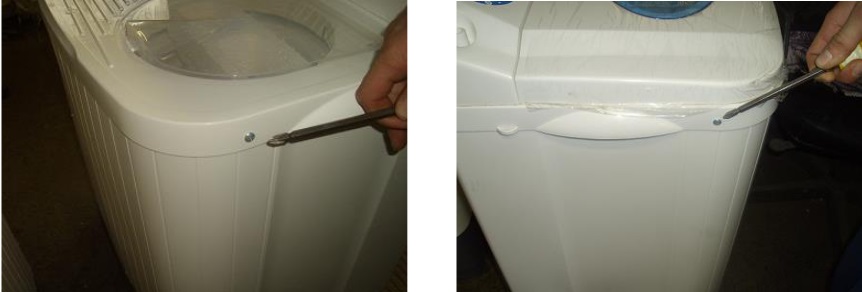
- the top cover is lifted;
- the drum is pulled out;
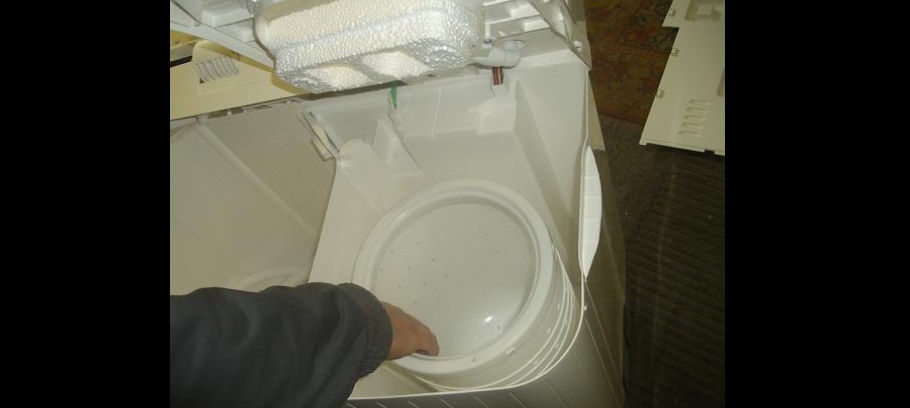
- a new drum is installed or the old one is patched.
That's it! All that's left is to replace the top cover, secure the drum, and screw on the back panel. Then, run a test spin and assess the quality of the repair.
Interesting:
17 reader comments
Add a comment
Headings
Washing machine repair




For buyers




For users


Dishwasher




Everything's great, but how can I tell if the timer is working? The problem is this: When I turn on the wash cycle, the activator spins 3-5 times, stops, and then starts spinning in the opposite direction. After 3-5 spins, it stops and starts spinning in the opposite direction. When loading laundry, it barely rotates at all. What could this be? My machine is a Renova ws-60pet.
Hello! I have a RENOVA washing machine. Could you tell me what to do if the wash timer isn't spinning?
The actuator should work like that, in both directions. But the fact that it doesn't turn is bad. It could be not enough water, or too many rags (it can't handle more than 6 kg, judging by the model). Or the engine is screwed. Start testing small—more water, less rags.
Thank you! Good article. What happens if the wash timer works, but the wash actuator doesn't? Even with no laundry in the drum, with or without water, the drain and spin cycles work.
I have the same thing
What to do if it doesn’t wash?
Hello! My washing machine has a feature where it starts beeping when there's a minute left in the wash cycle, as a warning. The machine beeps constantly while washing. How can I fix this? The timer is working and is accurate, but it keeps beeping. I've tried turning the power on and off, but the beeping still persists. I bought the machine exactly a month ago, and I do regular washing—I don't overload it. Could you please tell me what to do? It's a Renova ws-70pet.
The spin cycle does not turn on on the Renova.
What should I do if the spin function doesn't turn on?
Check the timer switch contacts.
I have the same problem, what should I do?
How do I fix the middle burner, the one that drains? The switch cap fell off, so I use pliers to turn it, but I'm really fed up with it. The outer burners are designed the same way, but the middle lever is much harder to operate and is designed differently. Was it glued on? Has anyone else had this happen? How do I fix it?
Good afternoon.
Please tell me. Remove 40 ws pet machine.
The timers are working, I hear a clicking sound, apparently the motor is trying to start but won't, while the timers continue to run. It doesn't wash, drain, or spin. Even before the breakdown, water from the wash tub was leaking into the centrifuge. How can I drain the water from the machine now? It's a semi-automatic machine, and I couldn't find a drain hole for manual draining.
Hello. My Renova 80 washing machine is leaking from the bottom. What should I do? What could be the cause?
How to replace the cap on the tank?
Tell me, what should I do and what is the problem when I turn on active soaking, the timer works, but the centrifuge itself does not spin?
Excellent article. Could you please tell me about my Renova WS-15T washing machine? There's a ringing noise near the motor underneath the machine. What could it be?