
DIY Kaiser washing machine repair
 Repairing Kaiser washing machines is largely similar to repairing other brands of automatic washing machines, but there are some unique features. These features manifest themselves primarily in the most common malfunctions. We decided to discuss these problems in more detail, as well as the best ways to fix them yourself.
What breaks more often?
Which parts most often fail in Kaiser washing machines? To answer this question, we needed aggregated statistics from leading service centers. Based on this data, we concluded the following:
- The heating element is the most common problem with washing machines of this brand. It's difficult to say why this happens; it could be a quality issue, or perhaps a design issue with the washing machine. However, the most frequent complaints that service centers receive from citizens are related to the problem of heating water in washing machines. Kaiser.
- Second place goes to problems with filling and draining water. Incidentally, this problem isn't unique to Kaiser washing machines. Any other washing machine suffers from the same issue. Just take a look at the list of typical Electrolux washing machine malfunctions.
- The third most common complaint from consumers is about their Kaiser washing machine leaking. Hoses and pipes are a weak point in all automatic washing machines. Some brands are more prone to this problem than others, but the fact remains that it's always present.
Please note! Kaiser washing machines sometimes experience problems with the door lid, control module, belt, and motor, but these are all rare compared to the above-mentioned problems.
These are the top three problems with Kaiser washing machines. We decided to discuss them first and, most importantly, tell you how to deal with them and how to prevent them in the future. After all, prevention is always better than spending money on washing machine repairs later, and perhaps even on repairs to your neighbor's apartment.
The water is not heating up
Kaiser washing machines are most often equipped with a standard 280 mm 2000 W automatic washing machine heater. The spare part itself can be easily purchased at specialized retail outlets or ordered online; the approximate price is $16, plus $2-3 for shipping. The total cost is a maximum of $19, assuming you do the replacement yourself. Calling a professional will double or even triple the cost, so DIY repairs are preferable. What should we do?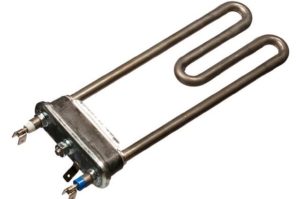
- Disconnect the washing machine from the electrical network, turn off the water, and disconnect the washing machine from the water supply and sewerage system.
- We pull it out of the niche into a free space and then unfold it.
- We unscrew the screws holding the back wall of the washing machine and remove the back wall.
- At the bottom of the washing machine's tank, we find two fairly large contacts with wires running to them - this is the heating element.
- We take an ohmmeter or multimeter, set it up, and then measure the resistance of the heating element. The working parameter will be about 26 Ohms; if the device shows significantly less, it is faulty and needs to be replaced.
- We disconnect the wires from the contacts of the heating element and the temperature sensor.
- We unscrew the mounting screws and take out the heating element.
Please note! The heating element is a bit difficult to remove, but don't pull too hard on the contacts, as this can tear them out. It's best to pull the element out slowly, rocking it from side to side.
- We take the new heating element out of the packaging, check it with an ohmmeter, insert it in place of the old one and make sure that it “sits in the niche”.
- We connect all the wires to the terminals, replace the back panel, place the machine in the niche, and connect the washing machine to the water supply, sewer, and electricity. We test and ensure everything is working properly.
Leaks
If you notice a sizable puddle under your Kaiser washing machine, either after a wash or between loads, there's a leak somewhere. Before looking for the leak, take immediate action to protect your apartment and your neighbor's from flooding. Turn off the water supply to the washing machine, then place several large rags under the machine, open the hatch located on the front wall in the lower right corner, and unscrew the debris filter.
Once you've drained the remaining water from your Kaiser machine and soaked it up with a rag, you can begin looking for the cause of the leak. Let's start with the hoses, since they are the easiest to check. Let's inspect the inlet and drain hoses. If the problem is drain hose, then it needs to be replaced. It's also possible that the inlet hose has burst, but in this case, more water will leak, and the leak will be more obvious. Replacing the drain and inlet hoses is fairly simple, so we won't cover that separately.
The next possible cause is the hoses. If the leak is internal, you'll have to disassemble almost the entire Kaiser washing machine to find it. This won't be easy to do on your own, so it's best to consult a professional. What could cause an internal leak?
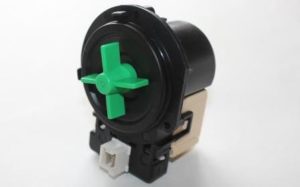
- pump;
- drain pipe;
- filling pipe;
- powder receiver pipe;
- hatch cuff;
- waste filter sealing gasket;
- emergency drain hose (its plug);
- filling valve;
- tank.
Important! Kaiser washing machines have plastic tubs. A bra underwire caught in the tub can puncture it, causing a leak.
Problems with filling and draining water
Similar problems with Kaiser washing machines can occur in several cases:
- the drain pump broke down;
- the drainage system is clogged with debris;
- poor quality of tap water;
- The flow filter of the inlet valve is clogged.
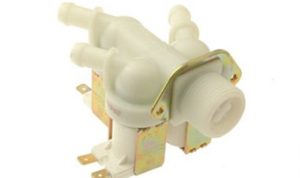 We shouldn't rule out trivial situations like when a user simply forgets to turn on the water supply faucet, or when the water is simply turned off. Such silly situations are far from uncommon. If the washing machine freezes and the display shows error E02, then you first need to check the inlet hose, and then inlet solenoid valve.
If your washing machine displays an E03 error, it's time to check the drain pump. It may need to be replaced, or it may clean – an autopsy and inspection will reveal this. In the future, to prevent clogging of the pipes and filters, don't forget to perform preventative cleaning of the washing machine using special products. To do this, purchase a product once a year, pour it into the detergent dispenser, and run a wash cycle without any items. Within an hour, the product will clean the inside of the machine, and half the problems will disappear.
In conclusion, Kaiser washing machines are quite reliable. They aren't the kind of appliances that require frequent repairs. However, these machines do have their weaknesses, which users should be aware of. Good luck!
Interesting:
6 reader comments
Add a comment
Headings
Washing machine repair




For buyers




For users


Dishwasher




My top-loading washing machine won't turn on. There's power at the power button—everything's working. The power button works, but when I press it, none of the lights come on; it's completely silent. I checked the button again, and there's power. What could be the problem? Help!
While my Kaiser top-loading washing machine was running, the drum jammed upside down. I can't turn it by hand; it's stuck somewhere. What should I do?
Useful article, thank you.
My Kaiser washing machine doesn't want to wash. It spins a couple of times and then stops. After that, I open the lid and there's water in the drum. The spin cycle is almost fine. But it jumps so much that even my child jumps. I have to turn it off and then spin it again! What should I do in this situation?
My Kaiser washing machine washes fine, drains well during the wash cycle, but the spin cycle isn't working. What's wrong with it?
I get error e11, please tell me what to do?