
LG Washing Machine - Malfunctions and Repairs
 The Korean company LG produces excellent washing machines with direct drive. This technology significantly increases the service life of the motor and moving parts. However, these machines are also prone to specific malfunctions, which service center specialists have identified as the most common. If you own an LG washing machine, you'll encounter the problems discussed in this article in 80% of cases.
Common faults and their symptoms
Specialists at leading service centers worldwide note the relatively high reliability of LG washing machines. The motor is considered the most durable component of this machine, failing in only one out of 500 service calls, and in half of those cases, the cause of module failure is a manufacturing defect. Moving parts are also considered quite reliable; all but the bearings require repair more frequently.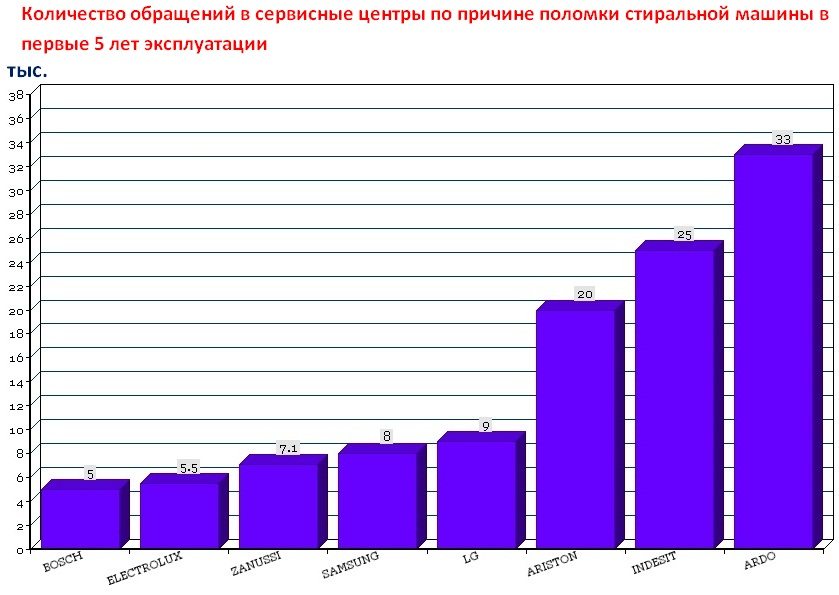
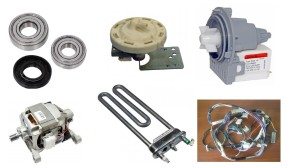
Which LG washing machine components break down most often? Let's list them:
- heating element;
- pressure switch;
- bearings;
- wires and terminals;
- drain pump;
- fill valve.
Malfunctions in these crucial washing machine components manifest themselves in various ways. It's important to carefully analyze the symptoms to more or less accurately diagnose the module's problem before disassembling your "home assistant." Specifically,
- A broken heating element gives itself away error code NO. If the error message doesn't appear on the display, you need to closely monitor the washing process: how the detergent is dissolving, how warm or cold the door lid is, and how well the laundry is washing. A definitive diagnosis of a module malfunction can only be made by measuring the voltage at its contacts with a multimeter.
- Pressure switch malfunctions most often manifest themselves as water draining on its own. This occurs when water continuously fills and drains during the wash cycle. The sensor doesn't send a signal that the tank is full, and therefore the fill valve is essentially always open. This module can be repaired manually.
- Broken bearings make themselves known with a loud bang and squeak, especially when the drum rotates at high speeds. It's very difficult to miss. I bet even your neighbors will notice this problem. To confirm the cause, rotate the washing machine drum manually. If you hear a creaking or knocking sound, the problem is definitely in the bearings.
- Sudden short circuits, shutdowns, and reboots of the LG washing machine's control module require attention to faulty wiring and terminals. Malfunctions of the control modules themselves are much less common in these machines. More often, problems arise with the wires leading to the unit's sensors. They fray, short out, burn out, and so on.
- Due to the specific design of the washing machine drain pumps LG modules fail approximately one and a half times more often than the same modules in machines of other brands. The problem is that the drainage system in these pumps is poorly designed, leading to clogs and pump failure. This manifests itself in the machine's inability to drain water, resulting in an OE error code. The error code is deciphered in the machine's operating manual.
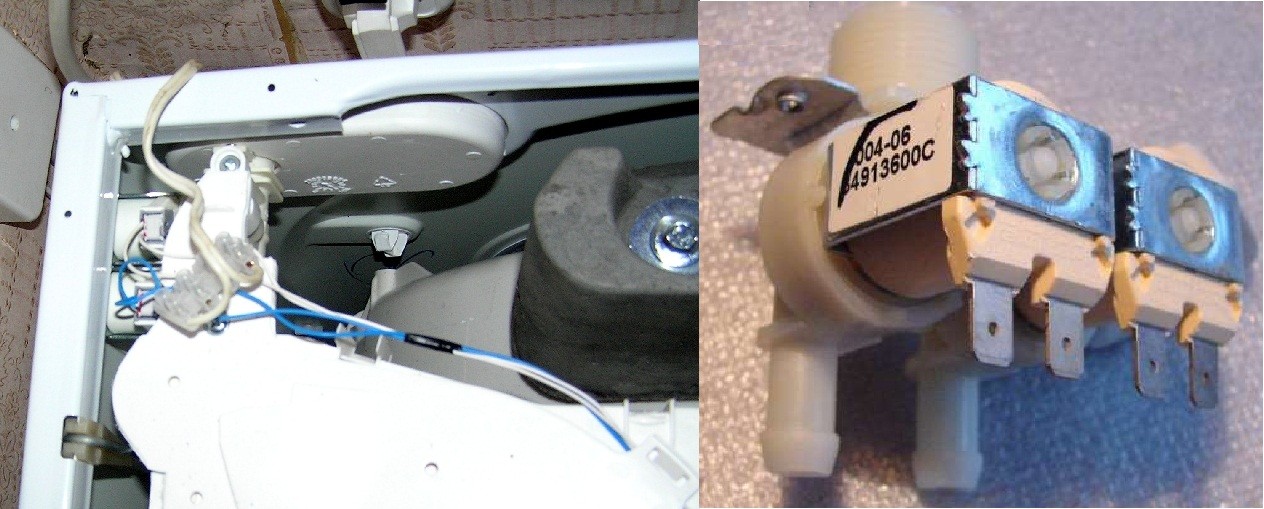
- Problems with the inlet valve seal are also common. It's frustrating to have to disassemble half the machine over one small rubber seal. But there's nothing you can do. Inlet valve problems manifest themselves as a constant flow of water into the washing machine's drum. This happens even when the machine is turned off. If the machine is turned off and you hear water gurgling, it's the inlet valve.
Please note! When troubleshooting your washing machine yourself, be sure to listen and observe its operation during the wash, rinse, spin, and drain cycles. Also, read the user manual; any abnormalities should raise red flags.
We repair heating elements and electrical systems
To access the washing machine's heating element, you'll need to unscrew several fasteners holding the back panel of the LG washing machine, then remove it. Next, look at the bottom of the tub (near the very bottom). There should be two paired contacts protruding from there, each with a screw in the middle, connected to several wires—this is the heating element. We check the contacts with a multimeter; if the display shows a value less than 20 Ohms, the heating element is faulty.
Removing the heating element is easy. Simply unscrew the screw we mentioned, pry up the rubber seal with a screwdriver, and pull the heating element out of the tank. Visually inspect the module's condition. A burned-out heating element rarely has no visible damage (usually soot stains). In most cases, the heating element fails due to a layer of scale that settles on it. A power surge or water getting on the contacts can also cause failure. This video tutorial will help you remove the heating element correctly.
This LG washing machine module cannot be repaired; it can only be replaced. You must purchase an original spare part from the manufacturer and install it in the washing machine drum, remembering to install the rubber seal. When installing the heating element, pay particular attention to the rubber seal. To ensure proper sealing, lightly lubricate it with machine oil.
Important! If the heating element's rubber seal doesn't fit tightly in the mounting hole, water from the tank will leak onto the heating element's contacts, and it will likely burn out again soon. Be careful.
Washing machine electrical repair LG comes down to checking all the wires and terminals going from the control module to all its units. It's not just a matter of checking all the wiring with a multimeter—that goes without saying. A visual inspection is also necessary: look for broken clamps, exposed wire fragments, traces of burning, and melted contacts. Any wiring issues discovered during the inspection should be addressed by replacing damaged conductors and terminals—this is what electrical repair is all about.
Problems with the fill valve, drain pump, pressure switch
It's easy to diagnose problems with the inlet valve of an LG washing machine yourself, and repairing this module yourself won't be difficult either, if you proceed methodically and according to a pre-determined plan. Dismantling and replacing the fill valve with your own hands is carried out in the following order.
- Turn the washing machine around.
- The inlet hose, connected to the water supply at one end, is screwed to the inlet valve at the other end. Turn off the cold water supply by turning off the tap.
- Unscrew the inlet hose.
- We take out, check and clean the inlet valve filter; it may be clogged with dirt and water is not flowing through.
- If the filter is OK, remove the top cover of the washing machine, unscrew the two screws holding the valve, and disconnect it from the pipes.
- Next, we need to check the valve rubber seals. In 90% of cases, the problem is that they're worn out and no longer able to retain water. If this is the case, we replace the rubber seals.
- If the problem isn't with the rubber seals, the valve's control circuit is most likely the issue. In this case, the entire valve will need to be replaced.
To the drain pump of the washing machine LG can be accessed without even disassembling it. Simply tilt the machine on its side, which will allow you to access the unit through the bottom. Check the drain pump sensor with a multimeter; if everything is OK, the problem lies with the unit itself. Then, proceed in order.
- Unscrew the lower part of the front panel of the machine.
- We unscrew the fasteners securing the drain pump.
- Place a basin underneath, as water will spill out during the removal process.
- We disconnect the plugs and remove the wires with the sensor.
- We disconnect the pipes, drain the water and put the unit aside.
Please note: Before laying the machine on its side, remove the powder drawer as instructed in the user manual, as any water remaining in the drawer could spill onto the control unit and damage the electronics.
Once the drain pump is removed, it's best to have it inspected and repaired by a specialist. Only they can definitively determine whether the pump is truly damaged; if so, a new one needs to be purchased and installed. Reassembly is the reverse. This is the easiest method. change the pressure switch (water level sensor) of the washing machine. If you can disassemble it correctly, replacing it yourself will be easy.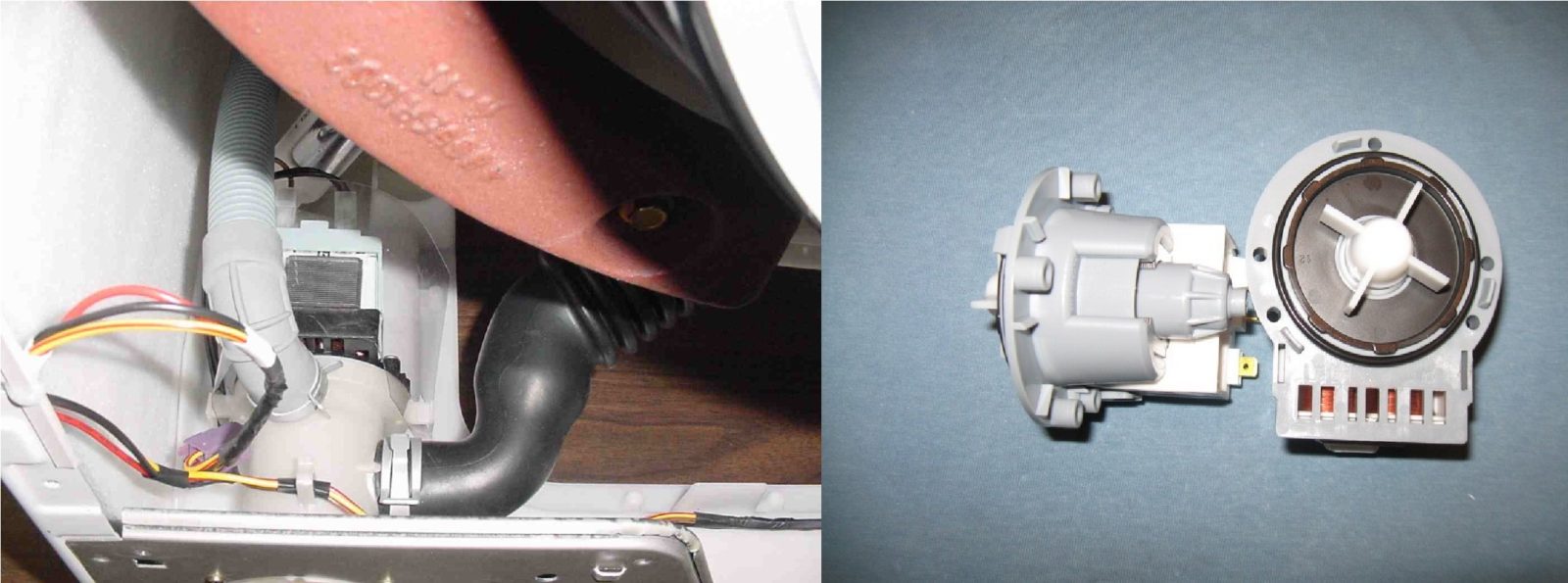
Why do bearings break? We repair them.
Bearing failure is a matter of time or manufacturing defects. The user can influence this process only by how intensively they use their appliance. Bearing failures must be addressed immediately, as a loose pulley can damage the drum, leading to very expensive repairs. The user manual won't help; you should either consult a specialist or consult specialized information.
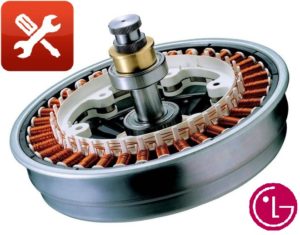
Thanks to the direct drive technology, which is implemented in most models of washing machines from the company LG, bearings, engine, pulley and other components wear out much more slowly and last longer. However, bearing failures do occur, and this creates a problem for DIY enthusiasts. How remove the bearing correctly Not everyone knows how to do this from the drum, but to start doing this, you need to remove and disassemble the washing machine tank.
Bearing repairs must be performed very carefully, using a special hammer with a bronze head and a thin metal rod. The bearing must be removed by striking it on opposite ends. First, place the rod on one end of the bearing and lightly strike it with the hammer, then move the rod to the other end and lightly strike it again. Repeat this procedure until the old bearing pops out, after which the new bearing can be installed in its place.
In conclusion, it's worth noting that any malfunctioning LG washing machine module can be repaired. Of course, even with careful technical information and expert advice, a successful repair isn't guaranteed, but it's definitely worth a try, especially since most cases involve typical malfunctions. If all else fails, consult a washing machine repair manual.
Interesting:

74 reader comments
Add a comment
Headings
Washing machine repair




For buyers




For users


Dishwasher




Why isn't a breakdown mentioned that sometimes occurs after 5-7 years of normal use? This occurs when a loosened spider spoke breaks, requiring extensive repairs, including replacing the spider, bearings, and seal. In such cases, the drum also needs to be soldered.
Don't use citric acid and you'll be happy!
The wash cycle is running normally. But after it's finished, it doesn't turn off. The Cotton indicator lights up and then restarts. What could be wrong?
Hello everyone! The tE light is on, and the heating element is putting out 33 ohms, so the temperature sensor seems to be working. 4.5 kOhm seems normal, but the sensor error message is still showing. It's an LG F 1280 NDS. Any advice on what else could be wrong? Thanks in advance.
Check the heating element for ground fault.
Our washing machine would occasionally rattle during the spin cycle. The last time it rattled so loudly, we had to turn it off. Now, when I spin the drum by hand, it rubs against something. We removed the heating element and noticed the drum wasn't spinning smoothly, but rather like an ellipse. Could it be a bearing? Is this covered under warranty, considering that LiZhi offers a 10-year direct drive warranty and the washing machine has a 5-year warranty?
The shock absorbers under the drum have failed.
What did they do?
The machine is running, the pump is pumping, but the drum isn't spinning. It's a direct drive. What's wrong?
I was cleaning the drain pump filter. I unscrewed the cap, cleaned it, and screwed it back on (tight as far as it will go). I turned on the machine, and water started flowing. While I was cleaning it, I took out a piece of plastic film about 2x2 cm. Is this piece of film necessary?
Sergey, this is a very common problem when tightening the drain valve cap on LG washing machines. The problem is that when tightening the cap, you need to press firmly, not just twist it forward along the thread. Only then will you close the valve properly. It's strange that LG doesn't mention this detail anywhere in their washing machine manuals...
The machine is running, the drum is spinning, but no water is coming out. How can I fix it?
After washing, the washing machine won't open. I unplugged it for half an hour, tried the spin cycles—nothing. Any suggestions?
Sasha, good evening. Have you figured out the cause yet? I have the same problem, but there's no voltage being supplied to the valves. If you find out anything, please let me know. Thanks in advance!
The machine is spinning. It stops at 11 minutes and doesn't move. I try to restart it. It can repeat for up to 4 minutes. Then it jumps to 12. What could this be?
Have you found the cause of the breakdown? Should I call a repairman? I have the same problem.
When spinning the laundry at the set speed, the machine stops and it seems as if the drum is not rotating smoothly.
The car does not start from the start button.
I have the same problem, what should I do?
When I turned on my LG washing machine, everything went out.
When I turn on the water heater, the circuit breaker in the electrical panel trips after 5 minutes. The machine operates normally in all other respects. I installed a new heating element. The result is the same. Could you please tell me what's causing this?
I turned on the car, but the electrical part doesn't work.
The car does not start from the start button.
The machine starts to make a noise (even without laundry) and displays the “motor overload” error.
Did you somehow solve the problem? I have the same problem.
It used to leak a little, and it wasn't entirely clear where it was coming from. But after cleaning the compartment at the bottom, on the right, water started leaking out.
I had the same problem! I had to thoroughly clean the plastic (on the lid and body) of scale. The sealing ring also needed to be cleaned of scale and turned over. The leak was eliminated. For how to tighten it, see above.
We have the same problem. Did you figure out what the problem is? Please help.
We took the machine apart and removed the oil seal and bearings. There's a hole where the oil seal goes. What's that hole for?
Oil seal leak indicator.
The machine is new. When I turn it on, half the lights don't light up, and half the display doesn't light up. What could be wrong?
Broken indicator board.
My LG-10B8QD machine has been running for four months, and the pillow started jumping during the rinse and spin cycle. I immediately turned it off. I'm afraid to try again. It sits firmly on the floor, and I removed all the shipping bolts during installation, as per the instructions. The first wash of the same pillow was fine. It might be due to uneven distribution during the spin cycle. Should I try again? Any advice? I'd be grateful.
My LG washing machine is 2 weeks old. There's a creaking sound at the end of the rinse cycle. What could it be?
After 10 minutes of running, water leaks from the bottom of the laundry lid. LG direct drive, 2 years old. The filter is clean, and everything is fine when empty. What's the problem?
Good afternoon! When I turned it on, something sparked inside the drum, after which the machine shut off and now doesn't respond at all when plugged in. Could you tell me how serious the problem might be and whether I should try to fix it myself?
Check the socket for proper operation. We had the same problem, and it turned out that the extension cord was simply short-circuited.
I had a similar situation, the heater short-circuited.
Please help! The start and pause buttons on the dashboard won't turn on. What should I do?
The machine starts to make a noise (even without laundry) and displays the “motor overload” error.
Please help! My LG washing machine is 2 years old. At first, there was a humming sound during the wash cycle, but now it's constant. All other cycles are fine. What could it be?
Galina, have you found the cause? We have the same problem.
Machine F14A8TDS5. After three years of trouble-free operation, a strange noise has appeared. It sounds like a buzzing sound. It only occurs in wash mode, meaning when the drum is spinning slowly. It doesn't occur during the rinse or spin cycles. The noise gets louder and longer as the cycle progresses. It resembles an electrical rattle or a resonant vibration of some part. It doesn't display any errors. The filter isn't clogged. Incidentally, after checking the filter, the noise disappears briefly. The water leaves a limescale deposit (kettle, plumbing).
So, has anyone solved the problem? The wash cycle doesn't start when I press the "Start" button?
The machine takes a long time to suck out water, but otherwise works fine.
Why is water leaking from the washing machine and not from the doors?
The machine is running, water is coming in, but the drum isn't spinning. I took the bearings apart and they're fine. What's wrong?
The door won't open; the lock springs back, but I can't unlock it. We finish the wash cycle, and then the lights go out, but the door remains locked.
My LG car displays an upside-down F. What does it mean and how can I fix it?
I get an error message F (upside down), how can I fix it?
The machine is 10 years old and turns off when the water heats up. Please help!
LG F1096QD3. I started making a grinding noise while weighing. Then the "LE" symbol appears, and the machine won't start. Could you please tell me how to fix it?
My LG 6 kg washing machine works, but it only washes with cold water. We called a repairman, and he said the computer was broken. What can I do? Please tell me.
Water is leaking through the powder loading hatch.
When I pour water into the detergent container, it splashes and some of it leaks out. Any advice?
The top edges of the tray should be level and fit snugly against the guides. Try pouring the detergent directly into the drum.
After washing, the washing machine won't open. I unplugged it for half an hour, tried the spin cycles—nothing. Any suggestions?
LG F1068SD1 does not rinse out the powder well after 3 rinses; there are whitish spots on the dark surface.
The washing machine only washes on the Cotton setting. Sometimes it switches, but most often it just washes on this one setting. How can I fix this? Please tell me.
While the machine is running, water is constantly added to the tank.
The display is on, but everything else is broken. I'm trying to change the mode, but it's not working. Has anyone else encountered this?
When turning the programmer, the operating mode is not selected (all red indicators remain lit). Pressing the Start button activates only the default mode—60 degrees of cotton.
When the programmer is rotating, all indicators light up.
Good afternoon! My 2.5-year-old LG washing machine with direct drive won't turn on. Yesterday it worked fine, and there were no signs of a problem. But today, the start button simply won't turn on, and the machine is dead. We checked the outlet, and my husband tried ringing it, and there's power. What could this be?
Marina, have you found the cause of the breakdown? Everything went dark and won't start on mine, too.
Thank you, you helped!
Good afternoon! When I plug the power cord into the outlet, the RCD trips. The cord is fine—I checked it. Is there a short circuit somewhere?
The display is working, the modes are turning on, water is flowing, the relays are triggered, but the motor doesn’t turn…
After moving, we turned on the washing machine. The water keeps coming in until we turn it off. Could you tell me what to do?
The machine won't turn on with the start button, but if I spin the drum by hand, everything lights up and the machine works fine. Does the same thing happen with another wash?
LG WD80164 NP. We turn it on, select a program, start it... and then the lights start flashing. The indicators flicker on and off, and after the lock is locked, the 75-ohm resistor in the triac circuit that supplies power to the lock burns out. I suspect the overcurrent protection is triggered.
Questions:
1. What resistance should the heater on the lock have?
2. What other reasons could there be for this behavior of the machine?
It doesn't turn on and the CL error lights up.
Water leaks under the machine during spin cycle. What should I do?
Hello, my LG washing machine has direct drive. It doesn't spin during the rinse cycle and stops when the speed is picked up, just as the sweet pump kicks in. Then it tries to start the spin cycle again. And it keeps going on and on.