
DIY Washing Machine Repair
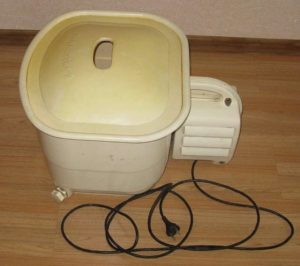 It's commonly believed that the Malyutka washing machine is only for the elderly. In fact, many other segments of the population use this type of machine. It's especially popular with summer residents and single bachelors. The beauty of this machine is its lightweight and simple design; it lacks a drum and fancy electronics, but even it does break down sometimes. Mallyutka washing machine breakdowns aren't complex, let alone fatal. In most cases, you can fix it yourself, especially with the advice of our experts.
Frequent breakdowns
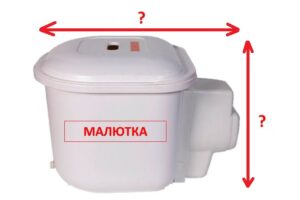
The Malutka washing machine is an activator-type machine. This means that the drum—an essential feature of any modern automatic washing machine—is absent here, replaced by an activator. However, if the Malutka were an automatic washing machine, it might have a drum, but since it's a semi-automatic machine, we'll find nothing but a wash tub and an activator.
Since the Malyutka does not have a drum, it does not make as much noise during operation as automatic washing machines.
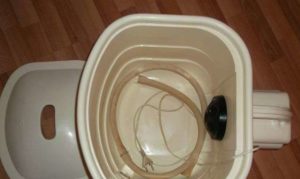 Since this washing machine is simple in design and breakdowns are rare, we can easily list and discuss all the typical malfunctions a user might encounter while using this type of appliance. Here are the symptoms of typical malfunctions:
- instead of washing, the machine hums and then turns off;
- the activator rotates slowly or gets stuck;
- the machine tears and wrinkles the laundry badly, a loud noise can be heard;
- the body of the Malutka washing machine is leaking;
- the hose of the Malutka washing machine is leaking;
- the machine does not turn on;
- the machine turns on, hums, but the activator does not turn;
- washing starts, but stops within a few minutes, the body is noticeably warmed up;
- The machine does not turn on, and there is a smell of burnt wiring.
The symptoms of breakdowns are clear and obvious, but what malfunctions caused them? Here, too, everything is quite simple. Some symptoms are caused by a faulty actuator, some by the washing machine's electrics, and some are caused by a faulty electric motor. Leaks of various natures can occur due to improper connection of the machine by the user, as well as due to wear of sealing rings and various rubber seals, but let's not get ahead of ourselves.
Problems with the activator
The activator is a moving element of the Malutka washing machine, the rotation of which causes the washing of items in the washing tank. Disruption of the activator's mobility leads to the cessation of the washing process. In some cases, the thermal relay is triggered and the machine shuts off. Let's list the problems associated with the actuator and, at the same time, discuss how to fix them.
- The washing machine's drum is significantly overloaded. When the washing machine is overloaded with laundry, the agitator doesn't spin properly or doesn't spin at all. The washing machine then starts humming loudly and eventually shuts off completely. Solution: Unload the washing machine, wait at least 15 minutes, and restart it.
- Threads, pieces of fabric, and other objects have become tangled around the activator and its shaft. The symptoms are the same: the activator doesn't rotate properly, the machine hums, and then shuts off. Repairs will involve cleaning the shaft and activator of threads, rags, and other foreign objects that could interfere with the operation of the moving part.
- The activator is crooked. The activator spins, but the laundry is partially torn and heavily wrinkled after washing, or the activator is catching on the walls of the wash tub. These actions are accompanied by a loud humming sound, and sometimes the Malutka washing machine shuts off for no apparent reason. Solution: Turn the washing machine over, remove the plug, unscrew the activator, clean the threads, and screw the activator back in until it stops.
Leaks
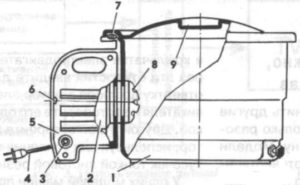 Leaks are quite common in Malutka-type washing machines, so some users, not considering the need to fix them, simply place their "home helper" in the bathtub and start washing. This approach can be dangerous because a water leak from the tank or hose can damage the washing machine's electrical system, causing a short circuit and potentially injuring the user. So let's not ignore leaks, but eliminate their causes ourselves.
If you detect a leak in your Malutka washing machine, you should inspect it for two potential problems: damage to the large O-ring and damage to the flange assembly. To determine the exact location of the leak, you'll need to partially disassemble the washing machine. Here's how:
- we dismantle the activator and then unscrew its housing;
- We inspect the large rubber band, called the large sealing ring;
- If there is any damage, we replace the part with a similar one;
- if the large rubber band is intact, disconnect the casing and electric drive from the tank;
- Having unscrewed six screws, we disassemble the casing, removing the flange assembly;
- When disassembling the flange assembly, take a photo of the location of the parts, remove the rubber bushing and inspect it for damage;
- Also inspect the small sealing ring; if damage is found on one of the parts, replace them.
Sometimes a leak is caused by a small spring ring in the flange assembly. If the ring is loosely clamped to the seal, it needs to be replaced with a tighter one or simply bent, but this may cause the leak to reoccur.
The easiest way to detect and fix leaks is in hoses or fittings. Unscrew the nut holding the fitting, remove the bushing, and pull out the gasket. If the slightest damage is detected, we replace the part. The hose itself can also become damaged, although over time, low-quality hoses included with Malutka washing machines dry out, crack, and fail, starting to leak water. In this case, there's only one solution: replacing the hose.
Electrical problems
If you turn on your Malutka washing machine as usual and it shows no signs of working, there's likely a broken electrical circuit somewhere. To troubleshoot the electrical fault, you'll need to completely disassemble the washing machine.
- We dismantle the activator.
- We pull off its body.
- We remove the engine casing.
- We remove the flange unit.
- We remove the washers from the engine shaft.
- We take out the protective elements – decorative plugs – from the casing.
- We unscrew the screws.
- We disconnect the rubber seal, while simultaneously disassembling the elements of the half-body.
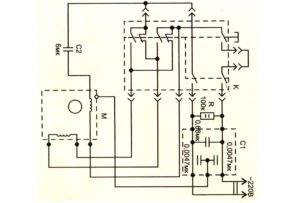
Now we can check the washing machine's electrical system. Arm yourself with a multimeter, set it to ohmmeter mode, and check the wiring and semiconductor components one by one. Poor contact may be caused by oxidized terminals, screws or nuts. We clean all suspicious elements with sandpaper and check the contact again.
If any wire breaks are detected, the break must be securely connected. It's best to use a small junction box rather than twisting the wires. As you repair, inspect all wiring. If any suspect wires, terminals, or semiconductor components are found, they must be either replaced or insulated.
When installing or removing semiconductor elements of the Malutka washing machine yourself, do not forget to check its electrical diagram.
Quite often, the time relay and the switch on the Malutka washing machine fail. We don't recommend repairing them; it's better to replace them. First, remove the old switch and time relay.
- There is a small cap next to the switch, you need to unscrew it;
- then unscrew the metal nut;
- remove the washer;
- we push the switch into the housing;
- we disconnect the wiring from the switch.
You can try cleaning the switch contacts and then wiping them with gasoline. In some cases it helps, but it is better to replace both the switch and the time relay. These parts cost pennies, but later there will be no problems with their functionality.
The thermal relay may also fail. When operating, the contacts of a thermal relay open when hot and close when cold. Only the cold element is checked with an ohmmeter. A broken, faulty relay cannot be repaired; it must be replaced with a new one with exactly the same technical specifications.
The engine is faulty
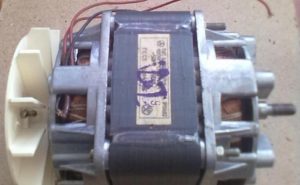 The motor of a Malutka washing machine can also have problems. In this case, we're talking about: loss of contact in one of the motor's many windings, breakdown and short circuit of a winding, or winding burnout. In this case, repairing the motor, especially rewinding it, is not cost-effective. Even doing it yourself will waste too much time.
It's much easier to replace the electric motor with a similar new one or, even better, buy a new Malutka washing machine. Incidentally, a new motor costs almost as much as a new machine, but just in case, let's say that the Malutka washing machine uses a single-phase asynchronous motor with two windings.
Prevention
To ensure your Malutka washing machine lasts a long time and, most importantly, is safe for others, follow a few simple rules that, under certain circumstances, will save both the washing machine and, most importantly, your life. These rules are simple and unremarkable, yet every second user neglects them.
- Do not attempt to heat water directly in the washing machine's tub using a kettle.
- Do not place the washing machine on the ground, the bottom of an iron bathtub, or any metal surface.
- If you have disassembled the washing machine body, check that the gasket is inserted correctly and the fasteners are tightened evenly.
By the way, if the seal has any damage, it needs to be replaced, and there is no need to skimp in this case – it’s for your safety.
- If during washing you notice any suspicious odors, such as the smell of burning electrical wiring, turn off the washing machine immediately.
- If you feel a strong or slight tingling sensation after touching the washing machine body, also turn off the machine; it needs repair.
The socket to which you connect the Malutka washing machine must be protected by grounding and a circuit breaker. About how to do it right an outlet for the washing machine in the bathroom You can read about it in the article of the same name posted on our website.
In conclusion, it's worth noting that the Malutka washing machine has been outdated for 20 years, yet it's still in demand. This machine is inexpensive, so calling a repairman for repairs isn't cost-effective, and repairmen often don't undertake such repairs. The only solution is to do the repairs yourself. How? We've covered this in detail in this article. Happy repairing!
Interesting:
6 reader comments
Add a comment
Headings
Washing machine repair




For buyers




For users


Dishwasher




The article doesn't provide replacement part numbers. Overall, everything is great! Thank you.
I couldn't find any advice... after a few minutes of washing, the machine starts whistling. Can you tell me what needs to be replaced?
How do you seal the joints between the motor and the body of a Malutka washing machine to prevent leaks?
Water is leaking from the machine where the shaft rotates and the casing connects to the tub! Show me what I need to fix the leak!
A detailed drawing of the place where water may leak!
What should I do if the engine hums when I turn on the car, but the actuator doesn't turn? If I turn it by hand, it starts. So, as they say, it only starts when pushed. I've cleaned all the bushings and components with gasoline and re-lubricated them. Also, for some reason, the engine is overheating quickly and intensely, even producing a smell. Could this be related to the capacitor?