
Siemens Washing Machine Repair
 Washing machines from the German company Siemens are known for their high quality and reliability. Under normal operating conditions, they can last up to 10 years without breakdowns. However, like any appliance, these machines also have their weaknesses, which can manifest themselves at the most inopportune moments. Knowing the typical faults allows you to diagnose them yourself and repair your Siemens washing machines.
Typical breakdowns
German washing machines are truly distinguished by the high quality of all components. Service center technicians note that, compared to other washing machine manufacturers, Siemens machines have the most reliable motors, control modules, and bearings. These parts break extremely rarely. The following faults have been identified as weak points:
- After the wash cycle is complete, the water doesn't drain, and the program doesn't switch to either the rinse or spin cycle. In this case, the most likely cause of the machine stopping is a broken or heavily clogged drain pump.
- Water fills and then drains immediately. In this case, the fill valve is faulty. This may cause water to leak from under the detergent drawer.
- Water leak. Water usually leaks under the machine or around the drum door, caused by loose or broken hoses or a worn seal.
- The water doesn't heat up. In almost all cases, the cause is a burnt-out heating element.
- The machine vibrates strongly during the wash and spin cycle, accompanied by a knocking sound. In such situations, technicians recommend checking for wear. dampers and shock absorbers.
Replacing pipes and drain pump
Replacing the hoses and drain pump is perhaps the most difficult job of all the frequently occurring malfunctions we've listed. The fact is that In German Siemens washing machines, the pump can only be accessed through the front cover.To do this, you'll have to disassemble almost the entire machine yourself. Prepare a clear workspace, a set of screwdrivers, and pliers, and get to work:
- Remove the clamp holding the cuff and remove the cuff from the front wall.
- We remove the powder tray from the machine and unscrew the screw behind it that holds the front wall.
- We remove the lower part of the machine body and unscrew a couple more screws underneath it.
Important! Don't forget to drain any remaining water from the machine by unscrewing the drain filter.
- We unscrew the screws holding the pump.
- Carefully move the control panel aside so as not to damage the wires.
- We disconnect the wires going to the drum door.
- We remove the front wall of the machine.
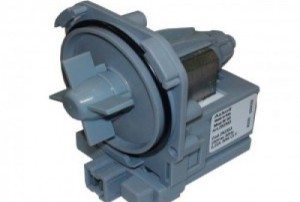 Now, carefully inspect the internal components of the machine. You can start with the hoses leading from the tank. They should be intact and tightly connected. To remove the faulty pump, you need to:
- disconnect all wires;
- disconnect the pipe connecting the pump and the tank;
- disconnect the drain hose.
The pump is checked for blockages and its functionality. If it is working properly, the volute and pipes are flushed and everything is reassembled in reverse order. If the pump is faulty, a similar one must be purchased and replaced.
Replacing the fill valve
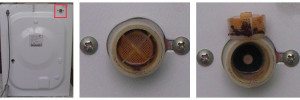 There can be many reasons why a washing machine's inlet valve fails, from poor water quality to wear and tear. Regardless, this part will need to be replaced, as in 99% of cases, repair is not practical. How do you replace a Siemens washing machine's inlet valve yourself?
- First, disconnect the washing machine from the water supply and electrical connections.
- Unscrew the inlet hose from the washing machine.
- Take a Phillips screwdriver and unscrew the fasteners on the top cover of the machine.
- In the place where the inlet hose goes, there is a fill valve, several wires with terminals go to it, they need to be disconnected.
- We disconnect the pipe from the fill valve.
- We unscrew the fasteners of the filler valve and remove it.
- We install a new valve in its place, connect the wires and hose, and replace the top cover of the machine. The inlet valve replacement is complete.
Important! On some Siemens washing machine models, the valve is additionally held in place by a plastic plug. This can be easily removed with a flat-head screwdriver.
How to replace a sunroof seal
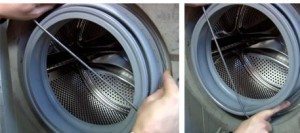 You can replace the seal on a Siemens washing machine without removing the drum. Doing it yourself requires patience and skill. You should only buy the same cuff, otherwise the seal may be damaged.So, the cuff replacement is carried out as follows:
- We remove the metal clamp that holds the cuff on the front wall of the machine.
- We remove the front wall, we have already told you how to do this.
- We disconnect the pipe coming from the powder receiver.
- We mark the position of the cuff with a marker.
- We remove the cuff from the tank.
- We take a new cuff and put it on the drum in a circle.
- We connect the hose.
- We screw the front wall.
- We put the cuff on the front wall.
- We put on the clamp.
The water isn't heating up: we're replacing the heating element.
Hard water and frequent use of the washing machine can lead to failure of the heating element.
Then the wash will be done in cold water, which will reduce its efficiency. In some models of machines, if the heating element fails, the wash may not start at all, and the machine display will show error code.
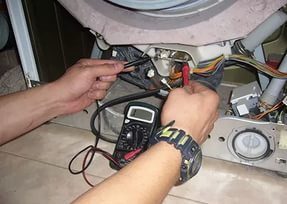 In German washing machines, the heating element is located behind the front wall under the tank.Removing this wall isn't difficult; the main thing is to unscrew all the screws. After removing the front part of the housing, we check the heating element for functionality using a multimeter. If it's faulty, we'll replace it.
- We unscrew the nut located in the center of the heating element base.
- We remove the wires and disconnect the temperature sensor.
- Using rocking movements from side to side, we pull the heating element towards ourselves.
- We take a new heating element and insert it into the socket, having first cleaned it of debris and scale particles.
- Then we connect the wires exactly to the contacts as they were. Therefore, it's best to take a photo before disconnecting anything.
- We tighten the nut.
To summarize, we've listed only the most common Siemens washing machine problems. Other malfunctions can also occur, such as sudden power surges that can cause the control module to burn out, especially if it's not properly protected. After prolonged use, seals, bearings, and motor brushes can wear out.
This type of Siemens washing machine repair can be done by yourself, but it requires more time, tools, and a strong work ethic. Therefore, in such cases, people most often turn to a service center.
Interesting:

1 reader comment
Add a comment
Headings
Washing machine repair




For buyers




For users


Dishwasher




Hello, what if the water is not squeezed out periodically and the pump is not clogged?