
Repairing the tachometer in a washing machine
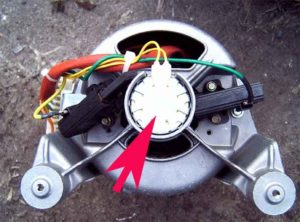 The tachogenerator is one of the most important components in a washing machine's system, as it ensures continuous communication between the motor and the control module. This tiny device influences the motor's speed, accelerating and decelerating it. If the machine suddenly starts to slow down, fails to stop on time, or delivers soaking wet laundry after the wash cycle, it's time to check the tachogenerator. We'll explain how to find it, what you can test it with, and whether it's possible to repair a tachogenerator in a washing machine.
How do you know if the tachometer is broken?
The tachogenerator usually needs to be checked after the washing machine malfunctions. Since the Hall sensor is essential for proper machine operation, problems with motor speed control will immediately indicate a faulty tachogenerator. During the wash cycle, it's important to pay attention to the following:
- the machine suddenly changes speed, sometimes slowing down, sometimes speeding up, without paying attention to the stage of the cycle;
- the drum rotation speed exceeds the value set by the user or even exceeds the maximum value allowed by the system;
- the speed is too low, does not reach the required revolutions, or the drum does not rotate at all;
- after washing, the clothes are either not washed at all or not wrung out.

Any of these conditions indicates a possible tachometer malfunction. To prevent accidental temporary machine failure or spin cycle interruption, completely unplug the washing machine and run the standard cycle again after half an hour. If the problem persists, take immediate action.
If the tachogenerator is not repaired in time, the machine will simply not start washing in the future, displaying an error message on the display. Moreover, a faulty Hall sensor can even cause the electric motor to burn out. Therefore, don't put off checking your device - at the first sign of a malfunction, begin diagnosing it yourself.
Location of the sensor
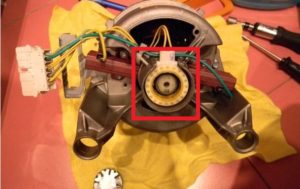
Finding the sensor isn't difficult, as it's located on the rotating motor shaft on all LG and other washing machines (except those with inverter motors). To remove the tachometer, you'll first need to remove some components: detach the rear panel and remove the drive belt.
Before any repair work, unplug the washing machine and turn off the water.
When you get to the motor, look for a small iron ring on the shaft - this is what the tachometer sensor we need looks like. Carefully remove the entire engine, as you cannot immediately disconnect the tachogenerator from it. If you don't have any experience with electrical installation, it's best not to experiment and call in specialists to avoid further damaging your washing machine.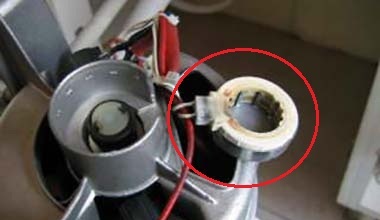
Is the sensor working?
If you managed to remove the motor and sensor yourself, you should first take a photo of the wiring so you can reconnect the motor yourself. Then, strictly follow our instructions.
- We go around the machine from the rear wall.
- We unscrew all the bolts securing the motor.
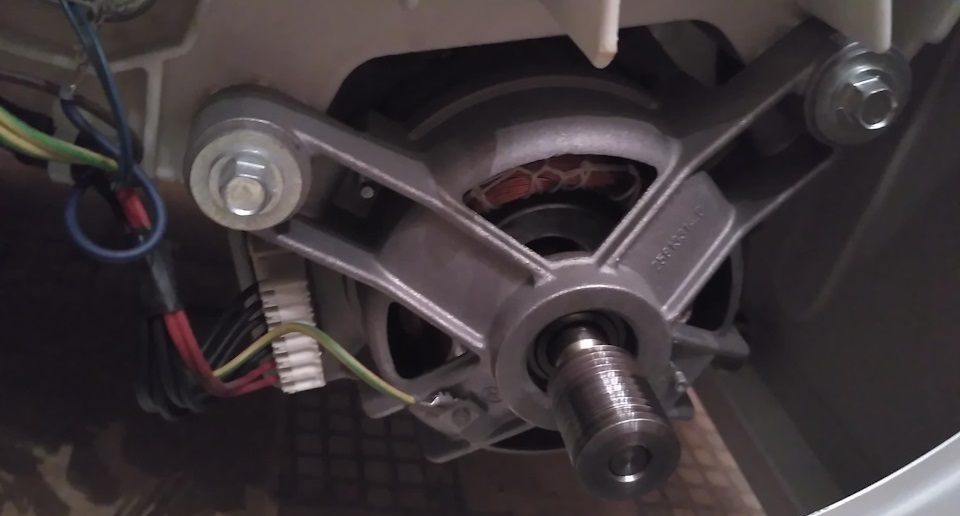
- We shake the engine from side to side and then pull it sharply towards ourselves.
Be careful, the engine is very heavy, so do not drop it, otherwise you will have to repair it again.
- First, inspect the sensor, wires, and fasteners. Sudden speed fluctuations often cause contacts to come loose and clamps to become loose. In this case, simply tighten the terminals more firmly to restore the normal balance.
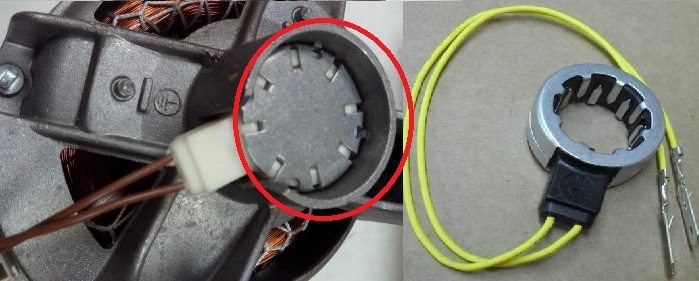
- If there is no visible damage, then you cannot do without a test, which can be carried out in two ways.
The first option is to measure ohms. To do this, set up the multimeter, loosen the wiring, and attach the probes to the contacts. If the reading is around 60-70 ohms, the sensor is working properly.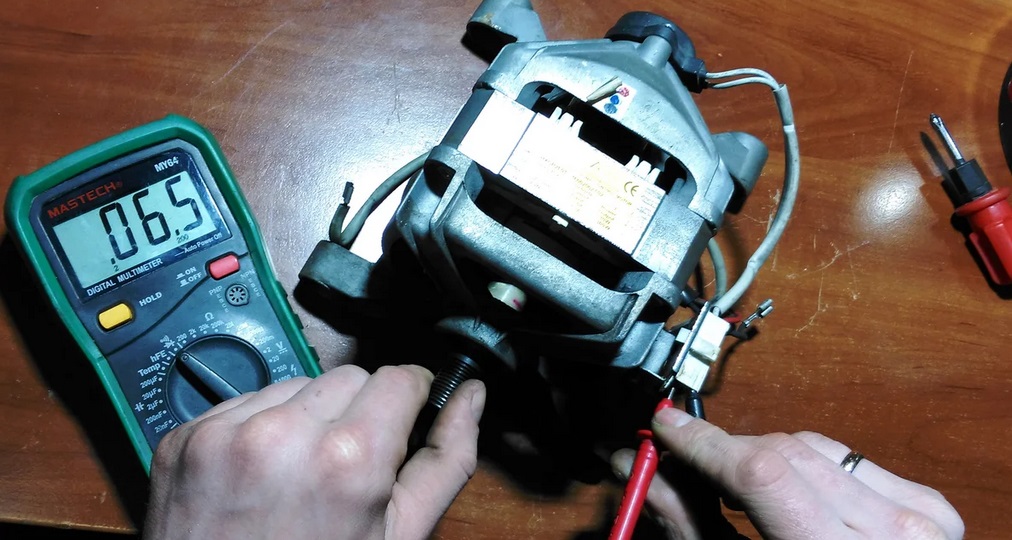
The second method is to measure the current generated by the sensor. Set the tester to voltage mode, connect the probes to the contacts, and either manually or ask a family member to rev the motor. If a reading of approximately 0.2 volts appears, the tachometer is normal.
Repair or replace?
The main problem is that the sensor is a non-repairable component, so it can only be replaced. To do this, it must be disconnected and removed from its mounting location. All connectors are easily unplugged and located in a common connector column on the motor.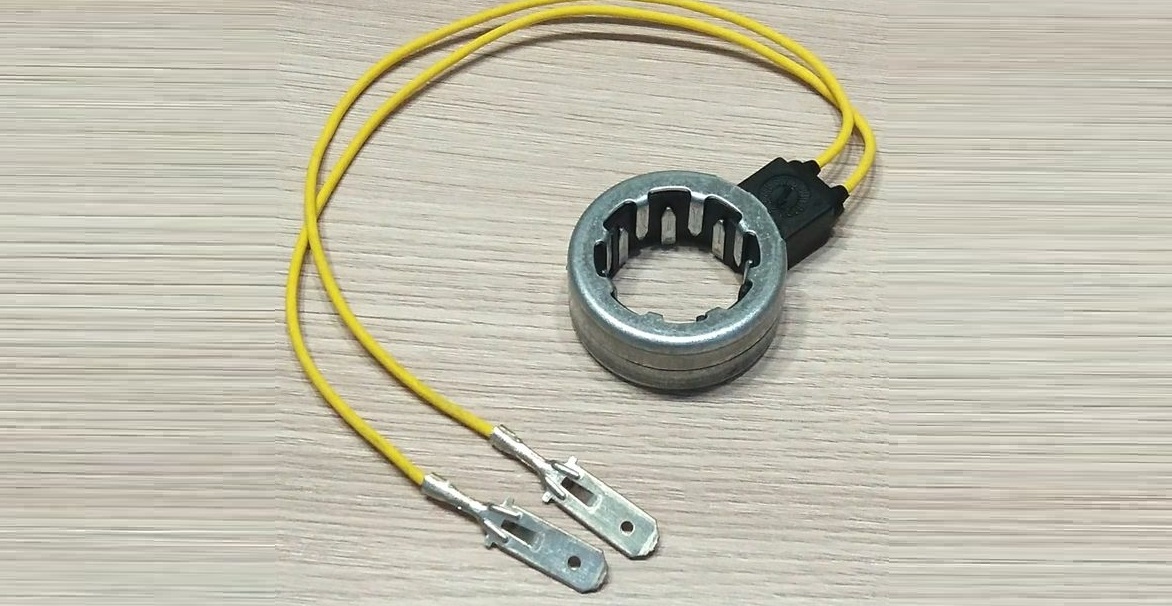
To remove the sensor, you'll only need a regular, thin-diameter flat-head screwdriver, which you can find in any home. Once unfastened, remove the top cover from the sensor; it will either be secured with small bolts or clips.
Next, replace the faulty part with a new one and install it into the washing machine in reverse order according to the instructions. For ease of installation, take a photo or video of the sensor removal process; this will make connecting the new tachogenerator easier. Finally, check the part and connections with a multimeter to ensure a test wash is possible.
Interesting:


Readers' comments
Headings
Washing machine repair




For buyers




For users


Dishwasher




Add a comment