
Dishwasher lock repair
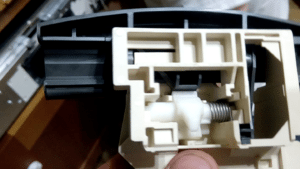 The dishwasher door is secured in the closed position by a special latch, which can fail. A faulty latch prevents the dishwasher from operating, so every effort must be made to quickly repair the door latch. This article will explain how to repair and, if necessary, replace such a latch.
A blocker that can be repaired
Not every dishwasher lock can be repaired. Modern locks on the latest dishwasher models are designed in a way that makes them impossible to repair if damaged. Such locks must be replaced. On older models Hansa dishwashers, Bosch, Electrolux, Indesit, the locks were quite repairable.
Old locks had a plastic housing containing a latch and sensor, as well as special locking pins. These locking elements were quite flimsy, especially the plastic base, which would simply break off after each door opening. If your dishwasher is equipped with such a lock, you'll immediately see the broken pins, which we'll try to repair. What steps should we take?
- Unscrew the front panel of the dishwasher door. If a front panel is installed instead of the front panel, remove it as well. The front panel is secured with several screws located on the inside of the door along the edges.
- After removing the front panel, we gain access to the power wires of the lock, they need to be removed.
- We unscrew the two screws that hold the lock and remove it.
- We cut a 10 x 65 mm metal strip from a scrap of 0.3 mm thick steel sheet.
- We drill holes in the edges of the plate for small screws.
- We bend the plate so that it lies across the broken bases of the fasteners, on which the antennae used to be.
- We securely screw the plate with self-tapping screws directly to the plastic body of the lock.
You can pre-drill thin holes in the lock body so that the screws can easily enter the plastic
- We check the connections, screw the door lock back on, and test it to make sure it's working properly. If everything is working properly, we screw the front panel back on and start the machine.
Replacing the blocker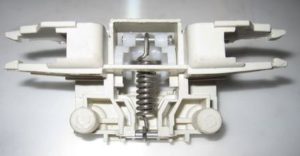
All-metal locks don't break very often, but if they do, they can't be repaired at home; they need to be replaced. This isn't just a simple case of the locking tongue sticking, but a full-blown failure with springs popping out and partial destruction of the lock body. By the way, the operating principle of the new locks is more similar to how the door locking devices on a washing machine work, but they are replaced differently.
- We proceed in the same way as we did with the lock repair. Unscrew the bolts around the door perimeter and remove the front panel.
- We disconnect the wires going to the lock sensor.
- There are two screws at the top of the door that hold the lock in place. Once they're unscrewed, we can easily remove the broken device.
- We take out the new lock and insert it in place of the old one.
- We screw on the new locking device, replace the wires, and screw back the previously removed panel. The job is done!
Or maybe this is not a malfunction?
If your dishwasher door lock won't latch, it doesn't always mean it's broken. The problem with modern locks is the latch, which gets stuck when the door is closed. The door opens, but because the latch is stuck, it won't close. What should I do? How do I return the latch to its original position? It couldn't be simpler. Take a screwdriver and pry up the base of the latch, just where it's spring-loaded. The spring will pop off the latch, and the latch will return to its original position. There you have it!
So, we've determined that repairing a dishwasher lock isn't all that difficult, provided it's repairable. Modern metal locks are designed in such a way that they can't be repaired, but they can be replaced. Luckily, replacement locks are inexpensive and quick to replace. Good luck!
Interesting:


Readers' comments
Headings
Washing machine repair




For buyers




For users


Dishwasher




Add a comment