
What thread does the washing machine use to connect the water?
 After purchasing a washing machine, the owner is faced with the task of connecting it to the utilities. You can connect the appliance to the water supply and sewer system yourself or have a professional install it. It's important to check with the store beforehand to ensure that installing the washing machine yourself will void the warranty.
Let's figure out how to connect a washing machine's inlet hose. We'll explain what threads are needed on a washing machine for the water supply. We'll also discuss three possible ways to connect the washing machine to the water supply.
Thread of the nut of the inlet hose SM
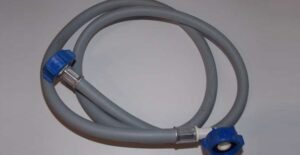
Every automatic washing machine comes with an inlet hose. This is used to connect the washing machine to the cold water supply. The inlet hose nut is made of plastic, but it does its job perfectly, holding the inlet hose securely to the washing machine body and the connection point to the water supply.
There are several ways to connect an automatic washing machine to the water supply. This can be done through a common faucet, by inserting the inlet hose before the flexible connection, or by cutting a clamp directly into the pipe. In each case, additional parts will be required.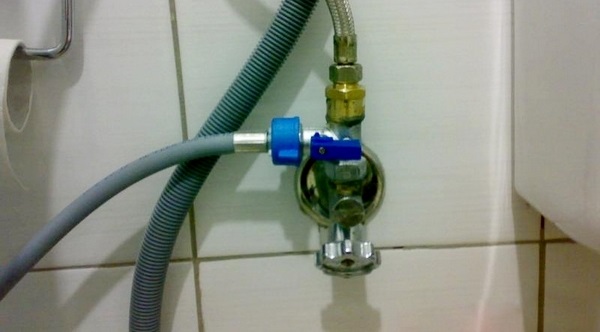
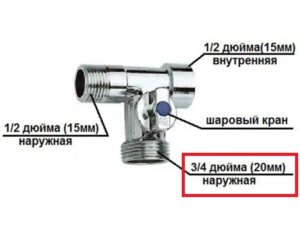
So, you'll need to buy a tee to connect the washing machine's inlet hose. Its thread must be of the appropriate size. All household washing machines use the same standard thread diameter: 3/4 inch.
So, you can safely go to the store and ask the salesperson for a tee tap to connect your washing machine to the water supply. It's impossible to make a mistake here, as the thread diameter is standardized. The 3/4-inch size fits all modern automatic washing machines from all manufacturers.
Let's "Join" the Mixer
If you decide to install the washing machine yourself, you need to choose one of three acceptable water connection methods. The most popular way to connect the washing machine to the water supply is through a faucet. In this case, you'll need to have the following on hand:
- A tee valve, the diameter of the first external thread should be 3/4 inch, the second 1/2 inch, and the third internal 1/2 inch. Experts recommend purchasing a ball valve with an extended flag;
- An extension (a chrome-plated piece with 1/2-inch threads on both ends). The length of the piece should match the dimensions of the tee faucet;
- thread for sealing (plumbing flax).
The procedure for connecting a washing machine via a bathroom faucet is as follows:
- turn off the cold and hot water supply to your apartment;
- open the mixer taps to ensure there is no water in the system;
- Use a wrench to remove the nuts securing the mixer and set it aside;
- remove plumbing adapters from water sockets;
- take a tee tap and an extension, wrap their external threads with sealing thread;
- screw the tee tap and extension into the water sockets;
- wrap the eccentrics with plumbing thread and screw them into the tee and extension;
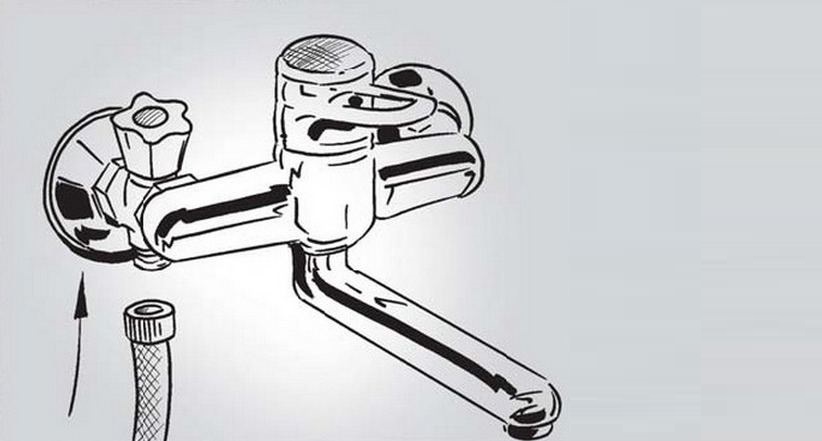
- put the mixer back.
During the work, it is recommended to immediately replace the old, worn gaskets under the mixer to prevent leaks from occurring in the future.
After this, you can turn on the water supply and check the faucet for leaks. If there are no leaks, the job has been done correctly. Next, all that remains is to screw the inlet hose into the free hole in the tee. The other end is connected to the body of the automatic washing machine.
We "cut" between the mixer hose and the pipe
This method is even easier than the previous one. In this case, it's important to remember that the standard service life of flexible hoses is 5 years. If the allotted time has passed, it's best to replace the hose immediately to prevent future leaks.
With this connection option you will need:
- tee tap (the requirements for it will be similar);
- plumbing linen thread for winding threads;
- sealing rubber for the flexible hose nut (if you need to completely seal the element, then buy a new liner).
You need to proceed as follows:
- close the cold water valve;
- make sure the water supply is turned off;
- unscrew the nut of the supply hose;
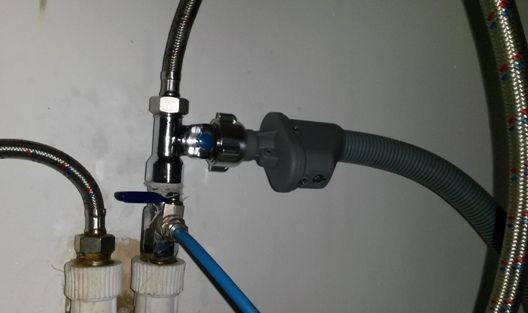
- wrap the thread under the nut with plumbing thread;
- screw in the tee tap;
- install a new gasket (or, if necessary, replace the flexible hose entirely);
- connect the supply line and the inlet hose of the washing machine to the tee tap;
- Turn on the water supply and make sure the connection is tight.
The joints must remain dry. If you notice even the slightest leak, disassemble the structure again and Check if the gasket is installed evenly and if there is enough winding on the threads. Troubleshoot.
We "crash" into a straight pipe
Another possible scenario is connecting the inlet hose to a straight section of the water supply line. In this case, a drill will be required, as a hole will need to be drilled into the pipe. To set up the connection point, you'll need:
- clamp for insertion into a water pipe with a 1/2 inch thread;
- ball valve (it should have two outlets, one with external thread, the other with internal thread);
- adapter from 1/2 inch thread to 3/4 inch;
- thread sealant.
The algorithm of actions will be as follows:
- turn off the cold water supply;
- drill a hole of 8-10 mm in size in the cold water supply pipe;
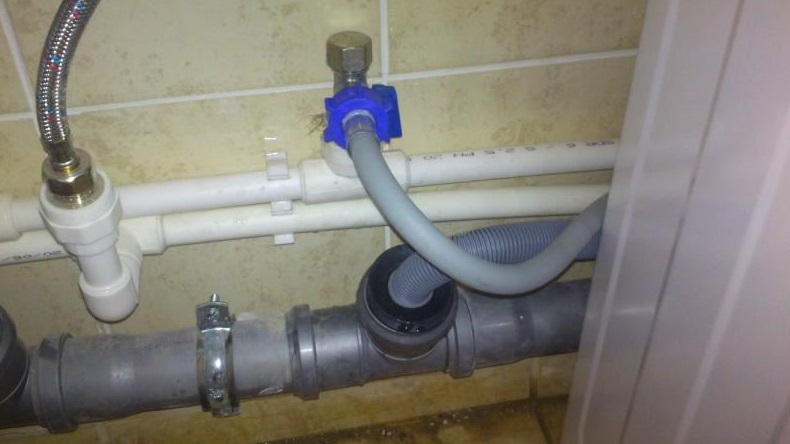
- Use sandpaper or a drill with a special metal attachment to clean the area of the pipe near the hole;
- install and tighten the clamp;
Be sure to place a sealing gasket in front of the clamp.
- install the ball valve, then the adapter, not forgetting to wrap the threaded connections with sealant thread;
- connect the inlet hose;
- Check the tightness of the connection by turning on the cold water supply.
The method for connecting the washing machine to the water supply is determined individually. In any case, you will need to purchase a tee valve and a sealant thread. The required set of additional parts will depend on the chosen connection scheme.
Interesting:

Readers' comments
Headings
Washing machine repair




For buyers




For users


Dishwasher




Add a comment