
What program should I use to wash towels in an LG washing machine?
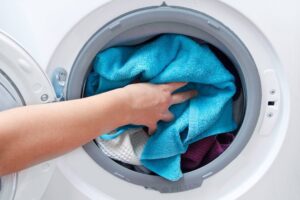 Washing machine manufacturers make life easier by releasing machines with preset programs. Built-in algorithms make it easier to select the right cycle, especially for everyday items like kitchen towels and bath towels. These items not only need to be protected from stubborn stains but also restored to their softness and freshness. A dedicated "bath" cycle is rare; more often, you need to select a towel wash cycle from the available options in your LG washing machine. Let's explore all the cleaning options, as well as secrets for caring for towels and bath towels.
The algorithm is selected based on the fabric of the towels
There is no single mode for washing towels. The explanation is simple: kitchen and bath linens are made from different fabrics, and therefore require different care. The type and color of the fabric base should be taken into account when choosing cycle parameters: heating level, spin intensity, and cleaning duration.
For cleaning most bath towels—terry, bamboo, and velor—a gentle wash is considered optimal: in cold water at 30-40°C (86-104°F) and with a minimum spin cycle at 600-800 RPM. Similar settings are used when loading modal into the drum. For cotton, linen, and microfiber items, the water temperature can be set to 60°C (140°F). Therefore, the following wash cycles are suitable: "Cotton Quick," "Cotton Eco," "Synthetics," "Quick 30," and "Delicates."
Before washing a towel, read its label – the manufacturer provides the optimal care instructions on the label!
Kitchen towels get dirty more often and are made of thick fabrics. These are often linen, cotton, or waffle cloth—a budget-friendly and convenient option. In this case, consider the color of the towel: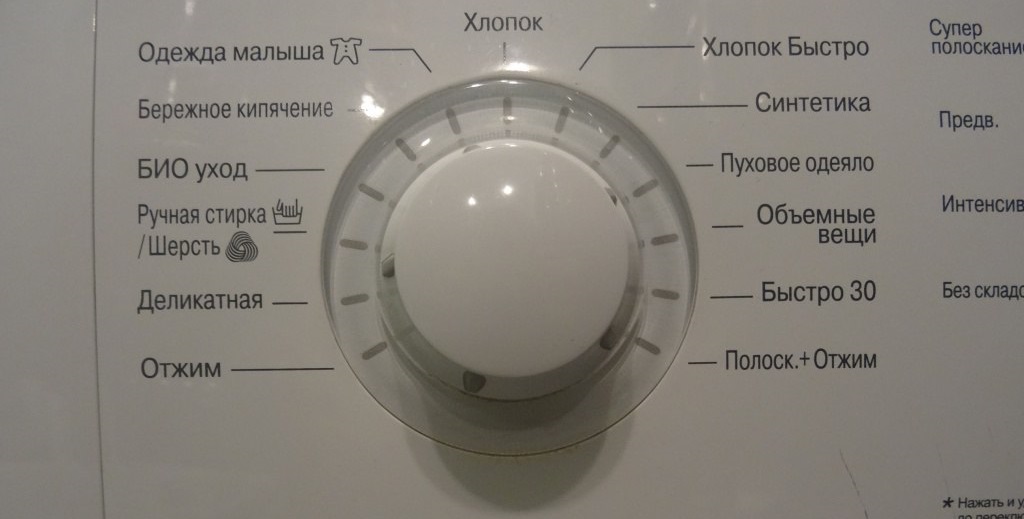
- brightly colored fabrics – temperature up to 40 degrees and spin up to 800 rpm;
- dark and black towels – heat up to 30 degrees and minimum spin;
- white – 60 degrees, 1000 and higher revolutions.
To remove grease or blood stains from kitchen towels, it's recommended to use high-temperature programs. These include "Cotton," "Cotton Fast," "Cotton Eco," and "Synthetics."
In addition to the washing cycle, it's important to choose the right detergent. It's recommended to replace regular powder with a liquid or gel detergent, especially when washing in cold water. Dry granules take longer to dissolve and are harder to rinse out of the pile. Powder particles penetrate the fibers, settle there, and appear as white spots after drying. The ideal solution is to use gel detergents from trusted brands:
- Weasel;
- Tide;
- Losk;
- Ariel;
- Molecola;
- Frosh;
- PROFline;
- Persil;
For washing children's towels, it's best to choose special gel concentrates: "Nasha Mama," "Sinergetic," "Mepsi," "Cotico," "Sonett," or "Umka." Unlike their adult counterparts, these contain a more natural formula, with reduced amounts of harsh surfactants and bleaches.
Be careful when adding fabric softener. Frequent use of fabric softener has been shown to make terry fabrics smoother, which negatively impacts their absorbency. It's best to use it sparingly, and instead use fragrances or scented detergents to impart a pleasant scent.
Stubborn stain on towel
If your towel has a stubborn stain, it's best to use a modern stain remover as soon as possible. A cheaper alternative is Persol bleach. Just be sure to read the instructions carefully and follow the dosage.
When there's no time to go to the store for a stain remover, the third option is folk remedies. For example, stains can be removed from waffle or terry cloth using household ingredients, soaking, or boiling. The simplest method is considered to be using vegetable oil. The instructions are as follows:
- boil water;
- fill a basin with boiling water;
- dissolve half a glass of soda, a tablespoon of powder, 50 ml of oil and bleach in water;
- dip the stained towel into the solution;
- After cooling, remove the cloth and rinse thoroughly;
- machine wash;
- dry.
For more advanced users, there is a microwave cleaning method. You need to wet a towel and lather it with laundry soap, and then go over the dirty areas with dishwashing gel and soda. Next, place the soapy fabric in plastic wrap and, without tying it, place it in the oven for 90 seconds at 450-500°C. The item should heat up; if it doesn't, repeat the process. Then machine wash or hand rinse.
The third option is boiling. The sequence of actions is as follows:
- Boil water in a large saucepan and leave it on the stove;
- add soap, soda, silicate glue, peroxide and ammonia to the water;
- place the towels in the boiling solution and “boil” them for about 15 minutes;
- remove, transfer to a bowl of clean cold water;
- After rinsing, dry.
Do not boil colored towels, otherwise the fabric will fade or discolor!
A paste of boiling water and mustard also works well on stains. Apply the mixture to the stubborn dirt, then wrap the cloth in plastic overnight. Rinse and dry.
Softening the fabric of towels
Over time, towels lose their original softness. This can be caused by hard water, poor-quality detergents, improper care, frequent boiling, and ironing. All of these factors damage the fibers, causing the terry surface to become stiff.
To soften the fabric, you need to:
- When washing, turn on the double rinse function;
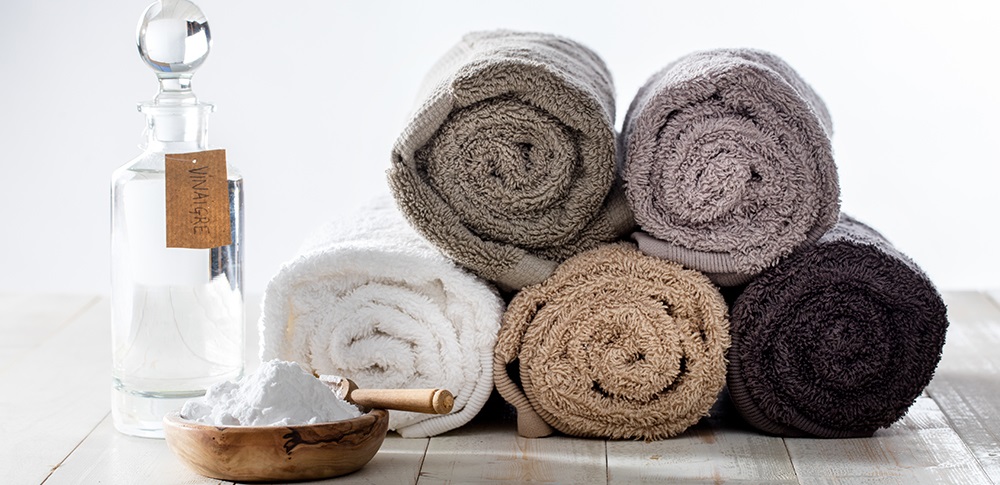
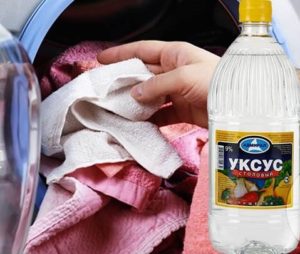
- soak in a solution with table vinegar;
- choose liquid concentrates on a natural basis (without aggressive substances);
- use softeners for hard water.
Bleaching, especially boiling, can also be detrimental to towels. It's best to avoid it and use gentle stain removers.
The towels smell bad.
To eliminate the unpleasant odor, you'll need acetic acid. Dissolve a glass of vinegar in 10 liters of water, and soak a towel in the resulting solution for 8-10 hours. Afterwards, the fabric is sent to the washing machine and washed through a full cycle.
The moldy smell from a towel can be removed by soaking it in a vinegar solution!
There's also a special solution called Oxiclean. Add three-quarters of a cup of this cleaner to water heated to 60 degrees Celsius (140 degrees Fahrenheit), then soak the foul-smelling item in the solution for 1-2 days. To consolidate the effect, machine wash the item and dry it in a ventilated area.
Interesting:

Readers' comments
Headings
Washing machine repair




For buyers




For users


Dishwasher




Add a comment