
Eco mode in the dishwasher
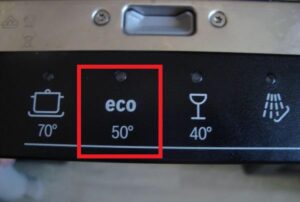 Dishwasher manufacturers are increasingly offering machines with energy-saving modes, which have become increasingly popular among users. For example, the Eco mode in a dishwasher allows you to save all possible resources: water, energy, and money. Is it really that appealing, or are there any pitfalls? Let's find out.
Eco mode characteristics
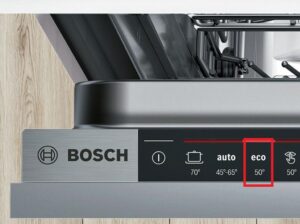
In an effort to protect the environment and the environment, the ECO program was recently developed and implemented in dishwashers. Judging by most reviews, the cleaning quality in this mode is no worse than in other modes. The program's principle is that the water is heated only to 50 degrees Celsius, and the volume of this water is smaller. Consequently, the heating time is reduced. Compared to hand washing, the water savings are already obvious, and the Eco mode is even more so. However, be sure to check the instructions for the dishwasher's cleaning time in Eco mode.
It's precisely because of its water and energy savings that this mode is also called eco-friendly, not economical. Water savings range from 20% to 35% across different machine models.
What's it for, you ask? It's simple: it's for everyday washing of lightly soiled dishes, like after dinner. Naturally, you shouldn't use this setting to wash baking sheets or greasy pans, as the results won't be impressive, if anything, disappointing. However, it's suitable for plates, bowls, cutlery, and mugs.
This program is available in many modern dishwashers. Studies have shown that Miele dishwashers save up to 20% water. Here's a list of dishwashers with this mode:
- Beko DFS 05W13 S;
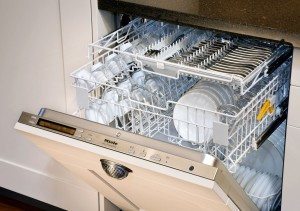
- Miele G 6060 SCVi;
- Hansa ZWM 616 WH;
- Candy CDI 1L949;
- Bosch SPV2HKX1DR.
Are you able to achieve savings?
Claimed water savings don't always translate into money savings; sometimes, they're just marketing gimmicks. Let's look at the Electrolux EES 948300 L dishwasher as an example to see how much money you'll actually save. This full-size model holds 14 place settings—that's about 63 pieces of cookware, including spoons, forks, a cutting board, and mugs.
In mode The ECO machine will work for 4 hours, which, as it turns out, is the longest program in this model. Water consumption will be 10.5 liters. Hand washing will take about 20 minutes, washing only half the dishes. Combined cold and hot water consumption will be about 43 liters. Of course, you'll need four times as much water. The machine does save money. But in monetary terms, the savings won't be significant.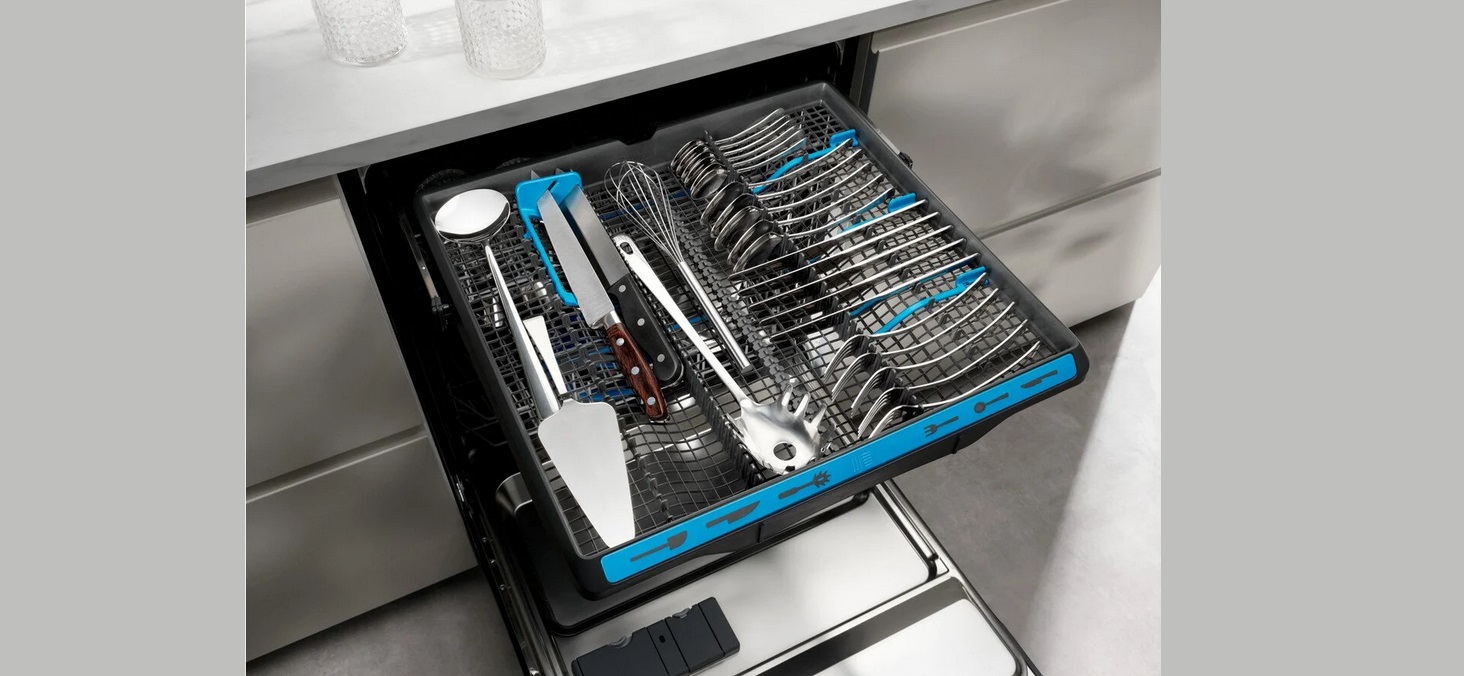
Machine washing also requires detergent, salt, and rinse aid, which are considerably more expensive than hand washing detergent alone. Furthermore, the machine will consume electricity, which is 1.36 kW over 4 hours. If you run the machine in this mode once a day, that's about 41 kW per month. So, you won't notice any savings in monetary terms. Again, this calculation is for a specific dishwasher. Consult the instructions for how long this mode lasts on other models.
On the other hand, you can see hidden savings. Housewives who enjoy expensive manicures save time and protect their hands and nails thanks to a dishwasher. And, in general, some dishes simply can't be cleaned by hand, no matter how hard you try, the way a dishwasher does. So, while we can't say the Eco program is truly economical, overall, a dishwasher saves us energy and stress. That's why sales of this "home helper" are only growing worldwide.
Interesting:

Readers' comments
Headings
Washing machine repair




For buyers




For users


Dishwasher




Add a comment