What cycle should I use to wash a down jacket in a Samsung washing machine?
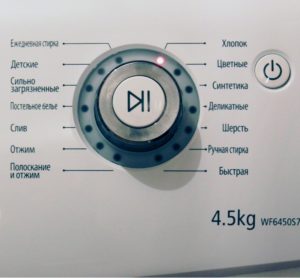
If your down jacket gets dirty, it's easier and quicker to clean it at home: just throw it in the washing machine and run the automatic cycle. The machine will do the rest, but just follow a few important rules to protect your item from damage and deformation. To avoid any surprises, prepare your item properly and select the right washing cycle for your Samsung down jacket. It's also important to find the right detergent, set the right parameters, and dry it properly. Let's explore the process right now.
Care instructions for a specific down jacket
Don't rush into machine washing—you first need to determine whether your down jacket can withstand the machine's harsh environment. Not all jackets are machine washable; in fact, some jackets don't tolerate moisture at all. To avoid risking your item, carefully read the manufacturer's care label, which provides specific care instructions for that specific item.
Machine washability is indicated by the presence of a label or a picture of a basin of water on the tag. If the basin is present, but only with a hand dipped in it, the item should not be placed in the machine; hand washing is permitted only. If there's a "dry clean only" mark or a basin with an "X" through it, the item should not be wet. It's best to take such a down jacket to a dry cleaner.
Before washing, carefully examine the label on your down jacket - if there is a symbol of a crossed-out basin or a hand hanging down, then you should not machine wash it!
Ignoring the manufacturer's recommendations is essential. This is the only way your down jacket will last a long time, retaining its original appearance and warmth. You should also consider the current condition of the garment. If the jacket is clearly in poor condition, with seams coming apart or feathers and down coming out, then putting it in the washing machine is strongly discouraged. Otherwise, the spinning of the drum will aggravate the problem and ruin the down jacket completely.
We make do with dry cleaning
In some cases, you can avoid using a washing machine. Generally, if there are localized stains, it's much safer to hand-wash the item, treating only the affected areas. For minor stains, it is recommended to choose dry washing, using salt, water, dishwashing gel or glass cleaner.
Machine washing cleans the down jacket evenly and removes even the most stubborn stains.
However, it's important to understand that spot cleaning has its drawbacks. Firstly, stains and streaks from detergents may appear. Secondly, significant color differences between cleaned and untouched areas of the fabric are possible. Thirdly, dry cleaning won't remove heavy or extensive stains or eliminate unpleasant odors. For even and comprehensive cleaning, it's best to use a washing machine.
What powder should we use?
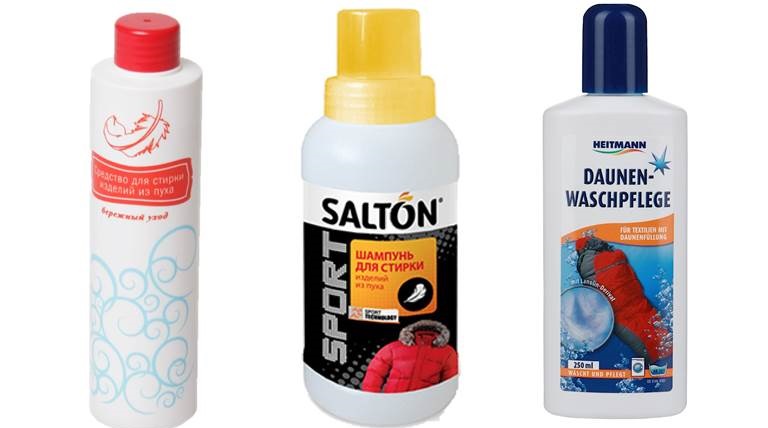
When washing down jackets, don't use regular washing powder—specially formulated gels are required. Everyday detergents aren't designed for the natural filler, as they can damage its structure and leave streaks and stains on the outer fabric. To avoid damaging your down jacket, look for a detergent labeled "for down items."
Specialized gel formulas contain special components that remove stains without damaging the fabric or filler. Furthermore, they protect the down structure and preserve its natural oils. Finding the right product is easy – manufacturers offer a wide range of gels and balms for down jackets.
Profkhim is a domestically produced gel for hand and machine washing of down items. It's inexpensive and comes in 200 ml bottles, enough for 3-4 washes. Thanks to its active ingredients, it combats stains of any severity without damaging the insulation or fabric of the garment. However, there is a significant drawback: the liquid has a rather pungent odor.
Nordland. A German product developed for washing down sportswear, ski suits, and overalls. It effectively removes stains without damaging the filler or outer material. Sold in 750 ml containers, it's used sparingly, 75-100 ml per cycle. When used correctly, it leaves no streaks or odor. Suitable for all types of insulation, both natural and synthetic.
"Salton Sport" shampoo for washing membrane down jackets, pillows, and blankets. Its unique design preserves the material's heat-retaining and ventilation properties, while gently cleansing the down and removing all odors. Due to the presence of a special impregnation, the gel protects clothes from future contamination. It is sold in small quantities – 250 ml, which is enough for 2-4 cycles on average.
When using gels to wash down jackets, it is important to follow the recommended dosage!
"Heitmann Daunen-Waschpflege" is a proven product made in Germany. It's sold in 250 ml bottles for about $4, and each bottle lasts for 5-6 cycles. Its gel-based formula is suitable for all washing methods, including machine washing. It removes even stubborn stains, gently and carefully. Its unique feature is that there's no need to fluff the down after use (just follow the proper cleaning instructions for down items).
"Laska." The manufacturer offers a range of gentle gels that can safely refresh your down jacket. The gentle formula doesn't damage the down, but it can't handle tough stains. Therefore, before using the product, it's best to pre-treat stains locally with home remedies, laundry soap, or specialized stain removers.
Domal Sport Fein Fashion. An affordable yet effective gel suitable for washing down jackets, sportswear and shoes, and any woolen items. It easily eliminates odors and removes tough stains without damaging down or membrane fabrics. It also fluffs up the fibers, leaving items soft and fluffy. Available in 750 ml bottles, it lasts for an average of 9-10 washes.
All of the above products are universal, so they're suitable for both hand and machine washing. Just be sure not to add fabric softener or conditioner to the machine or basin. Remember, they can leave white stains on fabric.
We are preparing the thing
Before loading your down jacket into the drum, it's important to prepare it for washing. Simply throwing it in the washing machine can damage the fittings, leave stains unwashed, and even ruin your favorite garment. To prevent this, keep a few important rules in mind:
First, remove all detachable elements (belt, trim, hood, decoration);
Pre-treat heavy stains with a stain remover or laundry soap, scrub with a soft brush and leave for 15-20 minutes;
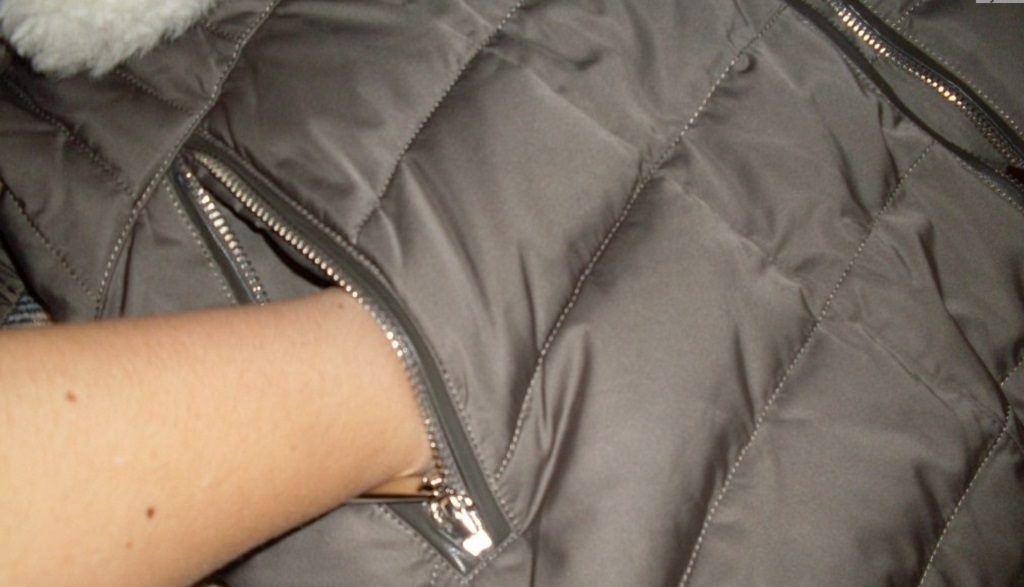
we fasten all zippers, buttons and rivets;
We check our pockets for forgotten items;
we seal the fittings with tape or cling film;
turn the jacket inside out;
Place the down jacket in a protective bag (an old duvet cover will do).
Before washing in the machine, stubborn stains should be rubbed with laundry soap and left to soak for 15-20 minutes.
Once you've completed all the steps, you don't have to worry about the final result—your down jacket will be completely washed without any damage to its appearance. It is important not to skimp and not to wash jackets with other things. It is better to load the item "alone", thereby ensuring that it is fully washed, rinsed and spun.
Selecting a program
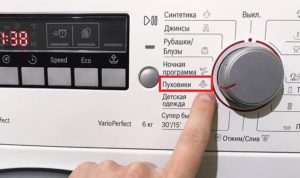
Due to the easily damaged filler, the down jacket is considered a delicate item. The "special status" prevents the user from selecting a standard wash cycle, as otherwise the insulation will bunch up, come loose, or cause seams to come apart. To avoid these unpleasant consequences, use only the special "Down" cycle.
If there's no "Down" button, you can use gentler alternatives: "Silk," "Wool," or "Delicate Wash." Just be sure to follow certain cycle parameters:
temperature up to 30-40 degrees;
spin – minimum, 400-800;
Rinse – an additional cycle is added to the standard one (we turn on “Double Rinse” or duplicate the repeated water intake).
It is recommended to wash down items using the “Down”, “Silk”, “Wool” or “Delicate Wash” cycle.
Be prepared for a long wash cycle. The delicate cycle involves slow cleaning with a large volume of water and a multi-stage rinsing process. Only this approach will prevent the material from shrinking and the down from losing its original properties.
Additional accessories
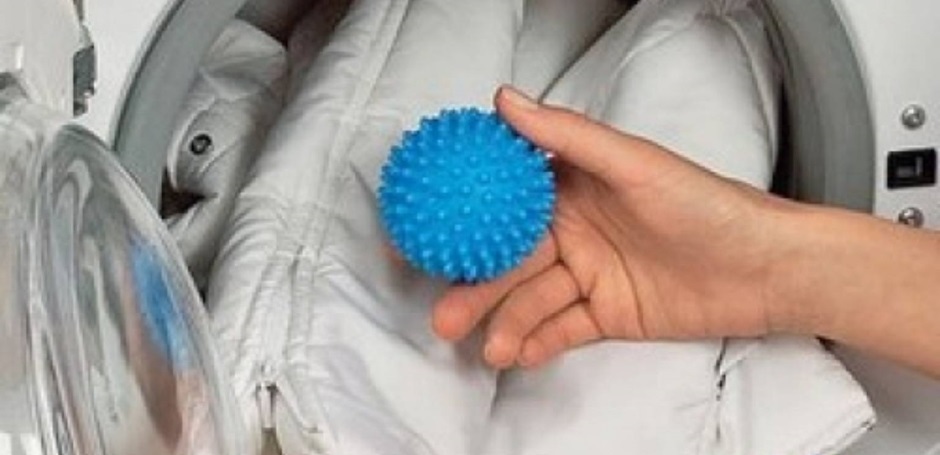
Experienced housewives strongly recommend washing down items with additional accessories—balls. Tennis balls or their rubber and silicone counterparts are believed to break up clumps of down, preventing the filling from clumping. Simply place one ball in each pocket and two more in the drum. Just avoid using heavy plastic balls, which can tear or damage the fabric.
It is recommended to wash the down jacket with silicone balls, which will gently fluff up the filling as the drum rotates.
However, experience shows that using balls is not necessary. Whether the insulation will clump depends on the quality of the down jacket's materials, the amount of detergent used, and the washing machine cycle selected. If the jacket is made of natural down and expensive fabrics, and the cycle parameters are set correctly, then you can do without the ballsMoreover, the lumps are easy to break up and fluff up after washing.
Is spinning necessary?
When washing a down jacket, the spin cycle is essential. Wringing out a heavy jacket by hand is extremely difficult, and without forced drainage, the garment will take a very long time to dry. This will result in the material becoming deformed and the filling developing a musty odor.
When washing a down jacket, it is important to set the spin cycle to 400-600 rpm.
However, excessive spin speeds are harmful to down items. High-speed spinning will destroy the down structure, break the feathers, and cause the insulation to "pull out" of the seams. Therefore, it's important to set the spin cycle to the minimum, ideally 400 or 600. Keep in mind that selecting the "800" or "1200" setting will negatively impact not only the down jacket but also the washing machine. A heavy item places a significant strain on the down. engine and bearing unit.
Getting rid of moisture
After washing, you need to take care of drying. Drying a down jacket follows specific rules, which are also best followed. These recommendations include the following:
do not use tumble dryers;
avoid using batteries and heating devices;
hang the item on a hanger or lay it out on a floor drying rack (you cannot put a wet down jacket on a table or blanket - it is necessary to ensure proper air conditioning);
do not dry in the bathroom, where there is high humidity;
place in a dry room with sufficient ventilation;
keep away from direct sunlight;
The down jacket should be shaken periodically and hung upside down and back to front to ensure complete drying and to prevent the down from clumping;
make sure that the drying process does not last longer than 2 days (otherwise the fluff will rot, start to smell bad, and the fabric will become stained due to uneven drying);
You can speed up drying by using a hairdryer.
You can't dry a down jacket for more than two days - because of the remaining moisture, the down will rot and develop an unpleasant odor.
It's recommended to protect a dry down jacket by treating it with a special water-repellent spray. This treatment will prevent future water damage, stubborn stains, streaks, and unpleasant odors.

 If your down jacket gets dirty, it's easier and quicker to clean it at home: just throw it in the washing machine and run the automatic cycle. The machine will do the rest, but just follow a few important rules to protect your item from damage and deformation. To avoid any surprises, prepare your item properly and select the right washing cycle for your Samsung down jacket. It's also important to find the right detergent, set the right parameters, and dry it properly. Let's explore the process right now.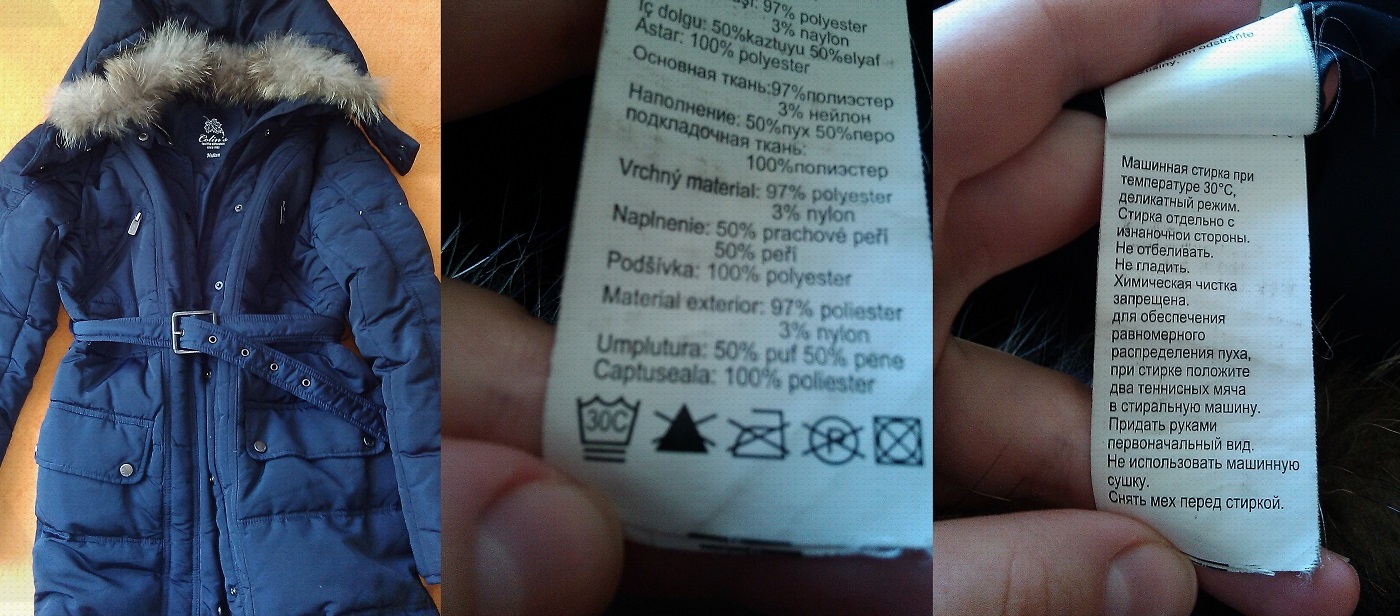

















Add a comment