
Korting dishwasher programs
 The dishwasher industry is constantly evolving, and manufacturers are equipping their machines with an ever-expanding range of programs. When used correctly, this makes life much easier for homeowners, as there's a dedicated program for every type of dishware and level of soiling. Let's take a closer look at the Korting dishwasher's wash programs.
Description of the Korting PMM algorithms
This company offers several models. Each one features 4 to 8 programs. These different modes allow you to find the perfect combination of temperature, wash duration, and water flow rate to ensure your dishes sparkle after a wash.
Let's start with the Intensive Wash program. This program is designed for large, durable cookware that is heavily soiled. This could include frying pans with burnt-on food or grease residue, baking sheets, oven-safe dishes, and the like. Dense ceramic dishes can also be washed using this program. It consists of 6 stages.
- The first wash cycle is a preliminary one. The water temperature is 50 degrees.
- The second wash cycle is the main one. The water is heated to 70 degrees.
- The first rinse is with cold water.
- Second rinse - another rinse with cold water.
- The third rinse is with hot water (up to 70 degrees).
- Drying.
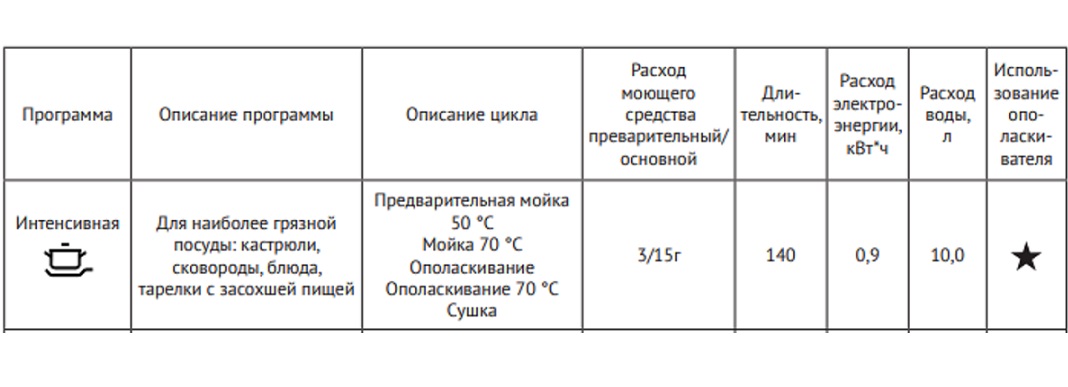
The program lasts almost 3 hours, but thanks to the high temperatures and intense water flow, even the most stubborn stains will be completely removed.
During one cycle, the dishwasher consumes 10 liters of water and 0.9 kilowatts of energy per hour. As for detergents, 3 g of powder is needed for pre-wash, and 15 g for main wash. You also need to pour rinse aid into the dispenser.
The Standard program is also worth mentioning. It's also designed for larger loads of dishes, but with less soiling. It can be used for washing both regular plates and cups after a meal, as well as cookware that doesn't require a more intensive wash. The program includes 5 stages:
- pre-wash at 45 degrees;
- main wash at 55 degrees;
- rinsing in cold water;
- rinsing in hot water;
- drying.
Important! The program lasts exactly 3 hours, using 13.5 liters of water and 1.3 kilowatts of energy per hour. Use 5 grams of detergent for the pre-wash and 25 grams for the main wash. Rinse aid must be added to the dispenser.
ECO program. This program is designed to conserve the dishwasher's resources. It uses only 10.5 liters of water and just over 1 kilowatt of energy per hour. However, these savings don't prevent the dishwasher from performing its job effectively. This is due to the fact that the cycle duration is very long - as much as 225 minutes, and the detergents are added in the same proportion: 5 grams for the pre-wash and 25 for the main wash. During this time and with this amount of product, all stages of the cycle manage to cope with the dishes with less loss of resources.
- Pre-wash.
- Main wash at 45 degrees.
- Rinse in hot water.
- Drying.
Since this program includes a rinse cycle, rinse aid must be added to the dispenser. This program is suitable for all moderately soiled dishes.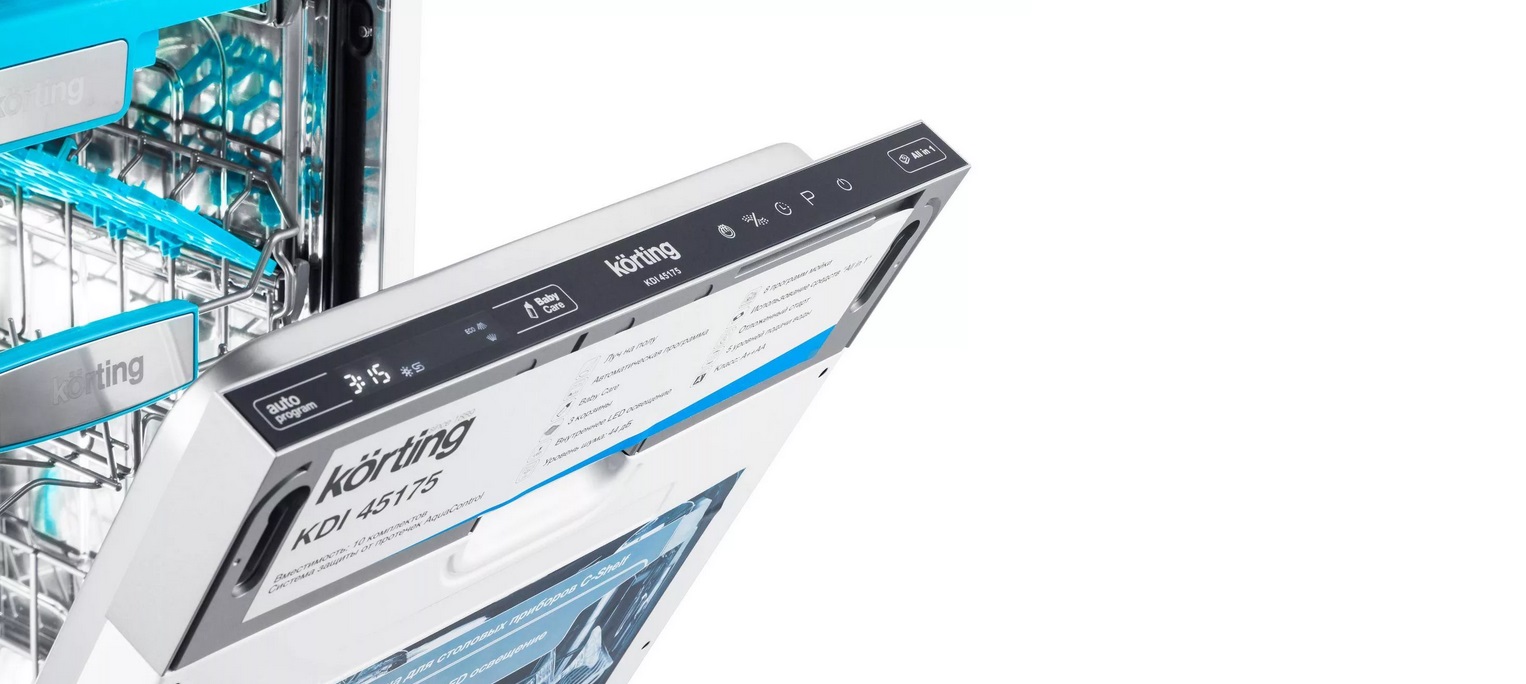
The abbreviated program is 90 minutes long. As you might guess, it lasts an hour and a half. During this time, the following stages alternate:
- wash in hot water;
- rinsing in cold water;
- rinsing in hot water;
- drying.
Overall, this program can handle heavy soiling, but it requires more detergent—30 grams. Rinse aid is essential! The dishwasher uses 12.5 liters of water and 1.35 kilowatts of energy per hour per cycle. This mode is a favorite among most housewives, as it's relatively quick compared to others and cleans dishes well, even with heavy soiling. Of course, if you completely load the basket with pans and baking sheets covered in burnt-on grease, it may not be able to handle it. But it's perfectly capable of handling a standard set of dishes.
Quick program. It consists of just three steps: washing and two hot water rinses.
The express program does not have drying, so you will have to dry the dishes naturally.
This program is energy-efficient across the board: it uses just 11 liters of water and 0.75 kilowatts of energy per wash cycle. No rinse aid is required, and 20 grams of detergent is sufficient. This program isn't designed for heavy soiling. It's suitable for washing plates, cups, cutlery, and pots without heavy greasy stains.
Launching and changing the program
Now you're fully armed with knowledge of programs, but any mode is useless if you don't use it. So how do you test your dishwasher?
- Open the dishwasher and pull out the two baskets. It's recommended to load the lower basket first, then the upper one, otherwise it will be awkward.
- Pour, pour or place the required detergents into the appropriate compartments.
- Connect the dishwasher to the power supply and make sure the water supply is fully open.
- Use the On/Off key to turn on the unit.
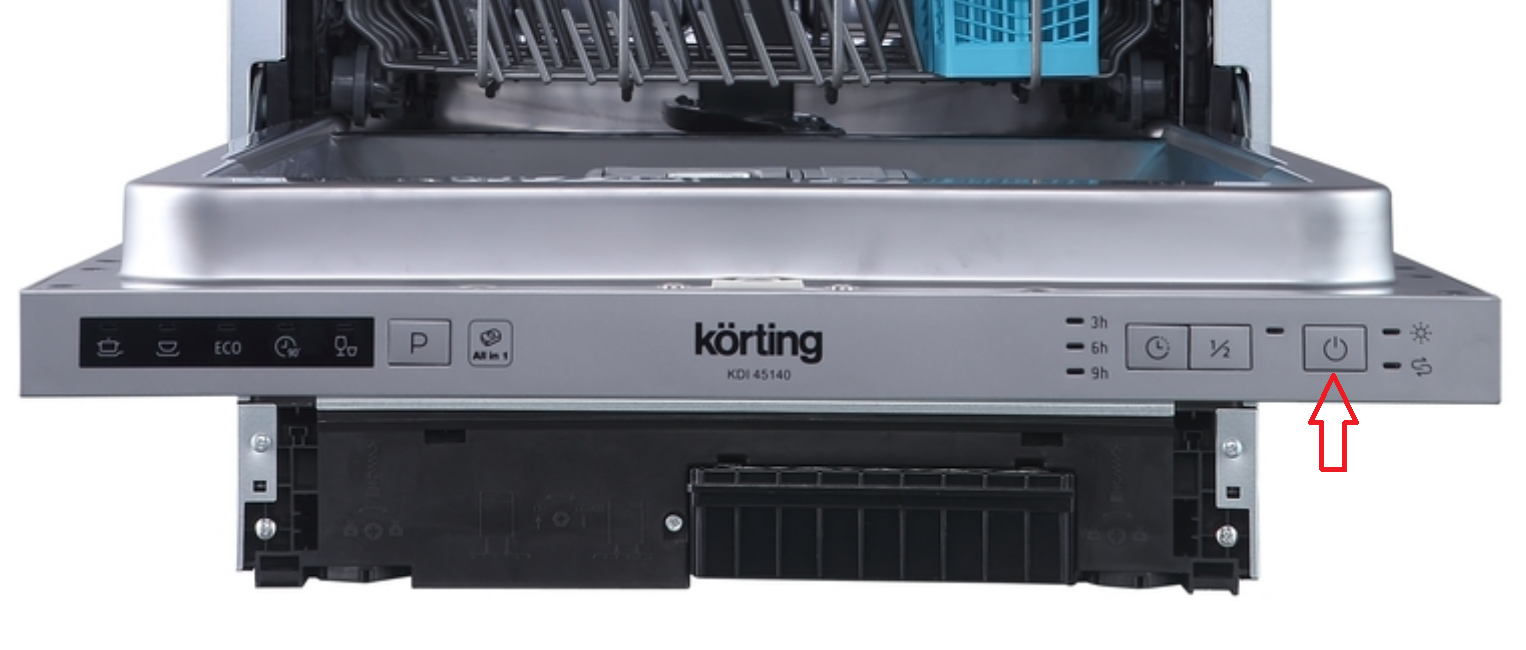
- Once again, remember the description of the program and make sure that you need it, run it.
- Once the indicator lights up, close the door and the machine will start working.
Important! You can only change the program on the fly if it was recently started. Otherwise, the dishwasher may already have removed the detergent from the compartment and drained the water. You'll have to start the entire process again.
Instructions for restarting the program:
- open the door slightly, wait until the water supply stops and open the hatch completely;
- hold down the “Program” key for a couple of seconds;
- install a new program.
As for forgotten dishes, you can add them to the basket at any time while the detergent is still in the detergent drawer. To do this:
- Open the door again slightly, wait until the water supply from the spray arms stops and open the door completely;
- put everything you didn't add right away into the basket;
- Close the door and wait for the cycle to resume.
Never fully open the hopper door while the machine is running. Otherwise, you could easily get scalded by hot water.
Interesting:



Readers' comments
Headings
Washing machine repair




For buyers




For users


Dishwasher




Add a comment