
Hansa dishwasher modes and programs
 After purchasing a new dishwasher, users are eager to try it out. Before testing the appliance, it's important to understand the operating modes of the Hansa dishwasher. After all, if you use the wrong program, the cleaning quality of your cutlery will be poor. We'll explain which programs are available on most Hansa models.
Hans PMM algorithms and their characteristics
The basic washing programs on most Hansa dishwasher models are the same. A description of the dishwasher's operating modes is provided in the equipment's instructions.Therefore, before putting the equipment into operation, be sure to read the user manual.
Hansa dishwashers have the following modes:
- "Intensive wash";
- "Normal";
- «ECO»;
- "Gentle wash";
- Express 60;
- "Rapid".
The choice of program will determine not only the quality of washing, but also the safety of the dishes.
Let's look at each program individually. We'll explain the temperature to which water is heated in each mode and what dishes each algorithm is designed for.
Intensive Wash is a program designed for very dirty dishes. This mode is suitable for washing burnt pots, pans, and plates with dried-on food residue. The water temperature is 65 degrees Celsius.
This algorithm is performed in 6 stages:
- pre-wash at 50°C;
- main wash at 65°C;
- rinsing;
- rinsing;
- rinse at 55°C;
- drying.
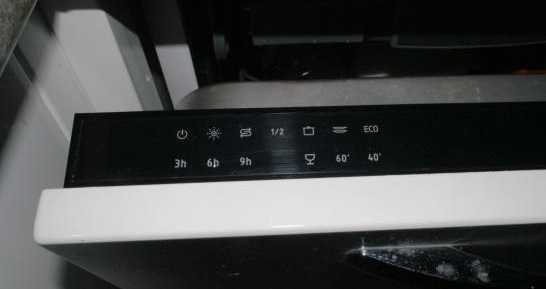
The "Intensive Wash" mode lasts 2 hours and 10 minutes. The machine consumes 16 liters of water per cycle. This is the most energy-intensive mode, consuming up to 1.2 kilowatts per hour.
The "Normal" program is designed for washing dishes with a moderate degree of soiling. It's suitable for cleaning plates, pots, saucepans, and lightly soiled frying pans. The cycle lasts 2 hours and 35 minutes. The cycle consists of the following steps:
- pre-wash at 45°C;
- wash at 55°C;
- rinsing;
- rinse at 65°C;
- drying.
Energy consumption during the "Normal" program is 1.07 kWh. Water consumption is 13 liters per cycle. This mode is often considered the everyday wash cycle.
The ECO program's name speaks for itself. This is an economical, standard-duration cycle designed specifically for washing lightly soiled dishes. The water is heated to 50°C. This program includes only one rinse step.
The ECO program runs for 165 minutes. It consumes 0.81 kilowatts per hour. The dishwasher uses approximately 9 liters of water per cycle.
The "Gentle Wash" cycle is designed for porcelain, glassware, and other delicate items. Water is heated to 40°C. The cycle lasts 1 hour and 50 minutes. Energy consumption is 0.7 kWh, and water consumption is 9 liters.
"Express 60" is another program for washing lightly soiled dishes. The cycle lasts just one hour, with the water in the tank heated to 62°C. This mode uses 9 liters of water, and the energy consumption is 0.85 kWh.
The "Rapid" program is distinguished by its duration—it runs for just 40 minutes. This mode does not dry dishes. The water in the wash chamber is heated to 40°C. It is suitable for lightly soiled dishes.
The Rapid cycle uses 10 liters of water. Energy consumption is minimal—just 0.45 kWh. The cycle consists of three stages: washing at 40°C, rinsing, and then rinsing at 45°C.
The wash cycle is selected based on the type of dishes loaded in the machine. If the dishes are burnt pots and dried-out plates, the ECO cycle won't be enough; you'll have to run the intensive cycle. For delicate dishes, only gentle cycles are suitable.
Washing dishes for the first time
After installing the dishwasher, perform a test run. Before using it for the first time, be sure to add regenerating salt to the dishwasher's dedicated compartment. The test cycle is performed empty, without dishes in the chamber, but with detergent. Observe the operation of the machine, check for leaks, whether water is stagnant in the chamber, and how the sprinklers rotate.
If the test run goes well, you can test the machine with dishes. All the information on how to turn on the dishwasher, load it, and select a wash program is provided in the equipment manual. Let's go over the main points.
Kitchenware should be arranged correctly in the baskets. The top basket of Hansa dishwashers is designed for small dishes:
- mugs, glasses, goblets;
- saucers;
- coffee cups;
- gravy boats;
- ladles, spatulas, etc.
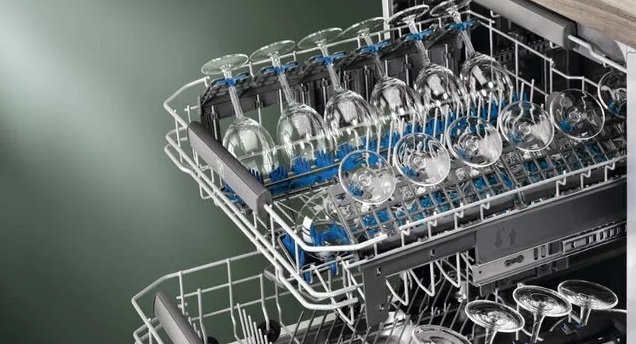
The upper basket can be adjusted in height. This is done to maximize the use of the cooking space. The instructions for moving the basket are detailed in the instructions.
The bottom basket is where larger and dirtier dishes are loaded:
- serving plates;
- pots;
- soup bowls;
- frying pans;
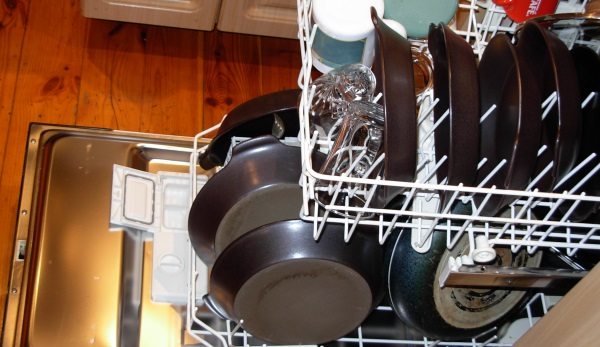
- lids;
- saucepans;
- baking sheets.
It is important to position the dishes so as not to block the spray nozzles.
Pots and other deep dishes are placed upside down in the baskets. This prevents water from stagnating inside the items. Be sure to leave a small gap between the items to ensure they are washed from all sides.
The holders at the bottom of the lower basket can be folded down. This is convenient when loading pots and baking sheets. It's recommended to place larger dishes at the edges and smaller ones closer to the center.
Before loading dishes into the dishwasher, be sure to remove any food debris, fruit pits, and paper towels. Remove any tea leaves and tea bags from cups. This will prevent clogging of the dishwasher's drainage system.
To improve cleaning results and reduce energy consumption, rinse heavily soiled, greasy, or burnt-on dishes with hot water before loading them into the dishwasher. This will help the machine clean the dirt more quickly.
Hansa dishwashers also feature a cutlery tray for small utensils. Items should not be nested within each other, as this will reduce cleaning efficiency. It's important to ensure that utensils don't protrude beyond the basket.
Do not wash in a dishwasher:
- wooden utensils;
- dishes made of non-heat-resistant plastic;
- items made of tin and copper;
- thin crystal;
- porcelain and mother-of-pearl dishes.
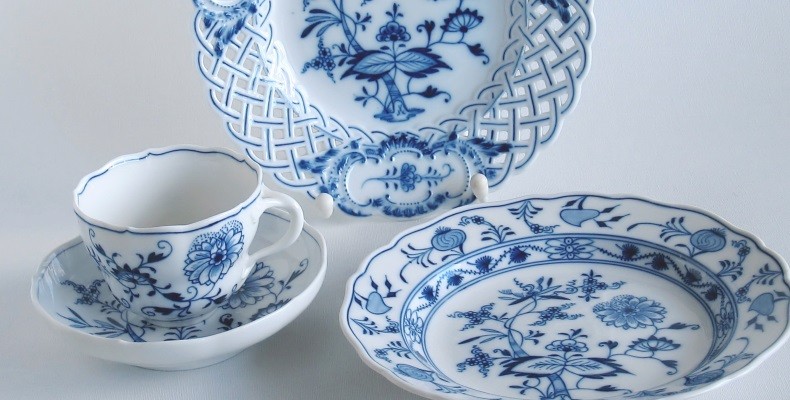
Each Hansa model has a different capacity. Information on how many place settings can be loaded into the dishwasher is provided in the instructions. It's important not to overload the dishwasher, as this can damage the appliance.
Once you've washed your dishes, add detergent to the dispenser. You can use a special powder, gel, or 3-in-1 tablets. Rinse aid is optional – it prevents streaks on your cutlery and speeds up drying.
Only special dishwasher detergents can be loaded into the machine.
After loading the machine with dishes and detergent, you can turn it on. To do this:
- plug the power cord into the socket;
- open the water supply tap;
- Make sure that the dishes do not interfere with the rotation of the spray arms;
- Close the dishwasher door tightly;
- press the “Standby” button, wait until the power indicator lights up;
- use the program selection button to select the desired mode;
- connect additional functions if necessary;
- Press the Start/Pause button.
The machine's current program can only be changed at the very beginning, before the dishwasher has used any detergent. To do this, press and hold the "Start/Pause" button, and the machine will enter standby mode. Then, select the desired program.
When the cycle is complete, the dishwasher will beep after 8 seconds. Turn off the dishwasher using the "Standby" button and slightly open the door. Wait 5 minutes for the dishes to cool, then unload the dishwasher.
Interesting:




Readers' comments
Headings
Washing machine repair




For buyers




For users


Dishwasher




Add a comment