
Washing machines of Russian manufacture
 Recently, washing machines labeled "Made in Russia" have become increasingly common, undoubtedly sparking interest among buyers. What does this label mean? Are these washing machines truly manufactured in Russia and can they be called "Russian"? Or is it just a marketing ploy? Many people remember domestically produced appliances boasting high quality and durability, but can the same be said of Russian-made washing machines, if any exist at all? Let's find out.
Manufacturing or assembly in Russia: what's the difference?
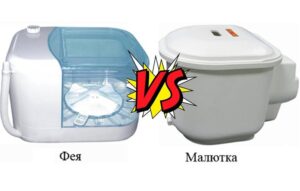
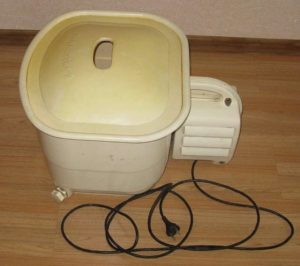
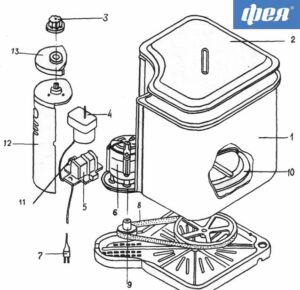
Washing machine production in Russia has been going on since Soviet times. Everyone is familiar with activator-type machines like the "Malutka," "Ob," and "Fairy," and even semi-automatic models were produced. But when it comes to the production of automatic washing machines, The first Soviet automatic washing machine can be called the Vyatka-12 machine, produced on February 23, 1981. However, even this machine is not 100% Soviet, since it was assembled using Ariston washing machine designs.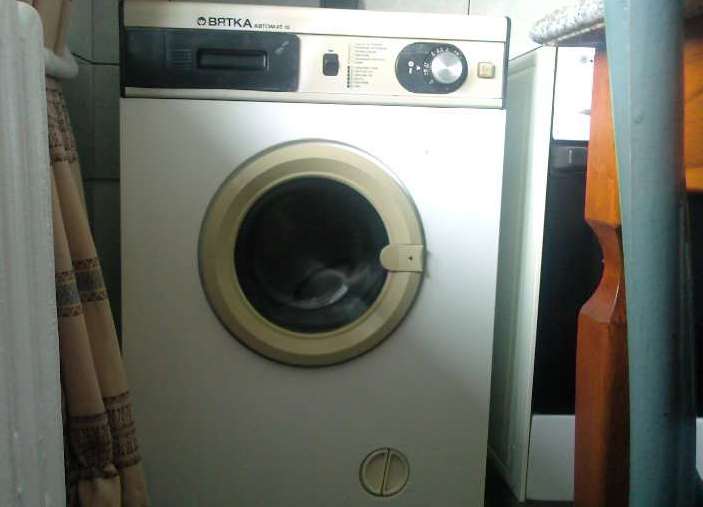
Today, washing machines from the Kirov-based Vyatka plant can't be considered entirely Russian, as the factory was acquired by Candy in 2005. They updated all their equipment and continued to develop washing machine production, implementing their own technologies. These machines can only be considered Russian-assembled, not Russian-made.
Important! Only those washing machines produced under our own brand and assembled using our own technologies can be considered Russian-made. These are also called domestically produced machines.
Most factories that assemble washing machines are either representative offices of well-known foreign companies (Germany, Italy, Korea) or companies that have purchased the rights to use a well-known trademark or brand. Washing machines manufactured at such factories are said to be hand-assembled by Russian workers.
Washing machine brands
 Washing machines are assembled in Russia under the following brands:
- Indesit and Hotpoint Ariston – the production of machines under these Italian brands is carried out at a plant in Lipetsk;
- LG – production of cars with a Korean brand is carried out in the Moscow region (Ruza);
- Samsung – cars with this Korean brand are produced in the Kaluga region;
- Beko and Vestel – washing machines with Turkish brands are manufactured in the Vladimir region (Kirzhach and Aleksandrov);
- Bosch and Siemens are assembled in St. Petersburg;
- Candy – produced at the Vyatka plant in Kirov;
- Atlant – cars under the Belarusian brand are produced in Moscow.
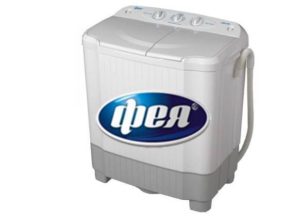
Russian-made automatic washing machines are manufactured at the Okean plant in the Far East. They offer both front-loading and top-loading models. Russian-made washing machines are typically the simplest. activator washing machines With and without a spin cycle, these machines are popular with summer residents due to their compact size and portability. An example of such a machine is the semi-automatic "Sibir" machine, manufactured at a factory in Omsk.
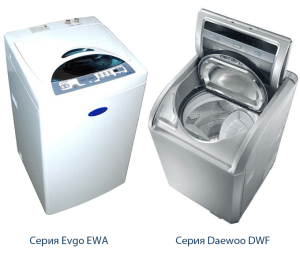
Evgo, a company located in Khabarovsk, also produces automatic washing machines. However, these machines are more or less Russian-made, as they are assembled from Chinese components.
Please note! Companies often counterfeit cars from popular brands and list the brand's country of origin as the country of manufacture, rather than the country where the car was assembled.
Features of Russian washing machines
The specifics of washing machine production in Russia stem from market demand. Domestic consumers are interested in machines with the following characteristics:
- front loading type of laundry;
- small-sized machines with shallow depth;
- large load of laundry;
- economical in energy and water consumption.
Unlike Europeans, our people prefer front-loading washing machines; most production is geared towards these types of machines. Only among Ariston washing machines are there models with top loading, assembled in Russia.Most campaigns also focus on the production of non-standard-sized appliances. These include washing machines:
- with a reduced depth of 50 to 55 cm are produced at the Beko, Ariston, Atlant and Candy factories;
Full-size machines are available only from manufacturers Candy, Ariston, Atlant and LG. - narrow machines with a depth of 49 to 39 cm. The most common machines have a depth of 40 cm, but there are also machines with a depth of 39, 42, 45, 47 cm;
- super-narrow cars with a depth of 36 to 33 cm, such machines are available under the brands Candy, Ariston, Atlant, Indesit, Beko.
 Narrow washing machines compromise their maximum load capacity, but Russian-assembled machines have addressed this issue. For example, a Candy machine with a 33 cm depth washes 4.5 kg of laundry, while with a 40 cm depth, the load capacity increases to 7 kg. Standard Russian-assembled washing machines are manufactured with a load capacity of up to 8 kg.
If you choose a washing machine assembled in Russia, choose one equipped with full leakage protection and surge protection. Machines from Bosch, Ariston, Indesit, and LG have leakage protection. Atlant and Beko models also have partial protection, including surge protection.
Regarding energy consumption, like European models, domestically assembled machines have an efficiency rating of Class A. Average water consumption also does not exceed 45 liters. This is achieved not only by reducing the amount of laundry but also by using the latest technologies, such as Smart Technology and Inverter Direct Drive.
Value for money and build quality
The production and assembly of washing machines in Russia has led to a significant decline in quality. However, the price has also dropped, making them affordable for the majority of the country's population. After several years of using Russian-assembled machines, service center technicians have concluded that these machines are among the least reliable.
Statistics show that Russian-assembled Indesit washing machines are the most frequently repaired. Russian-assembled Bosch washing machines, which are significantly cheaper than German-assembled machines of the same brand, are also frequently repaired. Russian cars Beko, Vestel and Candy are short-lived. If we compare the service life of cars assembled in Russia, they have the shortest service life.
- Machines assembled in Russia from Chinese components operate without failure for 2 years.
- Russian-assembled cars made from original parts (German, Italian, etc.) last an average of 5 years.
- Chinese machines also last on average 5 years.
- Washing machines assembled in Korea or Italy last up to 8 years.
- Cars assembled in France and Germany can last from 10 to 16 years.
- Washing machines assembled in Austria and Sweden are considered the most reliable. Their service life, depending on operating conditions, ranges from 14 to 20 years.
When purchasing a washing machine, pay special attention to the country in which it was assembled. Recently, it has become quite difficult to find original-assembly washing machines of brands assembled in Russia. For example, Bosch is assembled in Germany, while LG and Samsung are assembled in Korea (mainly in Russia and China). Chinese and Russian-made cars are the cheapest, so demand for them has grown significantly over the past few years.
Please note! Washing machines from well-known brands are assembled in China, France, Poland, and Slovenia, in addition to Russia. Their quality is also inferior to the originals, but superior to Russian-made ones.
Overview of car models
To fully understand what Russian-assembled washing machines are like, we will list several specific models and their main characteristics.
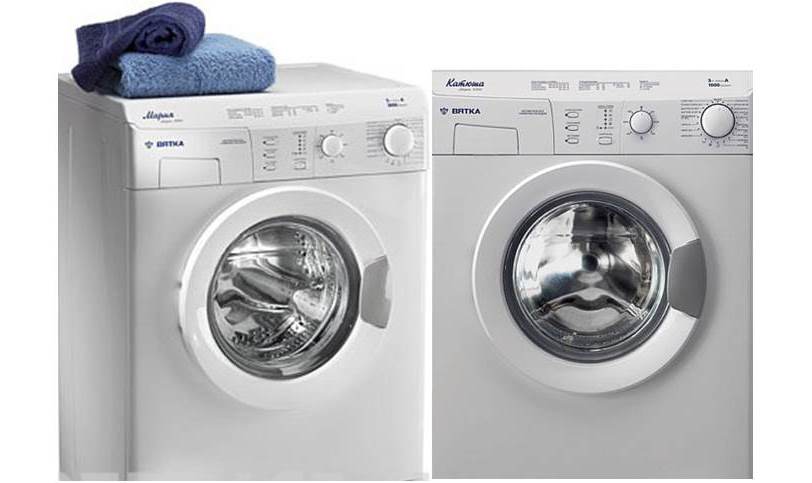
- The Vyatka-Maria and Vyatka-Katyusha washing machines are automatic. The former has standard dimensions of 85 x 60 x 54 cm and a load capacity of up to 5 kg. The latter is a narrow model with a depth of 45 cm and a load capacity of 4 kg of dry laundry. A distinctive feature is the tub made of stainless steel. These washing machines are considered economy class, priced around $110.
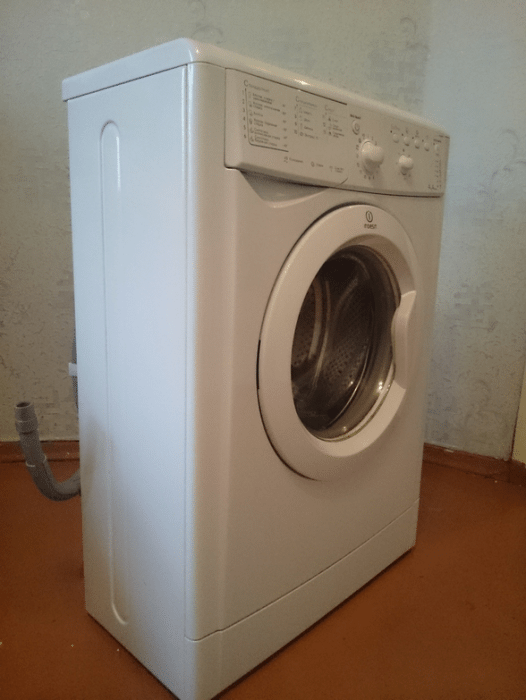
- The Indesit IWUB 4085 is an automatic washing machine with a depth of just 33 cm, making it ideal for use in small spaces. Its maximum load capacity is 4 kg. It spins at up to 800 rpm, giving it a Class D spin rating. It also features partial leak protection. Similar Indesit machines range in price from $130 to $150.
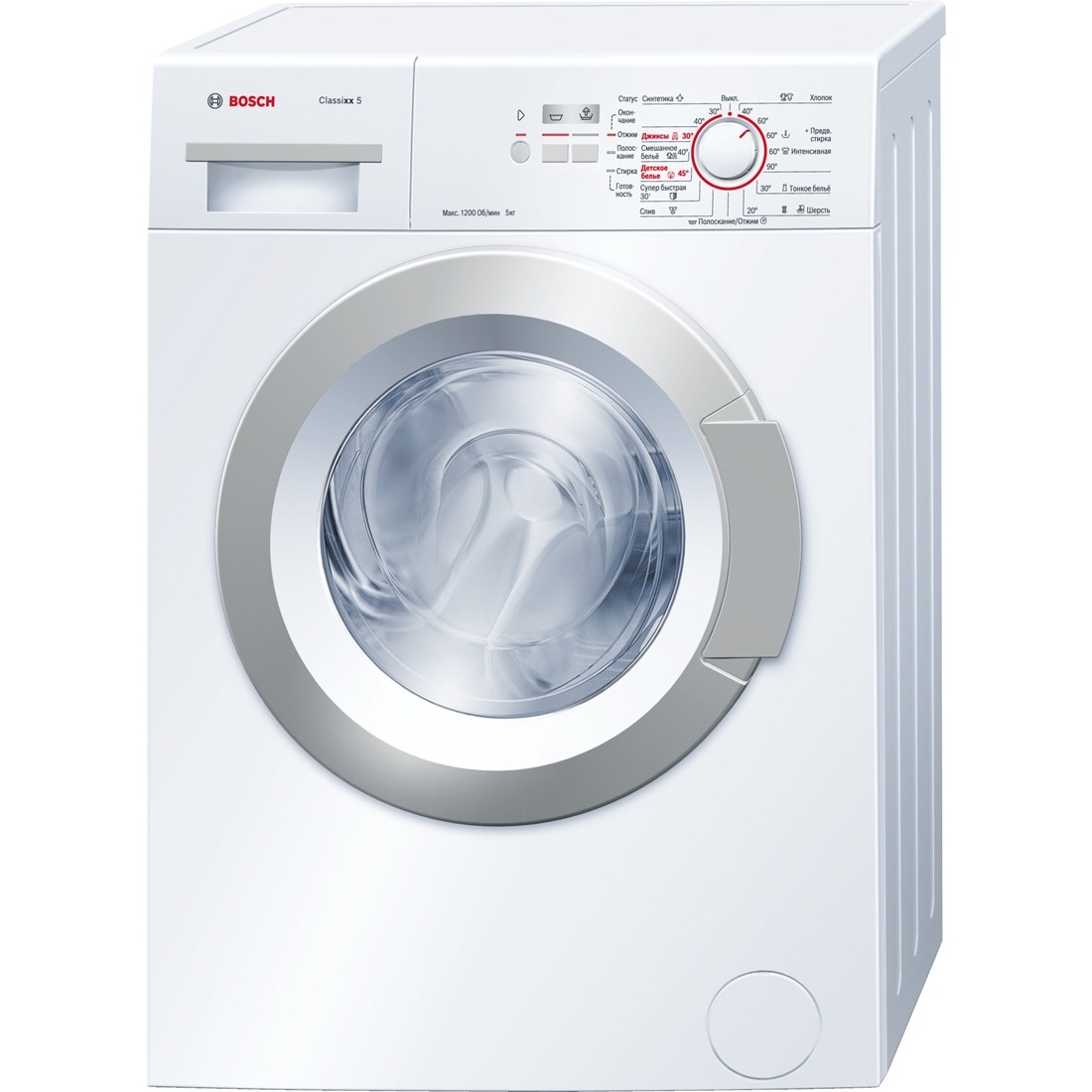
- The Bosch WLG 24260 OE is a front-loading washing machine with a maximum load capacity of 5 kg. Its depth is just 40 cm, and it offers a spin speed of up to 1200 rpm. This machine features a 3D Aquaspar system, which moisturizes laundry, saving water. Its functional display is especially appreciated by Russian consumers. It is affordably priced at under $230.
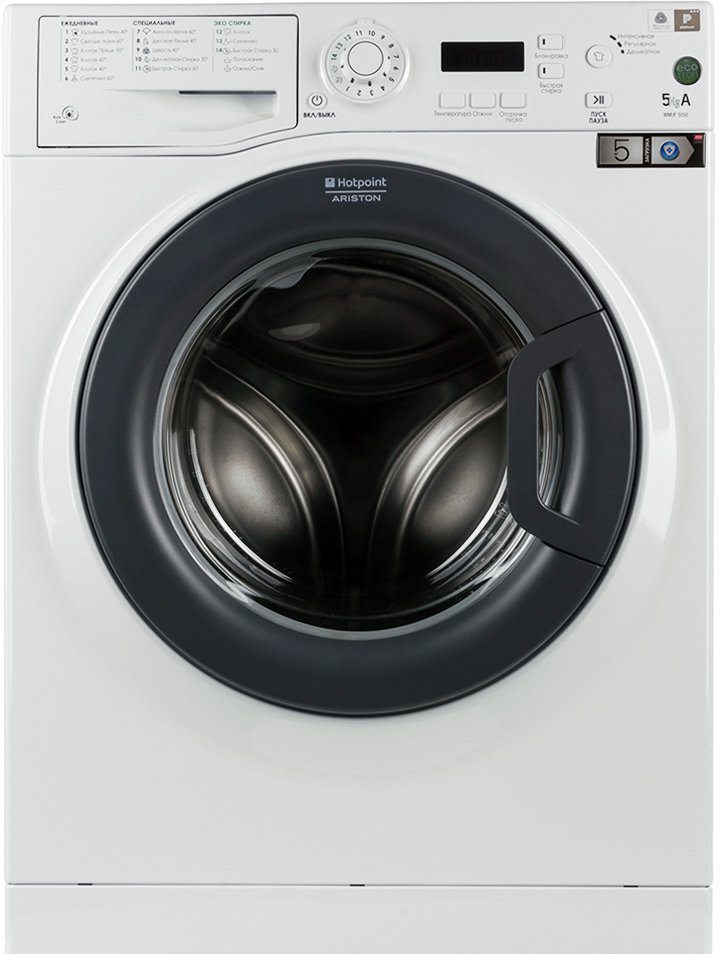
- The Hotpoint-Ariston VMUF 501 B is a narrow front-loading machine with a load capacity of up to 5 kg and a spin speed of up to 1000 rpm. Its features include an anti-allergy function. Price: up to $180.
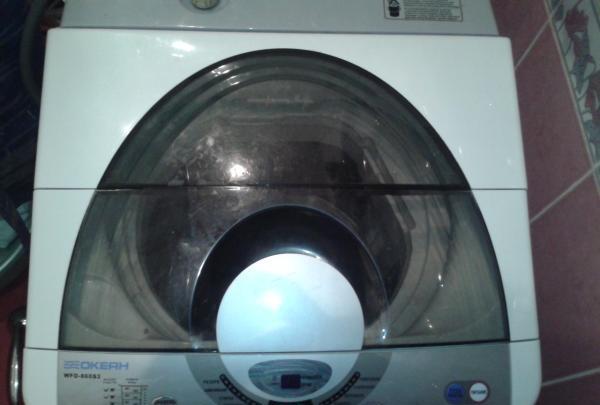
- The Okean WFO-860S3 is a Russian-made top-loading washer with electronic controls. It features a water level indicator. In addition to the fabric softener compartment, there's also a bleach compartment. You can add laundry after the machine has been turned on. Its dimensions are 91 x 52 x 53 cm, making it suitable for use in a narrow bathroom.
So, among Russian-assembled washing machines, it's quite possible to find a decent option for home use at a relatively low price. It's best to choose washing machines from brands that are assembled from genuine parts and whose assembly process is properly monitored. And remember, even expensive appliances can break down.
Interesting:

14 reader comments
Add a comment
Headings
Washing machine repair




For buyers




For users


Dishwasher




Which machine is better?
Only LG!
I don't think so!
Miele!
Where can I get spare parts if something happens? I have a Vyatka Katyusha. It's old, but so what? The hatch hook broke. So should I buy a new car because of that? The old one works fine. Where can I get that hook? I can't find it anywhere.
I've had a Vyatka-Katyusha for 16 years now, and it's been doing its job. I know it's getting old, but I don't want another one. If there were any problems, the repairman would fix them at home. Where can I buy one like that?
Could you please tell me if there are standard-depth washing machines with a narrow front, where the goal isn't space savings but the size of the furniture and appliances along the wall. I'd like a machine with the same dimensions as a top-loading machine, but designed to fit under the countertop. It's not necessary to have a transparent door, is it? How do manufacturers solve these problems? I'm hardly the only one asking this question. Has no one thought of this?
Vyatka automatic transmission VA 160500. It's been working for 30 years now. And nothing's wrong. I only replaced the seals and bearings. I'd buy a new one in a heartbeat.
So, gentlemen, the Vyatka 14 automatic has been in operation for 15 years now. The previous owner had it for over 10 years, manufactured in 1991. Honor and praise, it works flawlessly, sometimes even up to three washes a day! The downside is the power consumption. A deep bow to the manufacturers!
Where does this claim about Bosch's Russian assembly come from? Proof, please!
We've had an Ariston washing machine (made in Italy) since 2007.
We have a Russian-assembled Bosch machine with leak protection… it started leaking after two years of use! The protection tripped, shutting off the water. I disassembled it, thankfully, and discovered that the water supply hose to the detergent compartment had come off. They forgot to put the retainer back on during assembly; it was hanging loosely on the hose. The retainer on the adjacent hose was also missing, which, fortunately, didn't have time to come off. I put everything back on, drained the water, and it's still working, thank goodness!
Where can I sell my Vyatka automatic washing machine? It's been sitting idle for about 10 years.
Try Avito.