
Washing machine drum seal – what to lubricate and how to replace?
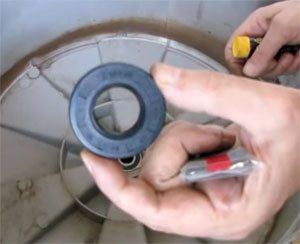 Today, automatic washing machines have become the most commonplace item. Like many other household appliances, they are designed to take on some of the chores and make life more comfortable and enjoyable. Their design allows them to perform their duties efficiently. They run on electricity, use water, and have some parts that should not come into contact with moisture.
The combination of these machine operating features compelled designers to create a system that would combine all of these features while maintaining safe operation and long-lasting service. Various seals and gaskets for washing machines took on some of the tasks associated with preventing water from entering unwanted areas.
Description of the seal
The seal is a special material whose purpose is to seal various joints and prevent water leaks.
It is used in all types of automatic washing machines. However, it may have different shapes and sizes in different models. Seals used in washing machines may have some differences from those used in other types of household appliances.
Their properties and characteristics depend, among other things, on the qualities of the rubber material from which they are made. Besides rubber, they are also made from silicone rubber, fluororubber, and other materials.
All washing machine seals use a special metal insert. It serves as reinforcement and helps maintain the seal's shape. This insert can be quite brittle, so care must be taken to avoid damaging it when replacing it.
Seal in the design of a washing machine
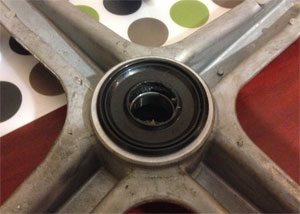 Let's look at the location of the oil seal in front-loading washing machines. The drum in these machines is secured to a bracket. The bracket has several legs, usually 3-4. A steel axle shaft is located in the center of the bracket. It secures the drum to the bearing assembly. This mounting method allows the drum to rotate, meaning it has mobility. The axle shaft drives the electric motor.
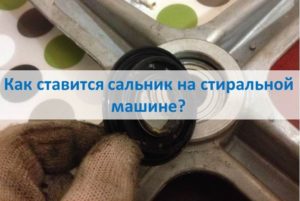
Washing machine oil seals are attached not to the shaft, but to a special bushing. Together, they ensure the washing machine's proper operation and protect against water leaks. They provide water resistance and protect the bearings and the entire assembly from moisture penetration. If moisture gets on the bearings, they will quickly rust and fail.
The seal is a very important part of the machine. If it's damaged, not only the seal but also the bearings will need to be replaced. Replacing the bearings requires almost complete disassembly of the washing machine. This is a very labor-intensive task. If you call a repairman, the repair won't be the cheapest. And if you do it yourself, it will be a significant investment of time and effort.
You can find instructions on how to replace bearings yourself below.
Replacement
 In essence, Replacing the seals requires the same steps as replacing the bearings. This means almost completely disassembling the machine. First, you'll need to remove the cover (the top part of the housing), then remove the front and back panels. Then access the tank and remove it. Disassemble the tank into two halves. Only then will you be able to access the bearing assembly. This is where the seal and bearings are located. We won't describe the entire replacement procedure in detail, as it's already covered in the article on replacing bearings on our website.
Oil seal lubrication
 When replacing a bearing and seal, it is essential to fill it with grease. The best option is to use
 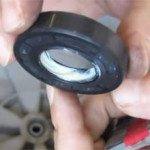 Lubricants recommended by the machine manufacturer. However, such lubricants can be expensive. Some mechanics use automotive and other types of lubricants, such as:
- Litol-24m,
- CIATIM-221,
- AZMOL-Alumina,
- AMBLIGON,
- and others.
Some believe that most types of lubricant are unsuitable for this purpose, as they soften the seal, which can fail again within a year or two. Therefore, if you want to be sure your machine will function properly and for a long time, it's best to use lubricants recommended by the manufacturer or other proven ones.
Interesting:
11 reader comments
Add a comment
Headings
Washing machine repair




For buyers




For users


Dishwasher




So what should I lubricate it with? What lubricant with the best properties can I find commercially?
A friend of mine worked as a washing machine repairman for about five years. He always used regular grease. And he applied a lot of it. Either he was being generous, or maybe that's what was really needed.
What difference does it make what he used if we'll never know how long these machines lasted? A properly installed oil seal should last about five years, by the way.
Nowadays, it's rare for a part to last that long.
Lithols, solid oils, and other auto lubricants are washed out by washing powders within 2-3 months. Then it takes another two months for the bearings to rust. That's exactly six months of warranty after replacing the bearings. Lubrication of the seals should only be done with a special grease specifically for washing machine seals. It's resistant to powders and is sold in single-use syringes.
Tell me at least one lubricant that's resistant to modern washing powders. Currently, repair shops are asking at least 3-4 thousand rubles to repair my washing machine, and not everyone will do it. And even if they do, as a friend wrote earlier, who knows what they'll stuff that seal with. I took it apart myself at home, replaced the bearings and seal. Of course, I couldn't find the right lubricant—I lubricated it with lithol and reassembled it. How long will it last? But I already know this machine inside and out: what it needs, what parts it has, how to get into it, etc.
My LG washing machine lasted exactly 10 years without replacing its bearings or seal. Now it's started grinding. My question is, is Indesit seal grease really necessary? It's the most reliable.
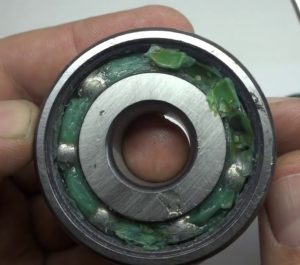
Special grease in a white tube, SkF bearings in Indesit and Merloni bags, etc. And all this from a home appliance repair store – CRAP!!! Don't fall for it! The car started creaking after six months. An autopsy revealed that the oil seal grease (light brown) had turned into an emulsion; the bearing inside was completely rusty, as was the grease (also rusty). That's why it started crunching. I don't know what they fill it with. It looks like regular solid oil (which, of course, is unlikely), but I was shocked by this picture. I dug through a ton of information online and concluded for myself: only calcium sulfonate is used for bearings, and thick silicone or any alkali-resistant metal-rubber grease will do for the oil seal. So – think about it. Let my bitter experience serve you. And for Evgeniy: LG uses Kluber isoflex NBU 15 (polyurea) under the brand name NBU 15.
I repaired an Indesit with a metal tank two years ago. It all went rather haphazardly. It started making noise. After disassembling it, I concluded it was the bearings. I found some used Soviet-era bearings in the garage, Litol, and TsIATIM 201. I cleaned the slightly burnt bearings and filled them with TsIATIM. I filled the leak near the seal with TsIATIM. I'm waiting for it to break (the water level during the wash and rinse cycles is below the seal).
The water level is below the seal, so the machine is spinning, and water will get in there anyway.
Is it possible to lubricate the oil seal with BOSCH gearbox grease?