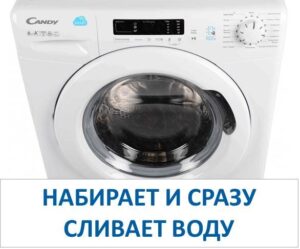
Sometimes a washing machine starts acting up: it seems to work, performing the set program, but the washing results are poor. Moreover, all the water collected for the wash immediately drains down the drain, causing the pump to hum constantly. As a result, the laundry remains dirty, and the machine is at risk of breaking down. Ignoring the self-draining system in your washing machine is essential, as otherwise the situation will worsen, leading to flooding, breakdown, or even the death of the machine. It's best to proceed with diagnostics without delay.
Why does this phenomenon occur?
A working washing machine takes in water for no more than 2-4 minutes, after which it starts washing, and starts draining only at the final stage.If the machine does not stop filling and immediately drains the water, then one of the system components has failed. As a rule, the cause of self-draining is:
drain hose not connected to the sewer correctly;
Intake valve not working properly;
The pressure switch has failed.
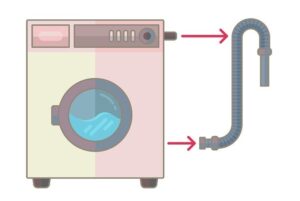
According to the instructions, the main bend of the drain hose should extend above the bottom of the tank, which is typically 50-80 cm above the floor. If the hose is connected to the sink's trap, this rule is followed, but when connected directly to the pipe, a lower bend is often allowed. As a result, due to insufficient pressure, the water in the machine is not retained and flows into the sewer by gravity.
When draining itself, the washing machine begins to make specific sounds - the hum of a working pump and the noise of a continuous flow of water.
The second possible cause of an unscheduled flush is a faulty inlet valve. If the membrane, seal, or sensor is damaged, the unit malfunctions, or more precisely, fails to close. Following a signal from the control board, the valve mechanism opens, water flows into the tank, but the intake doesn't stop at the required moment. An overflow occurs, the pressure switch detects that the maximum level has been exceeded, the protection is triggered, and the system activates an emergency flush. And so on, repeating the cycle.
The pressure switch, which monitors the tank's fill level, is also under suspicion. If it malfunctions, the sensor incorrectly displays the water level, ignoring critical levels. Logically, the circuit board doesn't receive a signal to stop filling, the drum overflows, the safety system detects the danger and initiates an emergency drain. The situation is similar to the previous one—self-draining occurs.
How to fix a car?
It is not difficult to fix the problem and stop the self-draining on your own. It is necessary to check each possible “culprit” sequentially, moving from simple to complex. Diagnostics begin with the easiest part—the drain hose. The drain hose is checked as follows:
the sleeve is disconnected from the siphon or sewer;
the released end of the hose is lowered into the sink or toilet;
any wash cycle starts;
The quality of the drain is assessed.
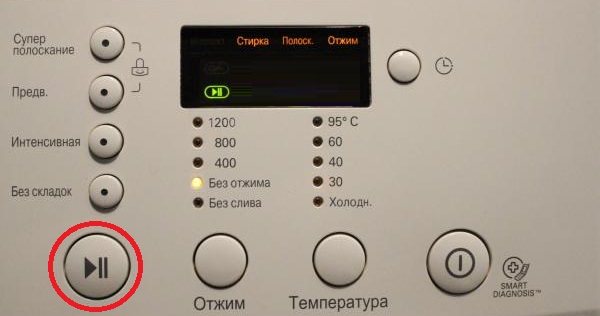
If the washing machine continues to fill and drain, restart the wash cycle, wait for the drum to fill, force-stop the cycle, and activate the drain. After 1-2 minutes, force-stop the cycle again and inspect the hose. Is water still leaking? This indicates the hose is not connected correctly; its height needs to be adjusted.
The problem is more complicated when the inlet valve fails. To diagnose it, it must be located and inspected. The mechanism is located under the top cover where the inlet hose connects to the machine body. To remove the device, disconnect the wiring, loosen the fasteners, and remove the retaining bolts. Next, begin the inspection:
inspect the valve for damage;
We ring the contacts with a multimeter.
The valve can't be repaired. The only solution is to replace it. If the hose and valve are fine, the pressure switch is at fault. Remove the top cover, take out the sensor, inspect the tube, and blow through it. Is the device broken? Then repair won't help—only replacement.
Don't delay solving the problem
If you notice any strange behavior in your washing machine, don’t delay diagnostics. Reasoning along the lines of “if it washes, then everything is fine” and “it’s better not to mess with it until it breaks” often have disastrous consequences.As a result, either the repair cost increases exponentially, or repair becomes impossible—the machine fails irreparably. Constant self-draining is not only inconvenient but also dangerous. Without human intervention, the problem won't be solved, but will only worsen. Poor washing results will be further complicated by:
constant system freezing – the machine will generate errors, pause the cycle, cancel the program;
an increase in electricity and water costs (the washing machine will take more water from the water supply, and the heating element will constantly work, trying to heat it up);
wear of the key components of the machine (the pump, heating element, pressure switch, board and inlet valve operate continuously during self-draining, which significantly reduces their service life);
risk of flooding the premises (if the drain hose is damaged or disconnected, water will flow into the apartment in a continuous stream).
It's not always possible to notice a self-draining cycle. More often than not, it happens unnoticed, especially if the user starts the wash cycle and then goes into another room. Therefore, experts recommend periodically listening and observing the machine while it's running. If the pump hums continuously and the machine doesn't stop filling, there's a problem with the system.
You can resolve a persistent drain yourself, the key is to follow the instructions and follow the steps consistently. If you can't resolve the issue yourself, don't delay in contacting a service center.

 Sometimes a washing machine starts acting up: it seems to work, performing the set program, but the washing results are poor. Moreover, all the water collected for the wash immediately drains down the drain, causing the pump to hum constantly. As a result, the laundry remains dirty, and the machine is at risk of breaking down. Ignoring the self-draining system in your washing machine is essential, as otherwise the situation will worsen, leading to flooding, breakdown, or even the death of the machine. It's best to proceed with diagnostics without delay.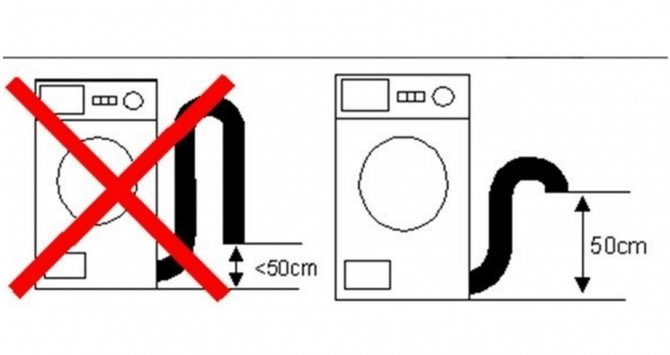














Add a comment